Titans of Chinese Tech
Twenty-One Lives
Most of them started their first company around the age of forty; their firms now occupy some of the most critical lines on the sanctions lists drawn up against China today.
What kind of history is this
In 1978 there was almost no such thing as a “private entrepreneur” among China’s urban population. Later generations would call 1984 “year one of the Chinese entrepreneur” — Liu Chuanzhi founded Lenovo in a gatehouse in Zhongguancun, Zhang Ruimin took over a loss-making collective refrigerator factory in Qingdao, and Wang Shi was still trading corn in Shenzhen. For that generation the starting point was rarely technology; it was the impossibility of going on as they were.
In the 1990s distribution and assembly ruled: Ren Zhengfei sold switches, Hou Weigui made stored-program switches, Cao Dewang made glass for water meters. From the late 1990s to China’s WTO accession in 2001, markets and capital opened at the same time: Richard Chang built SMIC in Shanghai, Wang Chuanfu bought Qinchuan Automobile, and Jack Ma said from a lakeside apartment that he wanted to build a company that would last eighty years.
In the 2010s mobile internet and manufacturing upgrading happened at once: Lei Jun’s Xiaomi reshaped the phone business with internet thinking, Robin Zeng’s CATL bet correctly on power batteries, and Wang Dongsheng’s BOE traded fourteen years of losses for self-reliance in panels. After 2018, sanctions and lists became the shared external condition of this generation — Huawei, ZTE, SMIC and YMTC were added to the Entity List one after another, and “self-reliance and controllability” turned from a strategic slogan into an engineering task that had to be delivered on the balance sheet.
By 2026 the companies run by these twenty-one people had a combined market value or valuation of more than RMB 10 trillion, spanning telecoms equipment, chips, new-energy vehicles, power batteries, panels, glass, internet platforms and large models. They are not one generation, and some are outright competitors; but read their lives together and the same thing comes through: how one country spent forty years turning “we cannot buy it” into “we build it ourselves.”
How the book is grouped and read
This book is grouped into nine categories by industry and national significance. The centre of gravity of each life is how the fortune was made — what circumstances they started from, what gates they hit, and how they survived them. Read in this order:
- Family and hard early years — poverty, being sent down to the countryside, dropping out of school, bereavement, the first failure;
- The founding moment — where the first pot of money came from, and what they lived on at the start;
- The hardest gate — a broken cash-flow chain, a partner turning hostile, technical failure, being strangled at the choke point, being sued;
- The turnaround — what turned the company from “surviving” into “rising”;
- Company history (i–vi) — a year-by-year chronicle that puts those four scenes back on a full timeline;
- Leadership style and character — temper, how they decide, how they use people, and the parts that cannot be copied;
- Secrets of success — a ledger that separates the copyable method from the un-copyable historical window;
- Person, family and marriage — how private life in turn shaped business decisions;
- National significance — their irreplaceable position in the supply chain;
- 2026 valuation and current standing — the latest figures for market value, revenue and ownership.
- Controversy — kept to a brief appendix, deliberately cut as short as possible; the point of this book is how they survived, not how they were criticised.
The three synthesis pages can be read on their own: The Successful Personality reads the leadership styles and secrets of all twenty-one across one another; the relationship map draws their mentorship, rivalry and supply ties into one focusable web; and the timeline lays every key year on a single axis.
All illustrations are imagery prompts only and contain no text; every aphorism returns to the original wording and is sourced. The “Sources” list at the end is there for checking, and editorial comment is kept separate from fact.
Headquarters map
The map below marks the cities where the twenty-one entrepreneurs’ headquarters sit. Click a marker to jump straight to that life; several people in one city are staggered slightly apart.
Communications & tech sovereignty
The Huawei and ZTE generation turned “cannot buy it” into “build it ourselves” — the front line of Chinese technological sovereignty in the sanctions era.
Semiconductors & chip sovereignty
From wafer fabs to memory: the two groups that came closest to breaking through in Chinese semiconductors’ hardest twenty years.
Electric mobility & energy
Batteries, whole vehicles, cross-industry alliances — the one time China’s auto industry has led a global race.
Consumer electronics & appliances
Phones, air conditioners, refrigerators: slowly grinding manufacturing scale into brands and core technology.
Appliances & manufacturing philosophy
Rewriting a small collective factory into a global white-goods giant — and handing the world’s management scholars a Chinese answer on the way.
Internet & platform economy
E-commerce and social payments: turning the transactions and trust of a billion Chinese into private infrastructure.
Internet & AI platforms
From search to algorithmic distribution, then to large models and autonomous driving — a technology cycle that turns over every decade.
Basic materials & manufacturing
Glass, panels, motorcycles — the least glamorous industries are often the truest entries on the choke-point list.
First-generation entrepreneurs
Representatives of the 1984 wave who went into business, and the earliest models of the Chinese corporate system.
- The lives are compiled from public reporting, annual reports, prospectuses, interviews and public talks; editorial notes are marked separately from fact.
- Market values and valuations use 2026 public-market figures; they fluctuate widely and are indicative only.
- The controversy sections record criticisms that have been publicly reported and do not represent the editor’s position; unresolved matters are marked “as of the time of compilation.”
- The illustrations were generated by AI from the imagery of each passage and are not realistic portraits.
The Successful Personality
They come from different industries, different generations and different tempers, yet overlap almost completely on a handful of things. This page reads the “Leadership style and character” and “Secrets of success” sections of all twenty-one across one another, to try to answer one question: when it comes to doing large things, what personality and what leadership do these twenty-one share?
Introduction: Twenty-One People, One Shared Question
The twenty-one profiles in this book each tell a story of "how they got through it." Read sideways, the two added chapters in every profile — "Leadership Style and Character" and "Secrets of Success" — reveal something interesting: these twenty-one people differ enormously in industry, age, background and temperament, yet they converge strongly on a handful of things. The task of this page is to extract those points of overlap and answer one question — what character and leadership, exactly, do these twenty-one people share when it comes to "getting big things done"?
We should first be clear about method and boundaries. First, the synthesis below rests only on publicly documented facts already gathered in this book, and offers no psychological speculation; each trait is backed, where possible, by two to four names and concrete events, and the reader can follow the links back to the original chapters to verify. Second, this book selects "survivors," so treating the traits shared by the successful as the cause of their success is itself a form of survivor bias; therefore, for every trait, one should ask, "How many people shared the same trait yet failed?" Third, the exercise is still worthwhile because this group shares one stretch of history — Reform and Opening-up, WTO entry, the mobile internet, new energy and import substitution — and with similar external windows, individual differences become easier to discern.
I. Scarcity and Hardship: Turning Desperation into Fuel
Of the twenty-one, the vast majority started from scarcity rather than resources. Cao Dewang left school at fourteen, selling tobacco strips, trading fruit and pulling a cart, cycling a hundred kilometres at two in the morning to stock up; Ren Zhengfei was unemployed at forty-four, swindled to the brink of bankruptcy, and at one point wanted to jump off a building; Wang Chuanfu lost his parents early, and his brother and sister-in-law sold a silver bracelet to put him through university; Dong Mingzhu went south after losing her husband at thirty-six and started from scratch as a salesperson; Robin Zeng grew up a boy from a village in eastern Fujian; Yu Chengdong was a farmer's hard-luck child who, eyes reddening as he spoke of his past, said "no one knows the hardship I went through"; Zhang Xue entered a repair shop at fourteen and took twenty-two years to put a Chinese motorcycle on the championship podium of a world circuit; Wang Dongsheng took over a loss-making plant and, during restructuring, simply threw his own personnel file onto the talent market to rally the whole workforce.
Hardship itself is of course not the cause of success; what matters is turning hardship into a refusal to look back. What these people share is not poverty, but a baseline setting formed after having been poor: with no way back, the only direction is forward. Zhang Xue said, "Whatever I'm unhappy with, I change it"; Dong Mingzhu explained her "never admit fault" as "decisions cannot be wrong, because if they are, tens of thousands of employees get hurt"; Cao Dewang turned his memory of hunger into a bottom line of "no bribery, no tax evasion, no wage arrears"; Wang Chuanfu converted the adversity of an orphan into a defiance that would not accept defeat. This hardness tempered by scarcity is the most common and the hardest-to-replicate layer of these twenty-one people.
II. A Sense of Crisis: Assuming Failure Even in Good Times
If hardship is something passively endured, a sense of crisis is a state they actively choose. As early as the late 1990s Ren Zhengfei wrote "Winter for Huawei" and "Spring in the North," saying "for ten years I have thought every day about failure," and in 2016 warned that "a state of hyper-stability will surely destroy Huawei"; at the height of CATL's fortunes Robin Zeng sent an all-staff letter, "Will Pigs Really Fly?," reminding the organisation that "the wind will stop," and often says one should "assume one will die tomorrow"; Wang Dongsheng wrote "only the anxious survive" into BOE's DNA; Zhang Ruimin had the eight characters "forever trembling with caution, forever walking on thin ice" hung on Haier's walls for over thirty years; and Pony Ma's early experience of being unable to sell QQ became Tencent's permanent reverence for cash flow and risk.
The operational form of a crisis mindset is "redundancy" and "spare tyres." Because he assumed failure would eventually come, Ren Zhengfei let HiSilicon, HarmonyOS and Ascend develop quietly in peacetime, so that when sanctions hit they could all be brought into service at once; knowing the wind would stop, Robin Zeng kept a consumer-electronics cash flow even while betting on power batteries, and kept a lithium-iron-phosphate line even while betting on ternary; out of reverence for cycles, Wang Dongsheng dared to expand capacity against the trend at the bottom of the panel market. In these people's hands, a sense of crisis is not an emotion but an engineering habit of "first assume the worst, then prepare for the worst."
III. Technology Independence: Taking the Lifeline into Their Own Hands
This is the line that most distinguishes "entrepreneurs" from "godfathers." Ren Zhengfei held that "for core technology, better three years slow than dependent on others"; Wang Chuanfu developed and produced in-house the batteries, semiconductors, moulds, automotive-grade IGBTs and silicon carbide, stating plainly that "vertical integration was forced out of us"; Dong Mingzhu "never advocated buying technology," and successively built out Lingda compressors, Kaibang motors and GREE moulds, with an in-house rate above 90% for key components; Zhu Yiming said "no chip means no soul; without mastery of the main core technologies, a nation's strength is built on sand"; Wang Dongsheng's slogan was "lose anything, but never starve R&D"; Liang Mong-Sung let the nodes speak, pushing the process from 28 nm all the way to 7 nm; Zhang Xue would rather lose money all year than fail to weld nearly 10% of revenue into self-developed engines; Robin Li turned Baidu into one of the rare companies in the world with a four-layer, full-stack in-house stack of "chip — framework — model — application."
Worth noting: their obsession with "independence" was often mocked as waste by outsiders in peacetime — HiSilicon spent ten years as a "spare tyre," BOE lost money for fourteen straight years, and Zhu Yiming walked the "road of certain loss" that is DRAM. The cost of independence is certain, the payoff uncertain; being able to book it as a "long-term account" rather than a "short-term account" is this group's shared calculus. Sanctions and supply cut-offs eventually proved them right: the longer the list of things used to strangle them at the choke point, the more those early seemingly unprofitable outlays looked like life-saving money.
IV. Long-Termism and the Resolve to Run Counter-Cycle
Almost every chapter closes with a similar tally: "how much is replicable, how much is era and luck." But one item repeatedly written into the "replicable" column is long-termism. When Wang Dongsheng lost over RMB 3 billion in a row from 2005 to 2006 and was cursed as a "moth of the state," he still refused to turn to real estate; Zhu Yiming swallowed more than RMB 30 billion in DRAM losses over three years and ran capacity to the max against the cycle; when the market share of the lithium-iron-phosphate route fell below 15% and outsiders judged the strategy mistaken, Wang Chuanfu still refused to switch to ternary lithium; Jack Ma, facing years of losses at Alibaba Cloud, simply said "invest RMB 1 billion a year, for ten years"; when Huawei saw its only negative growth in history in 2002, Ren Zhengfei made deep layoffs to survive the winter yet kept R&D fed; and Zhang Xinghai kept funding his electric-vehicle venture through nearly RMB 10 billion in cumulative losses, even mortgaging 70% of his shares to fund overseas R&D.
Running counter-cycle is not bravado but a faith in the industrial judgement that "cycles will eventually pass." They see an industry trough simultaneously as others' exit and their own curve, provided cash flow holds and state capital or investors are willing to backstop. This also explains why China's major hard-technology breakthroughs so often occur at the "expand at the trough" moment — panels, DRAM, power batteries, new-energy vehicles, almost without exception.
V. Focus and Trade-offs: What Not to Do Matters More Than What to Do
Almost all of these people held to a "main channel" and refused faster money for it. Cao Dewang voluntarily divested real estate and securities investment as early as 1994 to 1995, and in 2016 declined the quick money of finance and property, spending forty years circling only automotive glass; Liu Chuanzhi refused a stake in Minsheng Bank and a real-estate subsidiary, calling it "a mind free of clutter" in his growth; the Huawei Basic Law explicitly rules out entering the information-services business; Duan Yongping made the "Stop Doing List" (the list of what not to do) his signature — no blind expansion of the competence circle, no short-selling, no short-term speculation, no OEM, no rebates; and Zhang Xue had only motorcycles in his head. Duan Yongping even said, "I eliminated myself from the company."
Restraint is precious because it runs against human nature. The most common way Chinese private firms die is not by being beaten by rivals but by wandering off inside a diversification bubble. Among these twenty-one, almost everyone who has lived long and diversified widely has had a moment of "holding back from doing." Focus is not conservatism but a strategic choice to press limited resources into a single-point breakthrough.
VI. The Cognitive "Bet" and Decisiveness
Outsiders love to describe them with the word "gamble," but this group's "gamble" is mostly built on cognition and hedging. Robin Zeng changed the office motto "strong will to gamble" to "even stronger will to gamble" and gave a methodology: the gambling instinct rests on the "five knowings" — knowledge, common sense, experience, boldness, and appreciation; he says he acts on a 20% chance but then "lets it grow to 50%, 70%" along the way, leaving hedges throughout (betting on ternary while keeping iron-lithium, betting on lithium resources while also laying out sodium batteries). Wang Chuanfu weathered a 30% two-day share-price crash after acquiring Qinchuan; in 2022, with fuel vehicles still a substantial share, he abruptly halted their production; with his firm's survival at stake, Zhang Xinghai bet on Huawei, "willing to pawn his trousers to cooperate"; Yu Chengdong first throws out goals far beyond consensus to pull the team, then delivers them with his back to the wall; and Robin Li dared to launch the "Lightning Plan" against Google with fifteen people to Google's eight hundred, and poured resources into large models when revenue came under pressure.
The common thread: they dare to place bets with incomplete information, yet do not leave the outcome to luck. Yu Chengdong's "reverse from the goal," Robin Zeng's "five knowings," Duan Yongping's "dare to be behind the world, then contend for the lead from behind" are essentially the same thing — use judgement to raise the win rate, then use the organisation to turn judgement into reality. A true gambler hedges nothing and reviews nothing; they are not that.
VII. Sharing the Gains and Letting Go: Equity and the Stage
This is the most counter-intuitive item: most of these "godfathers" do not hold tightly to equity. Ren Zhengfei personally holds less than 1%, with over 100,000 employees holding virtual restricted shares through the union; Lei Jun pushed company-wide shareholding and, via an AB-share structure, controls over 60% of voting rights while holding about 20%; Zhu Yiming transferred half of his granted shares — about 768 million shares — to employees for free and pledged not to reduce his stake for ten years; Duan Yongping diluted 70% of his equity down to 17% and in 1999 voluntarily split the company into three, holding shares but not managing; Liu Chuanzhi early on won employees a 35% profit-sharing right; Jack Ma used a partnership system to solve succession; and Zhang Xue used personal loans to buy back equity and distribute it to the heads of four major divisions.
Giving away equity and power buys long-term loyalty and organisational vitality. Duan Yongping was willing to devolve power and bred a whole generation of disciples at OPPO, vivo and Pinduoduo; Ren Zhengfei was willing to hand day-to-day command to the rotating chairman, letting an unlisted private firm keep raising capital and incentives. Delegation goes with it — "let those who hear the gunfire call in the artillery," Pony Ma's "half a life handed to partners," Zhang Ruimin's devolution of three powers, Zhang Yiming's "Context, not Control." Sharing out interest and decision rights is this group's shared anti-family-business instinct.
VIII. Into the Trenches: An Obsession with Product and Detail
Alongside "delegation" sits a near-obsessive hands-on approach to product and detail. Pony Ma is a "mail maniac," sending emails at 4:30 in the morning to fix letter spacing, with an in-house joke that a product iteration was done in eighteen hours; Lei Jun worked a dozen-plus hours a day from his Kingsoft days, and at Xiaomi flew to South Korea in person for screens and calculated the cost of a single screw in supply-chain meetings; Wang Chuanfu inspects every process improvement himself and signs off on every project design one by one; Dong Mingzhu, to solve parking difficulty, ordered hills flattened and also went live herself to sell goods; Yu Chengdong rewrites the PPT through the night before launches and nitpicks the screen and AEB to the end; Robin Li makes an Excel comparison sheet by hand even when buying a car; and Zhou Hongyi has thoroughly turned the CEO himself into a product.
On these people you find no division of "strategy preacher plus absentee boss." Most came up as engineers or product managers and are used to deciding with concrete front-line numbers rather than listening to reports. This "tightening the screw" grind is the most fundamental divide between them and entrepreneurs who rose through capital manoeuvring.
IX. Mechanism and Grey-Scale: Organisations That Outlast the Individual
True masters take apart the old structures they built, with their own hands, at the peak. When revenue broke RMB 100 billion in 2005, Zhang Ruimin toppled the hierarchy and broke it into thousands of micro-units; in 2012 he removed over ten thousand middle managers at once, returning decision, hiring and distribution rights to the front line; Ren Zhengfei used the rotating-chairman system to lock himself into "rule of law," keeping only one vote; Pony Ma used "grey-scale rules" and a "horse-racing mechanism" to allow internal multi-team competition, and WeChat is precisely the fruit that ran out; Zhang Yiming managed over a hundred thousand people with transparent OKRs, "Context, not Control" and three-to-four-level reporting, and at thirty-eight voluntarily handed over the reins; and Duan Yongping stepped fully behind the scenes as early as 2001.
Paired with "mechanism" is "grey-scale" — allowing imperfection, allowing failure, allowing different voices. Ren Zhengfei likens himself to "a bucket of paste" that glues together different people, interests and contradictions; Pony Ma distilled grey-scale into seven dimensions and advocated a "biological organisation"; Zhang Ruimin summed up Haier's culture in four characters, "take oneself to be wrong." These people understand: no matter how strong an individual is, he will age, err and leave; the only thing that crosses time is an organisation that depends on no individual.
X. Expression, Narrative and Personal Credibility
On "expression" this group splits into two poles, both extreme. The outspoken pole: Jack Ma, with an English teacher's urge to express, turned "make it easy to do business anywhere" into a mantra and made Jin Yong's wuxia thoroughly into an organisational language; Yu Chengdong, with "Yu the Loudmouth" and "far ahead," turned the executive IP into advertising that saves RMB 1 billion a year in promotion; Zhou Hongyi lives as "the hardest-working AI blogger across the whole internet"; Lei Jun, with self-deprecation and "Are you OK," closes the distance with young users; Dong Mingzhu registered herself as a trademark and became her own spokesperson. The silent pole: Pony Ma, Zhu Yiming, Wang Dongsheng, Zhang Yiming and Robin Li almost never give interviews, letting products and milestones do the talking.
Behind both extremes is one principle — personal credibility is itself a factor of production. The outspoken turn the CEO into a product, using traffic to feed the business; the silent treat "speak less, do more" as a moat, because in an environment sensitive to regulators and public opinion, restraint itself is risk management. What matters is not how much is said but whether "what is said matches what is done": most of the boasts Yu Chengdong made early on were later fulfilled, and that is why "Yu the Loudmouth" could become an asset.
XI. Integrity, Duty and Frugality: Hard Values, Plain Living
Among the twenty-one you find not one known for luxury. Hou Weigui drove a Jetta for years, flew only economy and even brought his own rice cooker to make congee on trips, and ordered that no executive be given a secretary; Ren Zhengfei, in his seventies, still drags his own luggage and queues for a taxi, lining up with employees in the canteen; Wang Chuanfu wears a work uniform year-round, queues for the RMB 5 set meal and flies economy without exception; Cao Dewang joked of himself "never sent a box of mooncakes"; Zhang Xinghai drives only cars he built and those of benchmark rivals; Zhu Yiming appears in work uniform at the Hefei plant; Zhang Ruimin has no private office and no personal secretary. Frugality is not a performance but the natural result of directing resources to R&D and people.
Alongside frugality is a "hardness" in values. Jack Ma would rather fire his best salesperson than give up "no kickbacks," and four employees who used an internal script to snap up mooncakes were fired the same day; Dong Mingzhu refused her own brother's back-door request for goods, and she and her brother did not speak for twenty years, and she set the rule "those who leave GREE are never rehired"; Cao Dewang wrote "no bribery, no tax evasion, no wage arrears" as Fuyao's guiding principle; Duan Yongping made "integrity and duty" the master principle of his whole corporate culture, copied verbatim by OPPO, vivo and Pinduoduo. They are hard on their own because they know that once the system loosens, the organisation drifts apart.
Divergences: Five Contrasts
Commonality is the base; difference is what gives identity. Set the twenty-one against one another and at least five divergences come into view.
First, wolf nature versus ox nature. Ren Zhengfei is military-style centralisation and wolf nature; Hou Weigui is engineer-style moderation and balance: the two were in the same city, the same industry, of similar age, yet one stresses obedience and makes the customer listen to him, while the other excels at delegation and listens to the customer. In the years Hou Weigui personally led ZTE, only three executives were dismissed and he did not lightly fire people; Huawei, by contrast, used last-place elimination and "a bird that does not burn to death is a phoenix" to force out vitality. On the same industry track, both cultures survived — only their ceilings differ.
Second, centralisation versus delegation. Wang Chuanfu, Dong Mingzhu and Robin Zeng are all highly centralised — Robin Zeng is described as "the highest decision-making body itself," and Wang Chuanfu admits that the technology route and product choice "rest entirely on him alone"; at the other pole are Duan Yongping's extreme devolution and Pony Ma's "half a life handed to partners." The former suits low-tolerance, heavy-asset manufacturing that must place big bets fast; the latter suits internet products that change extremely fast and need to emerge bottom-up. Neither is absolutely better; it is only a matter of fit with the business.
Third, outspoken versus silent. Jack Ma, Yu Chengdong, Zhou Hongyi and Dong Mingzhu are expressive leaders; Pony Ma, Zhu Yiming, Wang Dongsheng and Zhang Yiming are silent engineers. The former turn personal IP into a strategic asset but also bind personal risk to the firm; the latter let products and milestones speak, at the cost of going mute when a story must be told or public opinion won.
Fourth, tech obsessive versus organiser. Wang Chuanfu, Zhang Xue, Liang Mong-Sung and Robin Li are technology believers, willing to stake their fortunes on a single node or a single engine; Liu Chuanzhi, Zhang Ruimin, Duan Yongping and Jack Ma are closer to organisation designers and merchants, putting "people" and "system" before technology — Liu Chuanzhi flatly says "to run a company is to run people," and Zhang Ruimin treats the company as an organisational laboratory. The former conquer the choke point, the latter let the enterprise cross cycles.
Fifth, fast and slow. Yu Chengdong wants "to make decisions at the fastest speed — act first, act now"; Hou Weigui and Robin Li lean slow and rational — Hou Weigui "tracks everything comprehensively but does not lightly place big bets" on new technology, and Robin Li even makes an Excel comparison sheet when buying a car. The fast ones caught the window; the slow ones avoided the traps; interestingly, each side views the other's temperament as a risk.
What Can Be Copied, and What Cannot
Across all twenty-one chapters, one recurring phrasing is: "about 50% to 70% of success is replicable; the rest is era and luck." Tally the "replicable" column across the board and you get a fairly short, fairly plain method list: customer/user-centricity, long and high-intensity R&D investment, sharing of interest and equity, focus on the main channel, a sense of crisis and spare tyres, counter-cycle resolve, institutionalised delegation, and the founder getting into the trenches. These do not depend on talent; they are "hard skills" that can be learned and written into a system.
The "not replicable" column points to two kinds of things. One is personal endowment — Ren Zhengfei's military experience and grey-scale philosophy, Robin Zeng's "five knowings" intuition, Wang Chuanfu's deconstruction mindset, Zhang Xue's rider's instinct, Jack Ma's narrative charm, Duan Yongping's "unity of knowledge and action" — these are hard for a second person to repeat as-is. The other is the window of era — the founding year of entrepreneurs in 1984, the shortage economy of the 1990s, WTO entry in 2001, the mobile internet of the 2010s, the new-energy subsidies around 2015, and import substitution and geopolitical controls around 2018. The wind the era gives is the variable with the largest multiplier.
Putting the two columns together, the lesson this group offers may be: methods can be learned, but methods only set the floor; what truly sent them to the pinnacle was "the right method, in the right window of era, executed by a person whose character is so extreme as to be unreplicable." In other words, what is replicable is the skeleton; what is not is the timing and the moment of heaven.
Comparison Table: The Twenty-One at a Glance (Style · Secret · One-Liner)
The table below is arranged by the book's nine categories and, for each person, gives the keywords of their leadership style, their single most core secret of success, and one line that can serve as an index. Click a name to jump to that person's profile.
Conclusion: Three Sentences for the Reader
First, before reading their success, read their failures and scarcity. Almost without exception the twenty-one endured broken cash chains, huge losses, being sued, being strangled at the choke point, or partners turning on them; "how they got through it" is always more worth learning than "how they succeeded." Second, learn the method, not the posture. The arbitrariness, hot tempers and obsession in them are often results rather than causes; cut off from era and resources, the same character only brings disaster. Third, treat them as a sample, not a list of role models. The value of this synthesis page is not to hand you a "success formula" but to let you see that within one stretch of China's rise, the same thing can be done in very different ways and all of them can work.
- The "Leadership Style and Character" and "Secrets of Success" chapters of the twenty-one profiles in this book (compiled in 2026).
- The annual reports, prospectuses, public interviews and media reports cited in each chapter are detailed in the "Sources" at the end of each profile.
- Editor's note: This page is a synthesising summary; the grouping of people and the generalisation of traits are the editor's judgement, offered only as a reading reference and not constituting an evaluation of any individual or company.
Relationship map
The twenty-one figures each seem to run their own race. But overlap their relationships and you find not twenty-one parallel lines but a network of nodes: some were assigned to the same factory in the same year; some were boss and subordinate under one roof; some have traded barbs from the launch stage for a decade; and others — one makes glass, one builds whole cars — depend on each other across a single supply chain.
How to read this map
The relationship map above places all twenty-one figures on a single circle, grouped by industry so that those in the same field sit next to one another. Each node on the circle is one person (or one group), and the lines between nodes stand for a verifiable relationship. The colour of a line marks the type of relationship: amber for peers and kindred spirits, red for rivalry and confrontation, blue for cooperation and supply, grey for shared city and geography.
Move the cursor over any node and the map focuses automatically: only the lines tied to that person remain, while everything else fades out, and the bottom-right corner shows his name, company and industry. Click a node to lock the focus; click a blank area or 'Reset' to return to the full view. The four colour swatches above the legend can be toggled — to see only 'rivalry' relationships, simply switch off the other three.
Every line in this map has a matching caption in the 'relationship list' below, with the source noted in the relevant biography. All relationships are backed by the original text in the corresponding chapter; any connection we were unsure of was left off the map rather than drawn.
Three kinds of ties: peers, rivals, supply
The first is 'peers and kindred spirits'. Superiors and subordinates within one company, colleagues from the same factory, and friendships across generations within one circle all fall here. Fewest in number, yet often the best clue to why someone ended up where they did: when Ren Zhengfei pulled Yu Chengdong back from Europe to take over the consumer business and the old guard launched a 'dump Yu' campaign, the founder settled it with one line — 'anyone who does not support Yu Chengdong's work does not support me.' In 1982, Duan Yongping and Wang Dongsheng were both assigned to the Beijing Electron Tube Factory in the same year, each on a monthly wage of 46 yuan; one resigned to study at Renmin University, the other stayed on and went on to build BOE.
The second is 'rivalry and confrontation'. This is the densest category on the map, and the truest texture of four decades of Chinese business history: Huawei and ZTE have battled in the same city for thirty years — Ren Zhengfei with wolf-like centralisation, Hou Weigui with an engineer's measured delegation; Lei Jun and Dong Mingzhu staged their RMB 1 billion wager at a CCTV awards ceremony; Pony Ma and Zhou Hongyi in 2010 forced hundreds of millions of users to choose between QQ and 360; and Wang Chuanfu and Robin Zeng, one pursuing vertical integration and the other an open supply model, were still squaring off in 2026 over LFP batteries and ultra-fast charging.
The third is 'cooperation and supply'. Semiconductors form the clearest vertical axis on this map: SMIC manufactures the Kirin and Ascend chips for Huawei, while CXMT's DRAM and HBM go to Huawei, Alibaba, Tencent, ByteDance and Xiaomi; and the playbook of industrial capital that Hefei once used to back BOE was applied, almost unchanged, to CXMT — Zhu Yiming himself calls it the 'BOE-like model'. The horizontal axis is automobiles: Huawei contributes technology and channels, Seres contributes the factory and the licences, and the two were bound together after a test drive at Songshan Lake in Dongguan.
In November 2011, Ren Zhengfei brought Yu Chengdong, then president of the Europe region, back to China to take over the consumer business. The old guard resisted, cornering him in a meeting room to force him out, until the dispute reached Ren Zhengfei, who settled it with a single verdict: 'anyone who does not support Yu Chengdong's work does not support me.' Yu later described the two as 'both mentor and commander' — from wireless to terminals to automobiles, he was moved wherever needed.
Both graduated from university in 1982 and were assigned to the Beijing Electron Tube Factory, each on a monthly wage of 46 yuan. The state-owned giant's rhythm — 'everyone felt they could do the work, yet no one did anything' — suffocated Duan Yongping, so he resigned to sit the entrance exam for Renmin University; Wang Dongsheng stayed, and eleven years later became the head of BOE.
Liu Chuanzhi is chairman of the China Entrepreneurs Club and a member of the Taishan Society, and is a 'friend across generations' with Jack Ma. Liu himself admitted that the Taishan Society 'never discusses operations at its meetings, only the big picture' — at heart a social club — yet it was precisely this circle that linked the first generation of industrialists with the internet generation.
The two are close in age, started up in the same city and had highly overlapping businesses, yet went to opposite poles: Hou Weigui with an engineer's moderation and delegation, Ren Zhengfei with a soldier's centralisation and wolf spirit; one listens to what customers say, the other makes customers listen to him. After 2010 the gap widened steadily, and by the time Hou stepped down, Huawei's revenue was already four times ZTE's and its profit ten times.
In 2011, Lei Jun's line 'born for enthusiasts' opened the internet-phone wave; the carrier-customised camp of ZTE, Huawei, Coolpad and Lenovo steadily lost ground, and it was in this very year that Yu Chengdong took over Huawei's terminal business. A decade later the two met again on the new-energy-vehicle track — 'far ahead' against 'Are you OK'.
The WeChat red packet at the 2014 Spring Festival was called within the industry a 'Pearl Harbor sneak attack' on Alipay: overnight it bound tens of millions of bank cards, plugging Tencent's gap in payments. From then on, payments, e-commerce, social and cloud computing went head-to-head; the two men — one tall and one short, one outward and one reserved — became the most classic match-up in Chinese internet history.
ByteDance upended the portals with its recommendation algorithms and directly struck at Tencent's traffic heartland. By 2025, Douyin's domestic monthly active users had passed one billion and its full product matrix about four billion, a scale approaching Meta — making it the strongest rival Tencent met in the mobile-internet era.
On the evening of 3 November 2010, Tencent issued its 'difficult decision', demanding that users choose between QQ and 360, instantly triggering a public outcry; the Ministry of Industry and Information Technology stepped in to mediate and both sides apologised. The litigation ran four years, and in 2014 the Supreme People's Court's final ruling held that Tencent's 'choose one of two' did not constitute an abuse of market dominance.
In earlier years it was a fight over the address bar between 3721 and Baidu Souba; in 2012 this became the '3B War': on the night of 28 August, Baidu launched a large-scale 'nocturnal raid' on 360, redirecting all news, maps and music reached via 360 to Baidu's homepage, and 360's share price fell 6.22% that day.
Baidu's traditional search-ad revenue once accounted for as much as 96%; as ByteDance, Kuaishou and Xiaohongshu rose, users' search habits were eaten into by in-app search, and its position as a traffic gateway kept loosening. Robin Li once lamented that 'our product and commercialisation judgments have repeatedly come under question' — and that was no mere modesty.
In 2012, Zhou Hongyi announced the '360 Special Edition phone', a lightly-asset-backed model whose specs matched Xiaomi's and whose price undercut Xiaomi's standard version by at least 500 yuan. He called himself the 'guerrilla commander': against Tencent he used security, against Baidu he used the browser to divert traffic, against Xiaomi he used phone value-for-money — never meeting rivals head-on on their home turf.
At the CCTV 'China Economic Person of the Year' awards on 12 December 2013, Lei Jun declared that if Xiaomi's revenue overtook GREE's within five years he would lose one yuan; Dong Mingzhu took him up on the spot — 'if we're betting, let's bet one billion.' When the result was revealed in 2018: GREE about RMB 200 billion, Xiaomi RMB 174.9 billion, and in his tenth-anniversary speech Lei Jun frankly admitted, 'we concede that we did lose.'
GREE and Haier are both Chinese white-goods giants. Dong Mingzhu believes in strong-handed centralisation and 'one person bound to one company'; Zhang Ruimin broke the firm into thousands of micro-entrepreneurial units and pushed 'rendanheyi' — aligning each employee with their own market order. On the same track, two completely opposite organisational philosophies.
CATL pursues 'open supply', selling batteries to all carmakers, while BYD pursues 'vertical closure', making and selling its own; Robin Zeng advances on both fronts, whereas Wang Chuanfu is almost all-in on LFP. In 2026 the two squared off — CATL released its third-generation Shenxing ultra-fast charging, and Wang declared that 'no one understands batteries better than BYD'. They may not be friends, but both are the architects who drove this industry's rise.
On Christmas Eve, 24 December 2020, Zhang Xinghai and his son drove an SF5 to Huawei's Songshan Lake base in Dongguan and asked Yu Chengdong to come down and test-drive it; a few hours of talks sealed the intent to cooperate. In March 2021 the two signed a memorandum of cooperation, and by year-end jointly launched AITO. Yu described him as 'not talkative, few wasted words, and determined in action'; Zhang Xinghai characterised the partnership as 'in victory we toast together, in defeat we fight to the death to save one another'.
In October 2020, Ren Zhengfei signed a document drawing the red line that 'Huawei will not build complete vehicles', positioning the car BU as 'helping carmakers build good cars'. In 2024, Zhang Xinghai bought the 'AITO' trademark for RMB 2.5 billion, and in 2025 invested a further RMB 11.5 billion to take a stake in Yinwang Intelligent, forming an open equity platform with Huawei at 80% and Avatr and Seres each at 10%.
In 2024, the Huawei Mate XT, equipped with BOE's flexible OLED screen, was unveiled — the world's first tri-fold phone. With R&D spending above RMB 10 billion for years running, Wang Dongsheng tore open a gap in the display industry long monopolised by Japan and South Korea, and also supplied a key component for Huawei's high-end models.
After the US cut off TSMC's 7 nm, Huawei's Kirin and Ascend AI chips shifted to SMIC for production. The wafer-fab foundations laid by Richard Chang in those years, and the N+2 (equivalent to 7 nm) that Liang Mong-Sung pushed to using DUV multiple-patterning with no EUV lithography machine, form the most critical backup capacity Huawei had in the sanctions era.
CXMT's DRAM customer list already covers domestic makers such as Huawei; in October 2025, CXMT delivered 16 nm HBM3 samples to customers including Huawei, with mass production planned for 2026. Memory is the most capital-hungry and most choke-point-vulnerable battle in Chinese semiconductors, and its relationship with terminal makers is one of mutual making.
CXMT's server DRAM customers already cover Alibaba Cloud, ByteDance, Tencent and others (reportedly Tencent has signed a multi-year supply agreement worth over RMB 20 billion, a figure not confirmed in a prospectus). Cloud providers are the largest buyers of memory in the large-model era.
In June 2025, Alibaba Cloud invested RMB 6.1 billion for a 3.85% stake, lifting CXMT's pre-IPO valuation to about RMB 158.4 billion. Deep binding between industrial capital and memory makers is the norm on this track.
ByteDance is one of CXMT's server DRAM customers. In 2024 ByteDance's capital spending on AI was about RMB 80 billion, raised further to about RMB 200 billion in 2026 — the scale of compute investment directly determines upstream memory orders.
Xiaomi's Yangtze Industrial Fund took a stake in Rui Li Integration, the operating entity of CXMT; Xiaomi also appears on CXMT's customer list. Both the phone and the car business lines need large amounts of memory.
Hefei was once called 'China's toughest VC city' for investing in BOE, and in 2016 applied the same industrial-capital playbook to back CXMT. Zhu Yiming himself calls this steadiness — 'the government voluntarily dilutes its stake, keeps injecting capital, yet never reduces its holding' — the 'BOE-like model'; a private entrepreneur relying on market financing alone could never replicate it.
In May 2018, online rumours spread that 'Lenovo, together with Motorola, sided with Qualcomm and did not back the Polar scheme led by Huawei'. Liu Chuanzhi, with Yang Yuanqing and Zhu Linan, issued a joint letter denying the rumour, and said he had phoned Ren Zhengfei, who said Lenovo's vote was fine and thanked it for its support of Huawei; Huawei also issued a statement thanking Lenovo for its vote and calling on the industry to join hands.
Fuyao is the world's largest automotive-glass supplier, and since 1994 has successively entered the global supply chains of GM, Ford, Volkswagen, Audi, Mercedes-Benz and BMW; BYD is a vehicle maker. Upstream and downstream of the same chain, one makes the 'unglamorous' base material, the other a terminal brand.
Both are links in the auto supply chain: Cao Dewang took a single piece of automotive glass to global number one, while Zhang Xinghai turned a township spring factory into a high-end smart-EV maker. Both started from the most basic tier of manufacturing, and both completed their initial accumulation under the same external condition — import substitution.
CATL is the power-battery supplier to major domestic carmakers, and Seres's AITO range is within its supply system. Competition in new-energy vehicles is, in essence, competition across three supply chains: batteries, electric drives and intelligent driving.
BOE's panel shipments surpassed Samsung and LG in 2018, topping the world for the first time; downstream are makers of phones, tablets, laptops and TVs. Xiaomi is a key link among them — the scaling of domestic panels directly pushed down the cost curve of domestic phones.
Both are headquartered in Chongqing and belong to the city's equipment-manufacturing cluster: Zhang Xinghai started from a spring factory in Chongqing's Baxian County and built high-end smart EVs, while Zhang Xue registered a company in Chongqing's Liangjiang New Area and built a motorcycle that won at WSBK. The same industrial soil, two entrepreneurs forty years apart.
Both are headquartered in Shenzhen: one makes communications equipment and terminals, the other batteries and complete vehicles. In the 2020s, Huawei's intelligent-automotive solutions and BYD's vehicle business met head-on in the market — cooperation and competition between same-city firms is the most typical ecology of Shenzhen's industrial cluster.
Xiaomi and Baidu are both headquartered in Beijing and both in a period of investment in AI and autonomous driving: Baidu launched the Apollo autonomous-driving open platform in 2017, and Xiaomi announced its car venture in 2021. The same city, the same technology window, two different ways of betting.
Three things the map reveals
First, this network has two centres of gravity. One is Shenzhen — Ren Zhengfei, Yu Chengdong, Hou Weigui, Wang Chuanfu and Pony Ma in the same city, where telecoms, batteries and social apps grew out of the same industrial district; the other is Beijing — Lei Jun, Robin Li, Zhang Yiming, Zhou Hongyi, Wang Dongsheng and Liu Chuanzhi clustered around Zhongguancun and Zhichun Road. Geography is no accident: the industrial cluster decides where talent flows, and that flow in turn reinforces the cluster.
Second, the densest competition sits precisely where technology turnover is most violent. When phones changed generation, Yu Chengdong and Lei Jun collided head-on; when power-battery strategies diverged, Robin Zeng and Wang Chuanfu parted ways; when algorithmic feeds displaced the search box, Robin Li faced both Zhang Yiming and Zhou Hongyi at once. The density of competition is, in truth, a measure of the pace of technological change.
Third, and most easily overlooked: the relationships that truly decide fate on this map are mostly not between people but between industry and the system. In CXMT's RMB 150 billion project, the Hefei government voluntarily diluted its stake from 80% to 37% while continuously injecting capital and never reducing its holding; the National Integrated Circuit Fund, local industrial guidance funds, and the whole-of-nation style of long-term commitment are not something two entrepreneurs can replicate with a handshake. This map draws people, but read it remembering what stands behind each line.
Same city, same generation: another cut
Beyond the three 'relationships' above, there are two looser but equally meaningful links: shared city and shared generation. Shared city is about geography; shared generation is about age — those born the same year often share the same frugal childhood and the same round of institutional change, and so develop a similar nose for 'opportunity'.
The tables below cut the twenty-one figures once by headquarters city and once by birth decade. Note the contrast: those born in the 1940s (Ren Zhengfei, Liu Chuanzhi, Hou Weigui, Zhang Ruimin, Cao Dewang) almost all started businesses only around age forty, their starting point being 'we had no choice'; whereas Zhang Yiming and Zhang Xue, born in the 1980s, began from 'having spotted a technology trend'. Within the same book, the two generations' motives for starting up barely overlap.
| Shenzhen | The shared starting point of communications equipment, batteries and social apps; one industrial district gave rise to five companies on different tracks. |
|---|---|
| Beijing | Around Zhongguancun and Zhichun Road, where three forms of internet, panels and first-generation IT gather. |
| Chongqing | A southwestern equipment-manufacturing cluster: complete vehicles and motorcycles, forty years apart yet on the same path of 'starting from basic manufacturing'. |
| Shanghai | Where China's wafer fabs were grounded; SMIC grew out of a marshland in Zhangjiang. |
| Hefei | A model city that traded industrial capital for an industrial chain, from BOE to CXMT. |
| Ningde | A small town in eastern Fujian that entered the core of the global auto supply chain because of one power-battery company. |
| Hangzhou | The origin of e-commerce and the platform economy — the apartment at Lakeside Garden. |
| Zhuhai | A stronghold of the air-conditioner industry, and the place Dong Mingzhu moved to at thirty-six and never left. |
| Qingdao | A laboratory for white goods and manufacturing philosophy: both the smashing of fridges and 'rendanheyi' happened here. |
| Dongguan | The origin of BBK, and the place where the two characters 'benfen' (doing one's proper part) gave rise to a whole school including OPPO and vivo. |
| Fuqing | A county town in eastern Fujian, from which a single piece of automotive glass rose to global number one. |
| Born in the 1940s · starting from scarcity | Almost all started businesses only around age forty, their motive being 'having no choice' rather than 'having spotted a trend'. |
|---|---|
| Born in the 1950s · inheriting and transforming | They caught the second wave of reform and opening; most started inside the system and then rewrote its rules with their own hands. |
| Born in the 1960s · the engineer dividend | With a full higher engineering education, they turned technical ability directly into the company's core asset. |
| Born in the 1970s · the internet generation | When they started up, China already had venture capital, a Nasdaq to look to, and American models to reference. |
| Born after the 1980s · algorithms and globalisation | The starting point is no longer 'having no choice' but 'having spotted a technology trend'; they start out facing the global market. |
What this map does not draw
First, it draws only 'public, verifiable' relationships. The many private friendships, fellow-townsman ties, schoolmate and ex-colleague links between entrepreneurs — or competitions and collaborations never made public — are not on the map. Invisible does not mean nonexistent; it only means there is no reliable source.
Second, it avoids causality. The years when two companies fought hardest were often also the years when both ran fastest — but that does not prove competition caused the growth; it may simply be that both stood on the same steep technology curve at the same time.
Third, and most important: this map carries a built-in survivor bias. Those who can be drawn as nodes are the ones who already succeeded; those who, in the same era and on the same track, used the same playbook yet failed to survive will appear on no relationship map. Read it as a map of 'how the survivors entangled with one another', not as a prescription for 'how to succeed'.
- The relationship map is compiled from the full text of the twenty-one biographies in this book; every line's caption can be corroborated in the corresponding chapter.
- The two tables, 'same city' and 'same generation', are classified by the headquarters city and birth year recorded in the biographies.
- Where unverified rumours are involved (such as the 5G standard-vote controversy), everything is presented strictly on the basis of the parties' public statements and reporting, with no inference drawn.
- Private friendships, fellow-townsman and schoolmate ties between entrepreneurs that were never made public are not on the map; invisible does not mean nonexistent, only that a reliable source is lacking.
Timeline
Stack the pivotal years of these twenty-one people onto a single timeline and a fact absent from the textbooks emerges: China's private technology sector did not grow gradually, year by year, but was instead brought into being 'in batches' in a handful of specific years — 1984, 1995, 2000 and 2010. Each time, an external condition loosened first, and then a whole cohort leapt in together.
Why draw this timeline
Looking at a single biography, it is easy to credit a person's success to individual qualities; only when all twenty-one are placed on the same horizontal axis does the weight of the phrase 'era's window' become clear. The year 1984 was later called 'the first year of Chinese entrepreneurship' — that year, Liu Chuanzhi registered his company in a guardhouse at Zhongguancun, and Zhang Ruimin took over a loss-making collective refrigerator factory in Qingdao; in the same year, the No. 1 Central Document allowed individuals to contract township enterprises, giving Cao Dewang the chance to take over a glassworks that had lost money year after year.
The timeline below is divided into six stages. Each stage opens with its historical backdrop, then lists the concrete events tied to these twenty-one people. The names tagged on each event are clickable and jump to the corresponding biography. One caveat: what is recorded here are 'years in which things happened,' not 'reasons for success.' Alongside these twenty-one, many others used the very same playbook yet failed to survive — they are not in this book.
Four years of 'batch births'
The first was 1984–1987. Reform and opening-up prised open a gap in the system, and the first wave of entrepreneurs came almost entirely from its margins: demobilised soldiers, research-institute cadres, township procurement agents. Liu Chuanzhi, Zhang Ruimin, Hou Weigui, Ren Zhengfei and Cao Dewang all registered their companies within those four years. Their shared starting point was 'having no other way to survive,' not 'having spotted an opportunity.'
The second was 1995–1999. The rules of a market economy were beginning to take shape, and a group of technically trained people with full engineering educations chose to start their own ventures: Wang Chuanfu made batteries in Shenzhen, Duan Yongping left the system to build consumer electronics on his own, Pony Ma built OICQ, and Jack Ma raised ¥500,000 at Lakeside Garden. The common thread of this wave was that, by the time they started out, China already had American models to look to.
The third was 2000–2005. As the dot-com bubble burst, China was entering or had just entered the WTO. Robin Li registered Baidu in two rented hotel rooms at Zhongguancun; Richard Chang led more than 300 engineers to build SMIC on the marshland of Zhangjiang in Pudong; and Zhu Yiming returned home to found GigaDevice. This was the most concentrated cohort of the 'engineer dividend.'
The fourth was 2010–2017. Mobile internet and the energy transition arrived at once: Lei Jun founded Xiaomi, Zhang Yiming founded ByteDance on Zhichun Road, Robin Zeng (Zeng Yuqun) set up CATL in a small town in eastern Fujian, and Yu Chengdong took charge of Huawei's device business. For this wave of founders, the starting point had shifted from 'having no other way to survive' to 'having read a technological trend.'
Every lifeline has a 'starting' year
The lifeline chart above represents each person's life as a horizontal bar running from birth year to 2026; the dark segment marks the years after they started a business or entered their life's industry. At a glance: the dark segments of Ren Zhengfei, Liu Chuanzhi, Hou Weigui, Zhang Ruimin and Cao Dewang all begin only around age forty, whereas those of Zhang Yiming and Zhang Xue begin in their twenties.
Putting the starting ages of two generations side by side is more convincing than any talk of 'late bloomers': it is not that starting late is better, but that a forty-year-old of that era and a twenty-year-old of this one faced utterly different worlds. The former had to contend with the system and with scarcity; the latter with direct competition on a global scale.
1978–1987 · Breaking the ice
In 1978, 'private entrepreneur' was not yet a legal status. The protagonists of this period were people at the margin of the system — demobilised soldiers, research-institute cadres, township procurement agents. Their reason for starting out was usually not technology or capital, but 'having no other way to survive.'
That year, almost no one among China's urban population held the identity of 'private entrepreneur'; everything that followed over the next four decades began here.
After graduating university, both were assigned to the same large state-owned plant, on a monthly wage of 46 yuan. Unable to stand the pace, Duan Yongping resigned to sit the entrance exam for Renmin University, while Wang Dongsheng stayed on.
The No. 1 Central Document allowed individuals to contract township enterprises; he seized the chance to contract this small plant in Gaoshan Town, Fuqing, which at the time made water-meter glass.
On 1 November, Lenovo's predecessor was registered in a guardhouse at Zhongguancun, with Liu Chuanzhi as deputy general manager. That same year was later dubbed 'the first year of Chinese entrepreneurship.'
He took up the post on 26 December. The plant had originally made electric motors and hairdryers, switching to refrigerators only in 1983, and was by then financially hollow and demoralised.
Its registered capital was just ¥2.8 million. In its first year ZTE earned only ¥350,000, and its per-capita revenue was said to be lower than that of a shoe-repairer.
Seventy-six refrigerators were smashed on the factory floor, becoming the earliest symbol of Chinese manufacturing's 'quality creed.'
With several partners pooling funds, he registered Huawei Technologies Co., Ltd. in a residential apartment by Shenzhen Bay. That year he was forty-three, having just been through unemployment and divorce.
They raised ¥6.27 million. Four months later automotive glass went into mass production at a cost of under ¥200 and a price of ¥2,000 — less than half the cost of the Japanese product.
1988–1999 · Leaving the system
The rules of a market economy began to clarify. After the 1992 southern tour speeches, 'leaving the system' turned from a kind of adventure into a fashion. Most of those who started businesses in this period had received a full engineering or foreign-language education, and by the time they did so China already had foreign models to look to.
She joined GREE's predecessor and was posted to Anhui. Her first task was to recover ¥420,000 from a customer that had defaulted on payment — a sum then equal to one-eighth of the company's total sales.
Over the next three years, China's marketisation accelerated markedly, and a number of officials and technicians within the system successively left to start businesses.
This was his first venture. Three years later he visited the United States for the first time, saw the internet, and on returning home built 'China Pages.'
In November of the same year it passed certification and obtained the Ministry of Posts and Telecommunications's first batch of network-access licences for domestic digital office exchanges. Thus 'JuDa ZhongHua' broke through the foreign encirclement.
Of more than 10,000 employees, over 2,600 took up shares, raising ¥6.5 million as the capital to restart the enterprise — the starting point of the BOE story.
It was the first Chinese company to introduce independent directors, and the earliest privately owned listed company in Fujian.
It started with batteries. Eight years later he bought Qinchuan Automobile, entering vehicle manufacturing.
That year Subor's annual revenue had already passed ¥1 billion. On a fundamental disagreement with the parent group over restructuring, he resigned and, with his core team, started afresh.
In the 1990s the GSM standard was dominated by Ericsson, Nokia and Motorola, and Huawei held zero GSM patents. Yu Chengdong led a team building from scratch, and in the same year launched Huawei's flagship GSM product.
Registered capital was ¥500,000. The following February they built OICQ, a little thing whose business model no one could yet see.
In February, in Unit 202, Building 16, Lakeside Garden, Hangzhou, eighteen people pooled ¥500,000.
Educational electronics (Jin Zhijiang), audiovisual electronics (Chen Mingyong), and communications (Shen Wei); he kept only equity and stayed out of day-to-day management — an arrangement that later gave rise to OPPO and vivo.
2000–2009 · WTO entry and listings
As the dot-com bubble burst, China was joining the WTO. The most concentrated feature of this period was the engineer dividend: people with complete higher engineering educations who, on the ruins of the bubble, built wafer fabs, search engines and social platforms.
On 1 January, in two rented rooms at the Peking University Resources Hotel, the founding team numbered only a few people. He returned home with a hyperlink-analysis patent and US$1.2 million in venture capital.
In April, he gave up his shares in WorldSemi and settled on a marshy wasteland in Zhangjiang, Pudong, to begin building SMIC.
Chinese-concept stocks were in disarray; NetEase's share price fell below one dollar — two years later, it was here that Duan Yongping bought in heavily.
Tariffs and markets opened at once; over the following decade 'Made in China' and 'the China market' became one and the same.
It ran trial production that year and mass production at 0.18 microns the next, setting the world record for fastest fab construction.
On the eve of SMIC's Hong Kong listing, TSMC sued alleging theft of trade secrets; in 2005 the case was settled out of court with damages of US$175 million.
It happened as SARS swept the country, shutting down offline commerce and, perversely, giving online transactions a boost.
This was the first large-scale cross-border acquisition of world-class IT business by a Chinese company; the deal closed in 2005, and Lenovo leapt to become the world's third-largest PC maker.
That same year Baidu launched paid ranking and transitioned into a standalone search site.
After three years in a joint venture with France's Saint-Gobain, a clash of vision led him to buy out the partner's stake for US$40 million, with an agreement that Saint-Gobain would not enter the China market before July 2004.
In a downcycle for the industry, it lost ¥1.6 billion in the first year and a further ¥1.7 billion in the second. The resolve that 'anything may be cut but not R&D' was tested hardest in precisely these two years.
Its pitch was 'uninstall rogue software.' Two years later it launched free antivirus, directly collapsing the paid model of Rising, Kingsoft and Jiangmin.
Jack Ma wrote that famous internal letter to all staff, 'The Mission of Winter.'
In November a settlement was announced: payment of US$200 million in cash plus 10% equity; Richard Chang had to resign as CEO and sign a three-year non-compete.
2010–2017 · Mobile internet and the energy transition
The two curves of smartphones and new-energy vehicles took off at the same time. For this wave of founders, the starting point had already shifted from 'having no other way to survive' to 'having read a technological trend'; and at the same time, competition within the industry became, for the first time, so loud and so public.
On 3 November, Tencent issued its 'Difficult Decision,' demanding that users choose between QQ and 360, instantly triggering public outrage and prompting the Ministry of Industry and Information Technology to step in and mediate.
On 3 December, he sat down with a group of executives and over 200 terminal-team members, ordering the terminal business to abandon operator-customised work and face consumers with its own brand: 'We are not on the defensive; we are an attacker.'
In January. The Spring Festival red packet three years later was called within the industry a 'Pearl Harbor sneak attack' on Alipay.
In November, at a Huawei meeting in Sanya, Ren Zhengfei transferred Yu Chengdong, then president of the European region, back home to formally take over the terminal business. The reason for choosing him was blunt: 'He can grasp the big picture while delegating the small, and has strategic vision.'
Its power-battery division was spun off from ATL, and Robin Zeng (Zeng Yuqun) returned to his hometown of Ningde to start the venture. In 2017 its shipments surpassed Panasonic's to rank first in the world.
In March, in a flat at Jinqiu Homeland. That August, Toutiao went live.
At the CCTV 'China Economic Person of the Year' awards ceremony on 12 December. Five years later the result was revealed: GREE around ¥200 billion, Xiaomi ¥174.9 billion.
In September, it raised US$25 billion, setting the then-largest IPO record in the world.
It refitted a former General Motors assembly plant at an investment of US$600 million. Five years later, Netflix's documentary 'American Factory,' set there, won the Academy Award for Best Documentary Feature.
In September; the following year it acquired Musical.ly for about US$1 billion and merged it with TikTok in 2018.
It focuses on DRAM. In July 2018 he resigned as general manager of GigaDevice to serve full-time as CXMT's chairman and CEO.
In October, at sixty-five, he arrived in Shanghai at the chairman Zhou Zixue's repeated invitation, taking over a foundry stuck at 28 nm with long-unstable yields.
That year its revenue approached ¥20 billion and net profit about ¥4.2 billion. The same year Robin Zeng sent an all-staff letter, 'Can Pigs Really Fly?,' reminding the organisation that 'the wind always stops blowing one day.'
At nineteen he had ridden his motorcycle through the rain chasing a film crew's convoy for over a hundred kilometres; seven years later, he finally had his own brand.
2018–2022 · Sanctions and hard tech
The 2018 ZTE embargo and the 2019 Huawei Entity List turned 'supply-chain security' into a shared external condition for this generation of entrepreneurs. 'Independence and controllability' moved from a strategic slogan to an engineering task that had to be completed on the books.
16 April. The already-retired, seventy-six-year-old Hou Weigui was brought out of retirement — the photo of him pulling a black trolley case through Shenzhen airport on an overnight flight to the US to negotiate became the symbol of this war without smoke.
This was more than three times ZTE's 2017 net profit; for all of 2018 it posted a loss of ¥6.983 billion.
In May, Liu Chuanzhi, together with Yang Yuanqing and Zhu Linan, issued a joint letter denying the rumour, and said he had spoken by phone with Ren Zhengfei; Huawei also issued a statement thanking Lenovo for its vote and calling on the industry to join hands.
Google cut off GMS and TSMC cut off supply, and at one point the Kirin chip became a 'swan song.' The sanctions forced out an entire localisation chain: HiSilicon design, SMIC foundry, plus HarmonyOS, Ascend and Kunpeng.
14 June. Two years later, N+1 and N+2 entered risk production, leaving Huawei and other customers an opening for advanced-process tape-outs.
That same year, Zhang Xinghai sat down with Yu Chengdong, pioneering cross-industry cooperation between the automotive and ICT sectors.
On 24 October he pointed directly at the 'pawnshop mentality' of financial regulation. In December Alibaba was placed under investigation for suspected monopolistic conduct, and in April 2021 was fined ¥18.228 billion.
On 24 December, a few hours of talks sealed the intent to cooperate. Zhang Xinghai's negotiating principle was 'we'll cooperate even if we have to drop our trousers.'
In March, the deal was signed in the presence of Chongqing municipal government leaders; at the April Shanghai Auto Show, the Huawei Select SF5 entered Huawei stores, with orders topping 3,000 in two days.
30 March. 'This is the last major entrepreneurial project of my life, and I am willing to stake my entire reputation on it.'
On 5 November, after leading Haier for thirty-seven years, he voluntarily asked not to take part in the new board's nominations; Zhou Yunjie succeeded him as chairman of the board, and he stepped back to honorary chairman.
It became the first traditional carmaker in the world to formally halt fuel-car production. Within two years it became the world's best-selling new-energy vehicle maker.
The world entered the large-model race. Over the following three years, virtually all of China's top tech companies shifted the focus of their capital spending to computing power.
2023–2026 · AI and domestic substitution
Large models rewrote the cost structure of every platform, and domestic substitution turned from a slogan into a verifiable set of mass-production milestones. What is most worth recording in this period is not who raised more money, but that things once thought 'impossible to make' began appearing on shipment lists.
In March, China's first large-language-model product open to the public. Robin Li bet the company on AI three to four years earlier than most Chinese internet firms.
In August, the Kirin chip returned. Core components were essentially localised, made by SMIC using DUV multiple-patterning.
In September, equipped with Huawei ADS 2.0 advanced driver assistance, sales soared from over 5,000 units to over 25,000 in December, a battle the media called one that 'saved Yu Chengdong from fire and water.'
The second employee shareholding plan granted shares at just ¥0.108 of registered capital per share, far below the ¥1.05 of the first plan in 2021 — at its hardest moment, the company used the cheapest equity to keep people.
In March. Two years later, Xiaomi's automotive business joined the front rank of the new-force makers.
In July, it moved from passively accepting to actively controlling; in August it signed an agreement to deepen strategic cooperation and invest in Yinwang, committing ¥11.5 billion.
The world's first tri-fold phone. That same year BOE ranked among the global leaders in shipments across several segments — smartphones, tablets and laptops.
19 January. The US had earlier passed its 'sell or be banned' law, and this geopolitical contest had dragged on for six years.
For the full year, net profit attributable to the parent was about ¥1.875 billion, and its products iterated from DDR4 and LPDDR4X to DDR5 and LPDDR5/LPDDR5X.
In October. It plans mass production in 2026 and completion of HBM3E development in 2027.
He resigned in October and the industrial-commercial change was completed in November, with his eldest son Cao Hui taking over. Earlier he had said: 'If even we go into real estate, who will be left to do industry?'
CATL released its third-generation Shenxing ultra-fast-charging battery and third-generation Kirin battery; Wang Chuanfu declared 'no one understands batteries better than BYD'; CATL's CTO said 'equipping a pure-EV above ¥250,000 with LFP is a downgrade,' and BYD's battery CTO rebutted him on the spot.
On 23 January, ByteDance kept only about 19.9% of the equity, and this six-year geopolitical contest finally came to a temporary rest.
On 28 March, in the SSP class of the World Superbike Championship, it led the runner-up by nearly 4 seconds. This was the first-ever win for a Chinese motorcycle manufacturer in that class, breaking decades of monopoly by European, American and Japanese brands.
On 27 July, at an issue price of ¥8.66, it opened at ¥49.5, a gain of 471.59%, and its total market value briefly reached ¥3.31 trillion, making it the first technology company on the A-share market to open above a ¥3 trillion market cap.
At forty-three, with a stake valued at ¥543.9 billion. That March, Doubao's monthly active users passed 200 million, making it the domestically most-used AI-native application.
- Timeline events are compiled from the main texts of the twenty-one biographies in this book; macro events (reform and opening-up, the southern tour, WTO entry, the financial crisis, ChatGPT and so on) are public historical facts and are noted only as era background.
- Years follow those recorded in the biographies; where the same event differs across sources (for instance, some founders' birth years), the biographies' version is used and the choice is flagged in the relevant chapter.
- The 'starting' year on the lifeline chart is the year a person started a business or entered the main industry of their life — not necessarily the year their company was registered.
Ren Zhengfei
Unemployed at forty and starting over with RMB 20,000, he built a small switchboard reseller into a technology fortress that thirty years of Western sanctions could not bring down.
01Family origins and a childhood of hardship
On October 25, 1944, Ren Zhengfei was born in a poverty-stricken village set among the karst mountains of Zhenning County, Anshun, Guizhou. His father, Ren Moxun, had studied economics at Beiping Civilian University in his youth, moved with an ordnance factory to Guizhou during the war, and later taught for years in the mountains; his mother, Cheng Yuanzhao, became a secondary-school mathematics teacher through self-study after finishing high school. The couple raised two sons and five daughters through great hardship, with Ren Zhengfei as the eldest child; the household of nine, parents included, scraped by on meagre wages.
At the time, the Guizhou highlands were desperately poor and food was severely short. The Rens adopted a 'rationed rice' system, with two or three people sharing one thin quilt laid over straw beneath a torn sheet. To give the children an extra mouthful, his mother would climb the hills for red-thorn berries, grind fern-root flour, gather the leaves discarded after the market closed, and buy cheap dead fish. Ren later recalled in 'My Father and Mother' that his greatest wish during three years of high school was simply to eat a white steamed bun; on the eve of the university entrance exam, his mother would slip him a small corn cake when his younger siblings were not looking — grain pinched from the whole family's mouths.
Hardship did not block his hunger for learning. In 1963, Ren Zhengfei was admitted to the Chongqing Institute of Architecture and Engineering to study heating and ventilation. At parting, his father urged him: 'Knowledge is power. Even if others stop studying, you must study; do not follow the crowd.' In 1974 he joined the Construction Engineering Corps and was posted to the Liaoyang Petrochemical Fibre General Plant as a technician, later rising to deputy regimental-level technical officer. In 1978, at thirty-three, he attended the National Science Conference as a technical backbone, and in 1982 he was elected a delegate to the 12th National Congress of the Communist Party of China. It took him more than thirty years to travel from a poor mountain boy to a crack technical soldier in the army.
02The start of the venture: the first pot of gold
After the 1982 demobilisation, Ren Zhengfei moved south to Shenzhen, where he became a deputy manager at an electronics subsidiary of the Nanhai Petroleum logistics service company. He chafed at the bureaucratic style, but trusting the wrong merchant, he was cheated out of over RMB 2 million of company loans on a single deal — at a time when monthly wages inland were barely RMB 100, an astronomical sum. After a year of debt collection he resigned in disgrace, divorced his first wife, Meng Jun, and crowded his parents and siblings into a ten-odd-square-metre shack in Shenzhen while his mother scraped by on gathered leaves and dead fish. Unemployment, debt and a broken family bore down on him at once in middle age.
In 1987, at forty-three, Ren Zhengfei pooled RMB 21,000 (around RMB 16,000 actually contributed) and, with several partners, founded 'Shenzhen Huawei Technologies Co., Ltd.' in a residential building, the name expressing the hope to 'keep China in one's heart and make a difference.' The company began by reselling fire alarms and air-flotation instruments, with few orders; later, introduced by others, it acted as agent for the HAX programme-controlled switch of Hong Kong's Hung Nin Company (HAX), earning its first pot of gold on the spread. At the time China's telecoms market was a 'seven-nation, eight-system' patchwork — products from Japan, the US, Canada, Sweden, Germany, Belgium and France crowded the field, while domestic equipment was almost a blank.
Reselling had a low barrier and competitors piled in, so supply was fitful. In a makeshift Shenzhen Bay warehouse Ren built a partition for a small room, ate and lived alongside the workers, and assembled small user switches from his own parts. He was convinced: without technology, your fate lies in others' hands. The venture's origin was not a dream of sudden riches but the struggle of a family of nine to 'have a mouthful to eat' — the earliest seed of why he later shared wealth with employees and kept only a tiny stake himself.
03The hardest pass
In 1990 a Hong Kong supplier suddenly cut supply, and orders worth several hundred thousand yuan faced breach. Ren rushed with engineers into the equipment room overnight and repaired the machines in three sleepless days and nights. That scene resolved him to develop in-house. In 1992, just as Huawei's first analogue switch, the JK1000, reached market, the market had turned to digital technology; the RMB 10-million-plus investment was lost, leaving just RMB 10,000 in the account. He borrowed at usurious rates and, according to several biographies, told the R&D team: 'If we fail again this time, I will only have to jump from the building.' More than fifty engineers made the lab their home, instant noodles their staple, the hum of machines their lullaby.
In 1993 the C&C08 digital switch was developed, yet during trial use in Yiwu, Zhejiang, its failure rate reached 50%. Ren led a team camping on the floor of the equipment room for sixty days, working round the clock in shifts to clear over 2,000 bugs, and finally won market approval at one-third the price of foreign brands. Meanwhile, the 1996 collective resignation of the marketing department and the 1998 drafting of the Huawei Basic Law were both accomplished under the twin pressures of finance and management.
In January 2001, his mother, Cheng Yuanzhao, died in a car accident in Guiyang. Ren was on a business trip abroad at the time and could not see her one last time — a lifelong pain. In 2000 he wrote 'Winter for Huawei,' dwelling on failure even as revenue topped the electronics top 100; in 2003 came the Cisco patent suit, which all but shut Huawei out of Europe and America. Each pass was survived by the three words 'stay alive.' In December 2018, his daughter Meng Wanzhou was detained in Canada, her personal liberty stripped for 1,028 days, thrusting this private firm onto the front line of geopolitics.
04The battles that turned it around
What truly anchored Huawei was the moment the C&C08 switch lit up. This self-developed digital programme-controlled switch tore through the iron curtain of the 'seven nations, eight systems' with low price and localised service, from the rural market's 'encircle the cities from the countryside' to a counter-attack on cities and overseas. In 1996 Huawei entered Russia; for four fruitless years it doubled down as the rouble crashed; in 2003, facing Cisco's 'lawsuit of the century,' it opened its source code to prove its innocence while teaming with 3Com to form a joint venture — winning the case and breaking into Europe and America at a stroke.
The second turnaround came under sanctions. In May 2019 the US placed Huawei on the Entity List; TSMC cut supply, the Kirin chip briefly became a 'swan song,' and its phone share fell from world number one out of the top five. Huawei launched the 'Nanniwan' in-house campaign: HarmonyOS replaced Android, HiSilicon held the line on chip design. In August 2023 the Mate 60 Pro slipped onto the market quietly with the Kirin 9000S, its 5G speed astonishing in tests, declaring that the 'choke point' was not a dead end; in November 2024 the Mate 70 series debuted the 'pure-blood HarmonyOS' HarmonyOS NEXT, with the Kirin 9100 made by SMIC using DUV multi-patterning, and core components largely domestic.
The third battle is in smart vehicles. Huawei folded its in-car business into Shenzhen Yinwang Intelligent Technology (Yinwang), allied with Seres, Chery and others; the AITO series carries the HarmonyOS cockpit; in 2024 Huawei's intelligent automotive solutions turned a profit within the year for the first time. From switches to chips to cars, the core of the three turnarounds is the same: put fate back in your own hands and trade R&D for survival.
05Corporate history (I): from reselling switches to self-developed programme-controlled switches (1987–1995)
In 1987, after being forced out of his post at the Shenzhen Nanyou Group, Ren Zhengfei founded Huawei with five partners in a residential block by Shenzhen Bay. Registered capital was about RMB 21,000 (around RMB 16,000 actually raised), with six initial employees, starting by acting as agent for Hong Kong's Hung Nin (HAX) and other brands of user switches, surviving on the markup from flipping equipment. Ren later recalled those as days of 'nothing to rely on but the need to survive,' when he nearly went bankrupt after being cheated on a payment and at one point even thought of jumping.
In 1990 Huawei made a key decision: stop being merely a trader and start developing in-house. The company launched its first user switch, the BH01, and pioneered 'internal financing' to raise capital from employees — staff subscribed for equity with their wages, easing the funding gap while binding personal interest to the company's fate. This mechanism, which later evolved into 'virtual restricted shares,' became the foundation that let Huawei keep raising and motivating capital without listing.
The R&D burden fell on Zheng Baoyong, who left Tsinghua before finishing. In 1993 Huawei launched the digital programme-controlled switch C&C08, a fight for its life. The rural communications market was ignored by international giants; Huawei cut in at county and township exchanges with the 'encircle the cities from the countryside' strategy, and C&C08 spread rapidly with low price and hands-on service. By 1995 Huawei's annual revenue exceeded RMB 1.5 billion, transforming from trader to a communications-equipment maker with its own products.
This stage planted Huawei's two genes: first, the wolf-like, 'customer-centric' service — engineers hauling gear into the countryside, keeping all-night vigils in equipment rooms; second, an obsession with technological self-reliance. Ren often said internally: 'On core technology, we would rather be three years late than be at others' mercy.' Those words were repeatedly vindicated two decades later under US sanctions.
06Corporate history (II): the Basic Law, the winter, and internationalisation (1995–2004)
In 1996 came Huawei's famous 'collective resignation of the marketing department': all serving cadres of the marketing system re-competed for their posts, to break up fiefdoms and re-energise the organisation. The next year Ren invited professors from Renmin University to draft the Huawei Basic Law; after three years it was finalised in 1998, setting out principles such as 'never enter the information-services industry' and 'focus strength through one aperture, channel benefit through one aperture,' chartering a private firm.
In 2000 Huawei's revenue reached RMB 22 billion, topping the national electronics top 100 for the first time. But it was then hit hard by the bursting of the dot-com bubble; Ren published 'Winter for Huawei,' warning that 'for ten years I have thought every day about failure.' To survive by cutting off a limb, in 2001 Huawei sold its power-supply unit, Avansys, to Emerson for USD 750 million — the 'selling blood' that carried it through the coldest winter.
2003 was Huawei's turning year: Cisco sued Huawei in the US for IP infringement; Huawei defended itself and formed the H3C joint venture with 3Com, defusing the suit while borrowing a boat to the sea; the same year Huawei formally launched in-house phone-chip development and founded HiSilicon. In 2004 Motorola once planned to buy Huawei for about USD 7.5 billion, but the deal collapsed at the last step when the other side changed CEOs — Ren later called it 'Huawei's good fortune.'
07Corporate history (III): surpassing Ericsson and the rotation system (2005–2018)
Through sustained investment in 3G, fibre and overseas operator markets, Huawei's revenue reached RMB 185.2 billion in 2010, surpassing Ericsson for the first time as the world's largest telecoms-equipment maker. In 2011 Huawei introduced the 'rotating CEO system,' with several senior figures taking turns running day-to-day management while Ren stepped back to set direction — a mechanism later evolved into the 'rotating chairman.' That same year Huawei set up its device company and formally entered the phone market.
In 2012 Huawei established the '2012 Laboratories' as a forward-looking basic-research platform, spanning the Noah's Ark Lab, HiSilicon, the Watt Lab and others. In 2014 revenue rose to RMB 288.2 billion. Through this period Sun Yafang long served as chairwoman, forming with Ren the tacit 'Fei on the left, Fang on the right' division: Ren led strategy and thought, Sun led external affairs and the marketing system, propping up Huawei's golden decade.
In 2018 Huawei's revenue soared to RMB 721.2 billion, with 5G technology leading the world. But crisis had arrived: on December 1, Meng Wanzhou, Ren's eldest daughter and CFO, was detained at Canada's request while transiting, and the extradition storm erupted. While projecting calm, Ren publicly said he would 'not sacrifice the company's interests to win his daughter's freedom,' and accelerated the 'spare tyre' programme to brace for the full sanctions to come.
08Corporate history (IV): sanctions, the spare tyre goes mainstream, and a trillion-yuan rebirth (2019–2026)
In May 2019 the US put Huawei on the 'Entity List,' cutting off Google GMS and advanced-process chips. That night He Tingbo, president of HiSilicon, issued the internal letter 'the spare tyre goes mainstream' — a decade of Kirin, Kunpeng, Ascend and the HarmonyOS operating system was activated at once. HarmonyOS moved from planning to the operating system of a fight to the death, its aim to build an ecosystem free of Android.
In November 2020, to protect its supply chain and survive by cutting the tail, Huawei spun off its phone brand Honor wholesale (valued at about RMB 150 billion). Revenue that year peaked at RMB 891.4 billion before falling back; in 2021 it dropped to RMB 636.8 billion (down about 28.6% year on year). Huawei launched the 'legion system,' building some twenty legions by 2022, linking R&D, sales and delivery to focus on vertical scenarios like mining, power and transport.
The turn came in August 2023: the unannounced Mate 60 Pro, carrying the domestic Kirin 9000S chip, went quietly on sale, declaring Huawei's breakthrough of the advanced-process blockade. That year revenue recovered to RMB 704.2 billion. In 2024 revenue reached RMB 862.1 billion, net profit RMB 62.6 billion and R&D investment RMB 179.7 billion; by year-end it launched the Mate 70 and native HarmonyOS (HarmonyOS NEXT), and in January set up the car-BU independent company 'Yinwang.'
In 2025 Huawei's annual report showed revenue of RMB 880.9 billion, net profit RMB 68 billion and R&D RMB 192.3 billion (about 21.8% of revenue), with nearly a decade of cumulative R&D investment of about RMB 1.38 trillion; operating cash flow was RMB 127.4 billion (up about 44%). By business: ICT infrastructure about RMB 375 billion, consumer devices about RMB 344.4 billion, digital power about RMB 77.3 billion, cloud about RMB 32.1 billion, intelligent automotive solutions about RMB 45 billion (up 72.1%), HarmonyOS ecosystem devices over 36 million, registered developers over 10 million.
In the first half of 2026, Huawei's revenue was RMB 467.819 billion (up 9.55%), R&D investment RMB 121.382 billion (up about 25.2%, as high as 25.94% of revenue); dragged by earlier spending on devices and smart cars, attributable net profit was RMB 23.428 billion (down about 36.77%). Its phone share in the China market rose to 20.6%, back to number one, and cumulative HarmonyOS Intelligent Mobility deliveries passed 1.5 million vehicles. Ren's phrase 'the direction is roughly right and the organisation is full of vitality' finds here its most concrete gloss.
09Corporate history (V): the R&D system, the 2012 Laboratories, and two decades of laying down technological 'spare tyres'
Huawei's R&D system was not built in a day. In 2011 Huawei consolidated HiSilicon, the Noah's Ark Lab and other basic-research forces into the '2012 Laboratories' — named after the doomsday metaphor of the film 2012, used by Ren to warn of 'extreme survival.' Under it sit the Noah's Ark Lab (AI fundamentals), HiSilicon (Kirin, Kunpeng, Ascend, Balong and other chips), the Watt Lab (energy, batteries, thermal), the Shannon Lab (maths and optics) and the Central Research Institute, positioned as a basic-research platform 'for the next ten years': no short-term revenue targets, tolerant of high failure rates, stockpiling disruptive technology for the main channel. This mechanism is the root from which the later 'spare tyres' could go mainstream together under sanctions.
The HarmonyOS operating system is a specimen of this long line. Huawei began planning its own OS as early as 1992 and formally initiated the project in 2015, aiming for a distributed, all-scenario system free of Android dependence; after sanctions landed in May 2019, on August 9 Huawei formally released HarmonyOS 1.0 at the Developers Conference, first on Honor's smart screen, initially demonstrating distributed capability. It iterated year by year: in 2020 version 2.0 extended to phones and cars, in 2021 the source was fully open-sourced, in 2023 version 4.0 previewed HarmonyOS NEXT. The real turning point came on October 22, 2024 — the 'pure-blood HarmonyOS' HarmonyOS NEXT was released, with a fully self-developed stack, completely severed from Android, over 110 million lines of code, over 6.75 million registered developers, over 15,000 native apps and meta-services, and over 1 billion devices carried. Rotating chairman Xu Zhijun called it 'the road to victory when there is no way back.'
AI chips are another main thread. On October 10, 2018, at the Shanghai Full Connect Conference, Xu Zhijun released the full-stack, full-scenario AI strategy and the Ascend series: the edge-inference chip Ascend 310 (12 nm, just 8 W, 16 TOPS INT8) was the first to mass-produce; the training flagship Ascend 910 used Huawei's self-developed 'Da Vinci' architecture, 7 nm process, 256 TFLOPS half precision, 512 Tera-OPS integer precision, 310 W, and when mass-produced on August 23, 2019 was billed as the world's most powerful AI processor; the Atlas 900 training cluster built on 1,024 Ascend 910 chips once set a record of 59.8 seconds on ResNet-50 training. After US sanctions cut TSMC's 7 nm, Ascend shifted to SMIC: the 910B came in 2023, the 910C mass-produced in 2025 (dual-die packaging, industry estimates about 80% of Nvidia H100 performance), becoming the main base for domestic PanGu, iFlytek and other large-model training; in September 2024 Xu Zhijun first published a multi-year chip roadmap, promising one generation per year through 2028.
The Kunpeng server CPU and Ascend form the 'Kunpeng plus Ascend' compute base, rivalling Intel and Nvidia, rolled out at scale in domestic Xinchuang and intelligent-computing centres. Cars are Huawei's latest and most aggressive front: at the 2019 Shanghai Auto Show, Xu Zhijun announced the move into cars, setting up the Intelligent Automotive Solution BU (car BU) with three models — component supply, HI, and the select-car (HarmonyOS Intelligent Mobility) mode. In January 2024 Huawei registered Shenzhen Yinwang Intelligent Technology Co., Ltd. (registered capital RMB 1 billion) as the car BU's independent vehicle; that August, Changan's Avatr and Seres each took a 10% stake for RMB 11.5 billion, valuing Yinwang at RMB 115 billion, forming an equity-open platform with Huawei holding 80% and Avatr and Seres 10% each, taking on five businesses — intelligent driving, intelligent cockpit, intelligent vehicle control, intelligent vehicle cloud and in-car optics — the most thorough institutional landing of Huawei's 'we don't make cars, but we empower them.'
10Corporate history (VI): early international breakthroughs and the chess game of joint ventures and spin-offs
Huawei's first step abroad landed in Hong Kong. In 1996 Huawei signed with Hutchison Telecommunications, under Cheung Kong, winning an order of about USD 36 million (also said to be HKD 36 million) for its 'business network' product built around narrowband switches — Huawei's first overseas order, the first time a large switch went abroad. It then copied the domestic 'encircle the cities from the countryside' route, easy before hard: avoiding the high thresholds of developed countries and the main battlefields of multinationals, cutting in from developing markets with low price and hands-on service to accumulate international experience, then turning back to attack the European and American mainstream high-end market.
Russia and Africa were two hard nuts. In 1997, at Russia's economic low, multinationals pulled out one after another, yet Huawei instead formed the local joint venture 'Beto-Huawei' in Ufa, holding on with a localised model; for a full four years it reaped almost nothing until 2000, when it won two big projects — Ural Telecom's switches and Moscow MTS's mobile network — opening the prelude to scale sales; in 2002 it won the 3,797-km, 320G optical-transmission backbone from St Petersburg to Moscow. In Africa, Huawei cut in after 2000 with a 20–30% price advantage; in 2004, partnering with Vodafone on Kenya's smart-grid upgrade, it won Africa's first order, after which it blossomed across sub-Saharan Africa.
Europe was the true main battlefield. In 2001 Huawei's 10G SDH optical-network product entered Germany, France, Spain and the UK via local agents; in 2004 it won a contract of over USD 25 million from the Dutch operator Telfort (a major breakthrough in Western Europe), set up its European regional headquarters in the UK and placed the European regional centre in Paris; in 2005 it became a preferred supplier for BT's '21st Century Network' and signed a global procurement framework with the world's largest mobile operator, Vodafone, and the same year built Thailand's CAT a national CDMA2000 3G network (USD 187 million) and worked with Australia's Optus on DSL — overseas contract sales for the full year surpassed domestic for the first time, and Huawei was at last embraced by mainstream operators.
Joint ventures and spin-offs were Huawei's flexible posture for dodging political barriers. On the technical-cooperation front, in 2003 Huawei formed Huawei 3Com (H3C) with 3Com, taking 51% with technology and staff while 3Com put in USD 160 million for 49%, using its nearly 50,000 channels to circle into the US enterprise network; in 2005 Huawei transferred a 2% stake to 3Com for USD 28 million to give it control, and in 2006 3Com bought Huawei's remaining 49% for USD 882 million, H3C left Huawei and was later renamed H3C Communications. In 2004 Huawei formed TD Tech with Siemens to co-develop TD-SCDMA. Motorola, for its part, planned to buy Huawei for about USD 7.5 billion in 2003–2004, the deal collapsing at the last step over a CEO change. These JVs, spin-offs and failed takeovers were both a survival strategy and a live classroom in which Huawei accumulated global negotiation and integration experience.
11Leadership style and character: a bucket of paste, a fiery temper, and the philosophy of grey
Ren Zhengfei is known for a 'fiery temper' and a 'scolding culture.' He often pounds the table and roars at senior meetings, flings reports in front of frontline managers, even cursing 'you dare bring this level to report.' Yet those scolded mostly take no offence — inside Huawei runs the saying 'the bird that does not burn to death is a phoenix'; those who could stand being humiliated in public by Ren and still get the job done were, on the contrary, promoted faster. He explained himself: 'I scold you because I still have expectations of you.'
He refuses all 'personal deification.' In 2019, facing the media, he publicly disclosed that he held only about 1.4% of Huawei (later annual reports showed 0.73%, 0.73%, 0.65%, 0.59%, edging down year by year), the rest held by the trade-union committee on behalf of employees. He repeatedly declined nomination to the Chinese Academy of Engineering, laughing 'I am not even a doctorate.' In the Meng Wanzhou affair he restrained private feeling and stayed rational outwardly, yet those close to him described him as 'lighting one cigarette after another on the hardest nights.'
'Grey-management' is his core philosophy: he holds that the world is not black and white, and a leader must grasp direction amid ambiguity, that 'the direction being roughly right' suffices, without chasing precision. He likens himself to 'a bucket of paste' — using an open, inclusive, win-lose-agnostic way to glue together different people, interests and contradictions. Military discipline (he came from the engineering corps) coexists with high tolerance for failure: he encourages the long-termism of 'the bench must be sat cold for ten years' and also allows that 'generals are fought out.'
In daily life Ren is extremely low-key. In his seventies he still drags his own suitcase through airport taxi queues and lines up with staff in the Huawei canteen; photographed in Paris eating sunflower seeds on the street, sitting anywhere. He insists 'Huawei has no heroes,' crediting system and collective for the credit. His story with Li Yinan shows his greyness further: the genius disciple he treated like a son left to found Harbour Networks against Huawei, and Ren personally led the 'anti-Harbour' campaign; years later, when Harbour was acquired by Huawei and Li returned, he still took him back.
12Leadership style and character (cont.): delegation, Huawei University, and 'no children as successors'
What Ren most underestimates is his obsession with 'delegation.' In January 2009, at the sales-system struggle awards, he proposed 'let those who hear the guns call in the fire,' inspired by the US special-forces three-man team (combat, information, firepower experts) — on spotting the enemy, the information expert locates, the firepower expert directly issues the combat order, with authority drawn along the cost of fire. In 2014 he further proposed 'the squad leader's war': shrink the fighting unit, build the command post where the guns are heard, and delegate planning, budgeting, accounting and sales decisions to the front line. The embodied form is the 'iron triangle' (account manager plus solution manager plus delivery manager) and the 'major-general company commander' (front-line reps over-ranked, possibly above the regional president), with the rear becoming systems support, authorising and supervising along the process; Ren said 'I don't know how many resources the front needs either, I can only trust him first, and review afterwards if ammunition is wasted.'
Empowerment and weeding are the two wings of this delegation. Huawei University is the base where front-line staff 're-forge,' preaching 'train the soldier the way the battle is fought,' testing at least three times a week, graduating with a sand-table to take back to practice; the strategy reserve of battle-training combined breeds 'fierce generals from the ranks.' On manpower it adds job rotation and last-place elimination: cadres without grassroots practice cannot take the administrative main track; the front line ranks one to two grades above headquarters, and returning to HQ is a voluntary demotion; last-place elimination forces organisational vitality, complementing 'the bird that does not burn is a phoenix.' Ren also pushed 'separating development from technology,' assessing both success and failure rates, keeping a group doing 'boundary-less' original innovation — a typical stroke of translating military experience into management systems.
The rotation system locks 'rule by man' into 'rule by law.' In 2011 Huawei established the rotating-CEO system under the board, with a small team of Guo Ping, Xu Zhijun, Hu Houkun and others taking turns at daily command, each term about six months; Ren explained this as 'harmony in difference,' collective decision-making avoiding personal rigidity and unexpected risk. It later evolved into the rotating chairman, three men concurrently heading the HR, finance and strategy committees, with Ren merely a member with one vote, major matters 'argued enough' in committee before consensus — the embodiment of his 'important things are not urgent.' A founder who voluntarily hands off daily command and keeps only direction is the fundamental difference between Huawei and most family firms.
On succession and personal honour Ren is clear and cool-headed. He repeatedly declined nomination to the Chinese Academy of Engineering, mocking 'I am not even a doctorate'; on succession, at the 2013 shareholding-employee representatives' congress he stated plainly that 'none of my family has the ability to succeed, and they will never enter the succession sequence,' that Meng Wanzhou 'can never, in all eternity, be a successor, for lack of a technical background,' and his son Ren Ping also did not enter the core; the 2019 BBC interview again stressed that the children 'are all strong-willed and must find their own path.' In anecdote he refuses all deification: dragging his suitcase alone in airport taxi queues, lining up with staff in the canteen, eating sunflower seeds on the Paris street; asked 'what if Huawei is gone,' he answered 'when the people are gone, what can I still manage' — returning the firm to system and collective is this godfather's most sober exit design.
A sense of crisis is the undertone he wrote into the organisation's blood. In 2001 he wrote 'Spring in the North,' borrowing Japanese firms' 'catfish effect' to remind that 'plan for danger in times of peace, this is no alarmist talk'; he said 'for ten years I have thought every day about failure' and 'failure will come sooner or later, so be prepared.' In 2002, Huawei's only negative-growth year, he cut staff heavily to winter, yet also expanded against the tide in crisis, holding R&D's grain unbroken; in 2016 he warned that 'a super-stable state will surely destroy Huawei' and 'it is not others who beat us down, but we who beat ourselves down.' Taking 'winter' as the norm and failure as the hypothesis lets Huawei turn every external blow into a source of organisational vitality — perhaps closer than any technology to the true legacy Ren leaves Huawei.
13The secret of success: what can and cannot be copied
One, the values of 'customer-centric, struggler-based.' Huawei rules that 'the customer's problem is an order,' with engineers on call 24 hours. Evidence: the early tradition of all-night vigils in county-town equipment rooms continues to this day, the root of winning global operators.
Two, extreme and long-cycle R&D investment. Evidence: nearly a decade of R&D exceeding RMB 1.38 trillion; in 2025 R&D was about 21.8% of revenue, rising to 25.94% in the first half of 2026; HiSilicon's 'spare tyre' layout took ten years to go mainstream under sanctions.
Three, the interest-binding of all-staff shareholding. Evidence: Ren's personal stake is under 1%, over 100,000 employees hold virtual restricted shares through the union and draw dividends; around RMB 1.5 per share in 2023 and about RMB 1.41 in 2024, with considerable per-capita dividends, forming the drive of 'the worker is the master.'
Four, self-criticism and organisational activation. Evidence: the 1996 collective marketing resignation, the rotating CEO/chairman system (from 2011), the legion system (2021–2022) are all sustained moves to break rigidity and prevent fiefdoms.
Five, the 'spare tyre programme' and the extreme-survival hypothesis. Evidence: HiSilicon, HarmonyOS and Ascend were quietly developed in peacetime, all activated after the 2019 sanctions, with the Mate 60 Pro breaking through in 2023 carrying the Kirin 9000S.
Six, grey leadership and long-termism. Evidence: tolerance of failure ('the bird that does not burn is a phoenix'), 'the bench must be sat cold for ten years,' not chasing precise direction but 'roughly right,' gluing diverse contradictions with a bucket of paste.
Seven, focus on the main channel, strength through one aperture. Evidence: the Huawei Basic Law explicitly bars entry into information services; for thirty years it has only done 'connection and computing,' refusing temptations like real estate.
Summary: what is copyable in the Huawei model is the operating skeleton of 'customer-centric plus long-term R&D plus shared interest'; what is hard to copy is Ren Zhengfei's own military experience, grey philosophy, extreme crisis sense, and the market dividend and state-will backing granted by China's particular historical stage — precisely the part of the 'godfather' that cannot be simply cloned.
14Person, family and marriage
Ren's first marriage was to Meng Jun (daughter of former Sichuan vice-governor Meng Dongbo), yielding eldest daughter Meng Wanzhou (born 1972) and second son Ren Ping. They divorced around 1983, and the daughter took her mother's surname Meng. His second marriage, to Yao Ling, produced youngest daughter Yao Anna (born 1998, a Harvard graduate who later entered show business). In a 2019 interview Ren publicly stated he had 'only two marriages in his life,' denying reports of a third wife. He joked that his two wives got on well, 'even the documents for remarriage were handled by the ex-wife.'
Family is where he feels guilt. After starting the business he worked sixteen hours a day on average and admitted 'none of my three children is close to me.' In 2001 his mother died in a car crash and he could not see her off; during Meng Wanzhou's detention in Canada he said he had 'made peace with never seeing my daughter again in this life.' He would not be an academician, would not list, would not trade property or stocks, and to this day queues in the canteen; Huawei practises virtual restricted shares, his personal stake under 1%, wealth mostly shared with employees — both gratitude for his parents' teaching of 'not selfish' and the root of Huawei's ability to twist into one rope.
15National significance
Huawei is the world's largest telecoms-equipment supplier, with business in over 170 countries and regions serving over 3 billion people. In 5G standard-essential patents, optical transmission and base stations it has long ranked among the world's top; its irreplaceability lies here: when Western equipment vendors withdrew from some markets under political bans, Huawei was the only Chinese maker able to supply an end-to-end self-reliant solution, directly bearing on every country's sovereignty over 5G and compute infrastructure.
Sanctions forced out a domestic chain: HiSilicon design, SMIC foundry, plus the HarmonyOS operating system, the Ascend AI chip and Kunpeng computing, forming a self-reliant stack from end to cloud. In 2025 Huawei's R&D reached RMB 192.3 billion, 21.8% of revenue, with a decade's cumulative R&D over RMB 1.38 trillion. Huawei to China is a cornerstone on the 'choke point' — it proves a company can, under blockade, win back technological sovereignty inch by inch.
16Controversies
Outside doubts about Huawei centre on three points: first, the opaque equity and succession mechanism, with Ren's extremely low personal stake and the source of his control under scrutiny; second, the geopolitical controversy stirred by the Meng Wanzhou affair and the Entity List sanctions; third, past criticisms of its 'mattress culture,' overtime intensity and management style. All the above are facts from public reporting; as of compilation no conclusion had been reached, and this profile offers no comment.
| Market capitalisation | Not listed, no public market cap. Huawei Investment & Holding is a 100% employee-owned unlisted private firm; it issues no shares, so there is no tradable secondary-market capitalisation. |
|---|---|
| 2025 revenue | RMB 880.9 billion (net profit about RMB 68 billion; source: Huawei's official Corporate Fact Sheet, updated April 2026). For comparison, 2024 revenue was RMB 862.1 billion, net profit RMB 62.6 billion, R&D RMB 179.7 billion (about 20.8% of revenue). |
| Equity / control | Ren Zhengfei's personal contribution is about 0.59% of total share capital (end of 2025); the remaining ~99.4% is held by the trade-union committee of Huawei Investment & Holding Co., Ltd., covering about 169,000 employees through the virtual restricted share plan (end of 2025). Ren exercises control through veto and influence rather than concentrated equity. The company has no actual controller. |

- Huawei's official website, 'Corporate Fact Sheet' (Corporate Fact Sheet, updated April 2026) — revenue, net profit, R&D, shareholding, employee count
- Longhua Net, 'Huawei annual report released; 81-year-old Ren Zhengfei's stake falls again' (April 1, 2025) — 2024 report, Ren Zhengfei's 0.65% stake
- Xinhua, 'First on why Huawei does not list' (May 10, 2016) — not listing, simple and stubborn, interest distribution
- Ren Zhengfei, 'Winter for Huawei' (2001, published on Huawei's Xinsheng community) — original crisis-awareness text
- China News Service, 'Meng Wanzhou's 1028 days and the changes in three years of China–US' (September 26, 2021) — Meng Wanzhou's detention and return
- United Credit Rating, 'Huawei Investment & Holding Co., Ltd. 2025 tracking rating report' — equity structure, assets and revenue
- Wikipedia 'Ren Zhengfei' entry and Ren Zhengfei's 'My Father and Mother' and 'A River of Spring Water Flows East' — early family, parents, marriage, origin of shareholding
- Huawei Developers Conference HDC 2025/2026 and media reports (GIGAZINE, Asia Times, etc.) — Mate 70, HarmonyOS NEXT, Kirin 9000S/9100, Yinwang car BU
- Huawei Investment & Holding Co., Ltd., '2025 Annual Report' (released March 2026): revenue RMB 880.9 billion, net profit RMB 68 billion, R&D RMB 192.3 billion, decade R&D RMB 1.38 trillion, cash flow RMB 127.4 billion.
- Huawei Investment & Holding Co., Ltd., '2026 First-Half Operating Results': revenue RMB 467.819 billion, R&D RMB 121.382 billion (25.94%), attributable net profit RMB 23.428 billion, phone share 20.6% number one.
- Huawei's annual dividend announcements (2023–2024): 2023 about RMB 1.5 per share, 2024 about RMB 1.41, employee shareholding dividend mechanism.
- Ren Zhengfei shareholding disclosures (Huawei annual reports 2019–2025): personal stake fell from about 1.4% to 0.59%, union committee holds over 99%.
- The Huawei Basic Law (finalised 1998) and public historical material such as the 1996 collective marketing resignation and the rotating CEO system (2011).
- US Department of Commerce Entity List sanction timeline (May 2019) and HiSilicon's 'spare tyre goes mainstream' internal letter (2019), Mate 60 Pro / Kirin 9000S release (August 2023).
- Honor brand wholesale spin-off transaction (November 2020, valued about RMB 150 billion) and Huawei legion-system build-up (2021–2022, about 20 legions) reports.
- Shenzhen Yinwang Intelligent Technology Co., Ltd. established (January 2024, registered capital RMB 1 billion) and car BU independence: Avatr and Seres each took a 10% stake for RMB 11.5 billion (August 2024), Yinwang valued at RMB 115 billion, taking on five businesses — intelligent driving / cockpit / vehicle control / vehicle cloud / in-car optics.
- Huawei Developers Alliance, 'HarmonyOS Development History': planned 2012, initiated 2015, released 1.0 on 2019/8/9, released HarmonyOS NEXT (pure-blood HarmonyOS, fully self-developed stack, severed from Android, over 110 million lines of code, over 6.75 million developers) on 2024/10/22.
- HUAWEI CONNECT 2018 (2018/10/10) released Ascend 310/910 and the Da Vinci architecture; Ascend 910 mass-produced (2019/8/23, 256 TFLOPS FP16); after US sanctions shifted to SMIC for 910B (2023), 910C (2025).
- Early internationalisation breakthroughs: 1996 Hong Kong Hutchison first order (about USD 36 million), 1997 Russia Beto-Huawei JV, 2004 Netherlands Telfort (over USD 25 million), 2005 UK BT 21st Century Network and Vodafone global framework; H3C (2003 JV, 3Com bought Huawei's 49% for USD 882 million in 2006), TD Tech (Siemens, 2004).
- Ren Zhengfei management quotes and succession statements: 'Let those who hear the guns call in the fire' (2009 sales-system struggle awards), the rotating CEO system (2011 annual-report feature), People's Daily Online interview 'family will not enter the succession sequence' (2013), BBC interview 'Meng Wanzhou can never in eternity be a successor' (2019).
Yu Chengdong
Before “far ahead” became a meme, he was the man who took Huawei phones from white-label to premium — and then built the car BU into an ecosystem.
01Family Origins and a Hardship-Stricken Early Life
In 1969, Yu Chengdong was born into a poor farming family in Huoqiu County, Lu'an City, Anhui Province. Huoqiu was then a state-designated poverty county, where rural children grew up fast. In one interview he admitted that his family was desperately poor when he was young: his elder brother drowned as a child, and his mother, overcome with grief, produced no milk, so he survived on thin flour gruel and at one point hovered near death. It was his father who decided to share his younger brother's milk with him, and so his life was saved. In the Anhui countryside winters dragged on, and children's padded trousers hung in tatters, their hands and feet chapped raw by frost every year. When he reached middle school he once collapsed from hunger on a field path; after a passer-by revived him, he still could not bring himself to buy even a few-fen side dish.
Even when too poor to spare a meal, he burned with a desire to read and spent the money he saved on books. Before the college entrance exam, while others revised, he still had to help with farm work at home. He once said to his father, 'Surely I can come back to farm during the busy season and go to school during the slack season?' In 1988 he entered the Department of Automatic Control at Northwestern Polytechnical University, topping the county in the sciences. After graduating he taught there for two years, then was admitted to the graduate programme in wireless communications at Tsinghua University. His studies cost his family almost nothing, he said, 'because I had a scholarship at school.' The resilience forged by studying through hardship in a poor household became the bedrock of the temperament that later let him 'hold the line' again and again at Huawei.
02The Starting Point: His Early Years at the Bottom of Huawei
In 1993, at the age of 24, Yu Chengdong joined Huawei — then a company of just over 200 people — on the occasion of a project trip to Shenzhen, starting as a low-level technician and becoming one of the developers of Huawei's first-generation digital programme-controlled switch, the C&C08. Huawei was then planning its own switch, and a graduate in automatic control was exactly the talent it needed. He would often carry the CC08 switch he helped develop, setting out from Shenyang and making his way to places such as Anshan; a long-distance bus ride took a whole day, departing in the morning and arriving only at night, and every day he dragged his weary body around promoting the business, full of enthusiasm.
In the 2G era of the 1990s, the GSM standard was dominated by Ericsson, Nokia, Siemens and Motorola, who held the patents; Huawei held zero GSM patents. Yu Chengdong volunteered to Ren Zhengfei to break into wireless, leading a team from scratch, and in 1997 finally launched Huawei's flagship GSM product, breaking into the domestic market. Later he proposed a distributed base-station scheme, a patent that earned him the post of President of Huawei's Europe region. In Europe he set the 'G5x3' target — breaking into the top three in the five countries of Britain, France, Germany, Italy and Spain — and after three years of gruelling battle led Huawei Wireless from orders in marginal small countries all the way up to the global top three. It was this hard fight 'from zero to top three' that tempered the swagger of 'only number one' he later displayed, and earned him the internal nickname 'Big Mouth Yu' — because he loved to talk big, yet often managed to deliver.
03The Hardest Hurdle: An All-or-Nothing Bet on Cutting the White-Label Business
In 2011, Lei Jun's line 'born for enthusiasts' opened the wave of internet phones, and the carrier-dependent alliance of ZTE, Huawei, Coolpad and Lenovo (the so-called 'Zhonghua Kuku Lian') was beaten back on every front. At the time Huawei's device business mainly made white-label handsets for carriers — thin margins, no brand, no channels — and Ren Zhengfei, shown a handset prototype by the device unit, could not even be bothered to speak and simply threw it down. The previous three heads had failed to reverse the decline; whoever took the job was 'doomed.' Already elevated to President of the Strategy and Marketing system with an easy post, Yu Chengdong volunteered to take on this mess.
On taking office he struck hard. In early 2012 he resolutely cut a large number of carrier white-label models and non-smartphone types; shipments fell by 30 million units overnight and revenue collapsed. The carriers turned on him: in Europe, of fifteen custom-phone clients only one remained, and giants such as Vodafone and France Telecom terminated cooperation. Internal opposition came like a landslide, and overseas staff also rebelled; rumours that 'Yu Chengdong is about to be sacrificed' surfaced every so often. He launched the P1 at RMB 2,999 and the D1 at RMB 3,999 to push into the high end, but neither sold. The Ascend brand name was one even shop assistants could not pronounce. There was even a rumour that Ren Zhengfei, whose D1 kept crashing, threw the phone in his face in front of others. This was the 'second great gamble' of his life — if it failed, he would resign to take responsibility, and Huawei's phone business would never recover.
04The Turnaround Battle: From the Mate 7 to AITO
The turning point came in 2014. With its fingerprint unlock and large-screen business positioning, the Huawei Mate 7 became an instant hit in the high-end market, the 'street phone' of officials and business travellers. Thereafter the P6 and P7 found their footing, and in 2014 Huawei's total phone shipments entered the global top five. Yu Chengdong's hard words of that year — 'if we're not in the world's front rank within three years, I'll step down' — were finally being fulfilled one by one. The Honor brand was also spun off from Huawei, taking on Xiaomi with an internet model.
Yet a far deeper darkness arrived in 2019. The United States placed Huawei on the Entity List; Google's GMS was cut off and TSMC's foundry supply was cut off, and the Kirin chip became a 'swan song.' In 2020, at the China Info 100 Forum, Yu Chengdong admitted that without the sanctions Huawei's phone shipments would long since have been 'far ahead,' but the sanctions cost Huawei 60 million fewer phones shipped. In November 2020, in search of survival, Huawei sold Honor outright. The phone business fell from global number one out of the top five and entered an extremely difficult period.
After cutting off the limb came the turn. In 2021, Yu Chengdong also became CEO of Huawei's Vehicle BU, proposing 'we won't build cars; we'll help carmakers build good cars,' and partnered with Zhang Xinghai of Seres to launch AITO. The AITO M5 went on sale in 2022, the Harmony Intelligent Mobility Alliance (HIMA) was founded in 2023, and the AITO M7 and M9 sold strongly in succession — the M9 held steady for months as China's best-selling luxury car above the RMB 500,000 tier, and the M7 became the 2024 annual sales champion among new-force brands. In 2024 HIMA delivered over 430,000 vehicles, and Huawei's smart car solution turned a profit for the first time that year. From the collapse of phones to a comeback in cars, he again turned the boasts he had 'talked up' into sales.
05Corporate History (I) 2003-2011: A Decade as a White-Label Factory and a Strategic Turning Point
The Huawei device story began in 2003. That year Huawei registered and established its Device Company as a subsidiary, enjoying greater autonomy within Huawei alongside 'product lines' such as wireless and wired. For the first ten years the device unit was almost an OEM 'white-label factory' for carriers: it produced phones to the custom specifications of carriers such as China Mobile and China Telecom, squeezing costs to the limit, and most devices carried no Huawei badge, being sold directly under the carriers' own brands. This model let Huawei reach 20 million units shipped in 2007, become the world's third-largest supplier of CDMA custom handsets in 2008, and break 30 million units shipped in 2009 — but margins were paper-thin and the device unit long remained marginal within the company. Before the 2008 financial storm, Huawei had even essentially agreed with several international investors to sell 49% of the device company, but the deal foundered when the financial crisis prompted the buyers to slash the price; had it gone through, today's Huawei phone business would not exist.
The turning point appeared in 2010. That year Huawei's push into the US mainstream communications market was blocked, and Ren Zhengfei began brewing a 'cloud-pipe-device' strategy shift, resolved to march into the consumer space. On 3 December 2010, Ren Zhengfei, together with a host of senior executives including Xu Zhijun and Guo Ping, held a forum with over 200 backbone staff of the device unit. In what was later called the 'Device Zunyi Conference,' he ordered the device unit to make a 180-degree adjustment: abandon carrier custom business, face ordinary consumers directly, and build Huawei's own brand. At the meeting Ren Zhengfei left his famous words: 'We are not on the defensive; we are attackers, and only by attacking can we succeed.' According to industry research organisations looking back, in 2010 Huawei's global phone shipments were about 3 million units, its market share about 1.5%, ranking tenth in the world, with virtually no brand at all.
Cadres are the decisive factor. In November 2011, at a meeting in Sanya, Ren Zhengfei recalled Yu Chengdong, then President of the Europe region, to take over the consumer business domestically; by year-end Huawei had integrated its consumer-facing business with its chip business and formed the Consumer BG. Ren Zhengfei's reason for choosing him was direct: 'He can grasp the big picture while letting go of the small, and he has strategic vision.' This stalwart, born in 1969 into a farming family in Huoqiu, Lu'an, Anhui, had graduated from the Department of Automatic Control at Northwestern Polytechnical University and then entered the graduate programme in wireless communications at Tsinghua University; he joined Huawei in 1993 as one of the developers of the first-generation digital programme-controlled switch C&C08. In 1997 he led the launch of Huawei's flagship GSM product, then took a team to open up the European wireless market, and with the 'G5x3' strategy (breaking into the top three of Britain, France, Germany, Italy and Spain) fought for three hard years, pushing Huawei's share in Western Europe from 9% to 33%, the highest in Europe. It was this hard battle 'from zero to top three' that convinced Ren Zhengfei he could crack the tough nut of the device business. But the old guard did not accept him — according to multiple reports, when Yu Chengdong first entered the device unit he faced a 'down-with-Yu movement,' in which several veteran generals cornered him in a conference room and pressed him to step down; the matter finally reached Ren Zhengfei, who settled it with one stroke: 'Whoever does not support Yu Chengdong's work does not support me.'
06Corporate History (II) 2012-2014: The Transformation Storm of Cutting White Labels and the Single-Phone Comeback of the Mate 7
On taking over he struck hard. In early 2012, Yu Chengdong resolutely cut a large number of carrier custom models and non-smartphone types; shipments fell by 30 million units overnight and revenue collapsed. In Europe, of fifteen custom-phone clients only one remained, and giants such as Vodafone and France Telecom terminated cooperation. Internal opposition came like a landslide; even Huawei's overseas managers failed to understand and 'lodged complaints' one after another, and every so often word spread that Yu Chengdong was about to be dismissed. The Ascend P1 he launched, priced at RMB 2,999, and the D1, at RMB 3,999, both targeted the high end but neither sold — industry estimates put the P1 at only around 1 million units, and the D1 was rumoured to crash frequently when Ren Zhengfei used it, nearly being thrown in his face in public. The Ascend brand, which even shop assistants could not pronounce, became a laughing stock inside the company. In 2012 the device unit's revenue was USD 7.5 billion and shipments 32 million units (compared with USD 6.8 billion and 20 million units in 2011, which looked like growth but in truth the pain of the high-end transition was unresolved, and Yu Chengdong himself reportedly received not a cent of his year-end bonus).
But he did not turn back. Yu Chengdong pushed the 'channel, brand, product' iron-triangle strategy in the device unit, on the one hand reducing dependence on carriers and developing e-commerce and open channels, and on the other relentlessly pursuing its own HiSilicon chips and industrial design. 2013 became the inflection point: in February the Ascend D2 with the first self-developed K3V2 chip was released; in June the P6, the world's thinnest phone at 6.18 mm, was launched; and by year-end the original large-screen Mate appeared. Combined sales of the three exceeded 10 million units, proving the viability of moving upmarket. That year device revenue rose to USD 9.4 billion and shipments to 52 million units. Yu Chengdong then said publicly that Huawei's device business had 'moved from not making money to making a little money.' The Honor brand also began operating independently from Huawei in this phase, taking on Xiaomi with an internet model, becoming side evidence of the later success of the B2C transformation.
The real comeback battle came in September 2014. The Huawei Mate 7, powered by the self-developed Kirin 925 processor and equipped with press-type fingerprint recognition, was launched in Berlin, Germany; once on sale it was impossible to get hold of a unit, and it gained a firm foothold in the above-RMB-3,000 price band. Industry estimates of its cumulative sales ranged from 4 million to 7 million units; Huawei officially characterised it as a 'cumulative hot seller,' but the consensus was that it marked the first time a Huawei flagship truly broke into the mid-to-high-end mainstream. He Gang, President of the Consumer Business's phone product line, once remarked: 'The Mate 7 is the first phone above RMB 3,000 that Huawei has sold in its twelve years of selling phones.' From then on the dual-flagship route of Mate and P took shape, and Yu Chengdong's hard words of that year — 'if we're not in the world's front rank within three years, I'll step down' — began to be fulfilled one by one.
07Corporate History (III) 2015-2020: Assaulting the High End, Reaching the Global Summit, and the Sudden Turn of Sanctions
After the Mate 7, Huawei phone sales climbed steadily. In 2015 total Huawei phone sales broke 100 million units; according to Counterpoint, that year's global market share reached 7.3%, ranking third. The P series and Mate series rose steadily; in 2016 the P9 introduced a Leica dual camera and sold over 10 million worldwide, as did the Mate 9. It was also in February 2016 that Yu Chengdong uttered the hard words later repeatedly quoted: 'overtake Apple in three years, overtake Samsung in five.' Public opinion then took it mostly as bragging, but he later proved he meant it.
The triumphant advance continued through 2018 to 2020. In 2018, Huawei (including Honor) shipped 206 million smartphones, with a global market share of 14.7%, firmly in the top three. In 2019 Huawei's full-year phone shipments were about 240 million units, ranking first domestically and second globally, of which the second quarter shipped 54.2 million units at a 17.6% share. The peak came in the second quarter of 2020: with 55.8 million units shipped and a 20% share, Huawei surpassed Samsung and Apple for the first time to top the world. Yu Chengdong even planned internally that by 2023 the consumer business would reach USD 150 billion and the phone business USD 100 billion. At that moment Huawei's phone business was just one step away from the 'number one in the world' boast.
Yet the darkest hour followed. In May 2019, the United States placed Huawei on the Entity List; Google's GMS services were cut off and TSMC's foundry supply was cut off, and the Kirin chip became a 'swan song.' In August 2020, at the China Info 100 Summit, Yu Chengdong admitted that without the sanctions Huawei's phone share would long since have been 'far ahead,' but the sanctions cost Huawei 60 million fewer smartphones shipped, and the Mate 40 would be the last generation to carry a high-end Kirin. In November 2020, in search of survival, Huawei sold Honor outright. The phone business fell straight from global number one; in 2021 shipments plunged to about 35 million units, dropping out of the global top five, and consumer business revenue was nearly halved year on year. This was the deepest trough since Yu Chengdong took the helm.
08Corporate History (IV) 2021-2024: HarmonyOS, the Vehicle BU, and the Independence of Yinwang
After cutting off the limb came the turn. In June 2021, Huawei released the HarmonyOS 2 operating system, built around 'everything connected,' laying the groundwork for shedding its Android dependence; in May of the same year Yu Chengdong also became CEO of Huawei's Smart Vehicle Solution BU (the Vehicle BU), proposing 'we won't build cars; we'll help carmakers build good cars and sell them well.' This red line originated in a sternly worded document signed by Ren Zhengfei in October 2020 — 'Huawei will not build complete vehicles; it will focus on ICT technology to help carmakers build good cars' — the end of which stated, 'henceforth anyone who again suggests building cars and disrupts the company may be reassigned.' The document was valid for three years, pinning down Yu Chengdong's urge to build cars. He then pioneered the select-car model (later upgraded to the Harmony Intelligent Mobility Alliance, HIMA): Huawei does not build cars, yet takes the lead in product definition, industrial design, the smart cockpit, the intelligent-driving system, brand marketing and terminal sales, while the carmakers handle production and delivery.
Choosing partners was the crux of Yu Chengdong's move. In December 2020 he first met Zhang Xinghai, founder of Seres (formerly DFSK); one side 'had everything except a factory that could build cars,' the other 'lacked everything except car-building qualifications and a factory,' and the two pieces of the puzzle fit perfectly. With the resolve of 'I'd pawn my trousers to work with you,' Zhang Xinghai handed over product-definition rights, channel-sales rights and brand-operation rights entirely to Huawei. In March 2021 the two sides signed a cooperation memorandum, and in December jointly launched the new brand AITO; the first AITO M5 delivered over 10,000 units within less than a hundred days of going on sale. In 2022 the AITO M5 and M7 went on sale in succession, with full-year cumulative deliveries exceeding 75,000 vehicles; the Vehicle BU brought Huawei RMB 2.077 billion in revenue, but the whole remained in the red.
The turning point came in 2023. On 29 August, the Huawei Mate 60 Pro, powered by the self-developed Kirin 9000S, went on surprise sale under the 'Pioneer Programme,' declaring the phone king's return. In September, the refreshed AITO M7, equipped with Huawei's ADS 2.0 advanced intelligent driving, was relaunched; its sales soared from 5,248 units in September to 25,545 units in December, a battle the media called one that 'rescued Yu Chengdong from fire and water.' After its launch the AITO M9 held steady for months as China's best-selling luxury car above the RMB 500,000 tier. In the same year the Harmony Intelligent Mobility Alliance was formally established. On 16 January 2024, Shenzhen Yinwang Intelligent Technology Co., Ltd. was registered, carrying the core technology and resources of the Vehicle BU. In August, Avatr, under Changan Automobile, bought a 10% stake in Yinwang for RMB 11.5 billion (Seres simultaneously took a 10% stake); on this basis Yinwang's valuation reached RMB 115 billion, with Xu Zhijun as chairman and Yu Chengdong and Changan chairman Zhu Huarong as vice-chairmen. Huawei's 2024 annual report showed terminal-business revenue of RMB 339.006 billion, up 38.3% year on year, and smart-car-solution revenue of RMB 26.353 billion, a surge of 474.4% year on year that turned a profit for the first time that year. HIMA delivered 444,956 vehicles for the full year, topping China's new-force brands above RMB 300,000 with an average transaction price of RMB 379,000, surpassing the traditional luxury brands BBA. At year-end the Mate 70 series debuted the 'pure-blood HarmonyOS,' HarmonyOS NEXT, marking the operating system's complete break from Android.
09Corporate History (V) 2025-2026: The Five-Brands Map of HIMA and the Mate's Return
In 2025, the Harmony Intelligent Mobility Alliance entered a phase of scaled explosion. Full-year cumulative deliveries reached 589,107 vehicles, up 32% year on year; December alone delivered 89,611 units, setting a record for three consecutive months. More crucially, on 28 October 2025, Yu Chengdong announced on Weibo that cumulative deliveries across the HIMA range had surpassed 1 million — reaching a million from zero in just 43 months, a record for the fastest achievement by a Chinese new-force brand. The product matrix expanded from the original 'AITO' to 'Five Realms': AITO (Seres), Luxeed (Chery), Stelato (BAIC), Maextro (JAC), and Royal (SAIC), covering the multi-tier high-end market. Among them, the AITO M9 has cumulatively delivered over 226,000 units and held the crown as the best-selling luxury SUV above RMB 500,000 for 17 consecutive months; the AITO M8 delivered over 170,000 units within a year of launch; and the Maextro S800, a million-class flagship, at one point exceeded the simultaneous in-China performance of the Porsche Panamera in monthly deliveries. As of August 2026, cumulative HIMA deliveries had surpassed 1.5 million.
The phone line also returned in force. In 2024 Huawei's domestic phone shipments grew 37% year on year, its share leapt to 16% and ranked second domestically, and it recaptured the number-one spot in mainland China in the first and fourth quarters of that year. In the first quarter of 2025 domestic sales climbed to number one, and full-year phone shipments exceeded 120 million units. The Mate 60 series sold about 14 million units over its full cycle, breaking the ceiling for domestic flagships. On 25 November 2025, Yu Chengdong presided over the launch of the Mate 80 series and the Mate X7 foldable, debuting HarmonyOS 6; the Mate 80 series started at RMB 4,699, and after the launch Huawei's domestic phone share surpassed Apple for two consecutive weeks to retake number one, reaching 36% in the above-RMB-4,000 price band. In foldables, Huawei holds a steady first place with about a 60% domestic share, and the Mate XT trifold has cumulatively shipped over 1 million units worldwide — the only manufacturer in the world to achieve million-level shipments of a trifold.
In terms of posts, Yu Chengdong stepped down as Consumer BG CEO in April 2024 (succeeded by He Gang) while retaining the chairmanship of the Consumer BG; in April 2025 he stepped down as chairman of the Vehicle BU, and in September of the same year, by an appointment signed by Ren Zhengfei, became Director of the Product Investment Review Board (IRB); an October website update confirmed it, and at year-end he additionally took over as Chairman of Huawei Device Co., Ltd. As of September 2026, his public titles are: Huawei Executive Director, Chairman of the Consumer BG, Director of the Product Investment Review Board, Chairman of Huawei Device Co., Ltd., and Vice-Chairman of Yinwang — holding strategic, investment and personnel authority over consumer electronics and the Harmony Intelligent Mobility Alliance, and one of the four executive directors in Huawei's core management. From a switch technician to the leader of a trillion-yuan terminal and automotive ecosystem, he took 33 years.
10Leadership Style and Character: Big Mouth Yu, 'Far Ahead,' and the Stalwart Who Held the Line
The nickname 'Big Mouth Yu' is the key to understanding Yu Chengdong. When introducing products he always loved to knock rivals and talk big, and early on inside Huawei he was jokingly called the 'CHO' (Chief Bragging Officer). Facing the title, his response was quite blunt: 'Sometimes what I say may seem not very modest, but actually it's setting a requirement for the team that they must meet, leaving myself no way back, fighting with my back to the wall.' He even laughed, 'The boasts I made back then have basically all come true.' A Leo, he believes 'never be number two, only be number one,' and once told CCTV plainly: 'Being number two is harder; with the slightest misstep you slide into the third tier and can never get back to first, so you can only go for first.' This cycle of 'big words — delivered' forms his distinctive leadership label: using goals beyond common sense to pull the team along, then grinding it out to turn the goal into reality.
'Far ahead' (yaoyao lingxian) is the most viral line in Big Mouth Yu's quotations. The four characters first appeared at the Huawei Mate 40 series launch on 22 October 2020; as he introduced the industry's first 5-nanometre 5G SoC, the Kirin 9000, he repeated it throughout, saying it fourteen times in all, and was immediately turned into an internet meme by netizens. Later, when introducing the AITO M5 EV, he used it seven more times. The phrase caught on from phones to cars, even feeding back into rival launch events, becoming a nationwide meme. On 16 August 2025, on CCTV Finance's 'Dialogue' programme, he responded: 'Only when we have truly done it can we say it,' and 'in the past we didn't often say things like 'far ahead.'' Zhou Hongyi once quipped that he had been upgraded from 'Big Mouth Yu' to 'Big Cannon Yu' — through passionate speeches he saves Huawei at least RMB 1 billion in publicity costs every year.
In decision-making and personnel, Yu Chengdong is centralising and forceful, yet also dares to contradict Ren Zhengfei. After taking over the device unit in 2011, his first cut was to personnel: a batch of mid- and senior managers were reassigned or left, staff from the traditional wireless department moved in, and he poached backbone talent from Samsung, Motorola and Nokia, triggering the 'down-with-Yu movement,' which was only steadied by Ren Zhengfei's firm backing: 'Whoever does not support Yu Chengdong does not support me.' His work borders on self-torture: CCTV's 'Meet the Big Shots' revealed that he got off work after 1 a.m. and was back at 6 a.m. every day, and pulling all-nighters with the team revising the PPT before launches was the norm. In interviews he looked haggard, pulling out his phone at any moment to discuss work with colleagues. For product details he is almost obsessively exacting — the screen, photography, and AEB (automatic emergency braking) are all his 'Achilles' heels.' At the end of 2023 he clashed at a distance with He Xiaopeng of XPeng over AEB, bluntly saying 'that a carmaker's top boss doesn't even understand what AEB is,' bringing active-safety technology into the public eye. After an AITO accident, he again used a launch event to explain, point by point, the hidden door handles and the operating range of AEB, stressing that 'there is no absolute safety, only unremitting effort.'
Little known is his vulnerable side. In a 2021-2022 CCTV interview, when the reporter asked 'when was your most painful time,' Yu Chengdong buried his head and could not lift it for a long while, choking up and unable to speak — he said that when in inner pain he would walk the streets alone all night, walking until nearly dawn before returning to the office to work. He worried that within two years of the sanctions Huawei's phones might not return to flagship level and 'might just disappear,' which would be a disaster for Huawei. Speaking of his journey from a poor farm boy to today, his eyes reddened as he said 'no one knows what hardship I went through.' This tears, set against the 'Big Mouth Yu' on stage, form a stark contrast and let people see the real weight behind his 'holding the line.'
In external cooperation, his philosophy of dealing with people is 'protecting his own while also scolding them, and entrusting himself wholly to the right person.' With Zhang Xinghai of Seres, he regards their bond as a life-and-death friendship of a 'league of the downtrodden,' publicly praising Zhang as 'not good with words, few superfluous words, resolutely getting on with it, working overtime.' With Zhu Huarong of Changan, the two serve together as vice-chairmen of Yinwang and are strategic allies. Facing SAIC's Chen Hong and his 'soul theory' ('cannot accept Huawei becoming the soul while the carmaker becomes the body'), Yu Chengdong bluntly stated Huawei's predicament in the auto industry: 'new forces won't choose us, foreign firms won't choose us because of the sanctions, and traditional OEMs afraid of losing their soul won't choose us either' — yet he firmly believes Huawei excels at intelligentisation, electrification and connectivity, and 'complements' carmakers' strengths. He is both high-pressure and protective of his team; many inside have been scolded, yet he has repeatedly shouldered responsibility for subordinates in crises — which is precisely the underlying reason he could win on all three fronts of wireless, devices and autos.
11The Secret of Success: Seven Iron Rules Derived from Three 'Boasts Delivered'
First, dare to set 'impossible' goals, then deliver them with the power of the organisation. From the European 'G5x3' to 'overtake Apple in three years, Samsung in five,' and on to 'far ahead,' one of Yu Chengdong's management methods is to throw out a goal far beyond consensus to pull the team along, then with the resolve of fighting with his back to the wall force out their potential. In 2019 Huawei's phones reached global number two, and in the second quarter of 2020 global number one, proving this 'goal-driven backward planning' is no empty talk.
Second, strategic resolve beats turning with the wind. In 2012 he cut the white labels, shipments instantly falling by 30 million units and 'down-with-Yu' voices rising inside; he withstood the pressure and held on for three years, finally winning the Mate 7 turnaround and Honor's independence. His own words were: 'Unless I am removed, I will certainly persist.' Not looking back through the painful transition is something many entrepreneurs cannot do.
Third, keep core technology in your own hands. From HiSilicon's Kirin to the HarmonyOS operating system, from the ADS intelligent driving to Yinwang's vehicle-control platform, every turnaround Yu Chengdong led drew its confidence from in-house R&D. After the sanctions cut off supply, it was precisely the chip and operating-system capabilities accumulated early on that let Huawei survive 'the most difficult moment' and return with the Mate 60.
Fourth, find complementary partners of the 'league of the downtrodden' kind. The success of the Harmony Intelligent Mobility Alliance lies not in one-sided technological crushing but in choosing the right partner like Seres — one that 'has everything except a factory.' Zhang Xinghai was willing to hand over product-definition and channel rights, and the two sides' demands were equal with large room for error. He later summarised: cooperation is essentially a value exchange, and in choosing a partner one must look at the fourfold match of demands, authority, execution and fault tolerance.
Fifth, use 'not building cars' to guard the boundary of capability. Facing the temptation of car-building as a tens-of-billions-level heavy asset, Ren Zhengfei set the tone of 'not building cars,' and Yu Chengdong instead migrated ICT capability to the incremental components of smart cars, becoming 'a partner to all carmakers rather than an enemy.' This is strategic restraint: expanding within the boundary of capability rather than gambling outside it.
Sixth, take the field himself as 'chief spokesperson.' He is active on Weibo, WeChat Moments and livestreams, personally presenting products, attacking rivals and explaining technology, turning the executive IP into Huawei's cheapest and most effective advertising. Zhou Hongyi estimated that he saves Huawei at least RMB 1 billion in publicity costs every year — in the era of traffic, the willingness to show one's face and the ability to speak are themselves competitiveness.
Seventh, be obsessively exacting about product details to the end. The screen, photography, AEB — he insists on scrutinising them himself; before launches he revises the PPT through the night and picks over details frame by frame with the team. This 'product-manager style' exactingness built a word-of-mouth moat for Huawei phones and AITO in the high-end market.
In sum, about 60% of Yu Chengdong's success can be attributed to personal traits — the willingness to gamble, to hold the line, to be obsessive, and to speak well — plus Ren Zhengfei's repeated trust in 'summoning the general to fight fires.' The remaining 40% is the product of the times and luck: the dual dividend of China's consumer electronics and new-energy vehicles, Huawei's R&D accumulation of more than thirty years, and the domestic-substitution wave forced by the sanctions. His path is extremely hard to replicate — it requires both a Ren Zhengfei willing to write the 'no car-building' red line into a document to back him from behind, and a Zhang Xinghai willing to 'pawn his trousers' to run alongside him up front; neither can be missing. But the principles of 'set high goals, hold core technology, choose the right partners, and grind on the product' hold reference value for any enterprise that wants to practise long-termism.
12Personal Life, Family and Marriage
Yu Chengdong is direct and flamboyant, loves to talk tough at launches yet often backs it with data, and is jokingly called 'Big Mouth Yu' by netizens. He describes himself as a Leo who believes 'either don't do it, or do it as number one.' The phrase 'far ahead' went viral as a meme because he repeated it at the 2020 Mate 40 launch; he later laughed that those four characters had been 'said to death' and he was reluctant to say them anymore. His relationship with Ren Zhengfei is both that of teacher and 'general'; he has been summoned to fight fires in crisis after crisis, from wireless to devices to autos, a stalwart who 'goes wherever needed.'
On family, Yu Chengdong is extremely low-key and through public channels almost never speaks of his wife and children. What can be confirmed is that he came from a humble family and is deeply attached to his relatives, and that in his early years he studied hard and supported himself on scholarships. Other details of his marriage and children have not appeared in reliable public reports; this profile will not speculate, and merely notes that he 'rarely speaks of his family.'
13National Significance
The device and smart-car businesses steered by Yu Chengdong are a key link in the chain of China's consumer-electronics and smart-vehicle localisation. Huawei's device business reached revenue of RMB 339 billion in 2024, up 38.3% year on year, returning to a fast-growth track. In China's foldable-phone market, Huawei's share at one point approached 70% (IDC, Q3 2025). The return of the self-developed Kirin chip and the debut of the 'pure-blood HarmonyOS,' HarmonyOS NEXT, with the Mate 70 in 2024 marked the operating system's shedding of Android dependence.
In the smart-car field, Huawei's Vehicle BU became independent in January 2024 as Shenzhen Yinwang Intelligent Technology, positioned as an open platform. In 2024 the Harmony Intelligent Mobility Alliance ranked first in the share of mid-to-high-end new-energy vehicles above RMB 300,000, rewriting the luxury-car landscape long dominated by BBA. From phones that were strangled at the choke point to a self-controllable terminal operating system and smart-car incremental components, the significance of Yu Chengdong's two-front fight lies in holding two irreplaceable high grounds for China's technology industry.
14Controversies
The controversies touched on in public reports are mainly of the following kinds; this profile merely states the facts without commentary: first, the controversy over 'bragging' and expectation management, with some launch remarks accused of exaggeration; second, the public and marketing-rhetoric discussion triggered by AEB and intelligent-driving promotion and individual AITO traffic accidents; third, the dispute with carmakers over the 'soul theory' — some car factories have reservations about deeply binding themselves to Huawei; and fourth, his forceful internal management style. All of the above are public discussions as of the time of compilation, and remain unsettled.
| Market capitalisation | Huawei is unlisted and has no public market cap; the main entity of its smart-car business, 'Shenzhen Yinwang Intelligent Technology,' is valued at RMB 115 billion (as of August 2024, inferred from Seres and Avatr each taking a 10% stake for RMB 11.5 billion). |
|---|---|
| 2025 revenue | Huawei's latest confirmed year is 2024, with revenue of RMB 862.1 billion (annual report, released 31 March 2025), of which the device business was RMB 339 billion (up 38.3% year on year) and the smart-car solution RMB 26.353 billion (up 474.4% year on year). In 2025 the device and automotive businesses continued to grow; the full-year figure awaits the 2025 annual report, and this profile offers no forecast. |
| Equity / control | Shenzhen Yinwang: Huawei holds 80%, Seres 10%, Avatr 10%; Xu Zhijun is chairman, and Yu Chengdong and Zhu Huarong are vice-chairmen (business registration change on 31 March 2025). Yu Chengdong personally currently serves as Huawei Executive Director, Chairman of the Consumer BG, and Director of the Product Investment Review Board (2026). |
- MBA Lib 'Yu Chengdong' — early years, education, wireless and European career
- TMTPost / Ran Caijing 'The Yu Chengdong Behind the Mate 60 Miracle' — rural hardship, the college entrance exam, Tsinghua details
- The Paper 'Ren Zhengfei Says He Is Best at Bragging' — 2011 cutting white labels, carriers turn hostile, internal opposition
- Economic Observer 'Valued at 115 Billion Within 8 Months of Founding' — Yinwang founded, Seres/Avatr take stakes
- 21st Century Business Herald 'Five Years of Huawei's Deep Empowerment, Seres Runs Through a Million Vehicles' — AITO 2025 sales, M9 share
- Sina Finance 'Far Ahead Got Played Out' — the origin of 'far ahead' (Mate 40 launch)
- Sohu / People’s Daily full text of the 2020 China Info 100 Summit speech — remarks on the sanctions costing 60 million fewer units shipped
- Huawei '2024 Annual Report' — revenue RMB 862.1 billion, devices RMB 339 billion, Vehicle BU RMB 26.353 billion
- Jiemian News / Phoenix 'Sixteen Years of Turbulent Struggle at Huawei Devices: Open Spears and Hidden Arrows Beneath the Calm Surface' — 2010 Device Zunyi Conference, 2011 takeover, down-with-Yu movement, P1/D1 failures (2018/2023)
- China Enterprise News 'Crossing the Snow Mountains Straight to the Device Unit: The Long March of Huawei Phones' — 2003 device founding, 2008 planned stake sale, 2010 3 million units shipped at 1.5% share (2020)
- Caijing / China Newsweek 'Yu Chengdong: Not a Rat in the Rice Jar' — 2011-2013 transformation revenue and shipment data, iron-triangle strategy (2014)
- Sina Finance 'Yu Chengdong's 32 Years at Huawei: From Wireless to Devices, Only Industry Number One' — Mate 7 sales, 2015 past 100 million, 2019 240 million global number two, 2020 Q2 global number one (2025)
- Xinhua Net 'Avatr Takes RMB 11.5 Billion Stake in Huawei's Yinwang, Holding 10%' — Yinwang founded 2024, valuation RMB 115 billion, share structure (2024)
- China Securities Journal 'After a Million Deliveries, HIMA Faces Growing Pains' — 2025 full-year deliveries 589,100 vehicles, five-realms matrix, AITO M9 data (2025)
- Tencent News 'Huawei's Yu Chengdong: HIMA Cumulative Deliveries Break One Million' — one million in 43 months, 2024 deliveries 445,000, average price RMB 379,000 (2025)
- China Economic Net 'Huawei's 'No Car-Building' Teaches Whom a Lesson' — Yu Chengdong responds to SAIC's 'soul theory,' the logic of the select-car model (2023)
- East Money / Securities Times 'AITO M9 Launch' 'New AITO M7 Launch' — Yu Chengdong's public responses on AEB, hidden door handles, multiple collision incidents (2023)
- Shenzhen Hotline / CCTV 'Meet the Big Shots' 'Yu Chengdong Opens Up About His Upbringing for the First Time, Chokes Up and Tears Up Twice Before the Camera' — all-night work, walking through the night, sanction pain (2022)
- Baidu Baike 'Yu Chengdong' entry and 2025-2026 updates — Tsinghua wireless-communications master's, 2026 posts, Mate 80/HarmonyOS 6, HIMA 1.5 million vehicles (2026)
Hou Weigui
From a small factory under the aerospace ministry to one of the world’s four biggest telecom-equipment makers — ZTE is the quietest and earliest example of the “technology, industry, trade” route.
01Family Background and the Years as a Technician
Hou Weigui was born in Xi'an, Shaanxi, in 1941 (though some sources give 1942), and while his ancestral home is variously cited as Shandong or Jiangsu, Xi'an is the most consistently reported birthplace. He graduated from Nanchang University and began his career as a teacher at a secondary technical school. After the Cultural Revolution, the school was reorganised into an enterprise, and he moved from the lectern to the workshop floor, joining the Ministry of Aerospace's Factory 691 in Xi'an (later merged into the ministry's Institute 771). This experience is the starting point for understanding everything Hou would later become: not a born businessman, but a technician pushed to the front by the times.
In 1969, at just 27, Hou was transferred to Factory 691, starting as a rank-and-file technical worker and rising step by step to workshop director and then chief of the technical section. Following orders from above, Factory 691 began tracking semiconductor and computer-chip technology, giving Hou an early exposure to what was then a quite unfamiliar electronics industry. In the early 1980s, as one of the plant's technical mainstays, he was sent to the United States to handle technology and equipment imports. Years later he recalled that arriving in America was 'like landing on another planet'; the vast technological gap between China and the US shook him deeply and planted the seed of his later entrepreneurship — for the first time he clearly saw that the telecommunications industry would become the cornerstone and engine of a nation's modernisation.
02The Founding: Starting from Scratch in Shenzhen, 1985
In 1984, Factory 691 sent Hou Weigui and others to Shenzhen to scout opportunities. The original plan was to set up a chip company, but it was abandoned as too capital-intensive. At the time, Hong Kong manufacturers were shifting assembly orders to the mainland, and processing trade was booming. Factory 691 therefore decided to borrow money and start as a contract assembler, accumulating capital first before pursuing technology. In 1985, Shenzhen ZTE Semiconductor Co., Ltd. was formally established with registered capital of just RMB 2.8 million — Factory 691 held 66%, and the remainder was pooled by Hong Kong Yunxing Electronics and Shenzhen Guangyu of the aerospace system. It was among the first batch of technology-oriented joint ventures in Shenzhen.
The startup conditions were extremely harsh. The company borrowed crude makeshift premises in the Shangbu and Shahe area of Shenzhen; the so-called 'factory' was nothing more than a two-storey bare-shell building. To keep costs down, Hou started with the most unglamorous contract work: assembling radios, electronic watches, electronic keyboards, electric fans and heaters, and later taking on contract assembly of telephones. Assembling one electric fan earned only a few dozen cents in processing fees, with the bulk of the profit going to the Hong Kong merchants. In 1986, after a whole year of hard toil, ZTE earned just RMB 350,000 — its per-capita revenue reportedly lower than that of a shoe repairer — and in its first year contract sales came to only RMB 750,000. It was this 'impoverished little workshop' that became the starting point of what would one day be the world's fourth-largest telecom equipment maker.
03Betting on the Programme-Controlled Switch
While assembling telephones for Hong Kong merchants, Hou acutely sensed that the domestic telephone-communications market was expanding rapidly. In 1986 he quietly set up a Shenzhen research institute and organised staff to develop small telephone switches, steering the company from a 'trade-manufacturing-technology' path toward technology-driven growth, using trade to feed technology. At the time, the domestic communications market was monopolised by multinational giants such as Ericsson of Sweden, Alcatel of France, Siemens of Germany and Fujitsu of Japan, and home-grown equipment was virtually nonexistent.
This was a technological gamble: R&D demanded money and people, yet the company did not even own its premises. Overriding objections, Hou led his engineers in the makeshift factory to develop the first domestically produced digital programme-controlled switch. In 1989, ZTE successfully developed its first digital programme-controlled telephone exchange; by 1992 contract sales exceeded RMB 100 million. The bet paid off — from then on ZTE was no longer merely a processing plant but one of the few domestic firms able to build central-office switches, securing itself a place in the cut-throat scrap among the 'Big Four' of Chinese telecom (Julong, Datang, ZTE and Huawei).
04Breaking Out of the Property-Rights Trap: State-Owned but Privately Run
As profits grew, the two sides of the joint venture fell out completely over the company's direction. The Hong Kong capital believed a Chinese company at best did processing work for hard-earned money and argued for distributing the profits; Hou insisted on ploughing the accumulations into R&D. In 1993 the two sides split and the Hong Kong capital withdrew. Hou led the management to raise funds on their own and set up 'Weixiantong', which together with Factory 691 and Shenzhen Guangyu formed Shenzhen ZTE New Telecommunications Equipment Co., Ltd.: the two state-owned shareholders held 51% and Weixiantong held 49%, with an agreement that Weixiantong would bear operating responsibility and guarantee the appreciation of state assets, while the state shareholders would not interfere in operations.
This 'state-controlled, management-authorised' structure was a rare mixed-ownership breakthrough at the time, later dubbed the 'state-owned, privately-managed' model. It gave the management team extraordinary freedom and also avoided the property-rights dead end that trapped so many entrepreneurs of that generation — Lu Guanqiu and Li Jingwei both exhausted themselves trying to sort out ownership, and Li Jingwei even foundered on the rocks of property rights, whereas ZTE had already shaken off those shackles in 1993. In 1997, ZTE Corporation was established and listed on the Shenzhen Stock Exchange, with contract sales that year exceeding RMB 1 billion; in 2000 it surpassed RMB 10 billion; in 2004 revenue reached RMB 21.2 billion, and in December of that year it listed on the Hong Kong Stock Exchange, becoming the first mainland company with both A- and H-share listings.
05Going Global and the Gap with Huawei
Around 2000, Hou precisely seized three windfalls in the communications market: CDMA, PHS and handsets. On CDMA he bet on the relatively mature 95 standard rather than the more advanced but riskier 2000; once China Unicom adopted 95, ZTE won big. In 2000 he made PHS a core business, and by the end of 2004 PHS had 60 million users, at one point contributing a third of ZTE's revenue; the handset business was entered in 2002 and by 2009 ZTE ranked among the world's top five smartphone makers.
On internationalisation, he held to '80% in developing countries, 20% in developed ones', opening up territory in Africa, South America and South Asia and waging a price war against Ericsson and Nokia; by 2015 overseas revenue accounted for more than half. But it was also during this period that the gap between ZTE and its Shenzhen neighbour Huawei widened steadily: Huawei's more aggressive R&D and global onslaught left ZTE, after 2010, increasingly in a follower position, with a large loss in 2012. The two founders, both technicians of the same generation, took entirely different paths — Hou gentle, steady and low-key; Ren Zhengfei forceful, wolf-like and high-profile — their same-city rivalry becoming one of the most intriguing juxtapositions in China's telecommunications history.
06The Hardest Pass: The 2018 Sanctions and Shutdown
ZTE's true darkest hour originated in an export-control dispute with the United States. The matter began in 2010, when ZTE exported equipment containing US technology to sanctioned countries such as Iran. In March 2016, the US Commerce Department placed ZTE on the Entity List; in March 2017, ZTE pleaded guilty and agreed to pay a USD 892 million fine (with a further USD 300 million suspended), dismiss four senior executives and discipline 35 employees, and accept a seven-year probation period with US compliance monitoring.
On 16 April 2018, the US side accused ZTE of making false statements in letters and failing to implement employee punishments, and activated a seven-year denial order barring US companies from selling ZTE any components, software or technology. ZTE's core chips depended heavily on US supply, and internal accounts said its inventory would last only one or two months. On 9 May 2018, the company announced that 'as a result of the denial order, the company's principal operating activities can no longer be carried out.' At almost this point of paralysis, the retired founder Hou Weigui — then 76 by the 1942 account — was called back into service. A photo of him at Shenzhen airport pulling a black rolling suitcase, with the chairman and CEO trailing behind as they flew to the US overnight to negotiate, went viral on WeChat Moments; that gaunt silhouette became a symbol of this war without smoke.
07The Comeback: The Shift from Connectivity to Connectivity + Compute
The deadlock ended in a costly settlement: in June 2018, ZTE agreed to pay a USD 1 billion fine plus deposit USD 400 million into escrow; together with the 2017 USD 892 million, the cumulative fine reached USD 2.29 billion, more than three times ZTE's 2017 net profit. The management was thoroughly overhauled — the original 14 directors resigned en masse, Zhao Xianming stepped down as president, and Li Zixue and Xu Ziyang took over; on 13 July the ban was lifted and ZTE could resume work. For all of 2018, ZTE lost RMB 6.983 billion.
Learning its lesson through pain, ZTE elevated compliance and chip self-reliance to an unprecedented level. Years of intensive R&D gradually bore fruit: revenue was RMB 121.3 billion in 2024 (a slight year-on-year dip), and RMB 133.9 billion in 2025, up more than 10% year on year, returning to a growth track. The computing-power business was the brightest spot, with full-year revenue up about 150% year on year and accounting for nearly 25%, server and storage growth above 200%, and the government-and-enterprise business doubling to RMB 37.2 billion. ZTE Microelectronics' self-developed DPU chips and high-capacity switching chips enabled large-scale interconnection of domestic GPUs, and its AI servers broke into the core scenarios of Alibaba, Tencent, ByteDance, Baidu, JD.com, Meituan and Kuaishou. This pivot from 'connectivity' to 'connectivity + compute' was precisely ZTE's comeback after its darkest hour.
08Corporate History (I) 1985-1993: From Contract Assembly to the First Domestic Switch
On 7 February 1985, Shenzhen ZTE Semiconductor Co., Ltd. was inaugurated in makeshift premises in the Shangbu and Shahe area of Shenzhen, with registered capital of just RMB 2.8 million — of which the Ministry of Aerospace's Factory 691 in Xi'an held 66%, and the rest was contributed by Hong Kong Yunxing Electronics and Shenzhen Guangyu of the aerospace system. This joint venture, its equity structure bearing the deep imprint of the planned economy, was among the first batch of technology-oriented joint ventures in Shenzhen and the starting point of what would become the world's fourth-largest telecom equipment maker. In fact, when Factory 691 first sent Hou south, the original intent was to set up a chip company, but it was abandoned as too large an investment; at the time Hong Kong manufacturers were shifting assembly orders to the mainland and processing trade was booming, so borrowing to do contract assembly — accumulate capital first, pursue technology later — became the only realistic choice. The so-called factory was nothing but a two-storey bare-shell building, and the so-called production line was assembling radios, electronic watches, electronic keyboards, electric fans and heaters, later taking on contract assembly of telephones; assembling one fan earned only a few dozen cents in processing fees, with the bulk going to the Hong Kong merchants.
In 1986, after a whole year of hard assembly work, ZTE earned just RMB 350,000, with contract sales of only RMB 750,000 — per-capita revenue reportedly below that of a shoe repairer — and it was jokingly called an 'impoverished little workshop'. Yet while assembling telephones for Hong Kong merchants, Hou acutely sensed the domestic telephone-communications market was expanding rapidly. He quietly set up the Shenzhen research institute and organised staff to develop small switches, steering the company from a pure 'trade-manufacturing-technology' path to using trade to feed technology. In 1986, ZTE developed its first self-owned programme-controlled switch, the ZX-60, which passed technical appraisal and obtained a network-access licence the following July; in November 1989, the 500-line ZX-500 digital programme-controlled subscriber switch developed with Nanjing University of Posts and Telecommunications passed the Ministry of Posts and Telecommunications' test in Beijing and was validated by the Ministry of Aerospace, recognised as the first domestically produced digital programme-controlled subscriber switch. China's communications market was then in an era of 'seven countries, eight standards' — imported models from seven countries in eight incompatible systems — which precisely left gaps in rural and marginal markets for domestic equipment.
In 1991, the small-capacity central-office switch ZX500A, adapted for the digital upgrade of rural C5 end offices, was successfully developed and soon put into service in Taoyuan Town, Wujiang, Jiangsu, pioneering the entry of domestic switches into the rural market and triggering a nationwide 'rural telephone reform upsurge'. By 1992, contract sales exceeded RMB 100 million, and the company was no longer a pure contract manufacturer. In March 1993, the ZXJ2000 digital central-office switch was successfully developed and that November passed appraisal and obtained the first batch of network-access licences for domestic digital central-office switches issued by the Ministry of Posts and Telecommunications (certificate No. 93110). It was also in 1993 that the Hong Kong capital pushed to distribute profits while ZTE insisted on pouring funds into R&D; the two sides broke completely and the Hong Kong capital withdrew. Hou led the management to raise funds and set up 'Weixiantong', which together with Factory 691 and Shenzhen Guangyu formed Shenzhen ZTE New Telecommunications Equipment Co., Ltd. — a key step later hailed as 'state-owned, privately-managed'.
09Corporate History (II) 1993-1997: The State-Owned/Privately-Managed Restructuring and the Shenzhen Listing
After the 1993 restructuring, ZTE New Telecommunications was held 51% by two state shareholders and 49% by Weixiantong, with the articles stipulating that Weixiantong would bear operating responsibility and guarantee the appreciation of state assets, compensating with its equity if management faltered, while the state shareholders would not interfere in day-to-day operations. This 'state-controlled, management-authorised' design was a rare mixed-ownership breakthrough at the time, later called the 'state-owned, privately-managed' model. It gave the management team extraordinary freedom and avoided the property-rights dead end that trapped so many entrepreneurs of that generation — Lu Guanqiu and Li Jingwei both exhausted themselves untangling ownership, and Li Jingwei even foundered on the rocks of property rights, whereas 1993 ZTE had already shaken off those shackles, averting a Jianlibao-style tragedy. This institutional design became the underlying engine of ZTE's subsequent sprint and earned Hou the historical label of 'pioneer of mixed ownership'.
Technologically, in October 1993 ZTE's Nanjing research institute was founded; its first director, Chu Weimin, led a team that in just over a year developed the large-capacity central-office digital programme-controlled switch ZXJ10 with a final capacity of 170,000 lines. In March 1995, the ZXJ10 was put into trial service in Sheyang, Jiangsu, and in November received a network-access licence from the former Directorate-General of Telecommunications of the Ministry of Posts and Telecommunications, judged by expert review as 'the best model currently able to rival world-class equipment'. That same year Huawei also launched its so-called ten-thousand-line C&C08, and ethnic-Chinese communications makers represented by Julong, Datang, ZTE and Huawei broke through the foreign encirclement and gradually formed a rival force. Along with the rise of domestic machines, the per-line price of foreign giants' programme-controlled switches in the Chinese market fell from USD 300-500 per line in the early 1990s to USD 50 by 1998 — far below the international market price at the time.
In 1996, at the first marketing work conference, Hou proposed the strategic 'three expansions': diversifying the product structure from a single switch toward a multi-product portfolio; expanding the target market from rural telephony to local and urban networks; and extending the market footprint from domestic to international. The ZXJ10 thus became ZTE's cash cow, its revenue rising from RMB 366.6 million in 1996 to RMB 505.7 million in 1997, and its share of the Chinese market climbing from 10% in 1997 to over 20% in 1998. In 1997, Shenzhen ZTE Corporation was established and successfully listed on the Shenzhen Stock Exchange (stock code 000063), becoming China's first large-scale telecom equipment listed company, with contract sales that year exceeding RMB 1 billion; that year ZTE also won the World Bank-financed China Railway communications project (totalling USD 4.3 million) and scored a major victory in Hunan's 'Three-Yang Project' (Yiyang, Hengyang and Yueyang), taking its first step toward urban and local networks.
10Corporate History (III) 1997-2004: The A+H Listing, the Ace Switch and the Three Windfalls
After listing, ZTE began extending its 'connectivity' footprint overseas and into terminals. In October 1998, ZTE signed a USD 95 million 'turnkey' engineering contract with Pakistan Telecommunication Company, supplying 270,000 lines of ZXJ10 and supporting equipment to 36 switching offices across 15 cities including Islamabad and Karachi — the largest overseas communications EPC project won by a Chinese communications firm through international bidding at the time. In June 1999, ZTE exported its first ZXJ10 switching system to New York, ending China's history of no large programme-controlled switches exported to the US; that same year ZTE developed the ZTE189, the first domestically owned all-Chinese dual-band GSM handset. In Africa, in February 1998 it signed a protocol with the Democratic Republic of the Congo to form a joint-venture telecom company, with the Chinese side holding 70% — the first information-industry joint venture established by China in Africa and Chinese enterprises' first foray into international telecom operations. By 2000, ZTE's integrated access network had achieved large-scale commercial use with a domestic market share above 40%, and contract sales surpassed RMB 10 billion for the first time.
In this phase, Hou precisely seized the three windfalls of the communications market. The first was CDMA: when China Unicom launched, it wavered between CDMA95 and CDMA2000; Huawei chose the more advanced but riskier 2000 and bet heavily on it, whereas Hou judged that the 95 standard was no inferior and that developing 2000 required building on 95's technology — in the end Unicom adopted 95 and ZTE won big. The second was PHS: in 2000 he brought this technology, dismissed by experts as 'obsolete', into the core business; after a late-2002 policy shift demand exploded, and in 2003 PHS accounted for 30-40% of annual sales, reaching 60 million users by end-2004 and at one point contributing a third of ZTE's revenue. The third was handsets: entered in 2002, and by 2009 ZTE ranked among the world's top five smartphone makers. PHS and CDMA became ZTE's 'winter quilt' during the internet winter, letting it ride out the downturn in relative warmth.
In 2004, ZTE's actual operating revenue reached RMB 21.2 billion, and in December it listed on the Hong Kong Stock Exchange, becoming the first mainland company with dual A+H listings; that same year Hou was named a 'CCTV China Economic Person of the Year' and, at 63, moved to the role of chairman. The chip strategy was seeded at this time too: the predecessor of ZTE Microelectronics — ZTE's IC design department — was founded as early as 1996, and by 2014 its chip revenue had reached RMB 3.06 billion, ranking fifth in China; in 2015, its ZTE Microelectronics received RMB 2.4 billion in investment from the National Integrated Circuit Industry Fund. That year ZTE's R&D investment exceeded RMB 10 billion, placing it among the top 80 listed companies globally and top three in China; its PCT patents, a measure of R&D strength, ranked among the global top three for five consecutive years; overseas revenue exceeded half for the first time; and handset sales ranked sixth worldwide — plainly a globalised telecom enterprise defined by independent innovation and internationalisation.
11Corporate History (IV) 2005-2018: Global Expansion, the Gap with Huawei, and the Sanctions Shutdown
Around 2005, Hou proposed the internationalisation route of '80% in developing countries, 20% in developed ones', opening up territory in Africa, South America and South Asia and waging a price war against Ericsson and Nokia. Africa was an important battleground for ZTE: with unstable politics and complex engineering, European and American giants often gave up halfway, but ZTE gritted its teeth and persevered — in 2007 it sent people to develop Somalia, where the local operator dispatched an armoured car with heavy weapons to receive them at the airport and gunfire rang out nightly outside the hotel; in Ethiopia, facing the gruelling work of trenching and burying cables in remote areas, ZTE did not retreat either. By 2015, overseas revenue already exceeded half. But it was also in this period that Shenzhen neighbour Huawei, with more aggressive R&D and a global onslaught, gradually left ZTE behind; in 2012, as global telecom capital spending slowed and ZTE sank into the mire of low-margin handsets and inventory, full-year net profit attributable to the parent fell to a loss of RMB 2.357 billion, and for years thereafter ZTE remained in a follower position — the two founders, both technicians of similar age, had taken entirely different paths.
The crisis truly arrived from an export-control dispute with the United States. The matter began in 2010, when ZTE exported equipment containing US technology to sanctioned countries such as Iran. On 7 March 2016, the US Commerce Department's Bureau of Industry and Security (BIS), citing violations of export-control regulations, placed ZTE Corporation and others on the Entity List and issued several temporary licences, postponing sanctions until 29 March 2017. On 8 March 2017, ZTE pleaded guilty and agreed to pay a USD 892 million fine (with a further USD 300 million suspended, to be waived subject to performance during a seven-year probation), and as a condition of the plea dismissed four senior managers and disciplined 35 employees, while the US appointed an independent compliance monitor. This fine then set the record for the largest ever levied by the US Treasury's Office of Foreign Assets Control against a non-financial institution.
On 16 April 2018, the BIS accused ZTE of making false statements in letters and failing to implement bonus deductions and punishments for employees, activating the seven-year denial order barring US companies from selling ZTE any components, software or technology, and adding a USD 300 million fine. ZTE's core chips depended heavily on US supply, and internal accounts said inventory would last only one or two months; on 9 May the company announced that 'as a result of the denial order, the company's principal operating activities can no longer be carried out'. The deadlock ended in a costly settlement: on 13 June, ZTE and the BIS reached a 'superseding settlement agreement', paying a combined USD 1.4 billion in civil penalties (USD 1 billion paid in a lump sum and USD 400 million deposited in a US-bank escrow account), and the ban was lifted on 13 July. For all of 2018, ZTE lost RMB 6.983 billion and revenue fell to RMB 85.513 billion (down more than 20% year on year); the management was overhauled, the original 14 directors resigned en masse, Zhao Xianming stepped down as president, and Li Zixue and Xu Ziyang took over. At almost this point of paralysis, the retired founder Hou Weigui — then 76 — was called back; a photo of him at Shenzhen airport pulling a black rolling suitcase with the chairman and CEO trailing behind as they flew to the US overnight to negotiate went viral on WeChat Moments.
12Corporate History (V) 2019-2026: Reborn from the Ashes, 5G and the Connectivity + Compute Pivot
After the ban was lifted, ZTE recovered swiftly. In 2019, the company posted operating revenue of RMB 90.737 billion (up 6.11% year on year) and net profit attributable to the parent of RMB 5.148 billion, successfully turning around its losses; but after deducting non-recurring items it was only RMB 485 million, with a considerable share of the profit coming from RMB 2.6-2.9 billion in non-recurring gains arising from the Shenzhen Bay super-headquarters base and a supplementary agreement with Vanke. That year ZTE's R&D investment reached RMB 12.548 billion (13.83% of revenue), and it secured 46 commercial 5G contracts and deep 5G cooperation with over 70 operators worldwide. From 2020 to 2022, revenue was RMB 114.52 billion and RMB 122.95 billion respectively, with net profit attributable to the parent at RMB 6.81 billion and RMB 8.08 billion — already above the pre-sanction 2017 peak; in March 2022, the five-year US court monitoring period formally ended, and A+H shares surged that day.
Entering 2024 and 2025, ZTE delivered a steadier report card. Revenue in 2024 was RMB 121.299 billion; the annual report released on 6 March 2025 showed total operating revenue of RMB 133.895 billion (up 10.38% year on year), a record high, with net profit attributable to the parent at RMB 5.618 billion (down 33.32% year on year) and non-recurring net profit of RMB 3.37 billion. Among the three business segments, carrier-network revenue was RMB 62.857 billion (46.94%), government-and-enterprise business RMB 37.222 billion (27.80%), and consumer business RMB 33.816 billion (25.26%); domestic-market revenue was RMB 89.734 billion (67%) and international RMB 44.161 billion (33%). Full-year R&D expense was RMB 22.76 billion, about 17% of revenue; total staff numbered 65,095; and gross margin was 30.25%.
The real highlight was the pivot to 'connectivity + compute'. In 2025, revenue from computing-related business grew about 150% year on year, reaching 24.6% of total revenue, with server-and-storage revenue up over 200% and data-centre products up about 50%. ZTE Microelectronics' self-development capability gradually emerged: the in-house rate for communications chips exceeds 85%, the 7nm process is in volume production and the 5nm process has completed technology import; the 'Zhumufeng' (Everest) series of domain-customised CPUs based on the ARM v9 architecture packs up to 128 physical cores, the 'Dinghai' DPU can offload non-core GPU tasks and free up compute, and the 'Lingyun' switching chip delivers 51.2T of switching capacity, supporting large-scale high-speed interconnection of domestic GPUs to build AI-compute clusters of ten-thousand to even hundred-thousand cards. These chip and system-level capabilities let its AI servers break into the core scenarios of Alibaba, Tencent, ByteDance, Baidu, JD.com, Meituan and Kuaishou. In 2025 the chairman was Fang Rong and the president Xu Ziyang; in that year's annual-report address, founder Hou Weigui returned to western Yunnan for the 20th anniversary of a project caring for anti-Japanese-war veterans there — this low-key 'father of ZTE' remains connected to the company's lifeblood in another way.
13Leadership Style and Character: The Gentle Technician, the Low-Key 'Father of ZTE'
Hou Weigui is a classic case of a technician pushed to the front by the times. A top student at school, he taught at a secondary technical school for two years after graduating; after the Cultural Revolution his school was merged into the Ministry of Aerospace's Factory 691, and he rose from technical worker and workshop director to chief of the technical section, spending twenty years there as the plant's universally acknowledged top expert. When sent to the US to import technology in the early 1980s, he said he felt 'like landing on another planet', and first conceived a sense of market and cost: in China the plating layer on integrated circuits was thick, several micrometres, whereas Americans called that squandering money. This engineer's pragmatism would later run through all of ZTE's decisions. Among his generation of entrepreneurs, Hou was the most low-key, jokingly called 'the most obscure entrepreneur', in sharp contrast to the famous Liu Chuanzhi, Zhang Ruimin and Ren Zhengfei.
His frugality in daily life is almost legendary: he drove an ordinary Jetta for years, dressed daily in blue work clothes or a jacket, flew economy and stayed in ordinary hotels when travelling, and even brought his own rice cooker and rice to make congee in his room; six Mercedes-Benz sat in the company garage, but he never used one for private purposes, and he even ordered that no executive be assigned a secretary, believing secretaries were the source of factional culture and bureaucracy. Once, on a trip to Nanjing, finding the hotel too expensive, he simply moved himself into a guesthouse. In management he was gentle as spring rain and rarely lost his temper, accustomed to communicating with others by asking 'what do you think?' and 'what are your thoughts?', reluctant to dismiss a person and willing to give subordinates a chance even when they erred. During the years he personally ran ZTE, he dismissed only three executives in total, two of whom were sent to study in the US and given new posts on their return; nor did he bear grudges — in the early startup days a shareholder-unit leader had tried to replace him, causing an ugly scene, yet in 2004, hearing the man was ill, Hou sent someone to visit him.
The same-city contrast with Ren Zhengfei best outlines his character. The two are of similar age, founded companies in the same industry with overlapping businesses, yet they sit at opposite poles of 'ox culture' and 'wolf culture': Hou is the engineer's moderation and balance, Ren the soldier's centralised authority and wolf instinct; one excels at delegating and listening to customers, the other stresses obedience and makes customers listen to him; one believes 'there are many ways to manage an enterprise, and results are what count in the end', the other drives pressure with dialectics and mobile warfare. Hou was no devotee of technology — having witnessed Motorola's Iridium project fail miserably because its technology was too far ahead and its investment too huge, he developed a special reverence for the market and formed a 'low-cost trial' technology strategy: track new technologies comprehensively, avoid heavy bets too soon, and only commit fully once the market is clear. Internally, beyond the in-house 'ZTE Neican' newsletter he deliberately cultivated a stern side, issuing five red lines that meant automatic dismissal on crossing, to offset the risk that being 'too gentle' might undermine execution. It is said that during the huge 2012 loss he insisted on not laying off technical staff or cutting R&D, even preferring to delay wages rather than lose talent — unconfirmed, but consistent with his consistent 'old-ox spirit'.
In January 2016, at 74, Hou formally handed over the reins after steering ZTE for a full thirty years. On retiring he said calmly, 'life must have different stages', little knowing that two years later a sanctions storm would erupt and the 76-year-old would reappear at the airport to negotiate in a crisis. His succession arrangement was methodical: institutionally he locked in the control structure through 'state-owned, privately-managed', and in personnel he had Li Zixue succeed as chairman and Xu Ziyang as president, while he himself stepped back and did not interfere in daily affairs. A genuine regret remains — ZTE and Huawei started together, yet by the time he left Huawei's sales were four times ZTE's and its profit ten times, and the handset business never gained real traction, the greatest sigh of his entrepreneurial career. Yet his self-assessment stayed modest: what he left ZTE of greatest value was not book wealth but a corporate culture forged over years and accepted by all employees.
14The Secrets of Success: Institutions, Pace, People and Long-Termism
First, put property-rights institutional design first. The 1993 'state-owned, privately-managed' restructuring gave the management team authorised operation and extraordinary freedom under state-asset control, both honouring the commitment to appreciate state assets and avoiding the property-rights dead end — a shackle many contemporaries could not undo, and the fundamental premise behind ZTE's ability to sprint unencumbered for thirty years. Second, a market-anchored 'low-cost trial' technology strategy. Hou did not believe in technology worship, holding that 'the vitality of technology comes from the market', and on pivotal choices such as PHS and CDMA95 he bet on mature demand rather than advanced labels, letting ZTE ride out the internet winter against the tide and repeatedly beat rivals who bet heavily on long shots.
Third, a steady strategic cadence and a philosophy of balance. He believed in the 'old-ox spirit', opposed rushing to success and taking risks, stressed long-term planning and patience, and steered a moderate course between Iridium-style adventurism and Nokia-style conservatism — securing the company's survival and growth through bloody, cut-throat competition. Fourth, delegative, humane management that retains talent. For nearly twenty years his senior-management team was highly stable; he replaced top-down orders with consultative communication, dismissed only three executives and rarely let people go, and wrote 'put employees' interests and development first' into the cultural DNA.
Fifth, focus on the main channel and sustained high-intensity R&D. For years ZTE ploughed about 10% of annual revenue into R&D; in 2025 R&D expense reached RMB 22.76 billion, about 17% of revenue, and a near-40,000-strong engineering force underpins its foundational capabilities in 5G, chips and compute. Sixth, a pragmatic internationalisation route. By '80% developing countries, 20% developed ones' ZTE avoided head-on clashes with the giants, trading perseverance for markets in Africa, South Asia and South America, with overseas revenue already exceeding half by 2015. Seventh, bottom-line thinking and compliance self-reflection in crisis. After the 2018 devastation, ZTE treated compliance as a strategic cornerstone and raised chip self-reliance to an unprecedented height — ZTE Microelectronics achieved 7nm volume production and 5nm import, with an in-house rate above 80%. Eighth, the long-term sedimentation of corporate culture. Hou considered the most valuable asset he left to be culture rather than wealth — which lets ZTE keep running on institutions and consensus even after its founder exited.
In sum, Hou's success has a highly replicable side — clear property-rights design, market-oriented R&D trade-offs, pragmatic internationalisation and respect for talent are all methodologies later generations can learn — yet it also carries a strong element of era and luck: he caught China's communications historical window from 'seven countries, eight standards' to domestic substitution, and benefited from the institutional flexibility of the Shenzhen Special Zone and the patience of state capital. What is truly hard to replicate is the gentle yet firm balance he always maintained between an engineer's pragmatism and an entrepreneur's ambition: never betting the house, never dropping the bottom line, he steadily led a contract-assembly workshop into a hundred-billion-yuan telecom giant that could still be reborn after sanctions.
15Person, Family and a Low Profile
Among his generation of entrepreneurs alongside Ren Zhengfei, Liu Chuanzhi and Zhang Ruimin, Hou Weigui was the most low-key, jokingly called 'the most obscure entrepreneur'. Gentle, refined and frugal, he drove an ordinary Jetta for years, wore blue work clothes daily, flew economy and stayed in ordinary hotels when travelling, and even brought his own rice cooker and rice to make congee in his room. In management he was gentle as spring rain and rarely lost his temper, used to communicating by asking 'what do you think?', and willing to give subordinates a chance even when they erred. He believed in the 'old-ox spirit', advocated steadiness and no risk-taking, and positioned ZTE as a 'century-old shop'.
On his family, public information is extremely sparse; Hou rarely spoke of his relatives in public, and this biography does not fabricate or speculate on the matter. His personal lustre was left almost entirely in the enterprise itself — in his own words, what he left ZTE of greatest value was not book wealth but a corporate culture forged over years and accepted by all employees.
16National Significance
ZTE Corporation is one of China's largest telecom-equipment listed companies and a core player in the global telecom-equipment industry. As of 2025, its shipments of 5G base stations and 5G core networks rank second in the world, its overall fixed-network product market share is second globally, its 5G FWA & MBB market share has remained first in the world for consecutive years; and its annual shipments of home terminals have surpassed 100 million units, with PON CPE shipments ranking first globally.
Against the backdrop of the China-US technology rivalry, ZTE sits at a critical point in the choke-hold link: high-end communications chips (baseband, switching, DPU) long depended on US supply, and the 2018 sanctions exposed precisely this weakness; yet in recent years ZTE Microelectronics' self-developed breakthroughs in DPUs, high-capacity switching chips and next-generation ASICs, together with its full-stack capability of 'chip + system + modular R&D + AI', are gradually closing the localisation gap, becoming an indispensable link in China's autonomy in compute and communications. Its business spans more than 160 countries, a calling card for 'Made in China' going global in basic communications infrastructure.
17Controversies
[Controversy - minor] As of compilation, public reports touch on: the 2016 and 2018 US export controls and cumulative fines exceeding USD 2.2 billion, and internal-control and compliance failures; long-running discussion of equity and state-asset governance; and questions over ZTE 'falling behind' in competition with Huawei. The above are statements of already-public facts, with no commentary.
| Market capitalisation | The A-share (000063) total market cap is about RMB 158 billion (September 2026, floating with market price); the H-share (00763) is listed concurrently on the Hong Kong Stock Exchange, with combined A+H around the RMB 150 billion level. |
|---|---|
| 2025 revenue | RMB 133.9 billion (up 10.4% year on year); net profit attributable to parent RMB 5.62 billion (down 33.3% year on year); R&D investment RMB 22.76 billion, about 17% of revenue. Computing-related revenue up about 150% year on year, nearly 25% of total; server and storage up over 200%; government-and-enterprise business RMB 37.2 billion (doubled). |
| Equity / control | The founder team, through 'Weixiantong', holds 49% of ZTE New Telecommunications, while the state shareholders (the Factory 691 aerospace system and the Shenzhen Guangyu group) hold 51%; ZTE New Telecommunications is the controlling shareholder of the listed company. Because equity is dispersed, ZTE Corporation publicly discloses itself as having 'no actual controlling shareholder'. |
- People's Daily Online, Finance Channel, 'Low-Key Hou Weigui: Believing in the Logic and Power of the Market' (2013-12-20)
- State-owned Assets Supervision and Administration Commission of the State Council, State-Owned Assets Report, reprinted 'Hou Weigui: A Pioneer of Mixed Ownership' (2019-07-22)
- People's Daily (Overseas Edition), 'The Story of Hou Weigui and ZTE Corporation (Innovation Masters)' (2016-03-02)
- Haiwainet, 'ZTE Chairman Retires; Successor to Be Announced in March' (2016-01-08)
- ZTE Corporation 2025 Annual Report (disclosed by the Hong Kong Stock Exchange, 2026-03-06)
- ZTE Corporation 2024 Annual Results Announcement (HKEX, 2025-02-28)
- Sina Finance / Tencent Securities, 'All in AI: ZTE Over the Hill' and other 2025 earnings analyses (2026-03)
- Zhonghong Net, 'ZTE Corporation Wins Its Case in the US!' (2022-03-23)
- Wikiwand, 'US Sanctions on ZTE Incident' (compilation of sanction amounts and timeline)
- ZTE Corporation official website, 'Company Development History' (zte.com.cn, compilation of milestones by year)
- ZTE Corporation 2025 Annual Results Announcement (disclosed by the Hong Kong Stock Exchange, 2026-03-06)
- ZTE Corporation 2024 Annual Results Announcement (disclosed by the Hong Kong Stock Exchange, 2025-02)
- China Securities Journal / China Securities Journal Online, 'ZTE Corporation: 2019 Net Profit Reaches RMB 5.148 Billion' (2020-03-27)
- Sina Finance, 'Ren Zhengfei's Old Rival Strikes Back' (2023-03-23)
- Sohu / China Business News (First Financial Daily), Li Na, 'The Conservative: Hou Weigui' (report c. 2013)
- Zhonggong Net (China Labor Net), 'Five-Year Monitoring Period Ends; ZTE A+H Shares Surge' (2022-03-24)
Richard Chang · Liang Mong-Sung
One built the foundation of China’s wafer fabs; the other pushed process nodes from microns down to nanometres.
01Family background and early hardship
Richard Chang was born in Nanjing in 1948 and moved to Taiwan with his parents in 1949. His father, Zhang Xilun, was a steelmaking expert who had rushed explosives for the Flying Tigers during the War of Resistance; on his deathbed he fixed his son with a gaze and asked, 'When will you go back to the mainland and build a fab?' Those words became the seed of Chang's lifelong mission to return and build fabs. He read mechanical engineering at National Taiwan University, then studied in the United States: an MS in engineering science from the University at Buffalo, State University of New York, and a PhD in electrical engineering from Southern Methodist University. In 1977 he joined Texas Instruments (TI), where he trained under Jack Kilby, the 'father of the integrated circuit'. Over two decades he built more than twenty wafer fabs around the world (including in Taiwan, Japan, Singapore and Italy), earning the industry nickname 'fab-building pioneer'.
Liang Mong-Sung was born in Taiwan in July 1952. He earned his bachelor's and master's in electrical engineering from National Cheng Kung University, then went to the University of California, Berkeley for his doctorate, studying under Professor Chenming Hu, a co-inventor of FinFET. In 1987 he joined AMD to develop memory and processors; in 1992 he moved to TSMC as one of its 'R&D Six Knights', leading throughout the generational leap from 130nm copper processes to 16nm FinFET, and holding nearly 500 core patents. When Chiang Shang-yi retired in 2006, Liang was expected to take over as R&D vice president, but was instead shifted away from R&D; disheartened, he left three years later.
02Where it began: the Zhangjiang marsh and the Shanghai waterfront
Richard Chang took early retirement from TI in 1997 and first founded Worldwide Semiconductor in Taiwan, which in two years rose to become the island's third-largest foundry; in 2000 TSMC acquired Worldwide for USD 5 billion but never honoured its pledge to build fabs on the mainland. Chang gave up all his shares and in April 2000 moved his whole family to Shanghai with more than 300 Taiwanese engineers (plus over a hundred recruits from the US, Europe, Japan and Korea), settling in a marshy wasteland in Zhangjiang, Pudong.
Zhangjiang was then nothing but reeds and mud. Drawing on old connections, Chang raised nearly USD 500 million for the first phase; during the industry downturn he turned to European equipment makers and bought large numbers of second-hand machines, which incidentally dodged US and Japanese export controls on advanced equipment. The first returnees took only a third — even an eighth — of their overseas salaries. He built the first 8-inch fab in 14 months, ran trial production in 2001 and mass production of 0.18-micron in 2002, setting the world record for fastest fab construction; in 2004 the company listed in both Hong Kong and New York.
Liang Mong-Sung's 'origin' came seventeen years later. He went to Samsung in 2011 to push 14nm FinFET; in 2015 TSMC won its lawsuit and he was barred from working for a competitor until year-end. In October 2017, at 65, he accepted the three-time invitation of chairman Zhou Zixue and arrived in Shanghai 'still bearing fault' to become SMIC's co-CEO — inheriting a mess stuck at 28nm with chronically unstable yields.
03The hardest passage
Richard Chang's darkest hour was in the courtroom. On the eve of SMIC's Hong Kong listing in 2003, TSMC sued in California for trade-secret theft; in 2005 an out-of-court settlement cost USD 175 million; in 2006 TSMC sued again for breach of agreement; in September 2009 TSMC won, and in November SMIC announced a settlement: USD 200 million in cash plus 10% equity, with Chang forced to step down as CEO and sign a three-year non-compete. Nine years of effort ended in a single night's exit.
An earlier pressure came from the Taiwan authorities. In March 2005 they fined him NTD 5 million for 'illegal investment on the mainland', threatening heavier penalties if he did not pull out within six months; when he refused to back down, they issued another NTD 10 million fine. Chang paid the fines and simply renounced his Taiwan household registration, cutting off all his benefits and fallback on the island. With his family long resident in Taiwan, the familial cost of this choice was heavy — for the sake of a 'Chinese chip' he severed his own retreat.
Liang Mong-Sung's low point came with his 2015 loss and non-compete, and again in December 2020 when Chiang Shang-yi returned as vice chairman. He submitted his resignation on the spot, stating he was 'no longer respected or trusted', and ultimately stayed only after the board prevailed upon him. The TSMC lawsuits that touched both men across two generations are the shared scar of these two 'westward-bound' engineers.
04The comeback
Richard Chang turned things around with 'speed'. In under a decade SMIC became China's largest and the world's third-largest wafer foundry, listing in Hong Kong and New York in 2004 with eight fabs in Shanghai, Beijing and Tianjin. What is rarer still is that after being forced out at 61 and signing his non-compete, he founded Shanghai Xinheng in 2014 to tackle 12-inch silicon wafers (filling a domestic gap), and in 2018 founded Qingdao Xinen to pursue CIDM collaborative manufacturing — 'three rises and three falls', each time bouncing back and leaving his expertise on the mainland.
Liang Mong-Sung turned things around with 'nodes'. In his first year he raised 28nm yield from single digits to above 85%; in just 298 days he cracked 14nm FinFET, pushing yield past 95%; in June 2019 14nm entered mass production. Then N+1 and N+2 (equivalent to 7nm) entered risk production; with no EUV lithography machine, he forced a path through DUV multi-patterning, keeping an advanced-process tap-open for Huawei's Ascend and for Cambricon.
The two men's relationship is captured in an industry quip: Richard Chang gave China's semiconductors the 'fab', Liang Mong-Sung gave the 'node'. One erected the skeleton, the other supplied the flesh and blood — the sturdy frame that is SMIC was assembled by the two of them in relay.
05Corporate history (I) 2000–2004: the fab-building miracle in the Zhangjiang marsh
In April 2000, the 52-year-old Richard Chang drove SMIC's first stake into a reed-choked, muddy wasteland in Zhangjiang, Pudong, bringing more than 300 Taiwanese engineers and over a hundred seasoned recruits from the US, Europe, Japan and Korea. Learning from how Worldwide Semiconductor had been bought by TSMC for USD 5 billion without his knowing, he this time deliberately scattered the equity: the company was registered in the Cayman Islands, raised about USD 1.48 billion in its first round, and had sixteen shareholders spanning mainland China, the US and Singapore, including Shanghai Industrial, Beida Jade Bird, Walden International, Motorola and H&Q Asia Pacific. This dispersed foreign-capital structure looked on the surface like fund-raising, but was really a way to obtain US and European export licences for advanced equipment and technology — a company built of foreign capital and an international team could more easily circumvent the technology blockade then imposed on mainland semiconductors.
Funding arrived with extreme speed. In February 2001 SMIC secured tens of millions of dollars of strategic financing from DCM China; that July, Shanghai Industrial, Walden International, Zhangjiang Hi-Tech and others jointly put in USD 1.019 billion in Series A; in December it signed a USD 480 million syndicated loan with ICBC, China Construction Bank, Bank of Communications and Shanghai Pudong Development Bank. From the ground-breaking on 1 August 2000 to the first sub-0.25-micron 8-inch wafer entering trial production in September 2001 took only thirteen months, a new world record for fab construction. Chang also bought large quantities of second-hand equipment during the industry trough, dodging US and Japanese export controls on advanced machines while pushing fab costs far below Taiwan's. In August 2002 the 0.18-micron CMOS logic process passed full certification and entered mass production, making SMIC the first mainland foundry able to offer a 0.18-micron process; that year's revenue was USD 50.3 million, still a net loss of USD 102.6 million.
2003 was SMIC's turning point. Revenue jumped to USD 365 million, a year-on-year growth of 6.3 times, and it was called the world's fastest-growing wafer maker; that year it launched independent 90nm R&D, broke ground in Beijing at year-end on the mainland's first 12-inch line, and bought Motorola's old 8-inch plant in Tianjin at a low price. In under four years SMIC had four 8-inch fabs and one 12-inch fab, rising from zero to the world's fourth-largest foundry. On 17 March 2004 SMIC listed on the New York Stock Exchange under ADR code SMI at an issue price of USD 17.50; on 18 March it moved to Hong Kong at an issue price of HKD 2.69. Public reports put the two-market raising at about USD 1 billion to USD 1.8 billion (the prospectus disclosed net proceeds of about USD 970 million), used mainly to expand in Beijing, Shanghai and Tianjin. That year SMIC's revenue was USD 975 million and net profit USD 89.7 million; the prospectus planned capital expenditure of USD 1.95 billion and USD 1.37 billion for 2004 and 2005 respectively, targeting 8-inch-equivalent monthly capacity above 170,000 wafers by end-2005.
06Corporate history (II) 2004–2009: listing, litigation and Richard Chang's exit
SMIC's trouble arrived on the eve of its listing. In December 2003, at the sensitive moment of its US IPO, TSMC sued SMIC in the US federal district court in California for patent infringement and trade-secret theft, seeking an injunction and damages, naming SMIC's subsidiaries in Shanghai and the US. SMIC was forced into patient manoeuvring; after more than a year it reached a first out-of-court settlement in January 2005, paying USD 175 million, with TSMC conditionally withdrawing the suit and the two sides cross-licensing patents until December 2010. But the settlement did not stop the bleeding — in August 2006 TSMC sued again in the Alameda County Superior Court, this time for breaching the settlement and continuing to use its technology in the 0.13-micron process. At a cooperation launch ceremony in Tianjin, Chang called it deliberate harassment by TSMC and countersued for breach, yet could not stop the litigation's gears.
The lawsuit dragged on for three years. On 3 November 2009 a California jury found SMIC had misused trade secrets and breached the parties' agreement, awarding damages over USD 1 billion. SMIC's cash flow was then on the brink of rupture: its Q3 2009 report showed only USD 450 million in cash and equivalents, against total borrowings as high as USD 1.1 billion, with sixteen of the past seventeen reporting quarters in the red. On 10 November SMIC announced a second settlement with TSMC: USD 200 million in cash plus about 1.79 billion shares issued (with warrants that could lift TSMC's stake to about 10%), leaving TSMC with roughly a 10% holding once the deal closed; on the same day, founder Richard Chang resigned as executive director, president and CEO for 'personal reasons'. According to media accounts, after losing the case Chang broke down in tears on a call with his lawyer. He later said only flatly, 'The lawsuit with TSMC exhausted me, and I did my best.' Nine years of effort, out in a single night — the first but not the last time he hit bottom.
07Corporate history (III) 2009–2017: restructuring, mature nodes and a long wait
After Chang left, SMIC passed through two helmsmen, Wang Ningguo and Chiu Tzu-yun, entering a pragmatic lie-low period of 'encircling the cities from the countryside'. The successors deliberately avoided a head-on clash with TSMC on advanced nodes, instead pushing 55nm display-driver chips to about a 35% global share and nurturing local leaders such as GalaxyCore in image sensors. Chiu Tzu-yun set a 'three-no' strategy — no pursuit of advanced nodes, no blind capacity expansion, no dependence on international markets — raising capacity utilisation from 60% to 95% and putting SMIC in the black for consecutive quarters from 2012, with China-market revenue rising from 20% to 50%. Through this time SMIC was like a fighter holding a horse-stance: advanced nodes stalled, but it firmly built the foundation of mature-node business and customer stickiness.
The capital structure also quietly changed colour in this phase. From 2015, state-backed shareholders such as Datang Telecom and the National Integrated Circuit Industry Investment Fund (the 'Big Fund') gradually took control of SMIC, with state equity rising from about 30% in 2012 to over 40% in 2015. This eased funding pressure and laid the policy groundwork for later technology breakthroughs. By the time Liang Mong-Sung arrived in 2017, SMIC had formed a mature-node production matrix centred on Shanghai, Beijing and Shenzhen, with both 8-inch and 12-inch lines, yet was still stuck at the awkward spot of unstable 28nm yields and 14nm far out of reach — its gap with TSMC was widely seen as more than a decade. All of this was waiting for someone who could chew through the nodes.
08Corporate history (IV) 2017–2020: Liang Mong-Sung joins and advanced nodes break out
On 16 October 2017, the 65-year-old Liang Mong-Sung, at the three-time invitation of chairman Zhou Zixue, arrived in Shanghai as co-CEO, forming a 'dual-core' structure with Zhao Haijun: Zhao ran operations, mature nodes and cash collection, Liang ran R&D, advanced nodes and the node chase. His annual salary was a mere USD 200,000, a fraction of his TSMC-era pay, yet he brought over 200 core engineers — mostly former TSMC, UMC and Samsung hands from the Hsinchu Science Park — effectively air-freighting the entire advanced-node R&D talent skeleton to Shanghai. Liang's first move was to 'diagnose' 28nm; he judged the root cause was not technology but management — sluggish processes and redundant steps. His team raised low-end 28nm yield from 60% to above 85%, and doubled high-end to above 80%, and 28nm began to make money.
Then came the daring generational leap. Overriding widespread internal opposition, Liang argued for skipping 22nm and 20nm and charging straight at 14nm FinFET. In August 2018 SMIC announced 14nm development success, but yield was only 3%, purely experimental; he promised the board he could lift yield, and in under 300 days 14nm yield climbed from 3% to above 95%. In June 2019 14nm entered mass production, making SMIC the world's sixth company — after TSMC, UMC, Samsung, GlobalFoundries and Intel — to mass-produce 14nm; SMIC Southern's 12-inch plant planned two advanced lines of 35,000 wafers per month. That year SMIC's revenue was about USD 3.124 billion, its global share about 5%, ranking fifth; though still far behind TSMC's USD 35.7 billion, it had for the first time found a 'frenzied pace'.
In July 2020 SMIC returned to the A-share market on the Sci-Tech Innovation Board under code 688981, raising about RMB 53.2 billion, becoming that year's most watched homecoming; its N+1 process (equivalent to 8nm-class) entered risk production, keeping a tap-open for Huawei's Kirin among others. On 15 December, the board sprang a surprise vote: former TSMC R&D vice president Chiang Shang-yi became vice chairman — yet Liang was not told until 9 December. In his statement he wrote that he was 'no longer respected or trusted' and submitted his resignation; the next day after the news broke, SMIC's A-shares opened down nearly 10%, its H-shares were briefly suspended, and over RMB 30 billion of market value evaporated in a single day. The board eventually prevailed on him to stay, and the following year gave him a RMB 22.5 million home, raised his salary to USD 1.53 million and granted 24 million shares, only then settling the infight — but Liang's old grievance with Chiang Shang-yi from TSMC was now laid bare on the table.
09Corporate history (V) 2020–2026: sanctions, the Sci-Tech board and today's landscape
In December 2020 the US placed SMIC on the Entity List, cutting off advanced-process equipment purchases. Yet with no EUV lithography machine, SMIC forced open a path through DUV multi-patterning: N+2 (equivalent to 7nm-class), validated from 2022 via Bitcoin-mining chip orders and in scaled mass production from 2024, sustained Huawei's Kirin series and domestic AI chips. SMIC's 2025 annual report showed full-year revenue of USD 9.327 billion (about RMB 67.323 billion), net profit attributable to the parent of USD 685 million (about RMB 5.041 billion), gross margin rising from 18.0% to 21.0%, R&D investment of USD 774 million or 8.3% of revenue, capital expenditure as high as USD 8.1 billion, and by year-end 8-inch-equivalent standard-logic monthly capacity breaking one million wafers for the first time at 1.059 million wafers, with 93.5% utilisation, holding steady as the world's second-largest pure-play foundry.
The first half of 2026 went a step higher. Q1 revenue was USD 2.51 billion with a 20.1% gross margin; Q2 revenue broke USD 3 billion for the first time at USD 3.006 billion, up 20% quarter-on-quarter, with gross profit USD 761 million, gross margin 25.3%, 2.869 million wafers sold in the quarter, monthly capacity up to 1.097 million wafers, utilisation 93.7%, quarterly capex USD 1.836 billion, and Q3 guidance of revenue up 2%–4% quarter-on-quarter with gross margin 26%–28%. On the capacity map, four new plants — Tianjin Xiqing (total investment USD 7.5 billion, 100,000 12-inch wafers/month), Shanghai Lingang SMIC East (USD 8.87 billion, 100,000/month), Beijing SMIC Jingcheng (USD 7.6 billion, 100,000/month) and Shenzhen Pingshan (USD 2.35 billion, 40,000/month) — have a combined investment over USD 26 billion and plan 340,000 wafers/month of new capacity, ramping up in turn; of these, the N+2 line runs at about 85%–90% yield and some 35,000 wafers/month, with a target to double to 70,000, and is the only domestic vehicle for Cambricon, Hygon and some Ascend orders.
Domestic equipment substitution advanced in step: the N+2 line's locally made equipment ratio is about 35%–40%, the 28nm mature line about 60%–65%, with etching, deposition and cleaning increasingly handled by Naura, AMEC and ACM Research; Shanghai Micro Electronics Equipment's 28nm immersion DUV entered small-batch production in 2025, and a domestic EUV prototype was also reported by foreign outlets such as Reuters (not yet in mass production). But in March 2026 the Netherlands issued new rules barring even 28nm and 45nm DUV sales to China, holding signed orders, abruptly tightening the localisation window. The two protagonists have not exited either: in 2026, at 78, Richard Chang is executive director of Shanghai Jita Semiconductor, focused on automotive-grade chips; in April he lectured at Ningbo Orient University of Technology on 'Chips as a Great-Power Pillar' and pushed for the integrated-circuit facilities school to be inaugurated; Liang Mong-Sung still appears on the company website as co-CEO and in August 2026 was named to TIME magazine's global AI 100. One built the fabs, one built the nodes — together the two men assembled SMIC's frame, in relay, to this day.
10Leadership style and character: the two extremes of the fab-building pioneer and the silent technocrat
Richard Chang is the archetypal 'fab-building pioneer' leader, his style written in speed and cost control. He believed 'China's semiconductors fear not slowness but standing still', deciding with extreme speed and acting at once: ground-breaking in August 2000 and wafers in thirteen months drew on the muscle memory of the dozen-plus fabs he had built worldwide during twenty years at Texas Instruments. His way of recruiting was almost 'whole-family migration' — at his 2000 call, more than 300 Taiwanese engineers moved north with wives and children, and he moved audiences to tears at US talks, luring people from Silicon Valley to Zhangjiang with ideals rather than high pay; the first arrivals took only a third, even an eighth, of overseas salaries. His attitude to money was 'raise it and spend it where it counts': hoarding second-hand equipment in downturns, land 38% cheaper, deliberately scattering foreign equity to win export licences — seasoned capital manoeuvring. He was extremely frugal, SMIC employee No. 000001, called 'Engineer Zhang' by colleagues rather than boss; a Christian, he also built a chapel on the Beijing campus and was interviewed by The Christian Science Monitor, his faith and his father's charge to 'build fabs on the mainland' forming the bedrock of his sense of mission.
Facing the Taiwan authorities' fines and household-registration revocation, Richard Chang chose to bear it in silence and cut off his retreat: he paid the fines, simply renounced his Taiwan household registration, swallowed the familial cost, complaining of no injustice and never retreating. This trait of 'an engineer driven by mission rather than a businessman' (in the words of iAsk) gave him three rises and three falls — after leaving SMIC he turned to LEDs, founded Xinheng for big wafers at 66, founded Xinen for CIDM at 70, and joined Jita for automotive chips at 74 — each time stepping away at success to 'hand it to the state', never clinging to office. His weakness lies here too: over-optimistic and lax in intrigue, he scattered equity that sowed the seeds of later top-level infighting, yet thereby won access to technology and equipment.
Liang Mong-Sung is the other pole: the silent technocrat. He almost never gives interviews, his public image thin, yet he speaks through nodes — a single line, 'I completed development across five generations from 28nm to 7nm', says more than a thousand words. His management is 'devil's pace' plus militarisation: in his resignation letter he wrote that for over three years he almost never took a day off, driving more than 2,000 engineers to toil day and night; the Economic Observer judged him 'rule-bound and highly standardised, with a rigorous process for every problem'. Quick-tempered, demanding and fast-moving, colleagues call him a 'tech madman'. His technical route was internally contested: the generational leap straight to 14nm was initially opposed across the board and only carried through by his force of will; and his fixation on 'being respected' runs deep — back at TSMC he was heartbroken and left when moved to a 'cold-palace' four-person office, and in 2020 when Chiang Shang-yi was parachuted in above him he answered at once with his resignation. This character that values dignity above money explains why he would come for USD 200,000 a year yet, over one 'not-trusted' appointment, cost the company RMB 30 billion in evaporated value. The contrast is stark: Chang built the skeleton with capital and manpower, Liang supplied the flesh with obsession and nodes; Chang recruited openly and bounced back optimistically, Liang competed from the shadows, brooding and fighting for a breath of pride.
11The secret of success: eight bottom lines for building fabs and nodes
First, trade capital structure for technology access. Richard Chang deliberately scattered SMIC's equity and brought in foreign capital so the company, as a foreign-invested entity, could obtain US and European equipment export licences — almost the only lifeline for mainland semiconductors then; structure was strategy. Second, stockpile equipment counter-cyclically at low prices. He bought large numbers of second-hand machines during industry troughs, dodging restrictions while cutting cost; fast and cheap fab-building made speed itself a moat. Third, transplant talent wholesale. Bringing over 300 engineers with their families, and later Liang Mong-Sung air-freighting another 200-plus core hands as the R&D skeleton, shows that semiconductor competition comes down in the end to people (Zhou Zixue's words). Fourth, skip generations in R&D and concentrate resources on the node. Liang Mong-Sung abandoned 22nm and 20nm, charged straight at 14nm, then used DUV multi-patterning to bypass EUV and chew through 7nm — the classic play of pressing limited resources into a single-point breakthrough.
Fifth, dual-core governance hedges risk. Zhao Haijun ran operations and cash, Liang Mong-Sung ran R&D and the node chase — one steadied the base, the other attacked the ceiling, and together over nearly nine years they withstood the sanctions window, proving more resilient than a single strongman. Sixth, mature nodes feed advanced nodes. Chiu Tzu-yun's 'encircle the cities from the countryside' kept SMIC profitable and accumulating customers, giving it the wherewithal to fund Liang's advanced line — without cash flow, the node assault could not have lasted three years. Seventh, mission-driven low-cost talent. Neither man was in it for money: Richard Chang handed over the reins whenever a venture succeeded, and Liang Mong-Sung took USD 200,000 and donated his pay to an education fund; this motive of 'seeking no high office or riches' let the company retain top talent even in a capital winter. Eighth, turn grievances into capacity. Richard Chang, after losing his household registration, never looked back; Liang Mong-Sung, after being consigned to the 'cold palace', answered with yield; both internalised outside pressure as fuel for a comeback.
In sum, how much of SMIC's achievement is replicable, and how much is era and luck? Replicable is the method: scattered equity for access, counter-cyclical equipment hoarding, wholesale talent transplantation, dual-core governance, mature feeding advanced — a playbook any latecomer nation can study. Hard to replicate are two specific people: Richard Chang's capital-and-speed instinct as a 'fab-building pioneer' and Liang Mong-Sung's 'node obsession' in technical execution are exceedingly rare individual gifts; even less replicable is the window of era — the 2000 mainland policy dividend, the 2017 sanctions forcing the push, and the Big Fund's vast injections, whose overlay produced today's landscape. In other words, the approach can be learned, but the timing and the moment cannot be summoned; SMIC's miracle is the triple product of method, talent and national fortune, not the outcome of a single variable.
12Personal life, family and marriage
Richard Chang is a Christian and lives plainly. He is SMIC employee No. 000001, called 'Engineer Zhang' by colleagues rather than boss. His father's charge to serve the nation and his own faith are the bedrock of his resilience through repeated setbacks; with his family long in Taiwan, returning to build fabs meant living apart from loved ones — a rare regret he has mentioned.
Liang Mong-Sung is extremely low-key, almost never appearing in public, with his wife and family rarely exposed. He split the 'co-CEO' role into the dual-core structure with Zhao Haijun: Zhao runs operations, mature nodes and cash, he runs R&D, advanced nodes and the node chase; the two partnered for nearly nine years to withstand the sanctions window. In August 2026 he was named to TIME magazine's global AI 100.
13National significance
SMIC is the only mainland Chinese wafer-foundry leader with advanced-process mass-production capability, ranking third among global pure-play foundries (about 6% share in 2024). In 2025 its revenue was RMB 67.323 billion, monthly capacity over one million wafers (8-inch equivalent), and locally made equipment usage on mature-node lines was about 45% (public-report estimate).
14nm and below (including N+2, equivalent to 7nm) are strategic assets, but the EUV embargo leaves sub-5nm processes at others' mercy; N+3 (equivalent to 5nm) is externally expected to enter risk production around 2026 (estimate, not confirmed by the company). Richard Chang left the 'fab' skeleton and the fab-building system; Liang Mong-Sung supplied the R&D flesh of the 'node'; together they upheld the self-reliant, controllable foundation of domestic semiconductors under sanctions — an industrial position hard to replace in the short term.
14Controversies
TSMC separately sued Richard Chang and Liang Mong-Sung for trade-secret misappropriation and won (2009, 2015); the Taiwan authorities restricted and penalised the westward transfer of technology. SMIC's acquisition of equipment, 7nm yield and capacity under the Entity List have also drawn outside doubt. All of the above are publicly reported facts, as of the time of compilation (September 2026).
| Market cap | On the A-share market, around RMB 1.12 trillion at the 30 September 2025 peak; by end-2025 it had fallen back to about RMB 900 billion. The H-share was around HKD 517.6 billion over the same period. Combined A+H at the September 2025 high exceeded RMB 1.5 trillion (estimate; highly volatile). |
|---|---|
| 2025 revenue | RMB 67.323 billion (year-on-year +16.49%); net profit attributable to the parent company RMB 5.041 billion (year-on-year +36.29%). |
| Equity / control | Adopts a 'dual co-CEO' governance: Zhao Haijun (operations / mature nodes) and Liang Mong-Sung (R&D / advanced nodes) both serve as co-chief executives; chairman Liu Xunfeng. The National Integrated Circuit Industry Investment Fund (the 'Big Fund') is a major shareholder. |
- Chinanews, 'SMIC 2025 Net Profit Up 36.3% Year-on-Year, No Dividend' (2026-03-26)
- CNR (China National Radio), 'The "Chip" Engine Accelerates: Sci-Tech Board Semiconductor Segment Annual Reports Out' (2026-04-10)
- Economic Information Daily, 'Over 80% of Firms See Revenue Growth; Sci-Tech Board IC Sub-sectors Bloom on Multiple Fronts in 2025' (2026-03-11)
- China Economic Net, 'SMIC Plunged into Top-Level Infighting; H-Shares Reopen Down Nearly 10%' (2020-12-16, Liang Mong-Sung board statement)
- Qiaowang (China News Service), 'Richard Chang: Forging China's Chip Dream' (2005)
- EEWorld, 'Three Falls and Three Rises: Richard Chang Builds China's Chip with Patriotic Zeal'
- Sogou Baike, 'Liang Mong-Sung (SMIC Co-CEO)' (2026 update, includes TIME AI 100)
- Boshi Finance, 'SMIC Market Cap Tops a Trillion; Domestic Chips Press to Break the Technology Blockade' (Toutiao, 2025-09-22)
- East Money research report, 'SMIC In-Depth: Valuation and Market Outlook' (2025-12-19)
- Sina Finance, 'Richard Chang: Go Build Fabs on the Mainland' (2005)
- 36Kr, 'From Rock Bottom to a 300-Fold Market Cap Surge: The Capital Story Behind SMIC' (2020)
- China Newsweek, 'Shaking Off TSMC Came at a High Price; Richard Chang Exits SMIC in Dejection' (2009-11-11)
- China Economic Net, 'SMIC Plunged into Top-Level Infighting; H-Shares Reopen Down Nearly 10%' (2020-12-16, Liang Mong-Sung board statement)
- SMIC official website, 'SMIC Releases Its 2025 Annual Report, Operating Results Reach a New Level' (2026-03-26)
- SMIC official website, 'SMIC Releases Its 2026 Q2 Report; Quarterly Sales Revenue Breaks USD 3 Billion for the First Time' (2026-08-13)
- Baidu Baike, 'Richard Chang', 'Liang Mong-Sung' (2026 update)
- Time Weekly, 'At 74, Richard Chang Job-Hops Again; Once Founded SMIC, He Quit After Several Successful Ventures' (2022-05-23)
- The Paper, 'Suppressed Half His Life, Yet a Comeback from the Brink; the Semiconductor Godfather Returns to the A-Share Market to Build Another TSMC' (2020)
- Tencent News, 'China's Industrial Narrative: SMIC' (2025)
- Sohu Tech, 'SMIC Founder: The Idea That Success Requires 2nm Is a Misunderstanding' (2026, Richard Chang interview)
- Economic Observer and National Business Daily on Liang Mong-Sung's 'tech madman / militarised management' assessment (c. 2020)
Zhu Yiming
From an unremarkable NOR flash chip to a big DRAM plant in Hefei — China’s most expensive, most choke-pointed battle in memory chips.
01Origins and Study: From Yancheng to Tsinghua, Then to Silicon Valley
In 1972, Zhu Yiming was born in Yancheng, Jiangsu. Public information about his youth is extremely scarce — consistent with a lifelong pattern: no public speaking, no crafted public persona, and almost no media interviews; he rarely appears even at milestones such as a company listing. What is certain is a classic technical trajectory: he entered the Department of Physics at Tsinghua University in 1989, earned a master's degree from Tsinghua in 1994, then went to the United States for further study, attending the Department of Electrical Engineering at Stony Brook, the State University of New York, where he earned a master's degree.
After graduating he stayed in Silicon Valley, working on memory design. That was the late 1990s, when the DRAM business was thoroughly divided among three companies — Samsung, SK Hynix and Micron — which over four decades squeezed out all latecomers; the 2012 bankruptcy of Japan's Elpida and the 2009 collapse of Germany's Qimonda were footnotes to that monopoly. A Chinese engineer doing memory design in Silicon Valley could have settled comfortably into a lifetime as a technical specialist on that mature supply chain.
02The Founding: A Small Chip Nobody Thought Much Of
In 2005, Zhu Yiming returned to China and founded Xinji Jiayi Microelectronics — the predecessor of GigaDevice. The niche he chose was serial NOR Flash: a low-capacity flash memory chip used to store boot code, cheap per unit and a small market, almost the 'least glamorous' option in the semiconductor startup boom of the time. While peers chased star sectors such as CPUs, basebands and RF, he set out to build a memory chip worth only a few dimes.
The small chip succeeded. In August 2016, GigaDevice listed on the main board of the Shanghai Stock Exchange, becoming mainland China's largest domestic designer of code-type flash memory chips, and later extended into MCU and sensor businesses. For Zhu Yiming, the true significance of NOR Flash was not scale but proof of one thing: that in memory — a field the giants regarded as 'a red ocean within a red ocean' — a Chinese team could also survive on its design capability.
03The Hardest Pass: In Hefei, Betting on a Track Monopolised for Forty Years
In 2016, Zhu Yiming partnered with the Hefei municipal government to found CXMT, focused on DRAM. This was the riskiest leap of his career: from an asset-light chip design company into capital-intensive wafer manufacturing — a single DRAM production line requires investment measured in tens of billions of yuan, and every one of the technical barriers, yield ramp-up, equipment procurement and talent reserve is a hard deadline. His rivals were three giants that together monopolised more than 90% of the global market and had been fighting each other for four decades.
In July 2018, he resigned as general manager of GigaDevice, retaining only the chairmanship, and became full-time chairman and chief executive officer of CXMT. According to CXMT's prospectus and media reports, he promised not to take a single cent of salary until the company turned a profit. This was no gesture; it put his personal reputation and cash flow on the line together.
The real trough came in 2023. As the global memory industry entered a down cycle and DRAM prices crashed, CXMT pressed ahead with capacity expansion against the trend to protect revenue and share, but its profitability was severely hit by the downturn, with huge inventory impairment losses and losses overall. One detail illustrates its predicament: the company's second employee shareholding plan was launched in June 2023, with a grant price of only RMB 0.108 per share of registered capital — far below the RMB 1.05 of the first plan in 2021 — so the company, at its hardest moment, used the cheapest equity to retain people. The two plans together granted shares to 6,760 person-times.
04The Turnaround Battle: Generational-Leap R&D, Until the Gavel Rang at the STAR Market's Opening
CXMT's breakout path was 'generational-leap R&D': rather than methodically chasing every process generation, it concentrated resources to leap across them. The company successively achieved mass production of its first through fourth self-developed process technology platforms, with products iterating from DDR4 and LPDDR4X to DDR5 and LPDDR5/LPDDR5X, and formally launched its LPDDR5 series in November 2023, with core technology reaching internationally advanced levels. This meant that China finally had, for the first time in DRAM, a self-developed product line that could be mass-produced and delivered.
In 2025, the company turned losses into profit, with full-year net profit attributable to the parent of about RMB 1.875 billion. On 27 July 2026, CXMT (688825.SH) debuted on the STAR Market: issue price RMB 8.66, opening at RMB 49.5, up 471.59%, with total market capitalisation once reaching RMB 3.31 trillion, becoming the first technology company on the A-share market to open with a valuation above RMB 3 trillion, and surpassing SMIC to become the STAR Market's most valuable company; first-day turnover was RMB 141.2 billion, the first individual A-share stock to see single-day turnover break RMB 100 billion. In this IPO, proceeds before the over-allotment option were RMB 57.919 billion, and could reach RMB 66.607 billion with full exercise of the over-allotment (greenshoe) option — the largest IPO in STAR Market history.
05Company History (1) 2005–2012: The Birth of GigaDevice, Surviving on a Few-Dime Chip
Zhu Yiming's starting point in returning to China to start a business was humbler than outsiders imagined. In July 1972, he was born into an ordinary working family in Funing, Yancheng, Jiangsu; his father was a grassroots cadre in the township and his mother a factory worker. As a boy he loved taking apart clocks and radios, with an almost instinctive curiosity about mechanical and electronic parts. In 1989, as the second-highest scorer in his county's college entrance examination, he was admitted to the Department of Physics at Tsinghua University, and earned his master's in 1994; during this time he often went to Zhongguancun to write programs for small computer companies, and there first became aware of China's semiconductor 'pain of having no chips.' He then went to the United States to pursue a master's in electrical engineering at Stony Brook, the State University of New York, and after graduating stayed in Silicon Valley, first developing network processor search-engine chip sets at iPolicy Networks, then joining Monolithic System Technologies in 2001, where he rose to project lead and principal designer, completed the development of several logic-process-based memories, and fully mastered the entire flow of a memory chip from design to mass production.
In the spring of 2005, the 33-year-old Zhu Yiming returned to China with a set of SRAM patents and about USD 100,000 in seed capital, founding Xinji Jiayi Microelectronics Technology Co., Ltd. in a bare-shell room in the Tsinghua Science Park — the predecessor of GigaDevice. Rather than chase the hottest star sectors of the time, CPUs, basebands and RF, he chose serial NOR Flash: a low-capacity flash memory for storing boot code, cheap per unit and a relatively niche market from which the giants were gradually withdrawing. Zhu Yiming later explained this logic of choice: 'If the computer is likened to a crown, the CPU is the jewel on the crown, and memory is the base of the crown, which naturally calls for more gold and jewels.' He was convinced that memory is the 'base' of all computing — unglamorous yet indispensable — and the only entry point through which a latecomer could survive on design capability.
The first three years of the startup were a matter of life and death. In May 2008, the team developed China's first self-designed SPI NOR Flash chip and was about to mass-produce it when the global financial crisis suddenly erupted; venture capital clasped its purse shut, and the company's cash chain broke for as long as three months. During this period the American company ISSI (Integrated Silicon Solution) offered USD 10 million to acquire it, and industry giant Spansion bid even higher, but Zhu Yiming refused outright, calling it 'profiteering from a fire' — taking China's own memory technology at cabbage prices. At the critical moment, Tsinghua alumni including Xue Jun from the Tsinghua Science Park helped complete a new round of financing; the company survived the winter by extending supplier payment terms, applying for government subsidies and compressing operating costs, and no employee got a raise the whole time. In 2009, GigaDevice achieved large-scale mass production of SPI NOR Flash; in 2010 the company formally changed its name to 'GigaDevice,' and that year brought all chips from 512K to 32M capacity into mass production, with memory product sales exceeding 100 million units and market share beginning to climb rapidly.
06Company History (2) 2012–2016: Listing, Transformation, and the Nurturing of the MCU Second Curve
After surviving the financial crisis, GigaDevice moved onto the fast track. In 2012, according to data from the Semiconductor Industry Association, GigaDevice was already mainland China's largest domestic designer of code-type flash memory and its largest serial NOR Flash designer; in 2013 its global serial NOR Flash market share reached 22.4%, placing it among the world's top three and making it the largest fabless supplier in that field globally. That same year, Zhu Yiming made a far-reaching decision — to enter microcontrollers, launching the GD32 series MCU, China's first 32-bit general-purpose microcontroller based on the ARM Cortex-M3 architecture, followed by Cortex-M4 products, a milestone in the history of China's MCU development. In August 2015, GigaDevice mass-produced China's first self-designed NAND flash memory chip, formally linking up its three product lines of NOR, NAND and MCU.
On 18 August 2016, GigaDevice debuted on the main board of the Shanghai Stock Exchange under ticker 603986, with an issue price of RMB 23.26; after listing it posted eighteen consecutive limit-up days, opening at RMB 174.99 and earning about RMB 150,000 net per winning lot, making it that year's 'new-issue king,' with an IPO raising about RMB 582 million and becoming the first domestic listed company to mass-produce mainstream memory at scale. That year GigaDevice was already a top-three global NOR Flash supplier, with incipient customers including Samsung, Apple and Huawei, and its MCU portfolio already spanned 19 series and more than 300 products, widely used in industrial automation, smart homes, the Internet of Things and other fields. The capital market's recognition brought Zhu Yiming's first venture to a successful close, yet also planted a more dangerous idea: NOR Flash was, after all, a niche market; the real main battlefield — DRAM, monopolised more than 90% by Samsung, SK Hynix and Micron and tens of times the scale of NOR — was the piece of the puzzle in his heart that had never been filled.
In fact, Zhu Yiming first wanted a shortcut: to enter DRAM by acquiring Beijing Silicon Integrated Semiconductor (ISSI), but it did not work out. This failure instead strengthened his resolve to build his own fab. He knew full well that without indigenous manufacturing, China would forever be held at the choke point by others; yet DRAM is a widely acknowledged 'road of certain losses' — a single production line requires investment measured in tens of billions of yuan, and every one of technology, yield, equipment and talent is a hard deadline, with Japan's Elpida and Germany's Qimonda both falling on that road. Should he gamble? This judgment was later proven the riskiest yet most pivotal leap of Zhu Yiming's career.
07Company History (3) 2016–2019: Hefei's 'Project 506' and CXMT from Zero to One
On 6 May 2016, Zhu Yiming and Hefei municipal leaders formally sealed their partnership, committing to jointly build China's domestic DRAM factory, and named the internal code 'Project 506' after the date. A little over a month later, on 13 June, Hefei Zhiju Integrated Circuit Co., Ltd. (later renamed RuiLi Integrated Circuit, the predecessor of the CXMT Group) was registered in Hefei, positioned to focus on DRAM design, R&D, production and sales. The cooperation model was 'the government puts up the larger share, the enterprise the smaller': Hefei Industrial Investment put in about RMB 14.4 billion, roughly 80% of the first-phase project, GigaDevice contributed about RMB 3.6 billion, and the rest was arranged and raised by Zhu Yiming; the overall planned total investment reached as high as RMB 150 billion, the single largest industrial project by investment in Anhui province at the time. Hefei then, famed for its investment in BOE as 'China's toughest venture-capital city,' was seeking to build an 'IC capital,' and the two sides hit it off immediately.
The speed of construction was astounding. In March 2017, the first phase of Hefei's 12-inch DRAM base broke ground; that October, GigaDevice and Hefei Industrial Investment signed a five-year cooperation agreement to jointly carry out a 19-nanometer-process 12-inch wafer memory R&D project in the Hefei Economic and Technological Development Zone, with a budget of about RMB 18 billion; on 16 November, the operating entity, CXMT (ChangXin Memory Technologies) Co., Ltd., was formally established. In January 2018 the fab was completed and equipment moved in; in July, verification wafers were run for trial DDR4 production. That same year, Zhu Yiming made a decision that stunned the capital market: he resigned as general manager of GigaDevice, retaining only the chairmanship, and became full-time chairman and CEO of CXMT, binding himself with a military order — 'until the company turns a profit, I will take not a cent of salary or bonus.' He directly tied his personal income to the company's gains and losses, and held that line for seven years.
The key turning point in the technological breakthrough came from an 'overseas bottom-fishing.' Germany's Qimonda (formerly Infineon's memory division) went bankrupt in 2009, and some 7,000 DRAM patents were taken by Canada's Polaris/WiLAN for about EUR 30 million. In December 2019, CXMT reached a licensing agreement with WiLAN subsidiary Polaris Innovations, obtaining implementation licences to a large number of Qimonda DRAM technology patents along with more than 10 million documents totalling about 2.8 TB of technical documentation, at a cost of several hundred million US dollars. This 'inheritance' gave CXMT a European route (buried word-line architecture) off the main path of Samsung and Micron, allowing it to legally skirt part of the patent wall; but buying it was not the same as knowing how to use it, so CXMT invested about USD 2.5 billion more to redesign the chip architecture and process parameters. In July 2019, the company successfully ran verification wafers to trial-produce 8 Gb DDR4 engineering samples; in September, at the World Manufacturing Convention, it announced the formal mass production of 8 Gb DDR4 — mainland China's first self-developed, mass-produced DRAM chip, ending the history of 'no domestically made memory'; in November, it won its first commercial order.
08Company History (4) 2019–2024: Patent Breakthrough, Counter-Cyclical Expansion, and Three Years of Huge Losses
Mass production was only the starting point. The generational gap with the international giants was the real test, and Zhu Yiming chose a risky path — 'generational-leap R&D': rather than methodically chasing every process generation, he concentrated resources to leap across them. CXMT advanced from its first-generation process platform all the way to the fourth, with products iterating from DDR4 and LPDDR4X to DDR5 and LPDDR5/LPDDR5X, DDR5 reaching 8,000 MT/s and LPDDR5X up to 10,667 MT/s, matching mainstream international specifications. Meanwhile, the company completed multiple rounds of financing and structural consolidation: in May 2020 CXMT became a wholly owned subsidiary; in November GigaDevice made its first capital increase in RuiLi Integration of RMB 300 million, holding about 0.85%, and by year-end registered capital rose to about RMB 33.8 billion, with the Xiaomi Yangtze Industrial Fund and others taking stakes; in 2021 GigaDevice added another RMB 500 million, changing registered capital to RMB 40.19 billion with a valuation of about RMB 40 billion; in February 2022 it brought in 19 shareholders including Alibaba and Orient Asset Management, raising registered capital to RMB 48.58 billion and pushing the valuation past RMB 100 billion.
In October 2022, the United States issued new export-control rules requiring that the export of critical equipment to Chinese companies producing DRAM at 18 nanometres and below be subject to licence applications under a 'presumption of denial' principle, and later joined Japan and the Netherlands in tightening supplies of DUV lithography machines. The rule was seen in the industry as 'tailor-made for CXMT,' because CXMT's process node sits right around 18 nanometres — the US intent being to lock it out of advancing to more sophisticated processes. Equipment faced the threat of supply cutoff, core technical staff were unstable, and outsiders at one point wrote CXMT off as 'to be strangled in its infancy.' In this desperate situation, CXMT joined domestic upstream and downstream partners to launch a closed-door assault, accelerating the localisation verification of equipment and materials and pulling more than 200 domestic suppliers into technological upgrades. In November 2023, CXMT launched its LPDDR5 series (including 12 Gb dies, 12 GB and 6 GB chips), passed verification by mainstream handset makers, and became the first domestic DRAM maker to enter the mobile phone supply chain; that June, RuiLi Integration was wholly restructured into CXMT Group Co., Ltd.
These years were also CXMT's most gruelling 'winter.' Since 2022 the global memory industry has been in a deep down cycle; DRAM prices crashed by more than 40%, handset and PC shipments fell, and CXMT, then at an absolute disadvantage in both process level and scale, lost money on every chip it sold. Yet Zhu Yiming chose a 'Samsung-style' play — expanding capacity against the trend at the industry trough, trading losses for share. The company's net loss attributable to the parent was about RMB 8.3 billion in 2022, about RMB 16.3 billion in 2023 and about RMB 7.1 billion in 2024, with combined losses over the three years exceeding RMB 30 billion; in March 2024 GigaDevice again proposed a strategic capital increase of RMB 1.5 billion, the round totalling RMB 10.8 billion with a pre-money valuation of about RMB 140 billion, as CXMT shifted comprehensively to high-end compute tracks such as DDR5/LPDDR5X/HBM, halted low-end DDR4 production, pushed DDR5 yield past 90%, and began narrowing its losses. One detail shows its predicament then: the second employee shareholding plan was launched in June 2023 with a grant price of only RMB 0.108 per share of registered capital — far below the RMB 1.05 of the first plan in 2021 — so at its hardest the company used the cheapest equity to retain people; the two plans together granted shares to 6,760 person-times.
09Company History (5) 2024–2026: The AI Super-Cycle, the Return to Profit, and the Summit of the STAR Market
The turning point arrived in 2025. With global AI compute exploding, HBM (high-bandwidth memory) was preferentially supplied by the giants to AI customers such as Nvidia, Google and Amazon, drastically squeezing general-purpose DRAM capacity and suddenly tightening supply and demand while prices soared. CXMT happened to have just completed its iteration from DDR4 to DDR5, meeting a historic window: for full-year 2025 revenue was about RMB 61.8 billion and net profit attributable to the parent about RMB 1.875 billion, the first time it turned a full-year profit; in November it released a new-generation DDR5 product series with a top speed of 8,000 MT/s, covering servers, workstations and personal computers across all scenarios; that same month, LPDDR6 entered the sampling stage. The path to capital markets also accelerated: in June 2025 Alibaba Cloud invested RMB 6.1 billion for a 3.85% stake, lifting the pre-IPO valuation to about RMB 158.4 billion; in July it began its pre-listing guidance; on 30 December, CXMT's STAR Market IPO application was accepted by the Shanghai Stock Exchange, with plans to raise RMB 29.5 billion, making it the first STAR Market company to file under the IPO pre-review mechanism.
2026 was the peak year of capitalisation. The IPO passed review on 27 May, and on 12 June the CSRC registration took effect — only about 165 days from filing to registration. Subscription opened on 16 July, with the issue price set at RMB 8.66 per share and total post-issue share capital of 66.88 billion shares (67.884 billion after full exercise of the over-allotment option); proceeds before the over-allotment were about RMB 57.919 billion and could reach RMB 66.607 billion with full greenshoe exercise, a new STAR Market IPO fundraising record. On 27 July, CXMT (688825.SH) formally listed, opening at RMB 49.5, up 471.59% from the issue price; its intraday market capitalisation once surpassed RMB 3.6 trillion and it closed at about RMB 3.3 trillion (per the caliber specified by the source, the first-day market cap was about RMB 3.31 trillion), surpassing SMIC to become the STAR Market's most valuable company, with first-day turnover above RMB 140 billion, a record high for single-day turnover in A-share history.
Behind this capital frenzy lay an extreme V-shaped reversal in performance. In the first quarter of 2026, CXMT's revenue was RMB 50.8 billion, up 719% year on year, with net profit attributable to the parent of RMB 24.762 billion, up more than sixteenfold, averaging nearly RMB 300 million in daily profit — a single quarter almost wiping out the cumulative losses of past years; the company guided first-half revenue of RMB 110 billion to 120 billion and net profit of RMB 50 billion to 57 billion. By Omdia's caliber, CXMT's global DRAM market share rose to 7.67% in the fourth quarter of 2025 and was about 8% in the first quarter of 2026, firmly China's number one and the world's fourth, right behind Samsung, SK Hynix and Micron. On capacity, the company operates three 12-inch fabs in Hefei and Beijing; by end-2025 its monthly capacity was about 280,000 to 290,000 wafers, and according to estimates by Sinolink Securities and SemiAnalysis, it could reach about 350,000 wafers by end-2026 and target 500,000 by 2028 (the above capacity and share figures are all institutional estimates). Customers already include Alibaba Cloud, ByteDance, Tencent (media reports say a multi-year server DRAM supply agreement worth over RMB 20 billion has been signed, a figure not confirmed in the prospectus), Lenovo, Xiaomi, Transsion, Honor, OPPO, vivo and others. On HBM, in October 2025 CXMT delivered 16-nanometre HBM3 samples to domestic customers including Huawei, plans mass production in 2026 and completion of HBM3E development in 2027, and its Shanghai HBM packaging and testing plant is expected to enter production by end-2026 (progress remains an estimate and a target, about three to four years behind international makers). In August, CXMT's market capitalisation once surpassed RMB 4 trillion, making it a phenomenon-level listed company on the A-share market.
10Leadership Style and Character: The 'Low-Key Engineer' in a Work Uniform, and a Practitioner of Long-Termism
Zhu Yiming is among the lowest-key people on this list. He rarely gives public speeches and almost never grants media interviews; he is seldom seen even at high-profile moments such as a company's listing gong, and has been described as 'averse to the limelight.' A CXMT employee assessed him this way: 'Understated and pragmatic, with a rather academic working style, he often shows up in the Hefei campus in a CXMT work uniform, hurrying about just like an ordinary engineer.' This is no PR rhetoric but a genuine habit — he does not care about hospitality standards; those who come are old comrades who once handled components and debugged programs together, so an ordinary business room at the same standard as a business trip suffices; the free coffee in the company pantry was switched among three suppliers and he never commented, except that when two backup oscilloscopes went missing from the test workshop, he chased the administrative director three times that same day for the procurement progress. What he cares about is products and data, not pageantry.
This engineer-like pragmatism also shows in his lack of slickness and his refusal to say pretty things. A marketing employee grumbled that once, at a meal with a supply-chain partner, the other side's boss raised his glass and struck an official tone saying 'let's exchange resources and achieve mutual benefit and win-win,' to which he bluntly replied 'settle the final payment for the last delayed delivery first, then we'll talk' — instantly embarrassing the man and forcing the marketing department to draft three versions of a relationship-repair plan overnight. At the annual party, when everyone egged him on to perform, he stood on stage flustered for three minutes, then pulled out his computer and played fifteen minutes of a new model's motion-test video. He cannot give those around him emotional value, yet he makes the people who work with him feel secure: no need to read between the lines or fret about office factions; as long as the test data are solid and the product competitive, even if they slam the table and argue face to face in a meeting, he will sit and listen through to the end, then turn around and approve every resource the project needs.
In his management philosophy, he insists on 'seeking truth through pragmatism, tolerating errors to experiment, and putting people first.' He knows full well that chip R&D is a high-difficulty process of trial and error, and never holds the team accountable for a single technical failure; instead he encourages bold innovation and fosters a relaxed, focused atmosphere for the technical team. Facing eight years of persistent losses, industry doubt and public pressure, he always leads by example, steady and resolute, neither over-hyping outwardly nor defending himself deliberately, quietly leading the team to crack tough problems. Most emblematic is his 'sharing benefits, sharing risks': for seven years before profitability he took no salary and forwent cash-out gains, yet fully safeguarded the R&D team's pay and investment; after turning a profit in 2025, he promised to give 50% of his granted shares (about 768 million shares) to current employees over the ten years following the thirty-sixth month after listing, keeping none for himself, and pledged not to reduce his holdings in the first ten years after listing and at most 20% per year in the following ten years — described as the largest personal equity incentive in A-share history. He replaced 'shouting from the shore' with 'binding himself to the ship.'
Zhu Yiming's biggest controversy lies in simultaneously heading the listed company GigaDevice and the 'national team' CXMT: the two have drawn long-standing attention over related-party transactions and horizontal competition in the memory business. Public data show that the scale of related-party transactions between GigaDevice and CXMT rose from RMB 764 million in 2023 to RMB 1.182 billion in 2025, and is expected to climb to about RMB 5.7 billion in 2026; GigaDevice also directly holds about 1.88% of CXMT. From 11 to 25 May 2026, Zhu Yiming reduced his GigaDevice holdings by 6.3299 million shares through block and centralized bidding trades, cashing out about RMB 2.57 billion, a timing that coincided exactly with the critical window of CXMT's IPO review and intensified market sentiment swings. Such governance arrangements of 'one person straddling two boats' and the share-reduction moves are the most concentrated points of outside doubt about him, and as of the time of compilation no conclusion had been reached.
What sustained him through all this was an obsession with the 'base.' He has repeatedly said 'no chip means no soul; without mastering the core key technologies, a nation's strength is built only on sand,' and also 'to me, entrepreneurship is the fearlessness of the ignorant.' His judgment on 'whether to take the road of certain losses that is DRAM' was never about short-term accounts but about the long-term accounts of the nation and the industry: first survive by avoiding the giants' edge with NOR Flash, nurturing a team and cash flow, then turn back to gnaw on the hardest bone. The pressure of building a production line from zero in Hefei was beyond ordinary imagination — when he said 'the start-up capital must be at least RMB 10 billion a year,' all social capital shrank back, and it was Hefei, with the resolve of long-termism, that shouldered the tens-of-billions-level risk and bet on a dream no one else dared take up. He internalised that resolve into action: thinking yields only problems, doing yields the answer; whoever makes the product, mass-produces it and earns money is the one who succeeds.
11The Secret of Success: Discipline That Can Be Copied, and Fortune That Cannot
First, choose the 'base' rather than chase the trend. Zhu Yiming never chased hotspots in his startups but pursued the industry's 'base.' He avoided the DRAM where giants fought, first surviving through the niche yet controllable entry of NOR Flash, accumulating design capability, customers and cash flow, then turning back to attack the main battlefield. This rhythm of 'avoiding battle to build strength, then striking late' let GigaDevice grow into a global top-three NOR Flash player even in the cracks, and gave CXMT a 'sister company' as a buffer when funds were tightest.
Second, long-termism and the 'stomach to swallow losses.' DRAM is a typical strongly cyclical, capital-intensive track where new players almost inevitably lose money. Zhu Yiming's approach is counter-cyclical capacity expansion — when the industry trough sees Samsung, Hynix and Micron cut output to defend prices, CXMT turns around and runs its monthly capacity to the max, trading more than RMB 30 billion of losses over three years for share and yield. This is no gambler's recklessness but rests on the industry judgment that 'storage cycles every two or three years and the trough will eventually pass,' and on the institutional premise that 'Hefei state capital will backstop it.'
Third, generational-leap R&D, trading capital for time. CXMT was not content with linear catch-up but concentrated resources to leap across process generations, pushing directly from the first process platform to the fourth, with products jumping from DDR4 to DDR5/LPDDR5X, and then, using DUV multiple patterning, approaching 17 nanometres without EUV. The spiritual core of this strategy is identical to Samsung's 'multiple lines forward, rapid iteration' — replacing linear catch-up with multi-front investment to win a time window for catching up.
Fourth, cleverly using 'ruins IP' to break the wall legally. New DRAM players fear the patent wall most. Zhu Yiming's way to break the deadlock was to buy from bankrupt Qimonda about 7,000 patent licences and 2.8 TB of technical documentation — a European route off the three giants' main path — legally circumventing part of the blockade, then recalling Chinese engineers from Qimonda's Xi'an centre and with backgrounds at Micron, Hynix and TSMC to form the earliest core team. What was bought was the 'draft and entry ticket'; the real product depended entirely on CXMT itself redrawing the layout on that draft and tuning the yield.
Fifth, treat the local government as a 'venture capitalist.' CXMT's story is essentially the combined force of 'one person + one city + a bankrupt inheritance': Hefei, with an initial payment of about RMB 14.4 billion, shouldered 80% of the risk, and over ten years actively diluted its stake from 80% to about 36.79%, not passively thinned but actively giving up equity and valuation space, continuously injecting capital without ever reducing its holding. This 'BOE-like model' of industrial-capital resolve is something a private entrepreneur relying solely on market financing could never replicate.
Sixth, share benefits and treat equity as a tool. Zhu Yiming views equity as a means to bond the team rather than personal wealth: zero salary before profitability, forgoing cash-outs, and after listing transferring 768 million shares to employees at no cost, with no reduction for ten years. His 'strict with himself, lenient with others' won the team's unity and unwavering original intent through eight years of winter — precisely the 'stability of people' most scarce in long-term hard-tech assaults.
Seventh, engineer-style pragmatic decision-making. He looks at data rather than persona, deals straight without beating around the bush, tolerates trial and error, and does not hold people accountable for technical failures. This 'keep-your-head-down-and-get-things-done' style spares the organisation internal friction and keeps resources always concentrated on the core projects that can deliver. But it must be admitted that his cold, hard character also carries a cost: his un-slick external communication and the governance arrangement of one person across two companies have both become sources of repeated outside scrutiny.
In summary, half of Zhu Yiming's success can be copied: choosing the right 'base' track, the resolve of long-termism, generational-leap R&D and benefit-sharing are methodological discipline that latercomers can learn. But the other half cannot be copied — he is a rare technologist from Tsinghua's physics department who thoroughly mastered the entire memory flow in Silicon Valley; he caught Hefei's industrial ambition as 'China's toughest venture-capital city' and the policy window of the National IC Big Fund; more crucially, he hit the storage super-cycle ignited by 2025 AI compute and the geopolitical dividend of US controls unexpectedly 'clearing out domestic competitors.' It was the convergence in 2026 of era, luck and personal stubbornness that finally nailed a 'certain-to-lose' dream into the bell-ringing of the STAR Market.
12Personal Life, Family and Style
Zhu Yiming is among the lowest-key people on this list. He rarely speaks publicly about his family, and no reliable details about his relatives can be found in public sources, so this chapter offers no speculation. What can be observed is his style: technically trained, long-termist, treating equity as a tool rather than wealth.
According to the prospectus, in July 2025 the CXMT board granted Zhu Yiming 1.536 billion shares under the second employee shareholding plan, and he promised to transfer half of them — about 768 million shares, worth over RMB 37.6 billion at the first-day market capitalisation — to current employees at no cost, in batches over the ten years after the thirty-sixth month post-listing, with himself excluded from the incentive recipients. The market called this the largest personal equity incentive in A-share history; by the end of 2025 the company had 19,298 employees in total. He also pledged not to reduce his holdings within ten years after listing.
13National Significance: The Memory Chip Is the Last Piece That Must Be Made at Home
Among the many categories of chips, memory holds a special strategic position: it is highly standardised, extremely cyclical and capital-intensive, and has long been one of the categories with the highest share of China's integrated-circuit import bill — which is why it is the most concrete item on the 'choke-point' list. DRAM, moreover, is a track monopolised by three overseas giants for forty years.
CXMT is described as China's largest, most technologically advanced and most comprehensively laid-out DRAM R&D-design-manufacturing integrated enterprise, with its registered address and main production lines in the Airport Industrial Park of the Hefei Economic and Technological Development Zone. Its significance goes beyond a single company: it pulls design, manufacturing, equipment and materials into the same localisation loop and has spawned an entire memory industry cluster in Hefei. The shareholder structure also reflects this character — Hefei Qinghui Integrated Circuit (whose ultimate actual controller, traced through the ownership layers, points to the Hefei Municipal State-owned Assets Supervision Commission and the development-zone state-owned system) is the largest shareholder, with the National Integrated Circuit Industry Investment Fund Phase II, Anhui Provincial Investment Group, Hefei CXMT Integrated Circuit and others as co-shareholders, and GigaDevice also among the shareholders.
Editor's note: the chairman of Yangtze Memory Technologies (YMTC, Wuhan) is Chen Nanxiang, who is not the same person as Zhu Yiming, who leads CXMT; readers often confuse the two, so this clarification is made.
14Controversies
The main doubts in public reports are: Zhu Yiming simultaneously heads the listed company GigaDevice and CXMT, and the two's related-party transactions and horizontal-competition arrangements in the memory business have drawn long-standing attention; DRAM still lags Samsung, SK Hynix and Micron in technological generation; performance is sharply affected by the memory industry cycle, and whether the high valuation after listing can be sustained is in doubt; and in the equity structure, state and local capital dominate, with the balance between governance and marketised efficiency also repeatedly debated. As of the time of compilation no conclusion has been reached.
| CXMT 688825.SH share price | RMB 56.87 (close on 2026-09-09) |
|---|---|
| CXMT total share capital | 67.884 billion shares (data as of 2026-08-25) |
| CXMT market capitalisation | roughly on the order of RMB 3.8 trillion (estimated from the 2026-09-09 closing price and total share capital) |
| CXMT 2025 net profit attributable to parent | about RMB 1.875 billion (first annual turn to profit) |
| GigaDevice 603986.SH share price | RMB 381.87 (close on 2026-09-09) |
| GigaDevice market capitalisation | about RMB 270 billion (estimated on 704 million total shares) |
| GigaDevice first half of 2026 | revenue RMB 11.566 billion, net profit RMB 6.857 billion |
| Zhu Yiming shareholding | about 2.65% of CXMT before issuance (about 1.592 billion shares); about 5.13% of GigaDevice |
| Major shareholders | Hefei Qinghui Integrated Circuit 19.50%, Hefei CXMT Integrated Circuit 10.54%, National IC Fund Phase II 7.86%, Anhui Provincial Investment Group 7.12%, Zhejiang Alibaba Cloud Computing 3.47%, GigaDevice 1.62% |
- CNR Network, 'CXMT Tops with RMB 3 Trillion Market Cap; 13 Core Members Each Worth Over RMB 100 Million' (2026-07-27)
- Anhui Business News, 'CXMT's "Territory"' (2026-07-30)
- CXMT (688825.SH) prospectus and listing announcement (2026)
- GigaDevice (603986.SH) 2026 half-year report and shareholder materials (2026)
- Shanghai Stock Exchange STAR Market Listing Committee meeting result announcement (2026-05-27)
- China Securities Regulatory Commission approval of CXMT's initial public offering registration (2026-06-12)
- Tsinghua Alumni Association / Qingfen Linghang Enterprise Innovation Collection, 'GigaDevice — Zhu Yiming' (2021)
- Tsinghua University Institute for Industrial Innovation and Finance, 'Qingfen Linghang Enterprises (VII): GigaDevice — Zhu Yiming' (2021)
- Baidu Baike, 'Zhu Yiming' entry (updated continuously through July 2026)
- The Paper, 'From GigaDevice to the Trillion-Yuan CXMT: Chip Giant Zhu Yiming's 21 Years of Breakthrough' (2026-05-30)
- Phoenix Finance, 'A Concise History of CXMT's Development' (2026)
- Tonghuashun Finance, 'A Decade of CXMT: From an Empty Hefei Plant to a RMB 57.9 Billion IPO' (2026)
- China News Service / Zhongxin Jingwei, 'CXMT Lists: Can the DRAM Supply Chain Bid Farewell to "Catching a Cold When the Wind Blows Abroad"?' (2026-07-27)
- Securities Times, 'CXMT Soars on the Left, GigaDevice Hits Limit-Down on the Right! Zhu Yiming's Capital Map Plays Out Ice and Fire' (2026)
- China Electronic News, 'Listing Is Only the Beginning: China's Memory Industry Embarks on a New Journey' (2026-05-28)
- Sina Finance / Susang Network, 'The Yancheng Tycoon Worth Tens of Billions, One Kick from the Goal' and 'RMB 150 Billion Valuation! This Yancheng Native Is Sprinting Toward the Year's Hottest IPO' (2024–2026)
Wang Chuanfu
He started in batteries, bought Qinchuan to build cars, was bet on by Buffett and mocked by others — and ended up running the world’s largest new-energy vehicle maker.

01Family Origins and a Hardship-Stricken Early Life
On 15 February 1966, Wang Chuanfu was born into a poor farming family in Wuwei County, Wuhu City, Anhui Province. With many brothers and sisters, the household was already strapped for cash when misfortune struck twice over: his father died of illness when Wang was thirteen, and his mother passed away when he was fifteen. On the day of the junior-high graduation exam, he missed two papers because of his mother's death and thus failed to qualify for a vocational secondary school, ending up at a newly opened ordinary middle school in Wuwei. The family was so poor that even a kerosene lamp was a near-luxury; yet as he hauled water by lamplight, Wang kept reciting his lessons, driven by a single thought—that only education could carry him out of that barren place.
What sustained his schooling was his elder brother, Wang Chuanfang, and his sister-in-law, Zhang Juxiu. The brother had left school early to work, and when the sister-in-law married into the family, the silver bangle she brought was sold and the crumpled banknotes pressed into Wang's hands to pay for his tuition and meals. Wang Chuanfu etched that debt of gratitude into his bones. Years later he admitted that without his brother and sister-in-law pouring everything they had into supporting him, there would have been no BYD. Family ties became the first source of resolve that later kept him from bowing in the face of despair—better to act himself than wait for fate to show mercy.
In 1983 he was admitted to the Department of Metallurgical Physical Chemistry at the Central South Institute of Mining and Metallurgy (today Central South University). His clothes were patched all over, yet he was always dashing along with brick-thick textbooks, and he got through university on scholarships. In 1987 he was recommended for a master's degree at the General Research Institute for Nonferrous Metals in Beijing, where he studied under a battery specialist and threw himself into battery-materials research, refining experiment after experiment to perfection. After earning his master's in 1990 he stayed on at the institute to lead a project on alkaline nickel-cadmium rechargeable batteries, and his work on recolouring gemstones by molten-salt electrolysis was published in the British journal 'Gemstone'. At just twenty-six he was exceptionally promoted to deputy director of Room 301—one of the youngest section-level officials at the institute. A smooth path inside the system lay at his feet, yet his eyes were already on the distant turning of the wind.
02The Founding: Seed Money
In 1993, the institute set up Bigga Battery Co., Ltd. in Shenzhen and Wang Chuanfu became its general manager. In Shenzhen he saw that the brick-sized mobile phones then on sale often cost RMB 20,000 to 30,000, of which the nickel-cadmium battery alone ran to over a thousand yuan, while the global market was all but monopolised by Japanese firms. An international battery-industry report woke him up: citing environmental concerns, Japan had announced it would stop producing nickel-cadmium batteries at home, and a huge supply-demand gap was opening up. Wang judged this a field that could be upended with technology.
In February 1995, Wang Chuanfu gave up his secure 'iron-rice-bowl' post as Bigga's general manager, borrowed RMB 2.5 million from his cousin Lü Xiangyang—who had gone into business years earlier—and, leading a team of more than twenty people, founded BYD Industrial in a rented old workshop in Liantang, Shenzhen (some say Buji). His start-up capital was not even a fraction of what a single fully automated Japanese nickel-cadmium battery line would cost—such a line ran to tens of millions of yuan and Japan banned its export. Unable to afford one or even buy one, he broke the automated process down step by step into smaller parts, replacing machines with a semi-automated model of 'manual operation plus simple fixtures and jigs.' The whole line cost just over RMB 1 million yet gave him a daily capacity of 4,000 nickel-cadmium batteries, with total cost about 40% below that of his Japanese rivals. The industry later summed up this approach as 'humans plus fixtures equals robots.'
By the end of 1995, less than a year after its founding, BYD had beaten Japan's Sanyo to become the battery supplier for DBTEL, Taiwan's largest cordless-phone maker. The real turning point came as the 1997 Asian financial crisis swept through the region: Japanese electronics giants retrenched amid losses, and Philips, Panasonic, Sony, Motorola and General Motors all shifted their orders to the more cost-effective BYD. That year BYD sold 150 million nickel-cadmium batteries, leaping to fourth in the world with a market share approaching 40%; it then moved into nickel-metal-hydride and lithium batteries, and in 2000 became Motorola's first Chinese lithium-battery supplier, driving the international cost of a battery from USD 8 to 10 down to USD 2.50. Beating the Japanese with the nickel-cadmium batteries they had discarded, BYD earned its first pot of gold the hard way—but every step was solid.
03The Hardest Hurdles
The first perilous barrier already loomed in the old workshop of the 1995 start-up: no money, no equipment, no mature supply chain, and rivals were the Japanese battery giants that monopolised the globe. Wang's solution was to 'start with homespun methods'—rather than pitting capital against his rivals, he pitted his ability to break down processes and marshal labour. This 'semi-automated-versus-fully-automated' approach later became the underlying logic that ran through BYD's batteries, phone contract manufacturing and even car-making.
An even more dangerous hurdle came in 2003. By then BYD was already the invisible champion of mobile-phone batteries, yet Wang Chuanfu announced the acquisition of a 77% stake in Xi'an Qinchuan Automobile for about RMB 269.5 million (HK$254 million), breaking into car-making. When the news broke, the capital market nearly collapsed: the Hong Kong-listed share price plunged from HK$18, and within two trading days some HK$2.7 to 3.0 billion of market value evaporated, with the price touching a low of HK$12.50. A U.S. fund that held 60% of BYD called directly to threaten to 'dump it until it dies'; internally, most of the twenty-odd shareholders and senior executives stayed silent or even opposed the move, and even Xia Zhibing, the head of sales, urged him to give up. Facing the ridicule of the room, he said only: 'I'm going to spend the rest of my life on cars.' In his eyes, 'a car is nothing more than a super-large-scale application scenario for batteries'—this bold gamble was both to find an outlet for the batteries and to stockpile 'ammunition' for new energy.
What truly drove the company to the brink of life and death was the long downturn lasting more than a decade, from 2008 to 2019. Around 2010, the human-wave tactic ballooned the workforce from 90,000 to 180,000, leaving the organisation bloated and quality out of control; dealers cancelled their franchises en masse and consumer complaints poured in. In the third quarter of that year, profit cliff-dived from RMB 1.16 billion to just over RMB 11 million, the share price lost 85% within a year and a half, and sales reached only half the target. In 2011, vice-president of sales Xia Zhibing resigned to take responsibility, and in 2012 net profit plunged further to just over RMB 80 million—a drop of more than 90%. Facing outsiders' taunts that BYD was a 'paper tiger,' Wang publicly admitted fault: 'In the past we pursued scale expansion one-sidedly.' In the years that followed, the phasing-out of subsidies added another cut, and BYD endured in a half-dead state—the longest, loneliest night of his life and his company.
04The Battle That Turned It Around
The mechanism for surviving the downturn was 'retrenchment,' not 'doubling down.' Wang Chuanfu cut the bloated dealer network, slowed capacity and redirected capital back into R&D; across the fourteen years from 2006 to 2019, R&D spending exceeded net profit in thirteen of them. He turned to extreme vertical integration: making its own batteries, its own semiconductors, its own tooling and automotive-grade chips—'People say BYD pursues vertical integration to save money, but in truth vertical integration was forced upon us.' When neither outside supply nor quality could be trusted, he took destiny back into his own hands.
The first shot in the comeback was fired in March 2020: BYD launched the 'Blade Battery,' using a nail-penetration test to show it would not smoke or catch fire, turning 'battery safety' from a specialist parameter into a label consumers could understand, and pushing the industry back toward the LFP (lithium iron phosphate) route. The flagship sedan 'Han,' the first model to carry the Blade Battery, went on sale in July and in December broke 12,000 monthly sales—the first time a Chinese brand held its ground in the luxury-sedan market. In January 2021 the DM-i super hybrid was unveiled, with a fuel consumption as low as 3.8 litres per 100 km in charge-depleted mode and a petrol-and-electric range exceeding 1,200 km; that May, the one-millionth new-energy vehicle rolled off the line.
In March 2022, BYD announced it would halt production of fuel vehicles and stake everything on new energy, becoming the world's first carmaker to explicitly stop selling combustion cars; that year its sales surged to 1.86 million vehicles. From 2023 through 2025, BYD topped global new-energy sales for four straight years. In 2025 the group sold 4.6024 million new-energy vehicles for the full year (up 7.73% year on year), entering the world's top five by vehicle-group sales for the first time; overseas sales broke one million for the first time, more than doubling year on year, with operations spanning 119 countries and regions. In March 2026, the second-generation Blade Battery and megawatt flash-charging were unveiled, able to charge from 10% to 70% in just five minutes at room temperature. Once mocked by Musk, BYD now supplies its Blade Battery to some Tesla models—the former byword for inferior quality has become a partner in the supply chain.
05Corporate History (I) 1995–2002: From Nickel-Cadmium Batteries to a Hong Kong Listing
In February 1995, the twenty-nine-year-old Wang Chuanfu gave up his secure 'iron-rice-bowl' post as general manager of Shenzhen Bigga Battery, borrowed RMB 2.5 million from his cousin Lü Xiangyang—who had gone into business years earlier—and, leading more than twenty people, founded BYD Industrial in a rented old workshop in Liantang, Shenzhen (some say Buji). His start-up capital was not even a fraction of what a single fully automated Japanese nickel-cadmium battery line would cost—such a line ran to tens of millions of yuan and Japan explicitly banned its export. Unable to afford one or buy one, he broke the automated process down step by step into smaller parts, replacing machines with a semi-automated model of 'manual operation plus simple fixtures and jigs.' The whole line cost just over RMB 1 million yet gave him a daily capacity of 4,000 nickel-cadmium batteries, with total cost about 40% below his Japanese rivals. The industry later summed up this approach as 'humans plus fixtures equals robots,' and this underlying logic later ran through BYD's batteries, phone contract manufacturing and car-making.
Less than a year after its founding, BYD beat Japan's Sanyo at the end of 1995 to become the battery supplier for DBTEL, Taiwan's largest cordless-phone maker. The real turning point came as the 1997 Asian financial crisis swept through the region: Japanese electronics giants retrenched amid losses, and Philips, Panasonic, Sony, Motorola and General Motors all shifted their orders to the more cost-effective BYD. That year BYD sold 150 million nickel-cadmium batteries, leaping to fourth in the world with a market share approaching 40%; it then moved into nickel-metal-hydride and lithium batteries, and in 2000 became Motorola's first Chinese lithium-battery supplier, driving the international cost of a battery from USD 8 to 10 down to USD 2.50. Beating the Japanese with the nickel-cadmium batteries they had discarded, BYD earned its first pot of gold the hard way, but every step was solid.
In July 2002, BYD listed on the main board of the Hong Kong Stock Exchange (1211.HK), raising ample funds and acquiring for the first time the ammunition for horizontal expansion. Just before National Day that year, while investigating the mobile-phone casing market, Wang found that almost no domestic firm was in the business, so in December he formally named the components sub-factory the Third Business Division and entered precision structural parts. This step was the key to BYD's transformation from a battery maker into an electronics manufacturing services provider: in 2003 BYD Electronic's manufacturing revenue was only RMB 167 million, under 5% of total revenue, but by 2006 it had grown to RMB 5.134 billion, a 40% share, and over the next two years it became an important partner to the world's three largest handset giants. Wang Chuanfu later called this ever-deepening vertical integration the core competitiveness of BYD Electronic's business.
06Corporate History (II) 2003–2011: Breaking Into Cars and Buffett's Stake
The biggest gamble in BYD's history came in the seventh year after the 1995 start-up. In 2003, already the invisible champion of mobile-phone batteries, Wang Chuanfu announced the acquisition of a 77% stake in Xi'an Qinchuan Automobile for about RMB 269.5 million, breaking into car-making. When the news broke, the capital market nearly collapsed: the Hong Kong-listed share price plunged from HK$18, and within two trading days some HK$2.7 to 3.0 billion of market value evaporated, touching a low of HK$12.50; a U.S. fund that held 60% of BYD called directly to threaten to 'dump it until it dies,' and most of the twenty-odd internal shareholders and senior executives stayed silent or even opposed it. Facing the ridicule of the room, Wang said only: 'I'm going to spend the rest of my life on cars.' In his eyes, 'a car is nothing more than a super-large-scale application scenario for batteries'—this bold gamble was both to find an outlet for the batteries and to stockpile ammunition for new energy.
Car-making began almost from a blank sheet. In 2005 BYD launched its first sedan, the F3; its styling was said to borrow from the Toyota Corolla, yet with its low price it quickly found volume and became one of the best-selling Chinese-brand models of the time. Meanwhile the electronics-manufacturing business kept surging, with revenue reaching RMB 5.134 billion in 2006. In 2007 BYD Electronic (00285.HK) was spun off and listed in Hong Kong, and Wang's 'battery-plus-electronics' two-wheeled model took initial shape. The purchased Qinchuan was essentially nothing but a licence, and on a blank slate he built up the BYD auto brand, bringing almost every component—from wiper blades to engines—gradually into in-house production. This posture of 'making everything except the glass and tyres' led outsiders to see BYD as a barbarian storming into the auto industry.
On 29 September 2008, the turning point arrived quietly: MidAmerican Energy Holdings, a Berkshire Hathaway subsidiary of Buffett's, announced it would spend USD 230 million (about HK$1.8 billion) to subscribe for 225 million BYD H-shares at HK$8 each, a 10% stake. The investment was introduced to Charlie Munger by the U.S. investor Li Lu, and Munger lauded Wang Chuanfu as 'a combination of Edison and Welch.' This was Buffett's first major overseas investment after the financial crisis, and BYD's share price at one point skyrocketed tenfold; that year, at forty-three, Wang's net worth abruptly rose to RMB 35 to 39.6 billion, and in 2009 he topped both the Forbes and Hurun China rich lists as the country's richest man—the only carmaker-founder ever to do so.
07Corporate History (III) 2012–2019: A Long Downturn and the Phase-Out of Subsidies
After the peak came years of darkness. Around 2010, the human-wave tactic ballooned the workforce from 90,000 to 180,000, leaving the organisation bloated and quality out of control; dealers cancelled their franchises en masse and consumer complaints poured in. In the third quarter of that year, profit cliff-dived from RMB 1.16 billion to just over RMB 11 million, the share price lost 85% within a year and a half, and sales reached only half the target; in 2011, vice-president of sales Xia Zhibing resigned to take responsibility, and in 2012 net profit plunged further to just over RMB 80 million—a drop of more than 90%. Facing outsiders' taunts that BYD was a 'paper tiger,' Wang publicly admitted fault: 'In the past we pursued scale expansion one-sidedly.' In the years that followed, the phasing-out of new-energy subsidies added another cut, and BYD endured in a half-dead state—the longest, loneliest night of his life and his company.
From 2013 to 2019, as subsidies kept shrinking, BYD's profits came under sustained pressure. Two emblematic details stand out from this period: first, at the 2013 shareholder meeting, amid the Tesla frenzy, Wang declared that 'the moment household demand takes off, BYD could build a Tesla in minutes'—which the capital market then dismissed as arrogance, sending the share price down; second, in 2017 the industry's wind shifted abruptly and policy dividends tilted toward ternary lithium, allowing CATL to rise in its slipstream, while BYD's LFP market share at one point fell below 15%, its book profit shrank sharply, and observers widely concluded it had taken the wrong road and was about to fall behind. Yet Wang refused to change course, ploughing resources into R&D—across the fourteen years from 2006 to 2019, R&D spending exceeded net profit in thirteen of them, and with long-termism he stubbornly bore the industry's trough.
08Corporate History (IV) 2020–2024: The Blade Battery, DM-i and the Climb to the Top
The engine of the turnaround was 'retrenchment' and 'technology,' not 'doubling down.' In March 2020, BYD launched the 'Blade Battery,' using a nail-penetration test to show it would not smoke or catch fire, turning battery safety from a specialist parameter into a label consumers could understand and pushing the industry back toward the LFP route; on the spot Wang declared he would 'erase spontaneous combustion from the dictionary of new-energy vehicles.' The flagship sedan 'Han,' the first to carry the Blade Battery, went on sale in July and in December broke 12,000 monthly sales—the first time a Chinese brand held its ground in the luxury-sedan market. In January 2021 the DM-i super hybrid was unveiled, with fuel consumption as low as 3.8 litres per 100 km in charge-depleted mode and a petrol-and-electric range exceeding 1,200 km; that May, the one-millionth new-energy vehicle rolled off the line.
In March 2022, BYD announced it would halt production of fuel vehicles and stake everything on new energy, becoming the world's first carmaker to explicitly stop selling combustion cars; that year its sales surged to 1.86 million vehicles. In 2023 sales reached 3.02 million, seizing the global new-energy sales crown for the first time; in 2024 revenue rose to RMB 777.102 billion and net profit attributable to the parent hit RMB 40.254 billion, with full-year new-energy vehicle sales of 4.2721 million. From an orphan of an Anhui farming family to an entrepreneur who raised the banner of China's new-energy vehicle exports, this comeback story is also a microcosm of Chinese manufacturing moving from following in others' wake to running alongside them.
09Corporate History (V) 2025–2026: Today's Footprint
2025 was a year in which BYD's record scale and profit pressure intertwined. According to its 2025 annual report, full-year revenue reached RMB 803.965 billion, up 3.46% year on year, a new historical high; net profit attributable to the parent was RMB 32.619 billion, down 18.97%—the first annual profit decline since 2021—showing the 'revenue up, profit flat' pattern, with gross margin falling from 19.44% to 17.74% and the auto business's gross margin easing from 22.31% to 20.49%, mainly because the domestic price war and end-user discounts ate into profits. Full-year new-energy vehicle sales were 4.6024 million, up 7.73% year on year, retaining the global new-energy sales crown and entering the world's top five by vehicle-group sales for the first time; overseas sales broke one million for the first time, reaching 1.0496 million, up more than 145%; overseas operating revenue was RMB 310.741 billion, up 40.05%; R&D investment was RMB 63.441 billion (exceeding net profit for the period), cash reserves stood at RMB 167.8 billion, and operations spanned 119 countries and regions.
Capacity going overseas entered a phase of intensive landing. The Rayong, Thailand plant went into production in July 2024 (annual capacity 150,000; its 100,000th vehicle rolled off the line in May 2026); at the Camaçari, Brazil plant the first vehicle came off the line on 1 July 2025, with investment raised from the original R$3 billion to R$5.5 billion, Phase I at 150,000 units and expanding to 300,000 by end-2026, a long-term target of 600,000, and its 100,000th vehicle on 16 July 2026; the Szeged, Hungary plant began trial production in January 2026—mass production originally planned for year-end was pushed to the fourth quarter—with investment of up to EUR 4 billion, initial output 150,000, and the first model the Dolphin Surf (the Seagull at home); the Jizzakh, Uzbekistan plant entered production in 2024 (a joint venture with UzAuto, about 50,000 units); an Indonesia plant is planned at 150,000 and will follow in 2026; and the Manisa, Turkey plant (150,000) has been shelved due to stalled investment. The six overseas bases have a combined planned capacity of over 850,000 vehicles, used to circumvent trade barriers and stay close to local markets.
The latest pulse for 2026 is as follows: first-quarter revenue of about RMB 150.2 billion and net profit attributable to the parent of RMB 4.08 billion; first-half cumulative sales above 1.8 million vehicles, of which overseas exceeded 780,000; in July, BYD's 17-millionth new-energy vehicle officially rolled off the line; and in the 2026 Fortune Global 500 it ranked 91st, making the list for the fifth consecutive year. In March it launched the second-generation Blade Battery and megawatt flash-charging: at room temperature charging from 10% to 70% takes just five minutes, and from 10% to 97% about nine minutes, while at −30°C it needs only three minutes more than at room temperature. BYD's first overseas SkyRail opened in Brazil, the Brazilian plant reached its 100,000th new-energy vehicle off the line, and going overseas moved from 'product export' to 'supply-chain export.'
Underpinning all this is extreme vertical integration and a much-watched supply chain. Through wholly owned subsidiaries such as FinDreams Battery, FinDreams Semiconductor, FinDreams Technology and FinDreams Precision, BYD develops and makes in-house its batteries, IGBT and silicon-carbide power modules, MCU control chips and body electronics; its silicon-carbide modules are now over 90% localised, and its power semiconductors are even supplied to overseas carmakers like Tesla and Toyota. Wang Chuanfu likens technology R&D to a 'technology fishpond': drawing 'fry' from the pond as the market demands and applying them to products, and even where a frontier technology has no practical use yet, nurturing it with all his might—stocking the pond and raising the fish. In June 2025, amid controversy over long supplier payment terms and the 'DiChain' electronic commercial drafts, eight major carmakers including BYD pledged to pay within sixty days; BYD collects from customers in about twenty-five days, markedly faster than peers, and its accounts-payable turnover days fell from 141 to 98, yet it still drew regulatory attention (the MIIT and the NDRC stepped in to curb 'irrational competition' and improper payment terms), and an audit also pointed out that BYD had at one point improperly claimed subsidies. On the capital side, the combined market value of the A-share (002594) and H-share (01211) is on the order of HK$1 trillion; Wang Chuanfu directly holds about 16.9%, his cousin Lü Xiangyang's camp about 13% in total, co-founder Xia Zuoquan about 2.72%, and HKSCC custodies about 40.38%.
10Leadership Style and Character: The Tech Fanatic, Disassembly Thinking and the Engineer Dividend
Wang Chuanfu is called by outsiders the 'Tech Fanatic' and 'Brother Boatman.' His sharpest character label is 'disassembly thinking': face a hard problem, break it into solvable parts, then crack them one by one. The habit permeates his daily life—he likes reading, taking samples apart and visiting suppliers, and in his early years he bought Toyota and Mercedes-Benz cars and took them apart layer by layer to study them. When David Sokol, Buffett's representative, inspected the company in 2008, Wang drank battery electrolyte on the spot to prove its safety, then told Sokol afterwards, 'Tastes not so good, but it's OK'—a gesture that moved Buffett's team and indirectly led to the stake. He wears factory clothes year-round, queues in the staff canteen for the RMB 5 set meal, lives with employees in the Yadi First Village staff dormitory, and flies economy on every business trip; he does not wear suits because 'a suit adds a sense of distance,' and he cannot play golf, preferring to kick a football with engineers or go racing. Munger praised him as Edison plus Welch; interestingly, until the second half of 2008 Wang still did not know who Jack Welch was—he barely reads management books, and his office is piled high with technical journals.
His philosophy of using people rests on the theory of the 'engineer dividend': 'Every year China produces millions of science-and-engineering graduates; you won't find that many engineers anywhere else in the world.' Precisely because he does not worship academic credentials, his approach to newly hired PhDs is to 'first pull them down from the altar'—stating up front that in some respects a PhD must learn from scratch from the workers—so as to blend the technical ranks into a harmonious team; he demands extreme devotion to the work, 'ideally even walking at a trot.' On decisions he is highly centralised, once admitting that the choice of technology route and of products 'all rests on me alone'; every Monday the heads of the business divisions report to him, and countless major technical decisions are made by him in intensive meetings on first-principles grounds, forming a BYD-style blend of technical democracy and authority that 'encourages trial-and-error at the front line but sets the strategic direction at the top.' On CCTV's 'Kai Jiang La' in 2017, the host Sa Beining asked him how he defined himself, and he answered: 'I am first an engineer, and only then an entrepreneur.' This autocratic streak and extreme execution were on full display when he held firm through the share-price crash after buying Qinchuan and when he abruptly halted fuel-vehicle production in 2022.
His public persona is calm and silent, almost that of an 'invisible man,' yet his sparring with Musk at a distance best annotates his character: in a 2011 Bloomberg interview, Musk laughed out loud on hearing the name BYD and asked in return, 'Have you seen their cars?', openly refusing to treat it as a rival; in 2013, at a shareholder meeting, Wang shot back that 'BYD could build a Tesla in minutes.' More than ten years on, the tables turned; in 2023 the old clip resurfaced and Musk publicly changed his tune—'BYD's cars are now highly competitive'—and Tesla now fits some of its models with BYD's Blade Battery. The debt to his brother and sister-in-law who put him through school (his brother Wang Chuanfang and sister-in-law Zhang Juxiu sold a silver bangle to pay his tuition) he carried all his life, yet he kept his family arrangements low-key and rarely in the public eye. He is restrained about money but obsessive about technology, stating publicly that he does not rely on subsidies: 'Technology serves strategy; only by mastering technology can you understand the truest cost.' When the electric-vehicle revolution comes up, the normally reticent man's tone suddenly rises and he talks without stop—technology is the one topic he is truly willing to open up about.
11The Secrets of Success: Seven Threads from Vertical Integration to the Engineer Dividend
First, extreme vertical integration—taking destiny back into its own hands. BYD develops and makes in-house its batteries, semiconductors, tooling, automotive-grade IGBT and silicon carbide, and Wang states flatly that 'vertical integration was forced upon us'—when outside supply and quality could not be trusted, it pulled the lifeblood back inside. The FinDreams group uses an internal settlement cycle (forty-five days) to compress the external six-month payment window, collects from customers in about twenty-five days—far faster than peers—forming a cash-flow moat; this asset-heavy model is seen by Wall Street as backward, yet in the price war it became BYD's hardest backing.
Second, the technology fishpond plus the engineer dividend—stocking the pond and raising the fish. By the end of 2025, BYD's R&D staff numbered 127,700, or 14.68%, exceeding the combined R&D of most traditional auto giants. Wang treats technology as 'fry' and the market as the 'pond,' nurturing frontier technologies even when they have no use yet and hauling them out onto the table once conditions ripen. This system lets BYD 'do in two years, even one, what takes others five.'
Third, disassembly thinking and first principles. When starting out it could not afford Japan's fully automated lines, so he broke the process into small steps a person could do, replacing machines with 'humans plus fixtures' and cutting cost by a straight 40%; once making cars, he took apart Toyotas and Mercedes-Benzes, reducing the automobile to parts that could be conquered one by one. This habit of 'first smashing the problem to pieces' is the fundamental methodology by which BYD, at low cost, overturned highly automated rivals.
Fourth, long-termism betting on LFP. Since 2002 BYD has cultivated the LFP route; even when its market share fell below 15% in 2017 and outsiders judged the road mistaken, Wang refused to switch to ternary lithium. He held out until the Blade Battery arrived in 2020, when its safety and cost advantages overturned the game at a stroke, turning that year's 'stubbornness' into a strategic asset.
Fifth, autocratic decision-making and extreme execution. He held firm through the Qinchuan acquisition as the share price crashed 30% in two days and funds threatened to dump; in 2022, while fuel vehicles still made up a sizable share, he abruptly declared a halt to production and staked everything on new energy. Wang decides fast and centrally; subordinates recall that 'he personally inspects every process improvement and goes through every project design one by one'—this hands-on authority is the key to BYD being able to 'bet big and never look back' at turning points.
Sixth, using scale to dilute cost and manufacturing depth to win pricing power. Wang judged early on that the automobile is a scale economy—whoever first crosses the annual threshold of 100,000 vehicles can suppress rivals on cost. Riding the engineer dividend and semi-automated lines that blend human and machine, BYD drives manufacturing cost to the extreme, then breaks open the market with low-priced models such as the Seagull, feeding R&D back with scale and forming a virtuous circle of 'low cost—high volume—reinvestment.'
Seventh, globalisation moving from product export to supply-chain export. While peers walked the old road of 'selling products worldwide,' BYD had already placed six overseas plants in Thailand, Brazil, Hungary, Uzbekistan, Indonesia and elsewhere, with planned capacity above 850,000 vehicles, and it exports SkyRail, flash-charging standards and its technology model, using localised production to dodge tariffs and trade barriers. This 'capacity covering the market' layout replicates Chinese manufacturing's organisational capability overseas.
In sum, about 60% of Wang Chuanfu's success can be attributed to a learnable methodology—vertical integration, the technology fishpond, the engineer dividend, disassembly-style cost management—which in essence is the extreme deployment of 'China's manufacturing supply chain plus its vast pool of science-and-engineering talent'; but the other 40% is the product of era and luck: he precisely caught the window of new-energy policy and the industry's great wave, gained the capital and credibility endorsement of Buffett and Munger, and, in the trough of subsidy phase-out, survived to the turning point through long-termism. Vertical integration can be copied, but the 'Tech Fanatic' style of autocracy, the obsession with technology, and the personal trait of turning an orphan's adversity into a refusal-to-lose resolve are hard for a second person to replay.
12Personal Life, Family and Marriage
Wang Chuanfu is called by outsiders the 'Tech Fanatic' and 'Brother Boatman.' He is practised in disassembly thinking: face a hard problem, break it into solvable parts, then crack them one by one; on a factory visit he once drank battery electrolyte on the spot to prove its safety, and afterwards told Buffett's inspectors, 'Tastes not so good, but it's OK.' He wears factory clothes year-round and queues in the staff canteen for meals; working late and going deep into the front-line workshops are his daily routine. In public materials he rarely speaks of his family, and his wife and daughter seldom appear; the specific details of family life lack reliable public sources, so they are not recounted here. What can be confirmed is that he carried all his life the debt to the brother and sister-in-law who put him through school, and that low-key restraint and leaving his words to technology and numbers form his distinctive personal signature.
13National Significance
Wang Chuanfu's significance goes beyond the rise and fall of one company; he tore open a gap in the 'choke point' that had been throttling China's automotive and traction-battery supply chains. BYD is one of the few carmakers in the world that simultaneously masters batteries, motors, electronic controls, automotive-grade IGBT power semiconductors and whole-vehicle manufacturing, and its in-house Blade Battery has long ranked among the world's top in traction-battery shipments, while its IGBT modules broke a situation long monopolised from overseas. In the core 'three electrics' of new-energy vehicles and in the localisation rate of semiconductors, BYD offers a substitutable, scalable model.
On the globalisation front, BYD has pushed competition from 'product export' to 'supply-chain export': overseas bases such as Rayong, Thailand (in production since 2024, 150,000 a year), Camaçari, Brazil (first vehicle off the line in July 2025, investment about R$5.5 billion, Phase I 150,000 units, Phase II expanding to 300,000), Szeged, Hungary (trial production in 2026, investment up to EUR 4 billion, initial 150,000 units), Uzbekistan, Indonesia and Cambodia have successively landed, with total planned overseas capacity above 850,000 vehicles, used to bypass trade barriers and stay close to local markets. From an orphan of an Anhui farming family to an entrepreneur who raised the banner of China's new-energy vehicle exports, Wang's rise is also a microcosm of Chinese manufacturing moving from following in others' wake to running alongside them.
14Controversies
The controversies mentioned in public reports are mainly these: the 2025 issue of excessively long supplier payment terms drew regulatory attention and a clean-up; early products (such as the F3) were accused of borrowing the Toyota Corolla's styling, with associated quality and plagiarism disputes; around 2010, dealer pressure, price-cut wars, layoffs and an overtime culture also came under discussion; and there were questions about subsidy dependence and earnings quality. The above are all public statements as of the time of compilation, and are not commented on further.
| Market Cap | The A-share (002594) closed at about RMB 85.88 on 9 September 2026, with total share capital of 9.117 billion shares, giving an A-share market cap of about RMB 780 billion; the H-share (01211) stood at about HK$82 over the same period. The combined A+H market cap is on the order of HK$1.0 trillion (fluctuating daily with the share price). |
|---|---|
| 2025 Revenue | RMB 803.965 billion (annual report, +3.46% YoY); net profit attributable to parent RMB 32.619 billion (−18.97% YoY); R&D investment RMB 63.441 billion (+17.13% YoY, exceeding net profit for the period); cash reserves RMB 167.8 billion; full-year new-energy vehicle sales 4.6024 million (+7.73% YoY), of which overseas 1.05 million (+145% YoY), entering the world's top five by vehicle-group sales for the first time. |
| Equity / Control | Wang Chuanfu directly holds about 16.90% (about 1.541 billion shares, 2026 interim report); his cousin Lü Xiangyang holds 7.87% (about 718 million shares), and Rongjie Investment Holdings, which he controls, holds 5.11%, so Lü's camp totals about 13%; co-founder Xia Zuoquan 2.72%; HKSCC (H-share custodian) 40.38%. Wang Chuanfu is executive director, chairman and president, holding operational decision-making power; the company is dual-listed in A+H (Hong Kong main board in July 2002, A-share in June 2011). |
- Baidu Baike entry 'Wang Chuanfu' (2026 updated edition)
- People's Daily app: 'With a Fortune of RMB 142 Billion, How Did He—Praised by Munger—Go From Poor Boy to Life's Reversal?'
- Sina Tech: 'Wang Chuanfu: From Knock-off King to China's Richest Man' (2009-12-14)
- Dazhong Net: 'Wang Chuanfu, Father of BYD: The Man Buffett Favours' (2009-11-05)
- The Paper: 'Cutting Its BYD Stake—Has Buffett Smelled a Signal?' (2022)
- BYD: '2025 Annual Report' and HKEX: '2025 Annual Results Announcement' (2026-03-27, 01211.HK / 002594.SZ)
- People.cn Finance: 'BYD's Revenue Reached RMB 803.965 Billion Last Year, R&D Investment Up 17.13% YoY' (2026-03-30)
- China Shangbao Net: 'Wang Chuanfu: Dreaming the World in a Sea of Technology'
- BYD official website: 'About BYD' and 'BYD Ranks 91st in the 2026 Fortune Global 500' press release
- Southwest Securities research report: 'BYD's Overseas Factory Capacity Layout: Six Plants in Thailand / Brazil / Hungary / Indonesia Exceeding 850,000 Vehicles' (2025-11)
- Baidu Baike entry 'Wang Chuanfu' (2026 updated edition, including Buffett's USD 230 million stake in 2008 and China's richest man in 2009, etc.)
- People.cn Finance: 'BYD's Revenue Reached RMB 803.965 Billion Last Year, R&D Investment Up 17.13% YoY' (2026-03-30, 2025 annual report data)
- China Economic Net: 'A Tech Control on the Road to Car-Making—Notes on Wang Chuanfu, BYD Chairman and President' (2025-04-27, technology fishpond, vertical integration)
- Yicai: 'Profile | The 'Tech Fanatic' Wang Chuanfu' (including the engineer-dividend thesis and his account of centralised decision-making)
- Phoenix Auto: 'Wang Chuanfu, BYD's Helmsman: I Have the Gene for Adventure' (2009-06-29, details of factory clothes, canteen, economy class, etc.)
- Sina Finance: 'What Is the 'Soul of the Engineer'? Why BYD Values Engineer Culture So Much' (including nearly 110,000 R&D engineers in 2024 and 120,000 in 2025)
- BYD official website: 'Steadily Among the Global Top 100, BYD Ranks 91st in the 2026 Fortune Global 500' (2026-07-28)
- AInvest: 'The EV Supply Chain Payment War Nobody's Talking About' (2025-06, supplier payment terms and DiChain disputes)
- Toutiao: 'Musk Once Said BYD Cars Were Lousy! Yet Wang Chuanfu Said He Could Build a Tesla in Minutes' (2026-09-05, timeline of the 2011/2013/2023 sparring at a distance)
- Tencent News / 21st Century Business Herald: 'Unpacking BYD's Engineer Methodology: How Was the 120,000-strong 'Technical Dream Team' Forged?' (2026-01-23, Monday meetings, Wang Chuanfu teaching physical-chemistry classes)
Robin Zeng
A sign reading “gambling addiction” hangs in his office — from a battery workshop in Dongguan to nearly 40% of the world’s power-battery market.
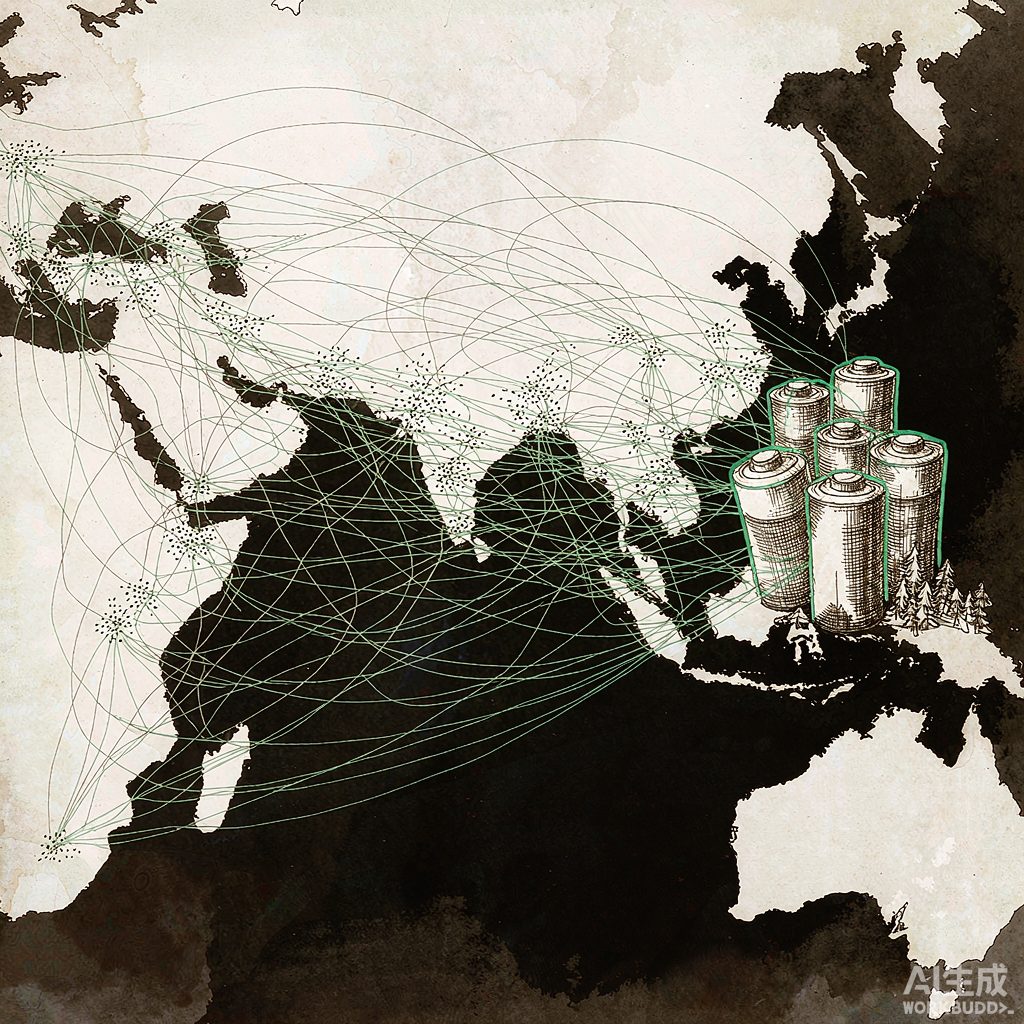
01Origins and a Hardship-Filled Youth
In March 1968, Robin Zeng was born in Lankou village, Feiluan commune, Ningde county, Fujian province (today Feiluan town, Jiaocheng district, Ningde city). Surrounded by mountains, with more hills than flat land and reachable only by a winding mountain path, the village was not wired for electricity until the late 1980s. Many households were Catholic, yet faith never brought prosperity. The Zengs were an ordinary farming family; his father, Zeng Qingchang, had kept the village accounts and was reckoned a capable man, but with eight children to feed, money was always tight. Quiet and bookish from childhood, Zeng blistered his hands on the hoe before his father asked him, 'Do you want to study, or be a farmer?' He answered, 'Study.'
Study, though, demanded talent. Zeng topped his class as a boy and loved the bonus questions on exam papers, for only by answering every one correctly could he show his real ability. In 1982 he was admitted to Ningde No. 1 High School, a provincial key school, where he became lifelong friends with a classmate, Huang Shilin. In 1985, ranked first in his school, he entered the Department of Ship Engineering at Shanghai Jiao Tong University. In those days, to get into Shanghai Jiao Tong and study shipbuilding was, to his village, a near guarantee of a life on the open sea, far from the isolated mountain hamlet.
After graduating in 1989 he was assigned to a state-owned enterprise in Fuzhou, the most respectable outcome for a child from the hills. Yet only three months later Zeng quit his iron rice bowl and headed south alone to Dongguan, Guangdong, taking an engineering post at a foreign-funded factory called SAE Magnetics. The plant made hard-disk read-write heads and was the Hong Kong subsidiary of Japan's TDK (Tokyo Denki Kagaku), nothing to do with ships. The villagers could not understand it: having scrambled out of the fields, why smash his own rice bowl? He never explained. That act of 'smashing' brought him the two mentors who would later reshape the global battery landscape.
02Where It Began: ATL and the Hard Road of Polymer Lithium Batteries
At SAE Magnetics, Zeng met the first of the mentors who would shape his life, his boss Chen Tanghua (a chemistry PhD from National Taiwan University and a Berkeley alumnus). In 1994 a newly appointed director, Zhang Yujie (electrical engineering from NTU, PhD from the University of Notre Dame, formerly at Ford and IBM), joined from outside. The two Taiwanese mentors taught him everything, sending him to the United States to study and pushing him to study part-time. While buried in the production line he earned a master's from South China University of Technology (2001) and a doctorate from the Institute of Physics at the Chinese Academy of Sciences (2006, under Academician Chen Liquan, focusing on lithium-ion batteries). In a decade he rose from technician to the plant's youngest engineering director, and its first from mainland China.
In 1999 the consumer-electronics boom was just starting. SAE's executive president, Liang Shaokang, had long seen the potential in batteries for mobile phones and MP3 players; when his proposal was vetoed by the Japanese parent, he teamed up with Chen Tanghua and Zhang Yujie to strike out on his own. They registered Amperex Technology Limited (ATL) in Hong Kong, with their first factory in Baima, Dongguan. Chen Tanghua became president and Zeng executive vice-president in charge of product development. Sony and Panasonic then monopolised cylindrical and prismatic cells, so ATL chose the differentiated path of thin, flexible polymer lithium batteries.
Real disaster struck in the first year. The team put up roughly US$1 million, nearly 40% of ATL's start-up capital, to buy polymer lithium-battery patents from Bell Labs in the United States. Yet batteries made to the formula swelled and deformed after repeated charge-discharge cycles and were simply not commercial. When they went back to ask, Bell threw up its hands: this was a 'world problem,' unsolved by any of the more than twenty licensees worldwide. With over a million dollars about to go down the drain, the infant company faced ruin. Zeng refused to accept fate; with a dozen-odd engineers he experimented day and night in a stairwell, finally pinning the fault on the electrolyte composition and mixing a new formula himself. ATL became the only one of the twenty-plus licensees to reach mass production.
The technical breakthrough let ATL find its footing. In 2003 Zeng led the development of odd-shaped polymer lithium batteries for Apple's iPod, winning an order for 18 million iPod cells. In 2004 ATL formally entered Apple's supply chain, a partnership that lasted fifteen years. Offering half the price of Korean cells with double the capacity, ATL quickly became the benchmark for phone batteries; Samsung, Huawei and vivo followed as customers, and its market share once reached 50%.
03The Hardest Pass: Enduring After the Acquisition, and Starting Again
In 2005 ATL's investors suddenly pulled out, and the cash chain nearly snapped. Zeng sought help everywhere, and in the end Japan's TDK Group bought all of ATL's shares for US$100 million, the very 'mentor' from whom he had bought patents for a million dollars now his boss. The Chinese team stayed on to run the business, and Zeng later became a senior vice-president of TDK, effectively 'working for the Japanese.' This patience, this swallowing of pride, lasted six years.
The turning point came from policy. From 2007 China used subsidies to support new-energy vehicles, and Zeng judged that where a phone uses one cell a car uses hundreds or thousands, so power batteries were a far bigger market than consumer cells, and foreign firms would likely be shut out of the subsidies. In 2011 the Catalogue for the Guidance of Foreign Investment Industries explicitly restricted wholly foreign-owned production of automotive power batteries. Led by Zhang Yujie, ATL spun off its power-battery division, and Zeng founded Contemporary Amperex Technology Co., Limited (CATL, the extra 'C' standing for 'Contemporary') in his hometown of Ningde. ATL initially held only 15% of the shares, then progressively cut its ties, and by 2015 the equity was 100% Chinese-owned.
The toughest pass was BMW. In 2012, barely a year old, CATL won the battery order for BMW Brilliance's Zinoro electric car, a fledgling Chinese battery maker entering the world's most demanding supply chain, almost a miracle. BMW threw over 800 pages of production standards at them, entirely in German, to be digested clause by clause, definitions and symbols included. Zeng personally led the team on the front line, spending about two years to run the full process of R&D, design, development, certification and testing; BMW also stationed senior engineers on site for over two years to help build the system. The battle won not just an order but a benchmark against the world's highest standards, and soon BAIC, Geely, Changan and others came calling.
04The Comeback Blow: Tying to BMW, Betting on NCM, and Reaching the Top of the World
Beyond the technical push, Zeng placed two strategic bets. First, when LFP was the mainstream, he judged that for passenger cars to spread, range would be the selling point, and he held to the high-energy-density NCM chemistry, while keeping a foot in both camps, since for commercial buses he still pushed LFP. Second, he was convinced China's subsidies would tilt toward energy density. In 2015 policy folded battery-system energy density into the subsidy calculation, NCM got a high coefficient, and the scales tipped CATL's way; that same year the Ministry of Industry and Information Technology's 'power-battery white list' excluded Korean and Japanese makers such as Samsung and LG from subsidies, and CATL rode the wave to third place globally in installations.
In 2017 CATL's power-battery shipments overtook Panasonic to reach first in the world. On 11 June 2018 it listed on the ChiNext board of the Shenzhen Stock Exchange, raising RMB 13.1 billion and opening at a market capitalisation of RMB 131.2 billion, soon exceeding RMB 1 trillion. From a boy in the mountains to the 'CATL King,' Zeng built two companies and made three bold bets, each placed exactly where the gears of the era meshed most precisely.
05The Lithium-Price Surge and the Battle to Defend Margins
Reaching the throne did not mean resting easy. From 2021 the prices of raw materials such as lithium carbonate soared, hitting RMB 600,000 a tonne at one point in 2022. CATL's gross margin in a single quarter was squeezed below 15%, and for the full year it was 20.3%, nearly half the 36% peak of 2017. The gross margin of its power-battery business slipped from 22% in 2021 to 17.17%. Capital markets wobbled in step: the share price fell steadily from its RMB 692 high, and market cap once dipped below RMB 900 billion, almost halving. Speculation upstream by 'some firms chasing only quick profits' left CATL in the middle and the carmakers downstream equally breathless, captured exactly by GAC chairman Zeng Qinghong's line that 'carmakers are all working for CATL.'
Zeng's counterattack had two prongs. Internally, from the second quarter he linked battery prices to lithium prices for the carmakers, passing the increase downstream; by the fourth quarter average power-battery prices were about 30% above the first quarter and gross margin recovered to 22.6%. Externally, in February 2023 he launched the 'lithium-mine rebate' plan: for three years, some power batteries would be settled at RMB 200,000 per tonne of lithium carbonate, in exchange for carmakers committing roughly 80% of their procurement volume, in essence returning the incremental profit from its own mines to valued customers and locking in long-term orders. At the same time the company paid up for lithium mines in Yichun, Jiangxi, and Sinuowei, Sichuan, and used a 'mine resources plus urban mines (recycling)' double supply to lock in costs. By 2025, as lithium prices fell and scale kicked in, CATL's overall gross margin was back above 25%, and the margin-defence battle was won.
06Company History (I), 1999-2011: From Bell Labs' 'World Problem' to the Eve of the Spin-off
CATL's origin is not in Ningde but in Dongguan. In 1999 Zeng, with Liang Shaokang and Chen Tanghua, registered Amperex Technology Limited (ATL) in Hong Kong, with its first factory in Baima, Dongguan, betting on the polymer lithium-battery route that Sony and Panasonic had not yet monopolised. In its first year the venture faced an existential crisis: the team put up about US$1 million, some 40% of the start-up capital, to buy polymer lithium-battery patents from Bell Labs in the United States, only to find that batteries made to the formula swelled and deformed after repeated cycling. None of the twenty-plus licensees worldwide had solved it, and Bell Labs threw up its hands, calling it a 'world problem.' Zeng refused to accept fate; with a dozen-odd engineers he experimented day and night in a stairwell, finally tracing the fault to the electrolyte and mixing his own formula, becoming the only licensee to reach mass production and turning round to file new patents of his own. This fight established ATL's engineering-first identity and taught Zeng thereafter to bet on method, not luck, when cornered.
After the technical breakthrough came the order breakthrough. In 2003 Zeng led the development of odd-shaped polymer lithium batteries for Apple's iPod, winning an order of as many as 18 million iPod cells; in 2004 ATL formally joined Apple's supply chain in a partnership lasting fifteen years. With prices half those of Korean cells and double the capacity, ATL quickly became the benchmark for phone batteries, and Samsung, Huawei and vivo became customers, its share once reaching 50%. Through all this Zeng studied while he built: a master's in electronic and information engineering from South China University of Technology in 2001, and a doctorate in condensed-matter physics from the Institute of Physics, Chinese Academy of Sciences, in 2006 under Academician Chen Liquan, becoming a 'battery expert' who understood both the production line and electrochemistry. In 2005 ATL's investors suddenly withdrew and the cash chain nearly broke; in the end Japan's TDK Group bought all the equity for US$100 million, the Chinese team stayed to run things, and Zeng later became a senior vice-president of TDK, 'working for the Japanese' for a full six years. That patience taught him, deeply, that 'in business you must ultimately be your own master.'
The turning point came from policy. From 2007 China used subsidies to back new-energy vehicles, and Zeng judged that a phone takes one cell while a car takes hundreds or thousands, so power batteries were a far larger market than consumer cells, and foreign firms would likely be excluded from the subsidies. In 2011 the Catalogue for the Guidance of Foreign Investment Industries explicitly limited wholly foreign-owned production of automotive power batteries. Led by Zhang Yujie (lifetime honorary chairman), ATL spun off its power-battery division, and Zeng founded Contemporary Amperex Technology Co., Limited (CATL, the extra 'C' for 'Contemporary') in his hometown of Ningde. ATL initially held just 15% of the shares, then progressively cut its ties, and by 2015 the equity was 100% Chinese-owned. This step both dodged the ceiling on foreign-investor favours and set a village-born enterprise exactly on the gear-tooth of the era.
07Company History (II), 2011-2018: BMW's 'Graduation Certificate,' the White-List Dividend, and the Bell at the Shenzhen Exchange
Barely a year old, CATL met its decisive battle. In 2012 BMW Brilliance was looking for a battery supplier for its domestic electric car, the Zinoro; Panasonic was too expensive and domestic makers could not meet the standard, so, almost on a whim, they approached this start-up. BMW threw over 800 pages of entirely German production standards, to be chewed through clause by clause, definitions and symbols included. Zeng personally led the team on the front line, spending about two years to run the full process of R&D, design, development, certification and testing; BMW also stationed senior engineers on site for over two years to help build the system. In 2014 the BMW Zinoro, powered by CATL's NCM batteries, went into service, and 'BMW supplier' instantly became a gleaming business card, with BAIC, Geely, Changan and Yutong soon following. Zeng later recalled that what truly excited him was not the small order but this 'graduation certificate,' a benchmark against the world's strictest carmaker, ten times more valuable than the order itself.
Beyond the technical fight, Zeng placed two strategic bets. First, when LFP dominated, he judged that for passenger cars to spread, range was the selling point, and held to the high-energy-density NCM route, keeping a foot in both camps, since for commercial buses he still pushed LFP. Second, he was certain China's subsidies would tilt toward energy density. In 2015 policy folded battery-system energy density into the subsidy test, NCM earned a high coefficient, and the scales tipped CATL's way; that same year the MIIT 'power-battery white list' shut Korean and Japanese makers such as Samsung and LG out of subsidies, and four-year-old CATL rode the wave to third in the world in installations. That year the company completed its joint-stock reform, renamed itself Contemporary Amperex Technology Co., Limited, and made its equity 100% Chinese-owned, with the policy dividend and its technology-route judgement resonating together.
2017 was the year of the summit: CATL's power-battery shipments passed Panasonic to rank first in the world, and its domestic share overtook BYD; that year revenue was nearly RMB 20 billion and net profit about RMB 4.2 billion. On 11 June 2018 CATL listed on the ChiNext board of the Shenzhen Stock Exchange, winning IPO approval in just twenty-four days, at an issue price of RMB 25.14, raising RMB 13.1 billion and opening at a market cap of RMB 131.2 billion; soon its value passed RMB 1 trillion and the name 'CATL King' spread on its own. From a boy in the mountains to the helmsman of a trillion-yuan company, Zeng built two businesses and made three bold bets, all placed where the gears of the era meshed most precisely. At the listing bell he said CATL's founding aim was 'to cultivate oneself so as to help others succeed': cultivating oneself means mastering core technology, and helping others means the company's products let its customers win in the market.
08Company History (III), 2018-2022: Peak Valuation, the Sodium-Ion Gamble, and the Margin Defence Amid Soaring Lithium Prices
Reaching the throne did not mean resting easy. From 2021 lithium-carbonate and other raw-material prices rocketed, hitting RMB 600,000 a tonne at one point in 2022, a rise of over 500% in a year. CATL's power-battery gross margin slid from 22% in 2021 to around 17%, and its overall gross margin was nearly halved from the 36% peak of 2017. Capital markets shook in step: the share price fell from its RMB 692 high and market cap once dropped below RMB 900 billion, almost halving. Upstream 'some firms chasing only quick profits' left the midstream CATL and downstream carmakers equally suffocated, captured by GAC chairman Zeng Qinghong's line that 'carmakers are all working for CATL.' At July 2022's World Power Battery Conference, Zeng called the lithium surge 'capital speculation,' stressed that proven lithium reserves could yield 160 TWh of lithium batteries and were no bottleneck, and declared nickel-cobalt recovery of 99% and lithium recovery over 90%, using the recycling system to offset resource anxiety.
On the technology front, in this phase Zeng moved on multiple routes. In 2021 CATL released its first-generation sodium-ion battery, opening a diversified path beyond lithium; that same year its CTP (cell-to-pack, module-free) technology reached its third generation, lifting energy content, cutting weight and leading the industry in energy density; in extreme manufacturing, a CATL plant was named a global 'Lighthouse Factory' by the World Economic Forum, the world's first battery factory so recognised. In September 2021 CATL's market cap briefly topped RMB 1.6 trillion, edging past Kweichow Moutai to become the A-share 'king of stocks.' Against the upstream price rises, Zeng's counterattack had two prongs: internally, from the second quarter he linked prices to lithium for the carmakers, passing increases downstream and recovering margin; externally, in February 2023 he launched the 'lithium-mine rebate' plan, for three years some power batteries settled at RMB 200,000 per tonne of lithium carbonate, in return for carmakers committing roughly 80% of procurement volume, essentially returning the incremental profit of its own mines to good customers and locking long-term orders. Meanwhile the company paid up for lithium mines in Yichun, Jiangxi, and Sinuowei, Sichuan, and used a 'mine resources plus urban mines (recycling)' double supply to lock in cost.
This phase also planted the seeds of organisational culture. In 2017, riffing on Lei Jun's 'flying pig' theory, Zeng sent all staff his famous letter 'Can Pigs Really Fly?,' warning everyone that 'the wind always stops one day' and cautioning against blind arrogance in good times. Around the listing, the widely circulated calligraphy 'Stronger Is the Gambling Spirit' on his office wall was replaced by four characters from the Doctrine of the Mean, 'Pu Bo Yuan Quan,' meaning wisdom like an inexhaustible spring. The swap was read as a turn in his mindset from 'placing a bet' to 'entering the chess game,' from daring to go all-in in the fog to cashing opportunities steadily through engineering method and systemic capability. It was in these years, too, that CATL moved from follower to full rule-maker, beginning to push Chinese battery standards onto the world.
09Company History (IV), 2023-2026: Shenxing and Qilin, Choco-Swap, the Hong Kong Listing and the Global Map
In the four years from 2023 to 2026, CATL turned from a 'battery-components maker' into a 'zero-carbon technology company.' On the product side, launches came thick and fast: in 2023 the Shenxing 4C super-charging battery and the Qilin battery, which won Germany's Automotive Innovation Award; in 2024 the world's first five-year, zero-degradation Tianheng storage system at 6.25 MWh per unit, plus the Shenxing Plus battery, with 1,000 km range and 4C super-charging, and the Xiaoyao range-extender hybrid battery, with over 400 km of pure-electric range; in 2025 the second-generation Shenxing super-charging battery, with a peak of 12C and 800 km range, Shenxing Pro, Xiaoyao Dual-Core and the Sodium New power battery. On replenishment, the company bet on 'battery-swap separation' via Choco-Swap, planning 10,000 swap stations in China by end-2027 and building the ecosystem with GAC, BAIC, Changan, Didi and others; by 2025 over 1,000 stations had been built, with Chongqing the first to turn a profit. On technology, Zeng advanced a two-wheel drive of 'LFP for storage and lower-end passenger cars, NCM holding the high end and long range,' and in November 2025 announced mass production of fifth-generation LFP, 'Super Iron Lithium,' pushing LFP's performance boundary toward NCM levels.
Capital markets reached an 'A+H' milestone. On 20 May 2025 CATL listed on the Hong Kong Stock Exchange (3750.HK) at an issue price of HK$263, with a global offering of about 136 million shares raising roughly HK$35.657 billion; on its first day it closed at HK$306.2, up 16.43%, for a total market cap above HK$1.39 trillion, the world's largest new share offering of the year, and just 128 days from filing to listing. At the ceremony Zeng said: 'CATL is not only a battery-components maker, but a provider of system solutions, and aspires to be a zero-carbon technology company.' The proceeds mainly fund phase one and two of the Hungarian plant, the Spanish plant with Stellantis, and the Indonesian supply-chain project, ammunition for overseas expansion.
Financials and the global map bore fruit in 2025 and 2026. In 2025 CATL's revenue was RMB 423.7 billion, up 17% year on year; net profit attributable to parent RMB 72.2 billion, up 42%, earning nearly RMB 200 million a day, more than the combined profit of thirteen listed carmakers. R&D investment was RMB 22.1 billion, over RMB 90 billion cumulatively in a decade, with about 23,000 R&D staff and more than 54,500 patents owned or pending. Lithium-battery sales were 661 GWh, up 39%; global power-battery share 39.2%, first for nine straight years, with overseas share rising to 30%; energy-storage shipment share 30.4%, first for five straight years. Capacity reached 772 GWh with 321 GWh under construction and utilisation of 96.9%. The first half of 2026 kept growing fast: revenue RMB 276.9 billion, up 55%, net profit attributable to parent RMB 43.3 billion, up 42%; per SNE Research, overseas share was 33.7% and domestic passenger-car installation share 46.7% in January-May 2026. Overseas plants entered a dense harvest: the German Erfurt plant (14 GWh) turned a profit in 2025; the Hungarian Debrecen plant (investment EUR 7.34 billion, planned 100 GWh) started its module line in June 2026; in Spain, CATL and Stellantis each hold 50% (investment EUR 4.1 billion, 50 GWh); the Indonesian project's initial phase is 6.9 GWh; and via the LRS licensing model CATL is building a Michigan LFP plant with Ford, starting production June 2026. From exporter to local manufacturer, the 'European triangle' and Southeast Asian footprint effectively circumvent the West's 'de-China-ification' barriers.
10Leadership Style and Character: The Dual DNA of 'Stronger Gambling Spirit,' Engineering Mindset and the Technical Businessman
The core label of Zeng's leadership is 'Stronger Is the Gambling Spirit,' but this 'gambling' was never blind betting, it was a repeatable method of judgement. The story of that calligraphy is theatrical: it was originally 'Firm Is the Gambling Spirit,' a gift from a mahjong friend to his mentor Zhang Yujie on his sixtieth birthday; Zeng loved it so much he sneaked it into his own office while the mentor was away, and Zhang, with no choice, wrote 'Stronger Is the Gambling Spirit' to swap it back. It later spread through a Fanfou post by Wang Xing, and the world learned of it. Zeng once had a classic exchange with Zhang: the mentor said you need at least 50% certainty to act, but Zeng said 'I'll do something with just 20% certainty,' because gambling, to him, rests on the 'five knowings' (knowledge, common sense, insight, courage, appreciation): start at 20%, and it grows to 50% or 70% as you work. Asked why he didn't hang the Fujian favourite 'Only Those Who Strive Will Win,' he answered, 'Striving alone isn't enough, that's manual labour; gambling is mental labour.' The line neatly sums up his philosophy: dare to move at low certainty, yet raise the odds with every step.
Running alongside 'gambling' is an almost obsessive 'engineering mindset.' Zeng has openly stressed that as the company grew from small to world-class scale it had to 'overcome empiricism and champion engineering methods,' pushing risk forward, making problems visible, making results verifiable. He even says his two startups felt like 'moving from one chaos to another,' and that he relied on data, models and simulation instead of gut calls. He runs R&D and business on 'two logics': tolerant of scientists, encouraging radical, ahead-of-the-curve ideas where mistakes are fine, but extremely strict with the commercial system. He champions 'adversary teams' that exist only to pick holes, judging new technology by trying to falsify rather than confirm, and rejects engineers 'parroting others,' demanding they return to first principles and judge independently. In 2026 he laid out a three-tier theory of innovation, breaking the boundary of scientific understanding, breakthroughs in engineering application, and refinement of existing technology, and admitted CATL had 'only achieved stage results,' still far from a fully sustainable energy system.
Organizationally, CATL is a blend of a 'patriarchal' founder and a highly efficient execution machine. People close to the company say 'Robin is the highest decision-making body,' he decides every matter, large or small, and everyone else executes. He manages through three vice-chairmen, one president and seven co-presidents, communicates frequently with over eighty directors, and sits in on the weekly project-review meeting. The company models neither IBM, Huawei nor Alibaba; new-hire training reads 'Cultivate Oneself to Help Others,' compiled from his remarks. A separate 'integrated management department' of roughly one to two hundred acts like 'the boss's eyes,' reaching deep to gather operational information. He has told subordinates, 'One wrong call on a production line I've sunk money into is a huge loss.' This centralisation and extreme control let a long-cycle, heavy-asset, low-tolerance manufacturing business run at speed, yet some former managers rated its management 'a complete mess.' That is the root of the starkly different public readings of his character: some call him gentle and refined, others say his temper is like fire.
In private, Zeng is a quintessential Fujian businessman and 'tech nerd': extremely low-profile, rarely giving public speeches, yet daring to bet big; he calls himself a 'technical businessman,' stressing that such a person must first be an excellent engineer. His devotion to R&D is near-obsessive: in 2025 R&D was RMB 22.1 billion, 5.23% of revenue, over RMB 90 billion cumulatively in a decade, with more than 20,000 R&D staff and over 50,000 patents. He uses the 'carrying pole' to mean perfecting known technology and the 'lottery ticket' to mean pre-research on disruptive technology, demanding researchers 'buy a hundred lottery tickets and win on more than ninety.' A sense of crisis is another constant: his 2017 all-staff letter 'Can Pigs Really Fly?' warned a thriving organisation that 'the wind will stop,' and he often says to 'assume you'll die tomorrow' and 'repair the ship in fair weather.' His rivalry and cooperation with Wang Chuanfu is especially revealing of his character: CATL follows the battery world's 'Intel' route of open supply, while BYD goes 'vertically closed,' making everything itself. In 2026 the two clashed head-on: CATL's CTO said 'using LFP in a pure-EV above RMB 250,000 is downspeccing,' and BYD's battery CTO rebutted him on the spot, while a 19 GWh Middle East storage order shifted from CATL alone to being split between BYD and Sungrow. Zeng, without naming names, criticised the industry's 'low-price competition and short-sighted impatience,' yet he and Wang jointly invest in Hunan Yuneng and share upstream suppliers, rivals on the same stage who also lift each other, the 'most respected opponent.'
11The Secret of Success: Eight Replicable Lessons, from the 'Five Knowings' to Systematic Output
First, build the 'bet' on cognition, not luck. Zeng's three bold wagers, on NCM, on LFP's return, on battery-swap and sodium, each rested on the 'five knowings' and kept a hedge: when betting on power batteries he kept the consumer-electronics cash flow; when betting on NCM he kept the LFP lines; when betting on lithium resources he built out sodium. Daring to bet at low certainty is guts; holding the line with a hedge is skill, and this method can be replicated organisationally.
Second, cash the bets with engineering methods. Without an engineering mindset to discipline it, gambling turns expansion into wasted lines and technology bets into blind punts. CATL runs its vast system stably on data, simulation and extreme manufacturing, pushing single-cell failure rates from PPM toward PPB, and in 2025, on 772 GWh of capacity, still hit 96.9% utilisation. Daring to bet on the future and cashing it through engineering is what lets it ride out cycles.
Third, grind away at 'graduation-certificate' grade customers. BMW's 800 pages of German standards and two years on-site bought not a small order but a benchmark against the world's strictest carmaker; later Tesla, Mercedes-Benz, Volkswagen, Ford and Toyota all became customers. CATL's success proves it: only those who crack the hard bones others cannot earn the positions others cannot take away.
Fourth, let policy dividends and technology routes resonate. The 2011 foreign-investment limits spawned the spin-off, the 2015 white list excluded Korean and Japanese makers, the 2017 subsidies tilted to energy density, and each time Zeng judged early and staked his position. But the dividend was an external cause; the key was that he had long laid out both NCM and LFP, so when the wind came, capacity and technology were ready.
Fifth, invest in R&D without counting short-term return. Over RMB 90 billion cumulatively in a decade, RMB 22.1 billion in 2025, over 50,000 patents, more than 20,000 R&D staff; he lets scientists make mistakes and encourages 'lottery-ticket' style frontier research. Intense R&D is the moat and the confidence to still 'cap the technology' when Wang Chuanfu's cost crush bears down.
Sixth, sell ecosystems and standards, not just products. Choco-Swap, the Xiaoyao range-extender, the Tianheng storage system, and LRS technology licensing, the Ford Michigan plant puts in no money and takes no stake, only paying licence fees, lift competition from 'cell price' to 'system solutions and standard-setting.' In 2025 integrated energy-storage shipments rose over 160% year on year, the fruit of this upgrade in dimension.
Seventh, bind the supply chain rather than hog the gains. 'Cultivate oneself to help others' in practice means equity ties, large prepayments and joint R&D with chain firms such as Hunan Yuneng, using the 'CATL Chain' to gather nearly a hundred upstream and downstream companies in Ningde, turning the small city into a 'capital of new-energy batteries.' Weaving a network of friends is harder to disrupt than standing alone on top.
Eighth, internalise the sense of crisis as organisational discipline. Issuing 'Can Pigs Really Fly?' in good times, the constant 'assume you'll die tomorrow,' and repairing the ship in fair weather let CATL, when lithium prices spiked and the share price halved, hit back fast with lithium-price linkage and the lithium-mine rebate, lifting gross margin from 15% back above 25%. In sum: about half of Zeng's success is replicable, the 'five knowings' method, engineering method, R&D discipline and chain-leader thinking can all be learned; about half is the product of era and luck, China's new-energy national fortune, the subsidy window, and the simultaneous demand explosion in consumer electronics and power batteries all arrived at once, and happened to be caught by a village boy who dared to bet, knew how to calculate and was willing to grind. Another person might not have meshed them all.
12Personal Life, Family and Marriage
Zeng is extremely low-profile and rarely speaks of his family; public sources only record that he came from a farming family, his father was the village accountant, and he had seven siblings (eight children in all). He believes in the engineer's way and calls himself a 'technical businessman,' a technical businessman must first be an excellent engineer. The four characters 'Stronger Is the Gambling Spirit' on his office wall have a dramatic origin: they were first 'Firm Is the Gambling Spirit,' written for his mentor Zhang Yujie's sixtieth birthday (Zhang loved mahjong and dared to gamble); Zeng liked them so much he sneaked them into his own office while the mentor was away, and Zhang, resigned, had someone write 'Stronger Is the Gambling Spirit' to swap them back. The story spread via a Fanfou post by Wang Xing, and the world learned of it. Asked why he didn't hang the Fujian businessman's common 'Only Those Who Strive Will Win,' he answered, 'Striving alone isn't enough, that's manual labour; gambling is mental labour.' He explained that the gambling spirit comes from the 'five knowings' (knowledge, common sense, insight, courage, appreciation), not blind risk-taking.
He and BYD's Wang Chuanfu are the twin titans of China's power batteries, yet rivals and partners on very different paths: CATL takes the 'open supply' route, selling to all carmakers, while Wang takes the 'vertically closed' route of making everything himself. Zeng advances on both fronts and in recent years has increased his LFP bets; Wang has gone almost all-in on LFP. In 2026 the two confronted each other head-on: CATL released its third-generation Shenxing super-charging and third-generation Qilin batteries, and Wang declared 'no one understands batteries better than BYD'; CATL's CTO said 'using LFP in a pure-EV above RMB 250,000 is downspeccing,' and BYD's battery CTO rebutted him on the spot. They may not be friends, but both are architects of the industry's rise. Zeng is also keen on philanthropy: in 2025 he donated a record sum to Shanghai Jiao Tong University, and is known for the Fujian business community's style of hard work and low profile.
13National Significance
To China, CATL is the 'ballast' on two fronts, power batteries and energy storage. In 2025 its global power-battery usage share was 39.2%, first in the world for nine straight years, with overseas share also rising to 30.0%; that year lithium-battery sales were 661 GWh, of which 541 GWh were power batteries. Energy-storage battery shipment share was 30.4%, first for five straight years. In China, of every two new-energy vehicles sold, about one carries CATL batteries; worldwide, of every three, about one uses its batteries.
On the supply chain, China already controls about 70% of global lithium-processing capacity, and six of the world's top ten power-battery firms are Chinese. CATL, with its 'mine resources plus urban mines' double supply, recycling over 200,000 tonnes of spent batteries a year at 99.6% nickel-cobalt-manganese recovery and 96.5% lithium recovery, has built a recyclable raw-material moat; and through its LRS (licence, licence, service) model it exports technology to Ford and others, pushing Chinese standards worldwide. Overseas, the German Thuringia plant (14 GWh, profitable in 2025), the Hungarian Debrecen plant (planned 100 GWh, with phase one's 40 GWh in mass production in early 2026, its capacity locked by Mercedes-Benz, BMW and Stellantis), and the Spanish Zaragoza joint-venture plant (50 GWh LFP, starting production end-2026) form a 'European triangle,' turning from exporter to local manufacturer and effectively circumventing the West's 'de-China-ification' barriers. With 2025 revenue of RMB 423.7 billion and net profit attributable to parent of RMB 72.2 billion (nearly RMB 200 million a day), it became the first A-share tech stock to top a RMB 2 trillion market cap, the tightest meshing of China's new-energy national fortune with a single company's fate.
14Controversies
Controversies in public reports mainly include: the Japanese-capital background after ATL's acquisition by TDK and its early equity structure were debated; upstream lithium-mine moves and the 'lithium-mine rebate' were seen by some rivals as a price-war tactic; the profit-split dispute of carmakers 'working for CATL' spurred several automakers to develop their own batteries and pursue 'de-CATL-ification'; plant-building in Europe and America and technology transfer face scrutiny; and the 2022 share-price halving and earnings swings drew questions. As of compilation, no settled conclusion had emerged.
| Market cap | A-share market cap roughly RMB 2.0 trillion (first crossed RMB 2 trillion in April 2026, the first A-share tech stock to reach that mark; combined A+H roughly RMB 1.9 trillion as of end-March 2026, per Xueqiu's comparison of the two leaders) |
|---|---|
| 2025 revenue | RMB 423.702 billion (up 17.04% year on year; source: CATL 2025 annual report, disclosed March 2026) |
| 2025 net profit | Net profit attributable to parent RMB 72.201 billion (up 42.28% year on year, nearly RMB 200 million net earned per day); operating cash flow RMB 133.2 billion |
| Equity / control | Robin Zeng holds 22.45% of shares through Xiamen Ruiting Investment Co., Ltd. (100% owned), making him the actual controller; his personal cash dividends in 2025 were about RMB 8.1 billion. Global power-battery market share 39.2% (first for 9 consecutive years), overseas share 30.0%; energy-storage battery shipment share 30.4% (first for 5 consecutive years) |
- CATL 2025 Annual Report (disclosed March 2026) - revenue RMB 423.7 billion, net profit RMB 72.2 billion, lithium-battery sales 661 GWh, market share 39.2%, R&D RMB 22.1 billion
- Economic Information Daily / Xinhua, 'CATL Officially Lists on the Hong Kong Stock Exchange' (20 May 2025) - Hong Kong listing, issue price HK$263, funds raised HK$35.657 billion, first-day gain 16.43%
- National Business Daily, 'Earning RMB 200 Million a Day! The Trillion-Yuan CATL, New Signals' (March 2026) - 2025 report details, dividends, equity structure, Choco-Swap stations
- Sina Finance, 'Zeng Yuqun: Not the Gambling King, Not the CATL King, but a Sage Within and a King Without' (November 2022) - ATL's founding, the Bell Labs breakthrough, the BMW order, the origin of his 'firm gambling spirit'
- CommonWealth Magazine (Taiwan), 'China's Third-Richest Man, CATL's Zeng Yuqun, Born of a 'Taiwanese Mentor' Legacy' (2022) - the mentor bond between Zhang Yujie and Chen Tanghua
- China Energy News, 'Why CATL's 'Lithium-Mine Rebate'' (20 March 2023) - lithium prices, gross margin, the lithium-mine rebate plan
- Yicai, 'Chinese Companies in the Reshaping of Global Industrial and Supply Chains' (2025) - factories in Germany, Hungary and Spain, and localisation
- 21st Century Business Herald, 'The CATL King Gets Anxious' (24 April 2026) - rivalry and cooperation with Wang Chuanfu, market cap topping RMB 2 trillion in 2026
- CNR.cn, 'CATL Lists on the Hong Kong Stock Exchange, Closing Up 16.43% on Its First Day' (20 May 2025) - Hong Kong stock 3750.HK, issue price HK$263, funds raised HK$35.657 billion, first-day gain 16.43%, market cap HK$1.39 trillion
- CATL 2025 Annual Report (disclosed 9 March 2026) - revenue RMB 423.7 billion, net profit RMB 72.2 billion, R&D RMB 22.1 billion, 54,538 patents, market share 39.2%, energy storage 30.4%, lithium-battery sales 661 GWh, capacity 772 GWh
- BOCOM International, 'Full-Year Results Beat Expectations, Profitability Stays Resilient' (10 March 2026) - 2025 financial breakdown, capacity utilisation 96.9%, progress of Hungary/Spain/Indonesia factories, 2026 shipment outlook 925 GWh
- China Economic Net, 'When Zeng Yuqun Sat with 71 Top Scientists' (13 February 2026) - R&D system, the carrying pole and the lottery ticket, the three tiers of scientific spirit, R&D spend over RMB 52 billion in the past three years
- Shanghai Securities News, 'Cultivate Oneself to Help Others, Forge a Kingdom from the Chain' (11 December 2024) - BMW Zinoro, CTP and the LFP return, Choco-Swap, the nurturing of Hunan Yuneng, the Stellantis joint-venture plant in Spain
- National Business Daily, 'What Is the Relationship between Zeng Yuqun and Wang Chuanfu' (2026) - the rivalry and cooperation of the two titans, domestic market share, the debate over whether pure-EVs above RMB 250,000 using LFP amounts to 'downspeccing,' and the RTC Middle East 19 GWh order changing hands
- Sina Finance / Phoenix, 'GAC Chairman Quips That Carmakers Are Working for CATL' (21 July 2022) - Zeng Qinghong's memorable line, Zeng Yuqun's response on 'capital speculation,' lithium recovery rate, and one in every three EVs worldwide using its batteries
- Hong Kong Commercial Daily, 'From Single-Product Export to Systematic Output' (2026) - 2026 H1 revenue RMB 276.9 billion, net profit RMB 43.3 billion, overseas share 33.7%, Germany profitable / Hungary module line in production
- Baidu Baike, 'Zeng Yuqun' entry (continuously updated) - born in Ningde in 1968, ship engineering at Shanghai Jiao Tong University in 1985/1989, a decade at SAE Magnetics, TDK's US$100 million acquisition, equity structure
- Cao Bing and Song Wei, 'The Contradictory Zeng Yuqun: Gambling Spirit, Engineering Mindset and Organisation' (2026) - patriarch-style decision-making, the integrated management office, the 'five knowings,' and the swap of the 'Pu Bo Yuan Quan' calligraphy
Zhang Xinghai
Springs, then microcars, then electric vehicles — and handing half his company’s fate to Huawei, the boldest alliance in China’s auto industry.
01Family and Early Years: A Country Boy and the Spark of a Single Spring
Zhang Xinghai was born in August 1963 into a farming family in Fenghuang Township, Ba County, Chongqing (today part of Fenghuang Township in Shapingba District). He grew up in the countryside, accustomed to villagers leaving at dawn and returning at dusk, carrying loads on shoulder poles. The first time he saw a tractor rumbling down a village road, the farm boy formed a simple idea: if farmers could mechanise their hauling and ploughing, if they could build a vehicle with four wheels, people from the mountains could leave their villages and see the wider world. That seed later grew into a dream of building cars.
He had two elder brothers, Zhang Xingming and Zhang Xingli. The three brothers were close, and that bond became the foundation for their later joint venture. After Reform and Opening, the private economy was unleashed, and Zhang Xinghai's seemingly far-fetched dream gained a chance to take root. But the starting point could not have been lower: no capital, no technology, no factory — only a few pairs of willing hands ready for hard labour and a township workshop.
02The Founding Bet: RMB 8,000 and the Localisation of the Square-Wire Retaining Spring
In September 1986, the 23-year-old Zhang Xinghai joined his two elder brothers, Zhang Xingming and Zhang Xingli, pooling the family's savings of RMB 8,000 to throw up a workshop on a bare patch of land back home. They named it the Chongqing Ba County Fenghuang Electrical Appliance Spring Factory, producing springs for household appliances and car seats. This was the predecessor of Seres. Production was entirely by hand; Zhang Xinghai described that period as an age of 'slash-and-burn, carrying loads on the shoulder', with the brothers all pitching in, staking nearly their lives on it.
From the earliest days, Zhang Xinghai was convinced that for the spring factory to survive it had to be 'absolutely leading'. He heard that a converted military plant in the Northeast had long imported from Japan a type of square-wire retaining spring used in washing-machine clutches, at one or two dollars apiece. The prevailing view was that 'China cannot make a square-wire retaining spring matching foreign performance'. Refusing to accept this, Zhang mobilised workers and outside technicians to tackle the problem again and again. In the summer of 1988, he and his third brother Zhang Xingming shouldered six crates of the newly developed square-wire retaining springs and travelled to the research institute of Shanchuan Machinery Works in Longchang for mechanical-property, fatigue-endurance and salt-spray tests. When the vehicle broke down, the two of them hauled the 130 jin (about 65 kg) load of springs on foot for five li (about 2.5 km) of mountain road.
Effort rewards the determined — this domestic square-wire retaining spring not only passed professional certification and filled a domestic gap, but drove the price down from one or two dollars to one or two yuan, and captured roughly a 90% share of the Chinese market on the strength of its quality and low price, earning Zhang Xinghai his first pot of gold. The factory was upgraded into Chongqing Changan Shock Absorber Co., producing shock absorbers for motorcycles, microvans and mopeds; within a few years he made it the industry leader, and its self-developed first-generation air-cushion rear shock absorber filled a domestic gap and was exported in volume.
03From Components to Whole Vehicles: Crossing the Threshold with Dongfeng
After building his shock-absorber business into that of the 'Spring King', Zhang Xinghai was not content to remain a supplier. He first moved into motorcycles, founding Xinganjue Motorcycle Company in 2002, but ran straight into the nationwide 'motorcycle restrictions' and was forced to turn to four wheels. The real leap came with a pivotal decision: to build cars through a joint venture with a central state-owned enterprise.
In June 2003, Zhang Xinghai formed a joint venture with Dongfeng Motor, establishing Dongfeng Yu'an Vehicle Co. in Shiyan, Hubei, to produce microcars under the 'Dongfeng Sokon' (DFSK) brand. It was the first mixed-ownership carmaker in China's auto industry, with Zhang Xinghai as general manager. Nobody was optimistic at the time — the microcar segment already had Changan, Wuling, Hafei and Changhe ahead of it; why should a private factory that started with springs succeed? Zhang poached people from Hanjiang Bus to build his team, step by step. In 2007 the company was renamed Chongqing Sokon Automobile Group, and its microcar output entered the national top three; by 2011, cumulative DFSK microcar sales had reached 1 million units. Transforming from a parts maker into a vehicle maker was the most critical lane change of his career.
04The Hardest Pass: The SF5's Darkest Hour — Heavy Investment, Almost Nothing to Show
In 2015, Zhang Xinghai launched the 'premium new-energy electric vehicle programme', beginning his third venture. In 2016 he registered the EV startup SF MOTORS in Silicon Valley (later renamed SERES, Seres), acquired InEVit.Inc, an electric-technology company founded by Tesla co-founder Martin Eberhard, and in 2017 bought AM General's factory, attempting to overtake rivals by a shortcut through 'Silicon Valley R&D plus Chinese smart manufacturing'. This was a genuine high-stakes gamble: according to public reports, Sokon ploughed about RMB 2.5 billion into electrification R&D and a further roughly RMB 8 billion into building an Industry 4.0 smart factory in Chongqing's Liangjiang New Area, with planned annual capacity of 150,000 units.
The opening, however, was brutal. At the April 2019 Shanghai Auto Show, the Seres brand's first SUV, the SF5, made a high-profile debut with a presale price range of RMB 278,000 to 458,000, and Zhang Xinghai set a modest target of '50,000 units a year'. But after it launched in volume in July 2020, the market was eerily cold: full-year sales were under 800 units (different estimates put it at about 700 to just over 1,000). The 150,000-unit capacity lay almost entirely idle, and every morning brought millions of yuan in depreciation. Meanwhile the company's finances went into a tailspin — revenue fell from about RMB 21.9 billion in 2017 to about RMB 14.3 billion in 2020, and in 2020 net profit attributable to shareholders showed a loss of about RMB 1.7 billion; combined losses for the four years 2020–2023 reached as high as RMB 9.835 billion. Capital markets also voted no confidence: Sokon's share price at one point lost nearly 70% from its peak.
Those years were the deepest trough of Zhang Xinghai's career: year after year of huge losses, a depressed share price, and a pessimistic outside world, while the Silicon Valley layout became unsustainable amid the external environment. He later recalled that the company had gone through three names — Yu'an, Sokon and Seres — and every lane change was 'looked down on': no one was optimistic when it made springs, no one when it formed the Dongfeng joint venture in 2003, and no one this time either when it bet on premium EVs. Innovation, he said, always grows amid being looked down on and not understood.
05The Turnaround: Staking Everything on the Huawei Card
At the juncture of 'change and survive, or stay still and perish', Zhang Xinghai made a fate-changing bet. In 2019 Huawei established its Intelligent Automotive Solution BU; that same year Zhang Xinghai sat down with Yu Chengdong, pioneering cross-industry collaboration between the automotive and ICT sectors. In 2021, Seres and Huawei bound themselves tightly together: Huawei provided the technology, brand and channels, and the two jointly built the AITO brand, with the AITO M5 unveiled at year's end.
The road was not smooth — the AITO M7 got off to a cold start in 2022, and Zhang Xinghai personally stepped in to promote it and worked with Huawei on a facelift, after which sales exploded. From 2023, the M7 and M9 sold strongly one after another, and the AITO M9 held the No. 1 spot in the RMB 500,000-plus segment for 21 consecutive months from February 2024 to December 2025. Seres finally turned from years of losses to profit: in 2024 revenue was RMB 145.176 billion with net profit attributable to shareholders of RMB 5.946 billion; in 2025 revenue reached RMB 165.054 billion (a record high) with net profit attributable to shareholders of RMB 5.957 billion, and AITO delivered over 426,000 vehicles for the year (including over 110,000 M9s, over 150,000 M8s and over 110,000 new M7s), becoming the best-selling Chinese luxury brand domestically. On 5 November 2025, Seres listed on the main board of the Hong Kong Stock Exchange (09927.HK), becoming the first luxury new-energy carmaker listed on both the A-share and H-share markets.
Zhang Xinghai attributed this comeback to 'walking alongside giants'. In July 2024, Seres paid RMB 2.5 billion to acquire the 'AITO' trademark and related patents from Huawei, shifting from passive acceptance to active control; in 2025 it went further, splashing out RMB 11.5 billion to take a 10% stake in Shenzhen Yinwang Intelligent Technology, spun off from Huawei's automotive BU (ranking alongside Avatr), binding the two sides' fates even tighter through a capital link. Faced with doubts about 'handing the soul to Huawei', he chose to answer with equity and product rather than argument.
06Corporate History (1) 1986–2002: Starting from a Single Spring, from Handicraft Workshop to 'Spring King'
Zhang Xinghai was born in August 1963 into a farming family in Fenghuang Township, Ba County, Chongqing (today part of Fenghuang Township in Shapingba District). As a boy his family was poor; because his siblings each had their own livelihoods, he alone farmed the land that fed five people, getting up in the dark at 3 a.m. every day to shoulder two baskets of vegetables over Maoshan Gorge to sell at Shuangbei on the bank of the Jialing River, and on the way back after selling he would gather 200 jin (about 100 kg) of pig fodder — a routine he endured for three full years. When he could bear it no longer, he left Fenghuang Township to join his eldest brother, who worked at a spring factory, and from then on was tied to springs. In the early days of Reform and Opening, Chongqing, as one of the first pilot cities for comprehensive economic-system reform, saw industry rapidly rising, and the twenty-something Zhang Xinghai harboured an 'ambition' disproportionate to his age — he wanted to supply springs to the Changan plant. In September 1986, the 23-year-old Zhang Xinghai joined his two elder brothers Zhang Xingming and Zhang Xingli, pooling the brothers' savings of RMB 8,000 to put up a workshop on a bare patch of land back home, named the Chongqing Ba County Fenghuang Electrical Appliance Spring Factory, producing springs for household appliances and car seats. Production was entirely by hand; he later described that period as an age of 'slash-and-burn, carrying loads on the shoulder', with the brothers all pitching in, staking nearly their lives on it.
Soon after starting, Zhang Xinghai was convinced that for the spring factory to survive it had to achieve 'absolute leadership' in its niche. As domestic household appliances took off, a converted military plant in the Northeast had long imported from Japan a type of square-wire retaining spring used in washing-machine clutches, at one or two dollars apiece, and the prevailing view was that 'China cannot make a square-wire retaining spring matching foreign performance'. Refusing to accept this, Zhang mobilised workers and outside technicians to tackle the problem again and again. In the summer of 1988, he and his third brother Zhang Xingming shouldered six crates of the newly developed square-wire retaining springs and travelled to the research institute of Shanchuan Machinery Works in Longchang for mechanical-property, fatigue-endurance and salt-spray tests; when the vehicle broke down halfway, the two hauled the 130 jin (about 65 kg) of springs on foot over five li (about 2.5 km) of mountain road. Effort rewards the determined — this domestic square-wire retaining spring not only passed professional certification and filled a domestic gap, but drove the price down from one or two dollars to one or two yuan, capturing roughly a 90% share of the Chinese market on quality and low price. To open up sales, he rode a slow green-skin train for over twenty hours to a factory in Jilin to pitch in person; on seeing the sample the other side placed an order on the spot, and without pausing to rub his swollen legs he took the contract and returned that same night. This battle made Fenghuang Spring Factory a stable supplier to Changan and other carmakers.
Once on firm footing, Zhang Xinghai soon upgraded the factory into Chongqing Changan Shock Absorber Co., producing shock absorbers for motorcycles, microvans and mopeds. In 1995 the Fenghuang Electrical Appliance Spring Factory was reorganised into Chongqing Yu'an Innovation Technology (Group) Co.; in 1996 Zhang Xinghai founded Yu'an Shock Absorber Co., formally entering the motorcycle and automotive shock-absorber field. In just six years he made it the industry leader, and its self-developed first-generation air-cushion rear shock absorber filled a domestic gap, was exported in volume, and a business office was set up in Vietnam. This experience planted two convictions in him: first, whatever you do, aim for the top of the industry, even if only a niche top; second, whatever you do must have a technological moat — if there is none, create one, or else refrain for the time being. This became the underlying logic of the methodology that let him repeatedly 'change lanes' yet never fail — the idea of 'better to be the head of a chicken than the tail of an ox'.
07Corporate History (2) 2003–2015: Building Cars with Dongfeng, DFSK Among the Microcar Top Three
After building his shock absorbers into those of the 'Spring King', Zhang Xinghai was not content to remain a supplier. Unlike private entrepreneurs such as Li Shufu and Yin Mingliang, who chose to 'go it alone, starting with sedans', he saw the huge opportunity in the microcar market but took a path no one had walked before: using the microcar as his entry point and entering the auto industry through a joint venture with a large state-owned group. On 27 June 2003, Dongfeng Motor Corporation, Dongfeng Industrial Co. and Yu'an Group formed the Dongfeng Yu'an Vehicle Co. tripartite joint venture (later renamed Dongfeng Sokon, DFSK), with Zhang Xinghai as general manager. This was the first mixed-ownership carmaker in China's auto industry, and Yu'an took a 50% stake with an investment of about RMB 50 million. A Dongfeng executive told him at the time, 'In this negotiation, you won a victory.' That a top-three domestic auto group would lower itself to negotiate a joint venture with a private firm and offer favourable terms was thanks to the reputation Zhang Xinghai had built up over the years, and it gave him his first taste of the leverage of 'riding the giant Dongfeng's east wind'.
The microcar business boomed after the joint venture. On 22 May 2005, the first microcar, the K07, launched in Wuhan; in 2007 it became the first domestic microcar brand to pass EU technical-standard certification, and that same year it hired Wang Baoqiang as endorser, plastering the slogan 'Drive Dongfeng, reach Xiaokang [moderate prosperity]' on township walls — that year sales surged to 50,000 units. Riding the 'cars to the countryside' policy dividend, in 2009 DFSK production and sales broke 200,000 units, entering the industry's top three with a market share above 10%; in 2010 output and sales exceeded 300,000 units; in 2011 cumulative microcar sales reached 1 million; in 2012 the K-series cumulative surpassed 1 million. The company built two major production bases in Shiyan and Chongqing, with annual capacity of 500,000 units, and stood alongside Wuling and Changan as the 'three giants of China's microcars'. Over that decade, Zhang Xinghai also learned the idea of formalised management from the Dongfeng partnership, sowing the seed for later modernised governance.
With the microcars on solid ground, Zhang Xinghai began a second transformation. In 2013 the company moved into passenger vehicles, launching the Fengguang series of MPVs and SUVs, gradually penetrating the mainstream passenger-car market from 'the countryside surrounding the cities'. In 2015 he launched the 'premium new-energy electric vehicle programme', opening the curtain on his third venture. By then he had already planned an Industry 4.0 smart factory in Chongqing's Liangjiang New Area and laid out R&D in Silicon Valley, sowing the seed for the later electrification gamble. Notably, the 2002 'motorcycle ban' had dealt a heavy blow to his motorcycle business, and it was precisely that setback that pushed him to turn decisively to four wheels, honing his instinct to 'not cling to the old, change lanes fast' when the wind shifts.
08Corporate History (3) 2016–2020: The Silicon Valley Gamble and the SF5's Darkest Hour
In 2016, Zhang Xinghai began his third venture, registering the EV startup SF MOTORS in Silicon Valley (later renamed SERES, from the ancient Greek for 'the land of silk'). In September 2016, Tesla co-founder Martin Eberhard became a strategic adviser; on 21 June 2017, Sokon signed to acquire AM General's civilian automobile factory for USD 110 million (in Mishawaka, Indiana, formerly the Hummer H2 production line), completing the handover on 31 October 2017 while retaining about 430 skilled workers; that October it also acquired InEVit.Inc, the battery-module company founded by Eberhard, who moved to chief scientist and vice-chairman. In 2017 Sokon obtained a new-energy production licence (the eighth or ninth by industry count) and invested about RMB 8 billion in Liangjiang New Area to build an Industry 4.0 smart factory with planned annual capacity of 150,000 units. Zhang Xinghai declared at the time that he planned to invest RMB 10 billion over the next five years in intelligent-vehicle technology and product R&D. This was a genuine high-stakes gamble.
In March 2018, prototypes of the SF5 and SF7 were unveiled; at the April 2019 Shanghai Auto Show, the Seres brand's first SUV, the SF5, made a high-profile debut with a presale price range of RMB 278,000 to 458,000, and Zhang Xinghai set a modest target of '50,000 units a year'. Yet after it launched in volume in July 2020, the market was eerily cold: full-year sales were only about 732 to 791 units (estimates range between 700 and just over 1,000), the 150,000-unit capacity lay almost entirely idle, and every morning brought millions of yuan in depreciation. Meanwhile the Silicon Valley layout became unsustainable amid the external environment, and Zhang Xinghai even mortgaged about 70% of his shares to keep the overseas R&D afloat — father and son at one point stood at the edge of life and death.
Finances then went into a tailspin. Revenue fell from about RMB 21.9 billion in 2017 to about RMB 14.3 billion in 2020, with 2020 net profit attributable to shareholders showing a loss of about RMB 1.729 billion; combined losses for the four years 2020–2023 reached as high as RMB 9.835 billion. Capital markets voted no confidence, and Sokon's share price at one point lost nearly 70% from its peak, its market value falling below RMB 10 billion. Zhang Xinghai later recalled that the company had gone through three names — Yu'an, Sokon and Seres — and every lane change was 'looked down on': no one was optimistic when it made springs, no one when it formed the Dongfeng joint venture in 2003, and no one this time either when it bet on premium EVs. Innovation, he said, always grows amid being looked down on and not understood. Those years were the deepest trough of Zhang Xinghai's career.
09Corporate History (4) 2021–2024: Betting on Huawei, AITO's Counterattack Back to Profit
At the juncture of 'change and survive, or stay still and perish', Zhang Xinghai made a fate-changing bet. In May 2019 Huawei established its Intelligent Automotive Solution BU; on Christmas Eve, 24 December 2020, Zhang Xinghai and his son drove an SF5 to Huawei's Songshan Lake base in Dongguan and asked Yu Chengdong to come down and test-drive it, and a few hours of talks sealed the cooperation intent. In March 2021, witnessed by Chongqing's top municipal leaders, Seres and Huawei Consumer Business Group signed a cooperation memorandum; at the April Shanghai Auto Show, the Huawei Smart Selection SF5 debuted and entered Huawei stores, with orders topping 3,000 in two days (roughly three times Seres's entire 2020 self-operated-channel sales). But the SF5 was after all a rushed product, selling only 7,080 units for the year, far short of expectations. The real test lay ahead.
On 2 December 2021, the AITO brand was launched; on 23 December, the first SUV, the AITO M5, capped the event with its HarmonyOS cockpit, delivering over 10,000 units within 100 days of launch, setting the record for the fastest a domestic new brand reached 10,000. The M5 began deliveries in March 2022, surpassing 10,000 cumulative deliveries in 87 days; on 4 July 2022 the AITO M7 was launched but met with an early Waterloo, its monthly sales at one point falling below 1,000 in the first half of 2023. That July, Sokon was formally renamed Seres Group. The turning point came in September 2023: the refreshed AITO M7, equipped with Huawei ADS 2.0 advanced intelligent driving, relaunched, and sales soared from 5,248 units in September to 25,545 in December, a pivotal battle the media called one that 'saved Yu Chengdong from fire and water'. Zhang Xinghai personally stepped in to promote it and worked with Huawei on the facelift, finally igniting the market.
The flagship AITO M9 launched on 26 December 2023, positioned as a panoramic intelligent flagship SUV, holding the No. 1 spot in the RMB 500,000-plus segment for 21 consecutive months from February 2024 to December 2025. Scale effects were released: in the first half of 2024 revenue was RMB 65.044 billion (up 489.58% year on year) with net profit attributable to shareholders of RMB 1.625 billion, successfully returning to profit; for the full year revenue was RMB 145.176 billion (up 305.04%), with net profit attributable to shareholders of RMB 5.946 billion, making it the world's fourth profitable new-energy carmaker after Tesla, BYD and Li Auto. In July 2024, Zhang Xinghai paid RMB 2.5 billion to acquire the 'AITO' trademark and related patents from Huawei, shifting from passive acceptance to active control; in August 2024 he signed a deepened strategic-cooperation and Yinwang-investment agreement, investing RMB 11.5 billion for a 10% stake in Shenzhen Yinwang Intelligent Technology, with the transfer completed on 31 March 2025 and full consideration paid in September, binding the two sides' fates even tighter through a capital link.
10Corporate History (5) 2025–2026: Hong Kong Listing, the Millionth Unit Off the Line, and a New Round of Venturing
In 2025, Seres set new records again: full-year revenue of RMB 165.054 billion (up 13.69% year on year, a historical high), net profit attributable to shareholders of RMB 5.957 billion, new-energy vehicle sales of 472,300 units (up 10.6%), and AITO deliveries of 426,000 units, making it the best-selling Chinese luxury brand domestically; of these, over 110,000 were M9s, over 150,000 M8s and over 110,000 new M7s. The AITO M8 launched on 16 April 2025, positioned as a family intelligent flagship SUV; within 24 hours of launch its firm orders broke 32,000, within 72 hours 44,000, and within 22 days 70,000, with cumulative deliveries for the year exceeding 170,000, firmly the annual sales champion in the RMB 400,000 SUV class; on 20 March 2025 the 2025 model of the M9 launched, further consolidating its high-end moat.
On 5 November 2025, Seres listed on the main board of the Hong Kong Stock Exchange under '9927.HK', becoming the first domestic luxury new-energy carmaker listed on both the A-share and H-share markets. After the over-allotment option was exercised it issued 108.6 million H-shares at an offering price of HK$131.50 per share, raising net proceeds of HK$14.016 billion — the largest Chinese carmaker IPO to date and the largest global carmaker IPO since 2025. The Hong Kong public offering was oversubscribed 133 times, with margin subscriptions exceeding HK$170 billion, and 22 cornerstone investors (led by the Chongqing Industrial Mother Fund with a HK$2.176 billion subscription) together took about 49% of the offering; it closed at HK$131.50, with a market value of about HK$229.07 billion. At the bell-ringing ceremony, Zhang Xinghai stood shoulder to shoulder with his son Zhang Zhengping. On 13 January 2026, the 1,000,000th AITO vehicle rolled off the line, and from the brand's launch to the millionth unit took just 46 months.
In 2026, Seres entered a phase of pressure and a fresh start. First-half revenue was RMB 57.493 billion (down 7.87% year on year), and net profit attributable to shareholders swung from profit to a loss of negative RMB 1.717 billion, mainly because the main models were in a product-iteration transition in the second quarter, battery-grade lithium carbonate's average daily price rose 132.2% year on year, automotive-grade chips faced structural shortages and price hikes, and asset-impairment provisions were made; first-half new-energy vehicle sales were 178,800 units (up 3.87%). In the first five months, cumulative sales were 130,400 units (up 19.9%), but May alone was 30,200 units (down 17.18%). Facing the diversion of dividends from 'Huawei's five realms', Zhang Xinghai launched a fourth venture: on 9 June 2026, SaiDou Technology unveiled the AIVA brand alongside Volcano Engine, a unit of ByteDance, proposing 'AI defines the car — first the AI, then the car', with its first ME7 crossover coupe SUV targeted above RMB 200,000 and debuting within the year; Landian Technology independently received RMB 6.67 billion in new funding (with Chongqing state assets and others joining in). On 12 September 2026, the AITO M9 Ultimate extended-wheelbase edition (priced at RMB 659,800) was delivered at the super factory; the all-new M9 had been revamped on 27 May, and AITO's product matrix keeps moving upmarket.
11Leadership Style and Character: The 'Sweeping Monk' Who Dares to Bet, Can Endure, and Gets Things Done
Zhang Xinghai is on the whole extremely low-key and pragmatic; the media gave him the nickname the 'Sweeping Monk' — a master of supreme skill yet unassuming and reserved. He dresses plainly, has no lavish habits, and normally eats in the factory canteen, never hiring a private chef; he drives only two kinds of car — ones he built (to find problems) and those of benchmark competitors (to learn) — and was Chongqing's first Tesla owner. Yu Chengdong described him as 'not good with words, sparing of small talk, never quibbling, just resolutely getting on with the work, overtime and all'. PCauto summed up his traits as 'daring to bet, able to endure, and getting things done': a master of supreme skill yet low-key and pragmatic, with both composure and boldness before the great waves of the era. This very contrast is the personal code behind why Seres, under Huawei's glare, did not lose its way but instead pulled off a hair-raising upgrade.
The instinct to 'dare to bet' shows in decisions made at the cliff's edge. In 2020, when the company's survival was at stake, he bet on Huawei as the only way out. At his first meeting with Yu Chengdong, a few hours of talks sealed the cooperation; his negotiating principle was 'cooperate even if it means pawning your trousers, accept unconditionally', and when Huawei proposed a 10% profit-sharing scheme he agreed without hesitation. Internally, he marshalled the group's most core R&D and production teams into a dedicated project group, tilted production resources toward it without limit, and provided the best production lines, equipment and most skilled workers; on key fronts such as model definition, pricing strategy and channel marketing he gave the Huawei team full say, 'not interfering, not hindering' — and any technical-optimisation or production-rectification request from Huawei was coordinated and implemented at the earliest moment and fastest speed. This all-in cooperation deeply moved the Huawei team.
The breadth to 'be able to endure' shows in the wisdom of the early cooperation period. He yielded the spotlight's glory, trading unconditional trust for collaborative efficiency and avoiding the most energy-draining internal jockeying. Faced with doubts about 'handing the soul to Huawei' and 'being reduced to a contract manufacturer', he responded calmly: as long as the cars are built well and the company is saved, who leads product definition and who handles intelligent R&D is not the core issue. His own words rang out: 'I am absolutely going to do this Huawei thing; we will not discuss whose hands the soul is in' (CCTV interview); 'If BMW came to me right now to talk about a joint venture to build cars, I wouldn't do it — I would firmly and unwaveringly pursue cross-industry cooperation with Huawei' (the 31 July 2022 renaming briefing). He ceded product-definition power but held fast to the lifeline of manufacturing, quality and service.
The resilience to 'get things done' is rooted in four decades of manufacturing DNA. He knows well that 'quality is the bottom of the bucket — it must never break'. He values management modernisation and institutionalisation: he set up a dedicated company executive committee, through which all major decisions are collectively discussed and decided; as a family-founded enterprise, internally everyone is addressed by title, rarely by name, and he made clear that 'a family enterprise is not the problem — family-style management is'. Most of the time he is amiable, but occasionally his dominance shows, as when he said things like 'change your thinking or change the person', though such moments are rare. Every month he personally visits AITO user centres around the country and sits down face to face with owners, gathering suggestions around specific scenarios such as 'when did the AEB automatic emergency braking last trigger' and 'which step takes the most time during servicing', and he led the establishment of the 'five-high standards' (high safety, high reliability, high performance, high quality, high value) as the internal benchmark for judging products.
The relationship between Zhang Xinghai and Yu Chengdong was a key variable in this turnaround. The two think well of each other and have praised one another in public many times; Yu Chengdong said, 'Mr Zhang has very sharp insight and decisiveness, which impressed me deeply'; Zhang Xinghai described their cooperation as 'when we win we toast together, when we lose we fight to the death to save each other'. The Yinwang stake negotiations were led by Zhang Zhengping, with Zhang Xinghai coordinating funds from the rear. From the second half of 2024, he voluntarily stepped back to the second line, handing the chairman-and-president roles to the 35-year-old Zhang Zhengping and bringing in a professional-manager team, forming a 'second-generation at the helm plus professional escort' structure. In his office hangs the inscription 'long-termism', and he takes the twelve characters 'persist in long-termism, firmly drive innovation' as the guiding principle of his 35 years of venturing — this is precisely the bedrock that kept him from withdrawing despite huge losses and kept him laying out AI car-making even as the traffic-dividend tide receded.
12The Secret of Success: Seven Rules Distilled from a Single Spring
First, an obsession with being the niche leader. From the square-wire retaining spring taking 90% of the national market and the shock absorber reaching industry first, to the microcar entering the top three, Zhang Xinghai has always believed in 'better to be the head of a chicken than the tail of an ox'. Even in the smallest segment, there must be a technological moat, or else refrain for the time being. This rule let him stand atop the niche mountain at every transformation rather than fight in a red ocean. Second is the leverage thinking of 'walking alongside giants' and borrowing Dongfeng's cross-border reach. Dongfeng gave him the qualification to build cars, the channels and formalised management; Huawei gave him intelligence, brand and distribution — two rides on the trend that proved 'openness never stops, cross-industry fusion is the norm'. He judged early that the future competition of carmakers would no longer be OEM against OEM but a contest of each side's overall ecosystem strength, and that going it alone has no future.
Third is daring to bet and able to endure. At the cliff's edge he bet on Huawei as the only way out, yielding the glory for collaborative efficiency; he bet on EVs, lost years of profit, and with cumulative losses near RMB 10 billion still did not pull out, even mortgaging 70% of his shares to feed the overseas R&D. What he bet on was direction; what he endured was the process — neither can be missing. Fourth is the user as anchor and long-termism. Every month he listens to users face to face, forming a closed loop of 'from the user, into R&D, and back to the user'; with the five-high standards as the internal benchmark, he avoids blind hardware stacking and stresses that the vehicle's overall architecture, tuning, calibration and whole-lifecycle safety are the real 'culinary skill and heat control'.
Fifth is family-founded but not family-managed. Brothers and nephews are all in the business, yet internally everyone is addressed by title, decisions go through the executive committee, and professional managers are brought in at the second-generation handover, balancing family control with corporate modernisation. Sixth is that the autonomous-manufacturing foundation must not be lost. He ceded product-definition power but held fast to the lifeline of quality, manufacturing and service; his self-developed Rubik's Cube technology platform is compatible with three powertrains — range-extender (EREV), pure electric and hybrid — which is hard power Huawei cannot take away and the most reliable chip in any 'de-Huawei-fication'. Seventh is going with the trend and changing lanes three times without clinging to the old. From springs to shock absorbers, shock absorbers to whole vehicles, whole vehicles to intelligent EVs, every lane change 'grows amid being looked down on and not understood', and when it is time to turn he never drags his feet.
In sum, about half of Zhang Xinghai's success is replicable: riding the trend, user orientation, institutionalisation and long-termism are all methods other enterprises can learn; the other half is hard to copy — he happened to hit the triple window of the era of Chongqing's manufacturing rise, Huawei's urgent need for a whole-vehicle partner, and new-energy national subsidies and policy dividends, and he combined the gambling instinct and resilience of mortgaging 70% of his shares to feed R&D and still not pulling out after nearly RMB 10 billion in cumulative losses, plus the 'two backers' of the Chongqing local government, which built the super factory at low rent for over RMB 3 billion and provided a backstop with over HK$2 billion in cornerstone investment. The AITO miracle is in essence the reward of the brave who 'make the right choice at the right moment and stake everything on it', not a mere accident of luck.
13The Man and His Style: The Low-Key, Pragmatic 'Spring King'
Zhang Xinghai is low-key and pragmatic, and the industry gave him the title the 'Spring King'; he is seen as a representative figure among Chongqing's private entrepreneurs. He often says venturing requires 'three lane changes' — from springs to shock absorbers, from components to whole vehicles, and on to premium intelligent EVs; what changes is the product, what stays is the tenacity of 'excel at whatever line you take up'. He believes in the business philosophy of 'walking alongside giants': when you cannot become the leader, it is better to stay humbly proactive and deeply collaborate with the strongest partners.
Little public information exists about his family. His wife is named Yan Min; his two elder brothers Zhang Xingming (born 1957) and Zhang Xingli (born 1954) have fought alongside him since the venture's start and long served as directors and vice-chairmen of the Sokon group — a classic family-style startup. His son Zhang Zhengping (born 1989) earlier led the layout of Jinkang New Energy and Silicon Valley's SF MOTORS, and is now the rotating president of Seres Group; the family's second generation has taken the baton. Zhang Xinghai also serves as a standing committee member of the 14th National Committee of the Chinese People's Political Consultative Conference and vice-chairman of the All-China Federation of Industry and Commerce.
14National Significance: A Model of a Private Vehicle Maker Collaborating with a Tech Giant
Zhang Xinghai and Seres offer a unique model: how a private vehicle maker that started as a township workshop, through cross-industry fusion with Huawei, came to stand on the front line of domestic substitution in the premium intelligent-EV segment. AITO broke the long-standing dominance of foreign brands in the RMB 500,000-plus luxury-car landscape, and the M9 even entered the National Museum of China, becoming the only new-energy car selected for the 'Achievements of Made in China During the 14th Five-Year Plan' exhibition.
In the supply chain, Seres commands core capabilities in whole-vehicle manufacturing, super range-extenders and the Rubik's Cube technology platform; its range-extender business holds the No. 1 position in the Chinese market with a 37.5% share; in 2025 its R&D investment was RMB 12.51 billion, its R&D staff exceeded 9,000, and cumulative authorised patents surpassed 8,000, with the capability for autonomous control of core technologies steadily rising. It proves that in the intelligent-EV era, the 'chemical reaction' between the accumulated know-how of traditional vehicle manufacturing and the hard-core technology empowerment of ICT can give birth to an end-to-end collaborative system spanning R&D, production, marketing and service, offering a reference path for the transformation of China's automotive industry.
15Controversies
As of the time of compiling, the main controversies in public reports centre on: deep dependence on Huawei — doubts about 'losing the soul' — and cumulative payments of over RMB 75 billion to the Huawei ecosystem for technology procurement and profit-sharing from 2022 to 2025; early reliance on subsidies and financing alongside years of huge losses; the SF5 failure and the heavy losses on the Silicon Valley investments; changes in the Dongfeng joint-venture relationship; and quality and delivery complaints about some models. Most of the above are facts reported publicly, and no comment is offered.
| Market capitalisation | Dual A+H platforms (A-share 601127.SH + HKEX 09927.HK from 5 Nov 2025, issuing 109 million shares at HK$131.50 each, raising net proceeds of HK$14.098 billion). Public quotes in June 2026: A-share about RMB 68.67/share, H-share about HK$58.80/share, a retreat of about 60% from the 2025 peak (A-share RMB 174.66), with combined market value of the two exchanges evaporating about RMB 130 billion from the high. The exact total A+H market cap is estimated from June 2026 share prices and is not separately listed in the annual report. |
|---|---|
| 2025 revenue | RMB 165.054 billion (annual report, +13.69% year on year, historical high); net profit attributable to shareholders RMB 5.957 billion (+0.18%), profitable for two consecutive years; ex-non-recurring RMB 5.136 billion (-7.84%). New-energy vehicle sales 472,300 units (+10.6%), AITO deliveries 426,000; NEV gross margin 28.8%, R&D investment RMB 12.51 billion. |
| 2024 revenue | RMB 145.176 billion, net profit attributable to shareholders RMB 5.946 billion (first full-year return to profit). |
| Equity / control | Zhang Xinghai's family holds controlling interest in Seres through Chongqing Sokon Holdings and others. In September 2025, Seres Automobile acquired for RMB 11.5 billion the 10% stake in Shenzhen Yinwang Intelligent Technology held by Huawei (Huawei 80%, Avatr 10%, Seres 10%), with the transfer completed on 31 March 2025; in July 2024 it acquired the 'AITO' trademark and related patents from Huawei for RMB 2.5 billion. |
- Baidu Baike entry on 'Zhang Xinghai' (covering birth year, venture history and family relations)
- Chongqing Daily, 'Four Chongqing Entrepreneurs' Message to the City's Young Entrepreneurs: Change, Guard, Refine, Sincerity' (2026-09-04)
- Changjiang Business News, 'Zhang Xinghai Bets Big Again, Joins ByteDance on a Two-Track Car Push' (2026; covering 2024/2025 revenue and net profit, the Yinwang stake, and market-cap evaporation)
- Xinhua Net, 'Seres 2025 Annual Report: Full-Year Revenue RMB 165.05 Billion, Net Profit RMB 5.96 Billion' (2026-03-31)
- Securities Times, 'RMB 11.5 Billion! Seres Fully Pays Huawei the Consideration for Buying the Yinwang Stake' (2025-09-29)
- Economic Observer Network / Sina Finance, 'Sokon Founder Zhang Xinghai on Renaming to Seres: We Changed Names Three Times, Looked Down On Three Times' (2022-08-02)
- The Paper, 'The "Honest Man" Seres: A RMB 10 Billion Loss Betting on Tomorrow' (2023)
- Youjia, 'A 732-Kilometre Cliff-Edge Journey: Seres and Huawei's Fight for Survival' (covering SF5 sales and investment details)
- People's Account (People's Daily), 'The New-Force Sales Crown Changes Hands' (covering SF5 sales and the Huawei Smart Selection SF5 turning point)
- Zhongguancun magazine, 'The "Spring King" Zhang Xinghai's Car-Building Dream: Seres Breaks the New-Energy Deadlock', November 2025
- Changjiang Business News (reporter Shen Yourong), 'Zhang Xinghai Bets Big Again, Joins ByteDance on a Two-Track Car Push', 2026
- Baidu Baike, 'Zhang Xinghai' entry (covering birth year, venture history, family relations, public offices), 2026
- Zhengguan News, 'From RMB 8,000 to RMB 200 Billion: A Chongqing Auto Magnate Borrows Dongfeng Twice', 2024–2025
- The Paper, 'The Era of Zhang Xinghai and Seres's Headlong Run' (covering the 1986 startup, the square-wire retaining spring, shock-absorber details), 2024
- Securities Times, 'Seres Lists on HKEX, the World's Largest Carmaker IPO of the Year', 2025-11-06
- Shanghai Securities News / CNR Network, 'Seres Rings the Bell at HKEX, Achieving Dual A+H Listing', 2025-11-06
- Tencent News, 'From the Fenghuang Spring Factory to the Fenghuang Smart Factory: Zhang Xinghai's Thirty-Seven Years of Tempering' (covering details of his first meeting with Yu Chengdong), 2025-03-30
- PCauto, 'The "Sweeping Monk" Zhang Xinghai: The Million-Unit Logic of Daring to Bet, Able to Endure, and Getting Things Done', 2026-01
- Sina Finance / East Money, 'The "Sweeping Monk" Zhang Xinghai: The Way of a Chinese Private Entrepreneur' (covering low-key traits, institutionalisation, family management), 2022–2023
- Shanghai Stock Exchange announcement, 'Chongqing Sokon Industry Group Announcement on the Acquisition of the US AM General LLC Civilian Automobile Factory and Related Assets', 2017-06-23 / handover 2017-11-03
- Seres Group 2026 interim report (A-share 601127 / H-share 9927), 2026-08-19/20
- National Business Daily, 'AITO M9 Ultimate Extended-Wheelbase Edition Begins Delivery; Zhang Xinghai: Today's Delivery Is Just Right', 2026-09-12
- Baidu Baike, 'AITO M8' entry (2025 launch and firm-order data), 2025
Lei Jun
From Kingsoft to a Xiaomi built on “going with the trend,” then three years to turn the SU7 into a phenomenon.
01Family, hardship and early years: a village in Xiantao and studies at Wuhan University
Lei Jun was born on December 16, 1969, in Zhaowan Village, Louhe Town, Xiantao City, Hubei Province—a genuine child of the countryside. Both his parents were schoolteachers, and the family was not well off. As a boy he loved taking apart radios and television sets; rather than scolding him, his father encouraged the tinkering, sowing an early interest in radio and hands-on making.
In 1987 he was admitted to the Computer Science department of Wuhan University from Mianyang Middle School (now Xiantao Middle School). Wuhan was among the first universities in China to trial a credit system, and Lei Jun gritted his teeth, gave up his afternoon naps, and scheduled his days in half-hour blocks; he finished all four years of credits in just two, even completing his graduation project ahead of time, and swept nearly every scholarship the university offered. From his sophomore year he was essentially financially independent, supporting himself on scholarships and by helping professors with projects.
Outside class he turned to real work: with his classmate Wang Quanguo he formed the "Yellow Rose Studio" and wrote the BITLOK encryption program and the "Immune90" antivirus program, making his name when the lab computers at Wuhan were hit by a mass infection; he took first prize for university-student science and technology achievement in Hubei Province. He also co-authored "Deep into DOS Programming" and "Deep into Windows Programming," published by Peking University Press and Tsinghua University Press respectively, which became the programmer's bibles everyone fought to read. By writing software for others and selling tools, he had already earned his first pot of gold by his junior year, and gained a small reputation on Wuhan's Electronics Street. What truly lit the fire was "Fire in the Valley" in the library—the startup stories of Steve Jobs and Bill Gates, which sent the eighteen-year-old pacing round and round the athletic field, resolving silently to build a great company in his lifetime.
02The first venture: the collapse of Three Colors
In his senior year (1990), Lei Jun pulled in Wang Quanguo, Li Ruxiong and others to found "Three Colors," whose main business was cloning Kingsoft's Chinese-character card. A few bookish students with no business experience, they rented a single room in a hotel, coding at night and pounding the pavement by day; five or six of them crammed into one small room, and when they couldn't lie down they simply got up to work. At first the card's technology was decent and the reception acceptable, but soon larger-scale, cheaper copycats appeared, mass-producing on top of their work and undercutting prices; meanwhile Microsoft Windows was on the rise, and the entire DOS Chinese-character-card market faced obsolescence.
With the product quickly copied and cash running out, Three Colors struggled to survive and could barely afford to eat; at his lowest, Lei Jun got by winning meal vouchers off the canteen cook in card games. After about half a year, the partners agreed there was no future and dissolved the company. When they tallied assets, Lei Jun and Wang Quanguo got a 286 computer plus a printer, and Li Ruxiong got a 386. This was his most important lesson in failure: good technology does not equal survival—a business needs a moat, must resist copying, and must manage its cash flow.
03The hardest stretches: sixteen years at Kingsoft and two brushes with death at Xiaomi
In January 1992, invited by Qiu Bojun, the father of WPS, Lei Jun joined Kingsoft as its sixth employee. He pushed development of the Windows-compatible "Pangu" suite, which cost over RMB 20 million but, when launched in April 1995, sold only about 2,000 copies—less than a tenth of plan; that year Kingsoft's sales fell to under a third of the previous year's, and headcount was cut from over 200 to just over 20. In 1996, squeezed between Microsoft Word and piracy, the company at one point could not make payroll and two-thirds of the development department walked out. In April, Lei Jun handed in his resignation, but Qiu Bojun talked him round and granted him a six-month leave; Qiu even sold his villa to keep the company afloat. On his return he turned to guerrilla tactics, surviving on Kingsoft Power Word, Kingsoft Anti-Virus, the media player Video Star, and the game "The Swordman," which in turn fed WPS. In 1998 Lenovo injected capital and restructured the company, and Lei Jun became CEO; on October 16, 2007, Kingsoft finally listed on the Hong Kong Stock Exchange, but its market value was only about HK$626 million, far below Alibaba and Baidu, which listed the same year. Two months later, on December 20, the 38-year-old Lei Jun—sixteen years at Kingsoft—resigned as CEO citing health reasons. That decade saw him miss almost the entire internet wave of search, e-commerce and social networking, and the anxiety later crystallised into his famous line, "Stand on the wind, and even a pig can fly."
2016 was the darkest year since Xiaomi's founding. Having just seized the No. 1 spot in China, Xiaomi expanded rapidly, masking its supply-chain and offline weaknesses; when Huawei and the OV brands struck back, Xiaomi's phone sales plunged about 36% from 2015, falling out of the global top five, and the Mi 5 was out of stock for as long as half a year. Lei Jun later admitted, "Once a phone company starts sliding, it's a one-way street to ruin." In May he personally took over R&D and the supply chain, removing co-founder Zhou Guangping, who had been in charge of the supply chain, and flew to Samsung's headquarters four times to apologise and negotiate AMOLED screen orders; at the same time he made up for lost ground offline, built Mi Homes, and replicated the model in India. On July 9, 2018, Xiaomi listed in Hong Kong at an issue price of HK$17, and broke issue on opening, falling to HK$16.6—the humiliation of "young people's first broken-issue stock" led Lei Jun to pledge that Xiaomi's overall hardware net margin would never exceed 5%.
04The turnaround: from the India counteroffensive to staking his reputation on cars
Having survived 2016, Xiaomi set a single-quarter shipment record in Q2 2017 and overtook Samsung to become No. 1 in India in Q4; the MIX full-screen phone was acquired by the Finnish Design Museum, and the brand stood tall again. In 2019 the Mi 10 began Xiaomi's push upmarket, and in 2020–2021 it climbed to second in global phone shipments.
The real gamble came on March 30, 2021: at 51, Lei Jun announced he would build cars, calling it "the last major venture of my life" and saying he was willing to "stake my entire reputation." The initial investment was RMB 10 billion, with a ten-year plan of US$10 billion. On March 28, 2024, the SU7 launched, starting at RMB 215,900, with reservations passing 50,000 in 27 minutes; on June 26, 2025, the YU7 launched, with reservations breaking 200,000 in three minutes and locked orders reaching 240,000 in 18 hours. In 2025 Xiaomi delivered 410,000 vehicles, and its auto revenue crossed RMB 100 billion for the first time and turned a full-year profit; the SU7 became China's best-selling sedan above RMB 200,000, and the YU7 held steady as No. 1 in mid-to-large pure-electric SUVs. That May, Xiaomi released its self-developed 3nm flagship SoC, the "XRING O1," becoming the first company on China's mainland with 3nm advanced-process design capability—completing the final piece of its "hardcore tech" puzzle.
05Corporate history (I) 1990–2011: from the Three Colors setback to "a bowl of millet porridge"
This was not Lei Jun's first venture. In 1990, as a senior, he and Wang Quanguo and Li Ruxiong set up "Three Colors" to clone Kingsoft's Chinese-character card; it dissolved in half a year, leaving him with only a 286 computer and a printer. That lesson in failure taught him that good technology does not equal survival—a business needs a moat, must resist copying, and must manage its cash flow. In 1992 he joined Kingsoft, rising from programmer to CEO, and lived through the Pangu suite's debacle, the company's near-death, and his resignation after taking Kingsoft public in 2007; in between he founded Joyo.com and sold it to Amazon in 2004 for US$75 million, then as an angel investor backed Vancl, UC and YY, among others. These ups and downs laid the groundwork for Xiaomi: he would both ride the trend and know how to use capital and ecosystem leverage to amplify wins.
On April 6, 2010, the 40-year-old Lei Jun and seven co-founders—Lin Bin, Li Wanqiang, Zhou Guangping, Huang Jiangji, Liu De and Hong Feng—drank a bowl of millet porridge in an utterly ordinary office in the Yinggu Building in Zhongguancun, Beijing, and declared Xiaomi born. The founding team's backgrounds complemented one another: Lei Jun understood software and the internet; Lin Bin came from Google China as engineering director; Zhou Guangping came from Motorola and led hardware R&D; Liu De ran industrial design; Li Wanqiang handled marketing and the user community; and Hong Feng and Huang Jiangji shored up systems and the technical middle platform. Lei Jun deliberately designed a structure of "one absolute core, seven partners," holding far more shares than the others to avoid the decision paralysis of equalitarianism—the institutional basis that later let Xiaomi pivot with extreme efficiency.
Xiaomi's first step was not a phone but an operating system. On August 16, 2010, the first MIUI beta went live with only 100 volunteer users; Lei Jun required engineers to reply to every item of forum feedback, turning "the sense of participation" into a product methodology. These seed users were later honoured as the "100 dream sponsors." On hardware, Xiaomi took an "asset-light, contract-manufacturing" route, with its first phone built by Inventec. On August 16, 2011, the Mi 1 launched in Beijing with a dual-core 1.5GHz processor, 1GB of RAM and an 8-megapixel camera, priced at RMB 1,999—nearly half the price of foreign-branded phones with the same specs; reservations on day one passed 300,000, and the livestream briefly crashed. In its debut year it shipped 270,000 units, and Xiaomi cracked the market with the reputation of an "enthusiast's phone"—while the later-viral "Are you OK" would not be born until a subsequent India launch.
06Corporate history (II) 2012–2016: the breakneck run, the reef, and the comeback from the brink
2012–2014 was Xiaomi's first golden sprint. Phone shipments leapt from 270,000 in 2011 to 7.19 million in 2012, over 21 million in 2013, and over 61 million in 2014, and for the first time it surpassed Samsung to top China. In July 2013 the Redmi launched at a starting price of RMB 799 with extreme price-to-performance, sweeping up the lower-tier market; that year's Redmi models, made with China Mobile, crushed the knockoffs. The same year saw the debut of the Mi TV and Mi Box, and the valuation shot past US$10 billion. Lei Jun wrote the seven-character formula "focus, extremity, word-of-mouth, speed" into his methodology, and used the internet reservation-and-flash-sale model to save on marketing and feed pricing—once hailed as the perfect footnote to the "flying pig theory."
At the peak came peril. In 2015 Xiaomi shipped 66.55 million phones—still huge, yet short of the internal target of 80 million, with growth collapsing from doubling to about 15%; the crux was the supply chain. Then-co-founder Zhou Guangping ran R&D and the supply chain, and his team had a fierce argument with Samsung Semiconductor's China-region executives at one meeting, slamming the table on the spot, which led Samsung to halt AMOLED screen supply; the Mi 5 was forced to slip to February 2016 and was out of stock for a full half-year. On Singles' Day 2015, with no new flagship in hand, Xiaomi could only cut prices on old models and lean on a flood of Redmi units to fill the numbers, and the executive overseeing the battle broke down in tears on the spot. Lei Jun later admitted that once a phone company starts sliding it's a one-way street to ruin, and the supply chain's "time bomb" had finally gone off.
2016 was the darkest year since Xiaomi's founding. Third-party data showed Xiaomi's China shipments crashing about 36% year-on-year and being lumped into "others" in global rankings. In May, Lei Jun personally took over phone R&D and the supply chain, removing Zhou Guangping and Guo Jun, and brought in old friend Zhang Feng—founder of Zimi—to overhaul the supply chain; he flew to Samsung's Korea headquarters four times to apologise in person and negotiate screens, and discovered that a screw stamped with Xiaomi's logo cost five times what rivals paid, then optimised costs screw by screw. On channels, president Lin Bin shifted to offline, opening Mi Homes in force; internationally, the India market held up half the sky. In October 2016, the concept phone Mi MIX stunned the industry with its all-ceramic full screen and was acquired by the Finnish Design Museum; in Q2 2017 shipments hit 23.16 million, a single-quarter record, and in Q4 it overtook Samsung to become No. 1 in India. On a CCTV program Lei Jun revealed that back then he finished lunch in three minutes and held as many as 23 meetings in a day, earning him the outside nickname "the fire chief."
07Corporate history (III) 2017–2021: the listing, the dual brand, and the bet on cars
Having escaped danger, Xiaomi moved toward the capital markets. On July 9, 2018, Xiaomi Group listed on the Hong Kong Stock Exchange at HK$17 and broke issue on opening, falling to HK$16.6; Lei Jun pledged that "the overall hardware net margin will never exceed 5%" and turned the humiliation into long-term discipline. Before the listing Xiaomi had already restructured its brands: in January 2019 it spun Redmi off as an independent brand focused on price-to-performance, while the main Xiaomi brand went upmarket, with the Mi 9 and Mi 10 successively pushing into the RMB 3,000–4,000 range. In 2020 Xiaomi's phone shipments rose to third globally; in 2021 it even briefly overtook Apple for second place, forming a new three-way standoff with Huawei and the OV brands, and that year completed the refresh of mainstays like the Mi 11.
The real gamble came on March 30, 2021. At 51, Lei Jun announced he would build cars, calling it "the last major venture of my life" and saying he was willing to "stake my entire reputation." In Xiaomi: The Venture Thinker he disclosed that before deciding he spent 75 days, made 85 industry visits and talked with over 200 senior figures; the initial investment was RMB 10 billion, with a ten-year plan of US$10 billion. This pivot grew from anxiety about the phone industry hitting its ceiling and growth slowing, and echoed his judgment about a "second growth curve." Meanwhile, in 2022 Xiaomi's upmarket push ran into an Indian tax dispute and layoffs, and outsiders briefly wrote it off—yet this set up the later breakthroughs in cars and chips. That November, Lei Jun again received an alumnus honour from Wuhan University for his RMB 1.3 billion donation, a thread of "repaying a vow" continuous with his long-termism.
08Corporate history (IV) 2022–2025: upmarket holds, SU7 and YU7, XRING O1
2023 was the year Xiaomi's "human-vehicle-home full ecosystem" strategy took shape. The Mi 13 and Mi 14 held firm in China's high-end market, and HyperOS replaced MIUI to link phones, cars and appliances; full-year revenue was RMB 271 billion, adjusted net profit RMB 19.3 billion, smartphone shipments 145.6 million, and the AIoT platform connected 740 million devices. On March 28, 2024, the first EV, the SU7, launched at RMB 215,900, with reservations passing 50,000 in 27 minutes and nearly 89,000 in 24 hours; full-year deliveries were 136,854 vehicles, and auto and other innovation businesses brought in RMB 32.8 billion. That year the group's revenue was RMB 365.9 billion and adjusted net profit RMB 27.2 billion—its "strongest annual report ever"—with R&D spend of RMB 24.1 billion and a global smartphone market share of 13.8%.
2025 brought multiple explosions for Xiaomi. In March, the Mi 15S Pro debuted carrying the self-developed 3nm flagship SoC "XRING O1"—a chip built on TSMC's second-generation 3nm process with 19 billion transistors, marking Xiaomi as one of the few companies on China's mainland with advanced-process design capability; around the same time it also released the XRING T1 watch chip with an in-house 4G baseband. On June 26, the first SUV, the Xiaomi YU7, launched, with the standard version starting at RMB 253,500; reservations broke 200,000 in three minutes, 289,000 in one hour, and locked orders reached 240,000 in 18 hours, setting a new record for automotive pre-orders. Full-year vehicle deliveries were 411,082, revenue crossed RMB 100 billion for the first time at RMB 106.1 billion and turned a full-year profit, with auto gross margin 24.3%; group total revenue was RMB 457.3 billion, adjusted net profit RMB 39.2 billion, R&D spend RMB 33.1 billion, and cumulative R&D over the past five years had passed RMB 100 billion.
09Corporate history (V) 2026: today's full-ecosystem map and the financial picture
In 2026 Xiaomi entered a new phase of "phone × car × appliance" advancing on three fronts. Its full-year China auto delivery target was set at 550,000 (about 34% up from 410,000 in 2025); the Beijing Yizhuang phase I and II plants have a full-load annual capacity of about 300,000–330,000, phase III came online after the Spring Festival, and the Wuhan plant in May, pushing total designed annual capacity past 600,000. The new-generation SU7 began deliveries on March 23, with locked orders above 60,000 by end-April; cumulative YU7 deliveries were 23,100. On July 30, Xiaomi launched the range-extender SUV Sky Nomad series—the N70 and N90—with pre-sale prices of RMB 259,900 and RMB 299,900, aimed at the family market and paving the way for a 2027 European push; the Sky Nomad series is also seen as a key piece for avoiding the EU's countervailing duty on pure EVs.
On the financial side, the first half of 2026 came under pressure but the foundation held: Q1 revenue RMB 99.1 billion, Q2 RMB 108.9 billion, with adjusted net profit for the half-year about RMB 12.3 billion, down over 40% year-on-year, mainly because of rising memory-chip prices and deliberate increases in car and AI R&D (RMB 9.2 billion in a single quarter). Auto deliveries in Q2 were 104,199, the first time crossing 100,000 in a single quarter, with segment gross margin 19.2 and operating loss narrowing to RMB 2.6 billion; as of August 17, 2026, cumulative SU7-series deliveries passed 500,000 and cumulative auto deliveries passed 700,000. Phone ASP hit a record high, AIoT connected devices reached 1.16 billion, and internet-services gross margin was about 76%, forming a profit cushion. On market value, at the March 2026 share-price peak Xiaomi's Hong Kong value was about HK$840 billion; by mid-year it had roughly halved, evaporating about HK$800 billion, then stabilised with volatility on expectations of ramping car volumes.
10Leadership style and character: the model worker, self-deprecation, and "the man lying on the floor"
The bedrock of Lei Jun's character is "the model worker." From sixteen-hour days, seven days a week at Kingsoft, to eleven meetings a day and a three-minute lunch in the Xiaomi era, partner Wang Chuan says he "works fifteen or sixteen hours a day, six or seven days a week." A programmer by training, he once wrote "Deep into DOS Programming" and described coding for 72 straight hours, with an almost obsessive precision about technical detail; Xiaomi launch PPTs were sometimes revised over a hundred times, still being tweaked before he went on stage. This "foolish hard work" sets him apart from most entrepreneurs who rose through capital manoeuvring—he genuinely tightens the screws himself, flies to Korea for screens himself, and calculates the cost of a single screw in supply-chain meetings, rather than merely preaching strategy.
He places extreme value on users and turns "being close to the people" into a systemic project. A heavy Weibo user, for over a decade he has kept replying to netizens in the comments and flipping likes within three minutes, living the billionaire CEO as an "interactable acquaintance"; before a new-car launch he personally solicits questions and "leaks" pricing in the comments, treating users as product managers. The accented "Are you OK" from the 2015 India launch became a viral remix meme; where most executives might send a lawyer's letter, Lei Jun laughed it off, and Xiaomi even bought the rights to make it an official ringtone and rolled out merchandise, turning a slip of the tongue into brand equity. This self-mockery and "down-to-earth" quality is his firmest bond of trust with young users, and makes the "Lei Jun IP" a low-cost, high-conversion marketing operating system for Xiaomi.
With talent and equity, Lei Jun is unusually generous. From the start Xiaomi pushed all-staff shareholding and all-staff investment; the 56 earliest employees pooled US$11 million of their own money, and one even sold a dowry; he designed an AB-share structure with "Class A shares carrying tenfold voting rights," holding about 23% of shares but over 60% of voting power, securing control while sharing wealth with the team. Since listing he has repeatedly granted shares on a large scale: in July 2021, within two weeks, he awarded nearly 190 million shares worth over RMB 5 billion to about 4,000 employees and 122 core technical experts; he also set up the "Young Engineer Incentive Plan" and the "Million-Dollar Technology Award," believing "one excellent person is worth at least fifty mediocre ones." But he also dares to make the hard call to dismiss a trusted lieutenant—in 2016, over the supply-chain crisis, he decisively removed Zhou Guangping, even booking an ambulance that day in case of trouble; centralisation and protecting people coexist.
A gap exists between his public image and private character. On stage he is the showman host of a "tech Spring Festival Gala"; off stage he is reserved and reflective. In Xiaomi: The Venture Thinker he frankly reviews mistakes such as the Redmi naming confusing the brand and the Anyang model's offline setbacks, admitting that in "the pig on the wind" the subject is the pig—meaning to lower one's posture; of his RMB 1 billion bet with Dong Mingzhu, he later said publicly that he "regretted the arrogance of those years and shouldn't have made that joke," yet without deference he lets products speak—GREE's phone flopped while Xiaomi's air conditioners reached No. 4 in China and surpassed GREE in online share. This resilience of "admitting defeat but keeping on going" is the underlying logic of his repeated recoveries from Kingsoft to Xiaomi, and explains why he could again and again pull the company back on track through broken listings and troughs.
11The secrets of success: seven lessons from Lei Jun
One: ride the trend, but first put in your 10,000 hours. Lei Jun's "wind theory" is often misread as opportunism; he himself corrects it: the pigs that can fly have practised 100,000 hours; Xiaomi caught the three big waves of mobile internet, IoT and new energy through long-term technological accumulation, not pure luck. Two: replace profiteering with an efficiency revolution. He insists hardware net margin stay under 5%, "price-to-performance is the greatest sincerity," and uses scale, supply chain and new retail to cut costs, feeding the savings back into pricing to build a moat hard to copy. Three: be friends with users. The 100 MIUI seed users, his personal Weibo interaction, and listening to advice to change products turn users into a free R&D and word-of-mouth network, with very low PR and customer-acquisition costs, and even negative reviews drawn into the iteration loop.
Four: find the best people and give them enough equity. The seven-partner complementarity, all-staff shareholding and AB shares to secure control—Lei Jun wooed talent relentlessly, "thirty visits to the cottage," binding people to the same boat with equity; at the same time he dares to remove incompetent executives, avoiding decisions held hostage by sentiment. Five: hit products plus extreme focus. Early on he polished only four core functions—calls, texts, contacts, home screen—and broke the market with one Mi 1 and one SU7, refusing to flood the market with endless models. Six: personally step in to fix weak points. When the supply chain collapsed in 2016, he didn't outsource to professional managers but took over himself and flew to Korea four times to apologise, using the "fire chief's" own body to survive the death spiral; this founder-backstop culture is the key to Xiaomi's reversal. Seven: long-termism and public reflection. Writing books to review, admitting mistakes, staking his reputation on cars—treating failure as an asset, not a stain.
In sum, Lei Jun's success has both a reproducible and an unreproducible side. Reproducible is the method: ride the trend, efficiency, users, equity, hit products, hands-on doing, long-term reflection—all of which any entrepreneur can learn from. Unreproducible are the era and the individual conditions: he caught the triple wave of China's manufacturing dividend, engineer dividend and the spread of mobile internet, and also possessed a programmer's technical grounding, the temperament forged over sixteen years at Kingsoft, and the capital accumulation and personal credit sufficient to "stake his reputation." The so-called "flying pig" is essentially the era providing the wind, while Lei Jun happened to have both trained his wings and been willing to lie on the floor, learning humbly in the dust—these two points are rarer than the wind itself, and harder to imitate.
12Personal life, family and marriage
Lei Jun is a programmer-born "model worker" who slept under five hours a day at Kingsoft and, for over twenty years, was called the "Zhongguancun model worker"; a heavy Weibo user, the 2015 India launch saw a Chinglish speech turned into the "Are You OK" viral remix meme, which he laughed off, actually drawing closer to young people. On November 29, 2023, in his own name he donated RMB 1.3 billion to his alma mater Wuhan University—the largest single alumni cash donation to any Chinese university to date—calling it "repaying a vow," for having finished university on scholarships, he had secretly sworn to repay it a hundred- or thousandfold someday.
On family: Lei Jun married Zhang Tong, a Wuhan University classmate; the two keep a low profile and rarely appear in public. Zhang Tong is a partner at Shunwei Capital and vice-chair of the Lei Jun Foundation; they have a daughter, and Lei Jun seldom speaks of his private life, with only limited public details available (as of compilation). The most talked-about public episode is the 2013 "RMB 1 billion bet" with GREE's Dong Mingzhu—whether Xiaomi's five-year revenue could surpass GREE's; when the result came in 2018, Xiaomi's revenue was RMB 174.9 billion, losing to GREE's RMB 200 billion, and in his tenth-anniversary speech Lei Jun admitted, "We admit we truly lost."
13National significance: the hardcore chain of phones, IoT and cars
By the end of 2025, Xiaomi's smartphone shipments were 165 million, holding steady in the global top three for five straight years; on China's mainland shipments rose to No. 2 with a market share of about 16.6%; the AIoT platform had connected 1.079 billion devices, the world's largest consumer IoT platform, with 22.7 million users owning five or more devices. In just two years the auto business joined the front rank of the new forces, with the SU7 and YU7 topping their market segments.
More crucial is the domestic breakthrough in underlying technology: the XRING O1 is one of the few self-developed 3nm phone SoCs after Huawei, and though it still relies on outside help in EDA, wafer foundry and other links, it marks real progress in domestically designed high-end chips; HyperOS, the XLA assisted-driving large model, the super motor and the 800V high-voltage platform weave the "human-vehicle-home full ecosystem" into a controllable technical closed loop. Amid external sanctions and normalised supply-chain uncertainty, Xiaomi uses phone cash flow to underwrite the long-cycle bets on cars and chips, offering China's consumer electronics and smart manufacturing an alternative path of "ecosystem coordination."
14Controversies
Publicly reported controversies include: early suspicions of "hunger marketing" and "futures phones," disputes over copying some products' industrial designs, contract-manufacturing and supply-chain labour issues, assisted-driving accidents and delivery disputes after entering cars, spats with Huawei and Dong Mingzhu, and advertising-placement disputes during the upmarket push. As of compilation, most remain at the level of public opinion and individual cases, with no major regulatory penalty seen to affect the core business.
| Market value | Xiaomi Group (1810.HK) Hong Kong market value: as of the close on March 25, 2026, about HK$843.3 billion; by mid-2026 the share price had halved from its peak and market value at one point evaporated by about HK$800 billion (as of compilation, subject to share-price swings). |
|---|---|
| 2025 revenue | RMB 457.3 billion (up 25.0% year-on-year), a record high; profit attributable to owners of the company RMB 41.64 billion, adjusted net profit RMB 39.17 billion (up 43.8% year-on-year). |
| Phone / IoT / auto segments | Phone × AIoT segment revenue RMB 351.2 billion (smartphones RMB 186.4 billion, shipments 165 million; IoT and lifestyle products RMB 123.2 billion; internet services RMB 37.4 billion); smart EV and AI and other innovation-business segment revenue RMB 106.1 billion (up 223.8% year-on-year), full-year deliveries 411,082 vehicles, gross margin 24.3%. |
| Equity / control | Adopts dual-class shares (AB shares); Lei Jun is founder, chairman and CEO, retaining special voting rights; in 2025 New Fortune estimated the Lei Jun family's shareholding value at about RMB 201 billion (ranked 6th). Specific shareholding ratios are subject to the company's ongoing disclosures (verified 2025–2026). |
- Xiaomi Group 2025 annual report (Hong Kong Stock Exchange, published 2026-04-28) and 2025 full-year results announcement (2026-03-24)
- Xinhua, "Xiaomi Group 2025 Revenue RMB 457.3 Billion; Cars and AI Become Strong Growth Engines" (2026-03-25)
- China Economic Net, "Lei Jun: The Eternal Entrepreneur" (2018-12-18) and "The Rise and Fall of Lei Jun's Ventures: From Kingsoft to Xiaomi" (2018-05-03)
- Baidu Baike entries for "Lei Jun" and "Zhang Tong" (revised over the years, verified 2025–2026)
- CCTV, "Business Life: Lei Jun on the Wind" (2012) and the "Face to Face" interview (2023-12)
- Jiemian News, "Behind Xiaomi's IPO: The 8-Year Startup Dream Begun with a Bowl of Millet Porridge" (2018) and Sina Finance reporting on Xiaomi's car-making (2024)
- Caixin, "Xiaomi Group Performance Tracker" and China Daily Online reporting on Lei Jun's annual speech (2025-09)
- Xiaomi Group 2024 annual report and full-year results announcement (published 2025-03-18, adjusted net profit RMB 27.2 billion)
- Xiaomi Group 2023 annual report (Hong Kong Stock Exchange, published 2024-04-25, with five-year financial summary)
- China National Radio Online, "Lei Jun Truly Deserves the Tech World's 'Model Worker' Title, Working Over Fifteen Hours a Day" (2016-07-20)
- Sina Finance, "At 50, Lei Jun's Net Worth Tops RMB 100 Billion: The 5 Rules That Decide Life's Wins and Losses" (2018-06-10)
- China Daily Online, "Lei Jun's First Business-Thinking Book, Xiaomi: The Venture Thinker, Hits Shelves; He Personally Recounts 30 Years of Business Thinking" (2022-08-12)
- Tencent Deep Web, "Xiaomi's 2016 Supply-Chain Crisis, Zhou Guangping's Departure, and Lei Jun's Four Trips to Korea to Apologise" (2017)
- The Paper, "Lei Jun and Yu Chengdong, Old Rivals Clash on the New Auto Battlefield" (after 2021)
- China National Radio Online and Tencent News, "Xiaomi YU7 Launches: Reservations Break 200,000 in 3 Minutes, 289,000 in 1 Hour" (2025-06-27)
- China Economic Net, "Xiaomi Officially Releases Its First 3nm Flagship Processor, XRING O1" (2025-05-23)
- Sina Auto, "Xiaomi 2026 Q2 Revenue RMB 108.9 Billion, Car Deliveries Break 100,000 for the First Time, 550,000 Annual Target" (2026-08-19)
- Hong Kong Commercial Daily, "Lei Jun Soaring on the Wind: Ten Years On, Xiaomi Becomes His New Label" (2018-06-14, on the wind theory and three years of reflection)
- People's Daily app, "Lei Jun: One Person Can Go Fast, but a Group Goes Far" (reporting on Xiaomi equity incentives, 2021)
Dong Mingzhu
She went south at thirty-six and rose from salesperson to chairwoman — “mastering core technology” is her most stubborn footnote on manufacturing.
01Early Life: Family Background and Hardship
In August 1954, Dong Mingzhu was born in Nanjing, Jiangsu, into an ordinary working-family household. She was no technical prodigy, nor the child of a business dynasty. Her family was poor, with many children, and as the youngest daughter she was the pampered little sister of the household. That ordinariness would later become bound, tightly, to two names: "Zhuhai" and "GREE".
In 1975 she graduated with a degree in statistics from the Anhui Wuhu Cadre Education Institute. That July she was assigned back to Nanjing and took an administrative post at a chemical research institute, on a cadre establishment. She soon married and settled into a calm, stable life—much like countless female cadres in government offices of that era.
In 1982 her son, Dongdong, was born. But fate struck hard in 1984—her husband died suddenly of illness, leaving a two-year-old boy and a thirty-year-old widow. She never remarried, raising her son alone, and stayed at the institute for six years, holding together a household on the verge of collapse with a meagre salary.
In 1990, at thirty-six, Dong Mingzhu made a life-changing decision: she left her eight-year-old son in her mother's care and headed south alone to Guangdong. She paused briefly in Shenzhen, then went to Zhuhai on an errand for a friend. Drawn to the open, tranquil character of this seaside town, she decided to stay and applied to join what was then called the Haili Air Conditioner Factory—the predecessor of GREE Electric—starting as a grassroots sales representative. From that moment, Nanjing lost an ordinary female cadre, and Chinese manufacturing gained an "Iron Lady".
02The Starting Point: Grassroots Saleswoman and the Forty-Day Debt Chase in Anhui
Before joining Haili, Dong Mingzhu had worked in office administration and knew nothing about sales. The company first had her shadow veteran salesmen on their rounds. Within half a year she had closed more than RMB 3 million in business on her own, and had also learned how to match air-conditioner capacity to a room's size and orientation, and how to handle different dealers. In an industry where "the banquet table is the marketplace" and drinking is the currency of deals, she—who could not drink—relied purely on sincerity, negotiating deal by deal.
What truly brought her to prominence was recovering a bad debt left behind by a former salesman. In 1990 the company sent her to Anhui to collect RMB 420,000 from a customer that had defaulted on payment. The client's manager dodged her and stalled at every turn, so Dong Mingzhu simply planted herself at his office door every day, wearing him down for a full forty days. She appealed to his emotions and reason until even his own staff were won over and secretly tipped her off. In the end the client had no choice but to let her haul away outdated air conditioners and inventory, truckload by truckload, as payment on the debt—and the surplus goods she had taken, she inventoried one by one and phoned the client to send someone to collect them, taking not a cent more than owed.
The moment the trucks rolled out of Anhui, this always-hard woman could not hold back her tears. But that humiliating campaign of persistence lifted the whole factory's spirits and won the admiration of General Manager Zhu Jianghong. More importantly, it showed Dong Mingzhu the disease at the heart of the air-conditioner industry's then-prevailing "goods first, payment later" consignment model—manufacturers' cash flow was held hostage by dealers and could turn into dead debt at any moment. On the spot she set herself a rule: payment first, goods later; never extend credit.
03The Hardest Pass: The Yinlong Fiasco and the Growing Pains of Channel Reform
In 2016, already the soul of GREE, Dong Mingzhu met the most public setback of her tenure. She pushed hard for an RMB 13 billion acquisition of Zhuhai Yinlong, a new-energy vehicle maker, only to have it voted down at the shareholders' meeting by minority shareholders acting together—the first time she had stumbled before her shareholders. Stubborn as ever, she then invested roughly RMB 2.34 billion of her own money to take a stake in Yinlong, becoming its second-largest shareholder (holding 17.46%), and recruited Wang Jianlin of Wanda and Liu Qiangdong of JD.com, among others, to co-invest RMB 3 billion, declaring she was "betting everything she owned."
This wager quickly turned into a quagmire. Yinlong's former actual controller, Wei Yincang, stood accused of embezzling funds and fled to the United States; its factories shut down and debts piled up. The lithium-titanate route delivered only about one-third the energy density of mainstream lithium iron phosphate, with an obvious shortfall in range, and Yinlong's market share fell from the industry's top three in 2016 to under 3% in 2024. In 2021, bypassing its shareholders' meeting, GREE Electric acquired a 30.47% stake in Yinlong for RMB 1.828 billion through a judicial auction and renamed it "Gree Titanium." It has since pumped in over RMB 3.8 billion more, only to reap continuing losses: by mid-2024 total liabilities reached RMB 24.786 billion, net loss for the half-year was RMB 1.905 billion, and the debt-to-asset ratio approached 100%; GREE's annual report booked about RMB 2.845 billion in impairment losses on account of this; in June 2025, the RMB 1.806 billion stake in Zhuhai Guangtong held by Gree Titanium was frozen by the court until 2028. The value of Dong Mingzhu's personal stake shrank from RMB 2.34 billion to about RMB 1.048 billion, a loss of nearly RMB 1.3 billion. She would later admit she had underestimated Yinlong's "financial black hole."
At the same time, the dealer system on which GREE built its reign reached a point where reform could no longer be postponed. In 2020 Dong Mingzhu personally staged thirteen livestreams with cumulative GMV of RMB 47.6 billion (roughly 30% of that year's revenue), trying to bypass provincial sales companies and reach consumers directly—but this struck at the interests of the dealer alliance led by Jinghai Guarantee, which cut its stake twice to signal its displeasure. Meng Yutong, the "successor" she had anointed, drew only RMB 620,000 on her debut and sold under RMB 4 million in half a year before leaving in disgrace; her successor, Wang Ziru, used the "Cloud-Network Batch" system to clip the dealers' wings, but the reform remains to this day a compromise. This string of growing pains left GREE's market value in 2025 far behind Midea's (over RMB 550 billion).
04The Turnaround: The Sales System and Reaching the Summit of Air Conditioning
Dong Mingzhu's real "turnaround" came in the 1990s. At the end of 1994 she became deputy head of the business department, and in 1995 was promoted to head; she turned the lessons of the Anhui debt chase into institutional rules: full adoption of "payment first, goods later" and "cash on delivery," and the creation of the "off-season rebate"—encouraging dealers to pay in the off-season and take delivery in the peak season, smoothing out capacity fluctuations while binding manufacturer and channel into a community of interest. This system laid the foundation for GREE's two-decade dominance of the channel.
In 1995, a Wuhan dealer approached her own elder brother to secure goods through the back door, offering him a commission. Dong Mingzhu refused him to his face and cut off supply as punishment; her brother, furious, sent a letter renouncing their relationship, and the siblings did not speak for twenty years, until 2015 when he fell gravely ill and she went to visit him, and the rift was healed. With the dearest of family ties she tested the hardness of her system: open a loophole for your own brother today, and tomorrow dealers across the country will all come currying favor.
In a golden partnership with Zhu Jianghong—a technician by background who personally gave Haili the name "GREE"—GREE air conditioners leapt to national sales leadership in 1996. Dong Mingzhu had already posted RMB 16 million in sales in Anhui in 1992 (one-eighth of the whole company) and another RMB 36.5 million in Nanjing alone in 1993. When Zhu Jianghong retired in 2012, she succeeded him as chair, leading GREE from a small appliance company with RMB 80 billion in revenue to an air-conditioner giant with RMB 200 billion in revenue.
At a CCTV awards ceremony in 2013, she and Lei Jun made their "RMB 1 billion wager"; when it came due in 2018, GREE narrowly beat Xiaomi's RMB 174.9 billion with roughly RMB 200 billion in revenue, vindicating asset-heavy manufacturing for once. From a grassroots saleswoman who went south at thirty-six to chase debts, to the Iron Lady commanding a RMB 200 billion empire, Dong Mingzhu completed a phoenix-like rebirth over little more than two decades.
05Corporate History (I) 1990–1996: From the Small Haili Plant to National Sales Leadership
In 1990, at thirty-six, Dong Mingzhu went south to Zhuhai and walked not into some star enterprise but into the obscure "Haili Air Conditioner Factory"—a small local plant under the Zhuhai Special Economic Zone Industrial Development Corporation, producing under 20,000 air conditioners a year, losing money year after year, and plagued by quality complaints. A statistics graduate, she had spent fifteen years in administration at a Nanjing chemical research institute and knew nothing of sales, yet she was sent to Anhui to recover the RMB 420,000 bad debt left by a former salesman. The client's manager dodged her, so she planted herself at his office door and wore him down for a full forty days, finally recovering the money with the unyielding stance of "either return the goods to settle the debt, or see you in court"—and as the trucks left Anhui, this always-hard woman could not hold back her tears. That humiliating campaign won the admiration of General Manager Zhu Jianghong and showed her the disease at the heart of the industry's "goods first, payment later" consignment model that held manufacturers' cash flow hostage; on the spot she set the rule: payment first, goods later; never extend credit.
In 1991, Haili and other enterprises were merged to form Zhuhai GREE Electric Co., Ltd., and Zhu Jianghong gave the small plant the name "GREE." Back in Anhui, Dong Mingzhu thrived, posting RMB 16 million in sales in 1992—one-eighth of the whole company; transferred back to her hometown Nanjing, in 1993 she sold another RMB 36.5 million there alone, so that within three years her personal results accounted for one-sixth of the company's total. What truly rewrote her destiny was 1994: to balance the treatment of technical and sales staff, Zhu Jianghong sharply cut sales commissions, triggering a mass exodus of sales backbones who vowed to bring GREE down. Zhu urgently recalled Dong Mingzhu to Zhuhai headquarters to clean things up, and at year's end appointed her deputy head of the business department—this "rescue" launched the "Zhu-Dong partnership" later celebrated in the industry as a model story.
In 1995 Dong Mingzhu was promoted to head of the business department and turned the Anhui debt-chase lessons into institutions: full adoption of "payment first, goods later" and "cash on delivery," and the pioneering of the "off-season rebate"—encouraging dealers to pay in the off-season and take delivery in the peak season, smoothing capacity swings while binding manufacturer and channel into a community of interest. Later she added the "year-end rebate" and the "ambiguous rebate," combining them into the distinctive "GREE model." By 1997, GREE's books showed not a single cent of accounts receivable. In 1996 she put RMB 100 million of profit toward subsidizing dealers, driving a 17% rise in sales; air-conditioner volume surpassed former leader Chunlan for the first time to rank first nationally, and the company's annual sales reached RMB 2.8 billion, jumping from eighth to second in the industry. On 18 November the same year, GREE Electric listed on the Shenzhen Stock Exchange (000651.SZ), and a regional small plant stepped onto the capital stage.
06Corporate History (II) 1997–2011: Channel Hegemony, Listing and Scaling
After the listing, GREE's true moat was the channel. In 1997 GREE pioneered the "regional sales company" model in Hubei—a sales company jointly funded by the manufacturer and major local dealers, with unified pricing and unified channels and shared profits, absorbing into a community of interest the dealers who had previously fought their own battles and undercut one another with cross-territory sales. This system gave GREE near-overwhelming channel leverage over the next two decades. The most emblematic episode was the 2004 clash with Gome: Gome had slashed GREE air-conditioner prices for promotion without permission, and Dong Mingzhu, judging this a violation of the manufacturer's pricing system, immediately announced GREE's withdrawal from all Gome stores and the building of its own exclusive-store network. This "challenge" was then seen as a fool's errand, yet it established GREE's strong tradition of "not depending on any single channel."
In April 2001, Dong Mingzhu became president of GREE Electric, moving from the sales front line toward overall management. In 2005 GREE completed its split-share-structure reform, straightening out the governance of the listed company. In 2006, GREE's ten major regional dealers jointly funded the "Hebei Jinghai Guarantee Investment Co., Ltd."; the following year (2007), Jinghai Guarantee acquired the stake held by GREE Group and became an important shareholder holding nearly 10%, the institutional finale of binding manufacturer and channel interests together—from then on the Jinghai alliance was both GREE's "second-largest shareholder" and the "ballast" of GREE's channel. Over the same period, GREE's revenue climbed from about RMB 7 billion in 2001 to about RMB 80 billion in 2011, with its core air-conditioning business holding a long-term stable first place in market share.
Yet the other side of scaling was the quiet formation of path dependence. Over these dozen-odd years GREE poured almost all its resources and managerial attention into the single main line of air conditioning; lifestyle appliances and small household appliances, though present, remained marginal. Core components such as Lingda compressors and Kaibang motors, though developed and made in-house, served mainly the single air-conditioning scenario. Dong Mingzhu would later repeatedly stress that "specialization is GREE's only choice"—a fixation on ultimate quality that also sowed the seeds of its later repeated failures at diversification and the belated arrival of a "second curve." Meanwhile, the technically trained Zhu Jianghong turned his energy to R&D, and GREE gradually built up autonomous capability in core components such as compressors and motors, laying the groundwork for the slogan of "mastering core technology."
07Corporate History (III) 2012–2019: The Dong Mingzhu Era, the Wager, and the Mixed-Ownership Reform
In May 2012, Zhu Jianghong retired at the statutory age, and Dong Mingzhu simultaneously took over as both chair and president—by the rules the two posts should not have been held by one person, but GREE made an exception for her. That year GREE's revenue first broke RMB 100 billion (RMB 100.084 billion), and the "Zhu-Dong partnership" formally gave way to the "Dong Mingzhu era." But the concentration of power was accompanied by a shift in the narrative: after Zhu's retirement, his photos in GREE's headquarters exhibition hall were largely replaced, and rumors of an internal "de-Zhu-Jianghong-ification" persisted; in 2015, on CCTV's "Kai Jiang La," Dong Mingzhu said "if I hadn't come back to help, GREE wouldn't be where it is today," and claimed that "GREE's truly patented technology only began in 2012"—the very year Zhu left—her words laced with the contest over "who owns the founder's IP." In 2017 Zhu Jianghong published his memoir "The 24 Years I Led GREE," which outsiders read as a gentle yet firm reply.
At the CCTV "China Economic Person of the Year" awards on 12 December 2013, Lei Jun declared that if Xiaomi's revenue surpassed GREE within five years he would lose one yuan, and Dong Mingzhu shot back on the spot, "if we're betting, let's bet RMB 1 billion"—a joking wager that evolved into a symbolic showdown between two business models, manufacturing and the internet. In 2015 Dong Mingzhu launched the GREE phone with much fanfare; its boot screen showed her own portrait and signature, and the first model was touted as capable of selling "50 million units, no problem," but final sales were only about 100,000, mostly absorbed by in-house staff and channel partners. The second-generation phone produced about 300,000 units with actual sales of only around 10,000, and resale prices on Xianyu, the online flea market, were just one-third of the official price. That same year she made herself the brand's spokesperson, declaring "let the world fall in love with made-in-China" and "master core technology," inscribing the dignity of national manufacturing into a slogan.
2016 was the most public setback of Dong Mingzhu's tenure: she pushed hard for an RMB 13 billion acquisition of Zhuhai Yinlong, a new-energy vehicle maker, but at the 28 October shareholders' meeting it was voted down by minority shareholders acting together—fifteen proposals were rejected and the acquisition stalled. Stubborn as ever, she then invested roughly RMB 2.34 billion of her own money to take a stake in Yinlong (holding 17.46%), and recruited Wang Jianlin of Wanda and Liu Qiangdong of JD.com, among others, to co-invest RMB 3 billion, declaring she was "betting everything she owned." In December 2019 GREE underwent its mixed-ownership reform: Zhuhai Mingjun, under Hillhouse Capital, acquired the 15% stake held by GREE Group at RMB 46.17 per share for a total of RMB 41.662 billion, turning GREE into a listed company with no controlling shareholder and no actual controller. Gezhen Investment, founded by Dong Mingzhu and seventeen senior executives, holds about 11% of Zhuhai Mingjun, preserving the management's voice.
08Corporate History (IV) 2020–2024: Livestream Self-Rescue, the Yinlong Quagmire, and the Channel Revolution
The COVID-19 pandemic of 2020 devastated offline home-appliance sales; GREE's first-quarter net profit was RMB 1.558 billion, down more than 70% year on year. Dong Mingzhu, who had always proclaimed her commitment to offline sales, was forced to livestream herself. Her 24 April debut on Douyin "crashed" because of network stutter—4.31 million viewers but only RMB 225,300 in sales; refusing to concede, she moved to Kuaishou on 10 May and took RMB 310 million, then broke RMB 700 million at the JD.com session and exceeded RMB 10 billion in a single day on "6.18." Across thirteen livestreams for the year she sold a cumulative RMB 47.62 billion, about 30% of that year's revenue, earning her the title "Livestream Queen." But this self-rescue was in essence a channel revolution that bypassed provincial sales companies to connect directly with consumers, striking at the vested interests of the dealer alliance led by Jinghai Guarantee and sowing the seeds of the later tug-of-war over channel reform.
In June 2021 GREE launched its largest employee shareholding plan since its founding, intended for no more than 12,000 people with funds not exceeding RMB 3 billion, subscribed at RMB 27.68 per share (roughly half the market price). Of this, Dong Mingzhu planned to invest RMB 830 million to subscribe for 30 million shares, taking 27.68% on her own, with the assessment target set at 10% annual net-profit growth. The market suspected "interest transfer," and the share price fell for two straight days, with over RMB 10 billion in market value evaporating in a single day; she had to hold a roadshow on 26 June to "fight the fire," clarifying she was not considering retirement next year and would stay locked in until retirement. That September, Meng Yutong, who had gained attention on the variety show "We Are the Young," joined GREE and was publicly declared by Dong Mingzhu to be "the one I want to groom as the second Dong Mingzhu"; GREE promptly opened the "Mingzhu Yutong Selection" livestream account.
From 2022 to 2024, GREE fought on two fronts at once—diversification and channel reform. In December 2022, Dong Mingzhu spearheaded the founding of the Guangdong Prepared-Dishes Equipment Industry Development Alliance and became its chair, betting on the equipment track of "what to cook with." Smart equipment (industrial robots, CNC machine tools), industrial products, and green energy were designated as the second curve. But Yinlong (later renamed Gree Titanium) rapidly sank into a quagmire: its former actual controller Wei Yincang stood accused of embezzling funds and fled to the United States; the lithium-titanate route delivered only about one-third the energy density of mainstream lithium iron phosphate, with an obvious shortfall in range; and its market share fell from the industry's top three in 2016 to under 3% in 2024. GREE Electric acquired Yinlong's stake through a judicial auction in 2021 and renamed it "Gree Titanium," then pumped in over RMB 3.8 billion more while losses continued. Meanwhile, Meng Yutong left in May 2023 and was sharply criticized by Dong Mingzhu at year's end for "using the platform to become an internet celebrity"; and Wang Ziru's fawning remarks in a 2023 interview—"I've never looked at my payslip" and "I just wanted to be closer to Chairman Dong"—set off a public outcry, reducing the succession topic to farce.
09Corporate History (V) 2025–2026: Handing Over, Transformation, and Today's Landscape
GREE's financial curve over the past three years has been an inverted V: in 2023 operating revenue was RMB 205.018 billion and net profit attributable to the parent was RMB 29.017 billion; in 2024 revenue was RMB 190.038 billion (down 7.26% year on year) and net profit RMB 32.185 billion (up 10.91% year on year), a record high; in 2025 revenue fell back to RMB 171.118 billion (down 9.96%) and net profit to RMB 29.003 billion (down 9.89%). The business structure remains heavily dependent on air conditioning: in 2025 revenue from consumer electronics (including air conditioners) was RMB 133.055 billion, nearly 78% of total revenue; industrial products and green energy RMB 17.381 billion; and smart equipment RMB 681 million (growing 60.51% against the trend), still small in scale. In market value, at end-2024 it was about RMB 254.5 billion, but by the 9 September 2026 close it had fallen to about RMB 217.7 billion, far behind Midea (over RMB 550 billion).
On 22 April 2025, GREE held the election for its 13th board of directors: Dong Mingzhu was re-elected chair with over 3.3 billion votes in favor—an approval rate above 100%—(she was seventy-one and beginning her fifth three-year term), but she stepped down from the presidency she had held for twenty-four years since April 2001, handing it to the forty-nine-year-old internal executive Zhang Wei. In January 2026 she further resigned as executive director of GREE Electronic Components Co. (silicon-carbide chips), passing the baton to Executive Vice President Fang Xiangjian; at the 2026 results briefing she was absent for the first time, with the management team facing investors in full. The new leadership—Fang Xiangjian, Liu Hua, Li Shaobin, Hu Yusheng, Wang Kai and others—is mostly technically trained; the youngest director, Zhong Chengbao, is a post-"85" (born in the 1980s) chief engineer, and succession has shifted from "one person" to "a team." The technological base keeps deepening: as of April 2026, GREE had filed a cumulative 140,044 patent applications (including 77,584 invention patents) and been granted 34,062 invention patents at home and abroad, ranking among China's top ten in invention-patent grants for nine consecutive years; R&D spending was about RMB 6.76 billion in 2023, about RMB 6.9 billion in 2024, and about RMB 6.46 billion in 2025, and the company claims its "R&D spending is invested as needed, with no ceiling."
The shareholding structure (as of 26 August 2026) is highly dispersed: Zhuhai Mingjun (Hillhouse) holds 15.35%, Jinghai Interconnect (the dealer alliance) 7.83%, GREE Group 3.46%, Hong Kong Securities Clearing 3.27%, and Dong Mingzhu personally 2.01%—GREE is a rare A-share hundred-billion-level white-goods giant with "no actual controller." Market share remains its bedrock: in 2025 its online retail-sales share for residential air conditioners was 24.31% and offline about 28%–29%, both first in the industry; its central-air-conditioning share exceeded 15%, first domestically for fourteen consecutive years. On the channel front, the "Dong Mingzhu Health Home" stores had reached 1,080 by 2025; in 2025 sales through Dong Mingzhu's personal livestream room surpassed RMB 12 billion, and GREE even registered the three characters "Dong Mingzhu" as a trademark of the listed company, institutionalizing her personal IP as brand equity. The share of self-owned brands in total exports rose from under 30% in 2015 to 70% in 2025, and exceeds 85% along the Belt and Road, moving from "exporting products" to "taking the brand global."
10Leadership Style and Personality: An Iron Fist, a Fiery Temper, and a Single-Minded Technical Obsession
Dong Mingzhu's most frequently quoted line is "I have never made a mistake, I never admit fault, I am always right," from a November 2016 NetEase interview and CCTV's "Face to Face." Her logic is not narcissism but a theory of responsibility: decisions cannot be wrong, because if they are, it is tens of thousands of employees and the enterprise itself that get hurt. This confidence in "never admitting fault" extends into her decision-making habits as extreme centralization of power—she rose from the grassroots and knows every link, and is therefore naturally conservative about delegating, preferring to make important calls herself. The opposite of Zhu Jianghong, who was "tolerant, low-key, good at listening, and inclined to delegate," she is "strong, domineering, confident, and stubborn, caring most about control." The two argued for twenty years yet grew ever fonder of each other; the industry's verdict: "Zhu Jianghong meeting Dong Mingzhu was Zhu's fortune; Dong Mingzhu meeting Zhu Jianghong was Dong's luck."
Her fiery temper is an open secret. While filming "Lu Yu You Yue," when a staffer failed to turn off the projector in time and disrupted a group photo, she flew into a rage on the spot—hands on hips—shouting "can't you give me a break" and "I'll have you all removed, just you wait." On "We Are the Young," the moment she entered the meeting room everyone shot to their feet; Yue Yunpeng said "your gaze is terrifying," Yang Di said "Chairman Dong is so scary," and Qiao Shan "broke into a sweat instantly," yet she looked perfectly innocent: "I'm not domineering at all." The internet rumor that she "goes so mad she throws her phone" is exaggerated, but it is true that she once smashed her own GREE phone in public to prove its quality. She has her own theory of emotion management: in an interview with Entrepreneur she admitted that releasing emotion means "scolding her subordinates"—"don't repress it; let your people know you are handling a matter from the heart, not hurting a person."
Her iron face toward the rules extends even to her own kin. In 1995, a dealer tracked down her elder brother and offered him a rebate of RMB 20,000–30,000 on a million-unit order if he would use his connection to her to secure goods through the back door. Dong Mingzhu flatly refused; after hanging up she directly notified a halt to supplies to that dealer. Her brother, furious, sent a letter renouncing their relationship and had her struck from the family register; the siblings did not speak for twenty years, until 2015 when he fell ill with cancer and she went to visit—he said "I understand you now"—and the rift was healed (this appears in the variety show "We Are the Young" and a Sina Finance report from April 2021). Toward her only son, Dongdong, she was equally "hard": she would not let him join GREE; the son earned a master's in law on his own and works as an ordinary lawyer, driving a modest car worth around RMB 100,000 and renting his home, so that even colleagues did not know he was Dong Mingzhu's son. She also set rules: those who leave GREE are never rehired; department heads who fail assessment are dismissed on the spot; and she most hates lying, "because lies that lead to wrong decisions are the most unforgivable."
Toward technology she has a near single-minded obsession. She has said publicly, "I never advocate buying technology," believing core technology cannot be bought and must be chewed through on one's own. To solve a logistics parking problem, she once ordered several hills near the Zhuhai industrial park flattened; to crack the "choke-point" links such as compressors, GREE successively built up Lingda compressors, Kaibang motors, Xinyuan Electronics, GREE Electrician, and GREE Mould, with in-house R&D and production of key components exceeding 90%, annual chip shipments over 100 million units, and leadership in setting international standards such as the ISO refrigeration compressor standards (ISO 18501:2025, ISO 18483:2025) and the IEC photovoltaic direct-drive controller standard (IEC 63349-1:2025). Her disagreement with Zhu Jianghong lies precisely here: Zhu once admitted that had he remained in charge he would not have let GREE make phones or cars, because the former air-conditioning leader Chunlan had precisely failed through blind diversification—yet Dong Mingzhu chose the opposite path. She is also adept at leveraging her "internet celebrity" identity for the company, livestreaming herself and serving as her own spokesperson, turning her personal IP into a zero-cost, national-scale advertisement—yet this also bound GREE's brand narrative deeply to her person, making it a double-edged sword.
11The Secret of Success: Seven Rules from Debt Collection to a RMB 200 Billion Empire
First, write the "cash-flow rule" into institutions rather than slogans. The 1995 adoption of "payment first, goods later" and "cash on delivery" together with the "off-season rebate" left GREE's books with not a cent of accounts receivable by 1997; this channel hegemony kept GREE free of dealer hostage-taking for twenty years. Second, guard quality and the pricing system with extreme standards. In 2004 GREE dared to withdraw from Gome and build its own stores; short-term this looked like a loss, but long-term it won pricing autonomy and a gross-margin moat (GREE's gross margin has long held around 30%). Third, technology must be autonomous, with R&D spending uncapped. From Lingda compressors to magnetic-levitation centrifugal units, from two-stage enhanced-vapor-injection compressors to the setting of international standards, GREE has filed over 140,000 patents; "mastering core technology" is not an advertising line but R&D investment on the balance sheet.
Fourth, be utterly impartial and unswayed by kinship to build credibility. Refusing her own brother a back-door favor and cutting ties with him for twenty years, keeping her son out of GREE, and never rehiring the departed—these seemingly cold choices bought an internal creed that "before the system all are equal," and formed the foundation on which she could keep tens of thousands of employees and the dealer alliance in line. Fifth, dare to step onto the field herself and turn the boss into traffic. In 2020, amid the pandemic, she personally livestreamed thirteen times to sell RMB 47.6 billion, and in 2025 her personal livestreams again broke RMB 12 billion; she registered the three characters "Dong Mingzhu" as a trademark, letting her personal IP settle as brand equity of the listed company. Sixth, bind the channel as a community of interest. The 1997 regional sales companies and the 2007 Jinghai Guarantee shareholding turned dealers into "second-largest shareholders," letting manufacturer and channel rise and fall together. Seventh, never lightly admit defeat; treat setbacks as turning points. After the Yinlong acquisition was rejected she personally went all in on a big bet; though the phone repeatedly failed she insisted it was "doing well," and though the employee shareholding plan drew suspicion she pushed it through—her "always right" is not always actually right, but that resilience of "get up again after losing" is indeed the undercoat of GREE's passage through the cycles.
In sum, about 70% of Dong Mingzhu's success is replicable: reverence for cash flow, insistence on autonomous technology, and an iron face toward the rules—any entrepreneur should learn these. But the other 30% is the product of era and luck—she caught the explosive popularization of air conditioning in the 1990s, met a partner like Zhu Jianghong willing to be the technical cornerstone, and rode the dividends of Chinese manufacturing's upgrade and the rise of national brands. Yet her strong-handedness, centralization, and governance structure of "one person bound to one enterprise" were both the accelerator of GREE's past thirty years and the biggest variable in whether GREE can truly deliver the answer sheet of the "post-Dong-Mingzhu era" under the pincer of Midea and Haier.
12Personal Life, Family, and Marriage
After her husband's early death, Dong Mingzhu has never remarried. She left her son Dongdong in her mother's care and spent years rushing about away from home, seeing little of him; she would not let him take tutoring or rely on connections, insisting he grow up independently. Behind this toughness lies an obstinacy about "not taking advantage of GREE"—family short of money may be helped, but her power must never be used for a trade.
In public she repeatedly declares "I am always right," and the outside world has dubbed her the "Iron Lady," "forever in the right," and "where she has walked not even grass grows." This unreserved confidence stems from her valuing GREE's life more than her own: decisions cannot be wrong, because if they are it is tens of thousands of employees who get hurt. She once joked, "even with two people, one of you always goes first in old age, and the one left behind is still alone," consoling herself for decades of single life.
13National Significance
GREE is the ballast stone of China's air-conditioner industry chain. In 2025 its online market share for residential air conditioners was 24.31% and offline about 28%–29%, both first in the industry; its central-air-conditioning share exceeded 15%, first domestically for fourteen consecutive years. Core components such as Lingda compressors and Kaibang motors are developed and made in-house across the entire air-conditioner chain, and are also supplied to peers; GREE also develops its own chips, seeking to fill the one link where it had been strangled at the choke point.
After "good air conditioners are made by GREE," Dong Mingzhu declared "master core technology" and "let the world fall in love with made-in-China," pushing Chinese manufacturing from a contract-labeling tag toward technological self-reliance. Its smart equipment (industrial robots, CNC machine tools) saw revenue growth of 60.51% in 2025; though still small in scale (about RMB 681 million), it is the seed of a second curve. Prepared-dishes equipment and energy storage are her other moves for the industrialization of agriculture and the energy transition—in 2022 GREE spearheaded the Guangdong Prepared-Dishes Equipment Industry Development Alliance, with Dong Mingzhu as chair, eyeing "what to cook with" rather than "what to cook."
14Controversies
As of the time of compilation, public controversies center mainly on: the failed Yinlong/Gree Titanium investment and related valuation guarantees and the equity-freezing lawsuits; questions over autocratic management and a personality cult; the public-relations storms around succession figures such as Meng Yutong and Wang Ziru; and the weak results of diversification, still-high dependence on air conditioning (consumer electronics near 80% of revenue), and the unresolved succession question. Most of the above are factual statements from public media reports, offered without comment.
| Market value | About RMB 217.7 billion (A-share 000651.SZ, close on 2026-09-09; about RMB 224.1 billion when the 2025 annual report was released) |
|---|---|
| 2025 revenue | Total operating revenue RMB 171.118 billion (operating revenue RMB 170.447 billion), -9.89% YoY; net profit attributable to parent RMB 29.003 billion, -9.89% YoY; consumer electronics (including air conditioners) about RMB 133.0 billion, 78.06% of total |
| Equity / control | No actual controller. Largest shareholder Zhuhai Mingjun (Hillhouse Capital) holds 15.35% (2026 interim report) / 16.11% (end-2025); Jinghai Interconnect (dealer alliance) 7.83%; GREE Group 3.46%; Dong Mingzhu personally about 1.80% (end-2025) to 2.01% (2026 interim). In 2019 Hillhouse acquired 15% of the shares for RMB 41.662 billion, and GREE shifted from state-controlled to having no actual controller. |
- GREE Electric 2025 annual report (000651.SZ, released 2026-04-29) and 2026 interim report
- Economic Information Daily, "Not a Blade of Grass Grows Where She Has Walked: Dong Mingzhu's View of Entrepreneurship" (2017-05-08)
- CCTV.com, "Face to Face" interview "How Dong Mingzhu Was Forged"; China Women's News, "Dong Mingzhu's Variety Show Debut: Once Refused to Open a Back Door for Her Own Brother" (2021-04-09)
- 21st Century Business Herald, "The Deadline of the 'RMB 1 Billion Wager' Approaches" (2018-11-15); CCTV "China Economic Person of the Year" awards (2013-12-12)
- Sina Finance / Yema Finance, "Dong Mingzhu's Bet on New Energy Hits a Snag" (2025-06); National Enterprise Credit Information Publicity System, Gree Titanium equity-freezing announcement (2025-06)
- Yuanchuan Institute and The Paper, reporting on GREE's channel reform and Meng Yutong and Wang Ziru (2020–2024)
- CNR.cn, "National Standards Issued, Equipment Vies to Take the Lead" (2026-02); China Economic Net, GREE establishes prepared-dishes equipment company (2022-12)
- GREE Electric 2025 annual report (000651.SZ, released 2026-04-29) and 2026 first-quarter report; GREE Electric 2025 annual report "At a Glance" (data as of April 2026)
- GREE Electric 2024 annual report (released 2025-04-28); China Securities Journal, "GREE Electric: 2024 Net Profit Up 10.91% YoY, Plans Dividend of RMB 20 per 10 Shares" (2025-04-28); National Business Daily, "GREE Electric's Net Profit Hit a Record High Last Year, Plans Generous Dividend Exceeding RMB 11 Billion" (2025-04-27)
- GREE Electric 2023 annual report (released 2024-04-29); China Economic Weekly, "GREE Electric 2023 Annual Report: Net Profit RMB 29.017 Billion" (2024-04-30)
- People's Daily Online, "Behind Zhu Jianghong's 'Public Feud' with Dong Mingzhu: Who Made GREE?" (2017-07-13); Economic Information Daily, "Not a Blade of Grass Grows Where She Has Walked: Dong Mingzhu's View of Entrepreneurship" (2017-05-08)
- National Business Daily, "10 Livestreams Sold RMB 41.68 Billion—'Livestream Queen' Dong Mingzhu to Partner with Macao This Time" (2020-10-11); China Economic Weekly, "Dong Mingzhu: Forged into a 'Livestream Queen' of Tens of Billions" (2020-12-31)
- Securities Times, "GREE Electric Shareholding Plan Sentiment Watch: The 'Miss Dong' That Even Hillhouse Could Not Stop" (2021-06-24); People's Account, "Employee Shareholdings, the Succession Question, Turnover—This GREE Shareholders' Meeting Was Packed with Information" (2021-06)
- Sina Finance, "Dong Mingzhu Refused to Help Her Brother Through the Back Door and Was Struck from the Family Register; 20 Years Without Contact" (2021-04-06); variety show "We Are the Young" (Dong Mingzhu on her brother and succession standards) (2021)
- Economic Information Daily, "Among the Nation's First Batch and Guangdong's Only! The First Pilot Navigator-Grade Smart Factories Sketch Out 'Future Manufacturing'" (2025-11-28); GREE Electric 2025 annual report "At a Glance" (patents, R&D, market share, overseas data, as of April 2026)
- China Youth Net, "Dong Mingzhu Re-Elected Chair of GREE Electric, Steps Down as President" (2025-04-23); National Business Daily report on GREE's first extraordinary shareholders' meeting of 2025 (Zhang Wei succeeds as president) (2025-04-22)
- Nanfang Plus, "Dong Mingzhu Publicly Assesses 'Internet-Celebrity Employees' Meng Yutong and Wang Ziru" (2023-11-09); The Paper, "Lei Jun Stole a March on Dong Mingzhu" (2024); Sohu, "GREE Electric, Living in the 'Dong Mingzhu Era' (a review of GREE phone sales)"
Zhang Ruimin
He smashed seventy-six refrigerators in public, and used “RenDanHeYi” to rewrite a small collective factory into a global white-goods giant.
01Family and early years: a young man who read in the factory
Zhang Ruimin was born in 1949 in an ordinary family in Shandong. He came of age at a time when schooling was no birthright: his secondary education was repeatedly broken off by class suspensions and upheaval, and he entered a factory early, working first as a labourer and spending long stretches on the workshop floor. He would return to this period again and again — not as suffering rhetoric, but as a source of knowledge. His grasp of the production line and of the worker's mind did not come from a business school; it came from the grease and noise of the shop floor.
After the Cultural Revolution ended, he made up for lost schooling. Public records show he entered Shandong's cadre-management and industrial system, serving at the Qingdao Household Appliances Industrial Company before being named its deputy general manager in March 1984. He was 35, and to outside eyes already a comfortable “superior-agency cadre” — so moving to an enterprise was no promotion, but a demotion. Worse still, the company waiting for him had driven away three factory directors within a single year.
02The founding moment: taking over a factory where a grenade could not kill anyone
On 26 December 1984, Zhang Ruimin took up the post of director at the Qingdao Refrigerator General Factory. The name sounded grand, but the reality was a shambles: the plant had once made electric motors and hair dryers and only switched to refrigerators in 1983; its annual turnover was a mere 3.48 million yuan, against losses of 1.47 million yuan, it was insolvent, its goods would not sell, and wages went unpaid. He later mocked himself: “What welcomed me were 53 leave requests — people turned up at eight, left at nine, and by ten you could toss a grenade into the compound and not hit a soul.”
The state of the grounds was more embarrassing than the numbers: a single dirt road that, in the rain, would “suck” your shoes into the mud; dilapidated workshops with broken doors and windows, reeking of urine because workers relieved themselves right on the floor. His first act was not about technology or the market but about discipline. The Qingdao Refrigerator General Factory Labour Discipline Regulations that later circulated online ran to 13 clauses, including “no defecating or urinating in the workshop,” “no sleeping on the job,” and “no stealing factory property.” Nobody took the rules seriously until he caught a worker stealing raw materials and punished him harshly — only then did the whole plant believe this director meant business.
Then came a near-impossible problem: the state had long since designated its approved refrigerator makers, and the door to importing foreign technology was all but shut; every step — bringing in a production line, taking a loan, converting foreign exchange — needed approval. Almost everyone urged him to give up. He made trip after trip to Beijing and, before that door closed, secured the refrigerator technology and equipment of the West German firm Liebherr. From May 1985, Liebherr components and machinery arrived in Qingdao; by year-end 15 production lines were on site, and a year later full production began. This was an age of acute scarcity — as the saying went, “you could sell a refrigerator made of paper.” By the second half of 1985, refrigerators were rolling off the line one after another, and the factory “came back to life.”
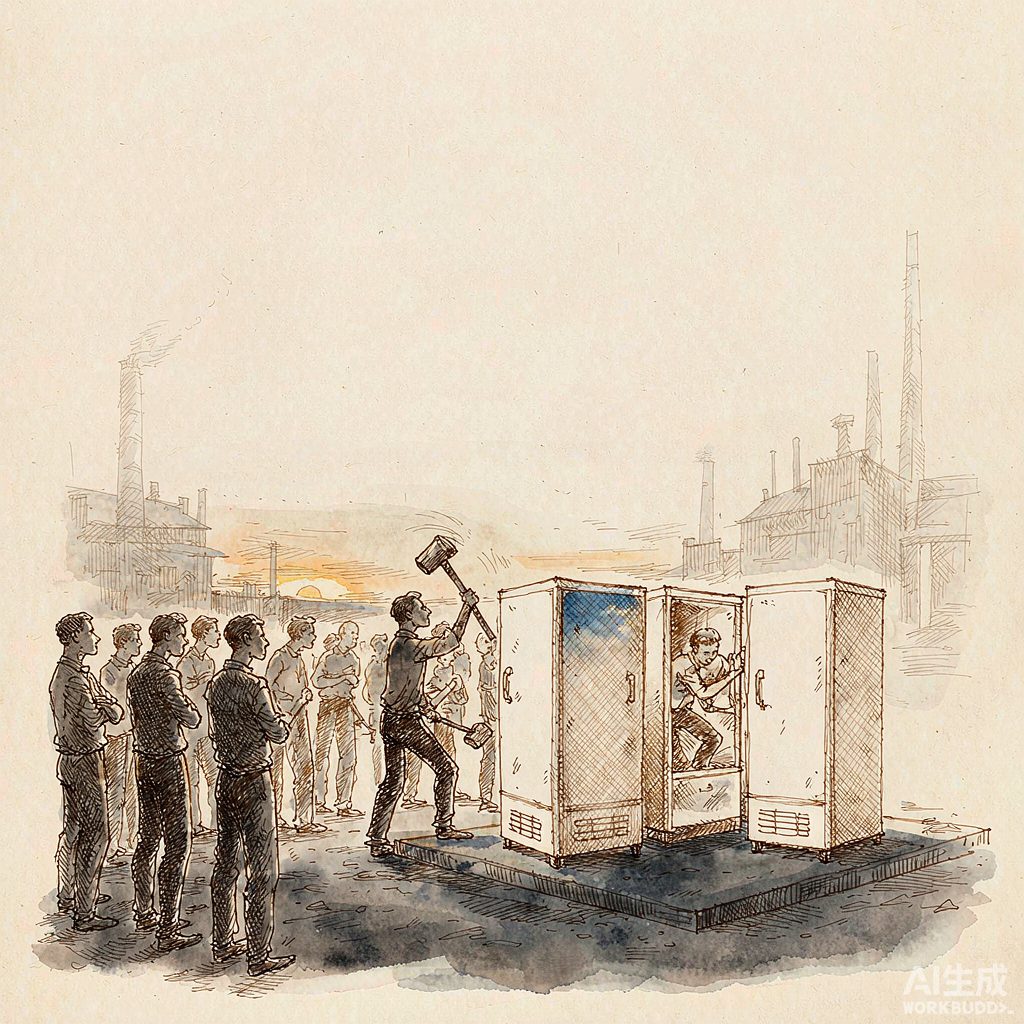
03The hardest pass: 76 refrigerators and a sledgehammer
Just as the plant had caught its breath, a customer came to buy a refrigerator, inspected one after another only to find defects in each, and finally took one home in reluctance. Afterwards, Zhang sent people to check every one of the 400-odd refrigerators in the warehouse and found 76 with various flaws. At the meeting to decide what to do, most managers and workers argued: they were still usable, so sell them cheaply to employees as a fringe benefit.
Back then this was not petty greed but common sense. A refrigerator cost over 800 yuan — roughly two years' wages for a worker; in an era when even substandard goods required ration coupons, “wasting” these units sounded close to madness. Zhang's objection, later widely quoted, was: “If I allowed these 76 refrigerators to be sold, it would be as if I allowed you to produce 760 such refrigerators tomorrow.” He also said there had long been an absurd idea — that the good stuff was for foreigners while the rejects were exported and resold at home for our own use — “From now on, Haier's products will no longer be graded; a defective product is scrap.”
He called an all-staff meeting on the spot and had all 76 refrigerators smashed in public, and by the very workers who had built them. Seeing the workers still hesitate, he stepped forward and swung the sledgehammer himself, striking the first blow. Old workers wept as they smashed; one woman cried out: “This isn't smashing refrigerators — it's smashing right into everyone's heart.” Even the supervising authority could hardly accept it. That sledgehammer was later permanently accessioned by the National Museum of China as a national cultural relic, catalogued as “National Museum Collection No. 092.”
In the month that followed, Zhang chaired meeting after meeting, the sole theme being: how, starting with myself, do we raise product quality? The cruelty of the act was that it was no external PR but an internal amputation — he destroyed the plant's most valuable “benefit” on the spot, for the sake of something impossible to quantify: a consciousness of quality.
04The turnaround: from one sledgehammer to the first National Quality Gold Award
Three years later, Haier refrigerators took the first National Quality Gold Award in China's refrigerator industry in a national appraisal. The image of Zhang hoisting the medal high above his head became another iconic picture of Chinese manufacturing. What lay between 3.48 million in revenue and 1.47 million in losses and that first industry gold medal was not imported technology, but those 76 refrigerators.
What followed was a steady undoing of his own work. From 1991 he began merging in a batch of “shock-fish” — state-owned firms with sound hardware but ruined management, such as the Qingdao Air-Conditioner Factory and the Freezer Factory — acquiring 18 in all and reviving them with the same management system exported wholesale. In the 1990s he distilled the OEC management method of “finish today's tasks today, clear today's accounts and rise a little higher each day” and the “slope-sphere theory”: a company is like a ball resting on a slope, advancing or sliding back, held in place only by basic management. In 1998 he pushed the “market chain” and a process reengineering that thrust everyone into the marketplace — internally called the “bloodless revolution,” and met with fierce opposition. In 1999 Haier built a plant in South Carolina, one of the earliest overseas moves by a Chinese appliance maker, and was ridiculed for it that same year.
In 2005 he proposed RenDanHeYi (literally “people and orders as one”): splitting the company into thousands of micro-enterprise units, turning employees from executors into entrepreneurs directly accountable to users. It was the most contested and most radical organisational experiment of his life. In 2012 he acquired New Zealand's Fisher & Paykel; in 2016 he bought GE Appliances for USD 5.58 billion; in 2018 he acquired Italy's Candy. On 5 November 2021, after 37 years at Haier's helm, he voluntarily declined to stand for the new board, handing the chairmanship to Zhou Yunjie while himself stepping back to honorary chairman.
05Corporate history (I), 1984–1991: from insolvency to a national gold medal
On 5 January 1949, Zhang Ruimin was born into an ordinary worker's family in Qingdao, Shandong, his father a garment-factory worker. A voracious reader and excellent student, he had meant to sit the university entrance exam and study journalism to become a reporter, but the Cultural Revolution that broke out in 1966 cut his schooling short; after finishing high school in 1968 he did not go “up to the mountains and down to the villages” but took his father's place as an ordinary worker in a hardware factory. There he worked by day and studied mechanical manufacturing at night school by evening, applying what he learned to technical innovation and rising from team leader to workshop director and then deputy director — experience accumulated amid the shop floor's grease and noise that he would later call the true source of his understanding of the production line and the worker's mind. In 1980 he was transferred to the Qingdao Household Appliances Industrial Company, and in March 1984 became its deputy general manager in charge of technical upgrading and the refrigerator project, already intimately familiar with the dying factory's condition.
On 26 December 1984, the 35-year-old Zhang Ruimin formally took over as director of the Qingdao Refrigerator General Factory. This collectively owned small plant, formerly the Qingdao Daily-Use Electrical Appliance Factory, had only hung out the refrigerator-factory sign mid-year, yet had already driven away three directors within twelve months. What he inherited was an insolvent wreck with annual sales of just 3.48 million yuan and losses of 1.47 million yuan; the grounds had but a single dirt road that “swallowed shoes” in the rain, broken doors and windows, and workers relieving themselves right on the workshop floor. He later joked that what greeted him were 53 leave requests — arrive at eight, leave at nine, and by ten you could lob a grenade into the yard and hit no one. His first move was not technology but the issuance of 13 labour-discipline rules, beginning with “no defecating or urinating in the workshop”; only after he caught and severely punished a raw-material thief did the whole plant believe this director meant business.
Even harder to solve was importing a foreign production line. The state had already fixed its list of approved refrigerator makers and all but closed the door to technology imports, yet the equipment would cost over 10 million yuan — when the factory earned a mere 500,000 yuan a year and could not even cover the interest. He ran again and again to Beijing and, before that door shut, secured the refrigerator technology and equipment of West Germany's Liebherr; from May 1985 components began arriving in Qingdao, and by year-end 15 production lines were in place. In an age of acute scarcity, when “you could sell a refrigerator made of paper,” Haier's units came off the line one by one and the factory lived again. In 1986 the first-generation product sold out on launch, but many customers said they could not understand the manual; he at once diverted engineers to write a new one readable at a junior-high level, and the complaints vanished.
The turning point for quality consciousness came in 1985. A customer inspected one unit after another, all flawed, and reluctantly took one; Zhang sent people to check all 400-odd refrigerators in the warehouse and found 76 defective. Cadres and workers wanted to dispose of them cheaply as employee benefits, but he said, “If I allow these 76 refrigerators to be sold, it is as if I allow you to produce 760 such refrigerators tomorrow,” and laid down that “a defective product is scrap.” He convened an all-staff meeting at which the very workers who built them smashed the units by hand, and he himself swung the sledgehammer for the first blow; old workers wept as they smashed. That sledgehammer was later accessioned by the National Museum of China as a national cultural relic. Three years on, in December 1988, Haier won the first National Quality Gold Award in the national refrigerator industry; in 1990 it took the industry's first National Quality Management Award, the “Golden Horse Award.” Meanwhile, from front-line practice he distilled the OEC management method of “finish today's tasks today…” and the “slope-sphere theory” — that the enterprise is a ball on a slope, advancing or sliding back, held only by basic management — two tools that later became the core template Haier exported to the outside world.
06Corporate history (II), 1991–1999: shock-fish, the listing, and going overseas
From 1991, Zhang Ruimin began a phase of scale expansion. He successively absorbed underperforming state and collective enterprises such as the Qingdao Air-Conditioner Factory and the Freezer Factory, merging 18 in all by 1997 and inventing the celebrated “shock-fish” model: pick firms with sound hardware but ruined management, invest no money and ship no equipment, simply send a few people to replicate the OEC method and Haier culture, and turn the target from loss to profit. His definition of the logic was “to revitalise assets, first revitalise people” — if people's minds do not change, a merger only buys a bigger burden. All 18 mergers succeeded, an anomaly amid the SOE reforms of the day, and quickly turned Haier from a single refrigerator plant into a comprehensive appliance group spanning freezers, air conditioners and washing machines.
The capital-market milestone came in 1993. Qingdao Haier (later renamed Haier Smart Home) listed on the Shanghai Stock Exchange under code 600690, among the first batch of Chinese appliance makers on the A-share market. The listing opened a channel for continuous fundraising and bound this former collective workshop to the rails of modern corporate governance. Zhang later recalled that what he cared about after listing was not how much was raised but that the capital market forced the firm to lay its books, governance and strategy out in the open. In parallel, amid diversification he advanced a pacing theory of “light up the east before lighting up the west,” stressing that one should master an industry before moving to the next rather than strike in every direction at once.
1998 was major surgery on Haier's internal governance. Zhang pushed the “market chain” and a process reengineering that thrust every department and every person into the marketplace, internalising external competitive pressure; the organisation shifted from pyramid to flat and information-driven, internally called the “bloodless revolution” and met with enormous opposition. On 25 March that year, Harvard Business School admitted “Haier Activates the Shock-Fish” into its case library, making Zhang the first Chinese entrepreneur to mount the Harvard podium. A year later, on 30 April 1999, Haier broke ground on a plant in South Carolina — among the earliest self-built overseas factories by a Chinese appliance maker, and again widely mocked that year. Zhang's answer: “Building a plant in America is not to save money, but to learn how to become a world-class brand.” On groundbreaking day the national anthem, “March of the Volunteers,” sounded in the city hall, and he said he felt a dream fulfilled.
07Corporate history (III), 2000–2012: the birth of RenDanHeYi
Entering the new millennium, Zhang's attention shifted from “getting big” to “staying alive.” In 2000 he published the essay “Haier Is the Sea,” likening the enterprise to an ocean that receives all rivers yet can also be evaporated and recondensed — hinting at the decentralised organisational philosophy to come. By then Haier was already a behemoth with revenue past 10 billion yuan, yet he grew wary of “large-enterprise disease”: bloated structures, slow decisions, distance from users, weak innovation. In 2001 he lectured at Columbia University and Wharton, the latter hailing the encounter of “the CEO of China's flagship enterprise and the world's number-one business school”; Britain's Financial Times named him among “the world's 30 most respected entrepreneurs.” The louder the outside applause, the heavier his inner anxiety.
In September 2005, Zhang unveiled the most radical organisational experiment of his life — RenDanHeYi. “Ren” is the employee, “dan” is the user's need, and “heyi” joins them directly, breaking the top-down chain-of-command hierarchy and splitting the company into thousands of self-starting, self-organising, self-driving micro-enterprises. He argued plainly that traditional firms treated people as mere executors, as cogs, and never liberated human nature; he would hand the “three rights” — of decision, of hiring, and of distribution — entirely to the micros and makers, so that “the user becomes everyone's boss.” When the model launched, Haier's revenue had already reached 101.6 billion yuan, a step from the Fortune Global 500; to others it “had no illness,” but in his eyes it was “gravely ill,” and he chose to tear it down and rebuild while still healthy.
In 2012, Haier acquired New Zealand's high-end brand Fisher & Paykel, filling a piece of the global high-end kitchen and white-goods puzzle. The deal followed the same logic as its earlier strategy of building its own brands abroad: Zhang always insisted on “difficult first, easy later” and on independent brand-building, refusing pure OEM because “going out to do OEM has no future; only firms that build their own brands are remembered by the market.” By then Haier had been transformed from a Qingdao refrigerator works into a multinational with footprints across Europe, America, Australia and Southeast Asia, and RenDanHeYi began to be tested cross-culturally inside the overseas firms it had acquired.
08Corporate history (IV), 2012–2021: the acquisition spree, the tri-market listing, and the handover
In 2012 Haier launched its “networking strategy,” dismantling the hierarchy outright into three kinds of people — platform owners, micro owners and makers — turning more than 80,000 employees into over 4,000 micro-enterprises. The price was the one-time removal of over 10,000 middle managers, who faced only two choices: start a business, or leave. Zhang later admitted “I was terribly afraid they would go petition the authorities,” yet pressed on, judging that large-enterprise disease could not be patched but had to be rebuilt from scratch; the move also caused significant attrition and internal upheaval and became the most contested source of RenDanHeYi. In 2015 and 2018, Harvard Business School added two more cases — “Haier and Zero Distance to the User” and “Haier — a Chinese Enterprise That Incubates Makers” — and Zhang returned to the Harvard podium after twenty years.
Acquisitions peaked in 2016. Haier bought the appliance business of America's General Electric (GE Appliances) for USD 5.58 billion, among the largest such deals in the history of Chinese appliances going abroad. When a US executive asked “how will you lead us?”, he replied: “Your boss and my boss are the same person — the user.” In 2018 it acquired Italy's Candy, filling out the European mass market; that same year Haier Smart Home issued D-shares (code 690D) on the China Europe International Exchange in Frankfurt. In 2020, Haier privatised its Hong Kong-listed subsidiary Haier Electronics and listed H-shares on the HKEX (code 6690), finally completing an A+H+D three-market capital layout and turning a collective workshop into a globalised public company simultaneously quoted in Frankfurt, Hong Kong and Shanghai.
On 5 November 2021, after 37 years leading Haier, at the Eighth Workers' Congress Zhang voluntarily proposed not to stand for the new board; Zhou Yunjie — who joined Haier straight out of university in 1988 and rose from the grassroots — succeeded as board chairman and CEO, with Liang Haishan as president; the legal representative was changed in the industrial-commercial registry on 27 November. Four days before his retirement (1 November), at Qingdao's first Entrepreneurs' Day symposium, he said: “Entrepreneurship emphatically is not the spirit entrepreneurs ought to have, but that entrepreneurs should create an environment in which everyone possesses an entrepreneurial spirit.” In a sense this annotates his 37 years of work — what he handed over was not one man's power but an ecosystem that “can run even without Zhang Ruimin.” In 2022 he still gave two near-10,000-word internal speeches systematically explaining the management thinking of an ecosystem economy, confirming that as honorary chairman he would no longer intervene in day-to-day operations.
09Corporate history (V), 2022–2026: the landscape today
After the handover, Haier's finances kept expanding steadily. The listed platform Haier Smart Home (A-share 600690, H-share 6690, D-share 690D) posted full-year 2024 revenue of RMB 286.015 billion and net profit attributable to the parent of RMB 18.731 billion; in 2025 revenue crossed the 300-billion mark for the first time, reaching RMB 302.347 billion, up 5.71% year on year, with net profit attributable to the parent of RMB 19.553 billion, up 4.39% — both record highs. The asset-liability ratio was about 57%, and net operating cash flow exceeded RMB 26 billion. On a full-group basis, Haier's 2025 global revenue reached RMB 426.8 billion, with overseas revenue accounting for over 50%. The dividend payout ratio was raised to 55%, and a RMB 3–6 billion buyback programme was announced, signalling confidence in long-term value.
On the global stage, Euromonitor data show that in 2025 Haier again led the world in retail volume of major home-appliance brands — its 17th consecutive year at number one; within that, refrigerators for 18 years running, washing machines for 17, freezers for 15 and wine cabinets for 16. Its overall brand share rose from 6.3% in 2009 to 12.1% in 2025, nearly doubling; in 2024 it was 11.7%, close to the sum of the second and third players. On overseas revenue, Haier Smart Home's 2025 foreign sales reached RMB 155.792 billion, over 51% of the total; in North America GE Appliances has led the US industry for four straight years, its European white-goods share tops all Chinese firms, and in Australia the dual brands Haier and Fisher & Paykel lead major white goods at No. 1. Globally, Haier Smart Home now operates 35 industrial parks, 173 manufacturing centres, 126 marketing centres and 230,000 sales outlets, serving more than 1 billion user households across nearly 200 countries and regions.
On brand and scenario, Casarte has led China's high-end segment for nine consecutive years, holding about 44% of the above-10,000-yuan refrigerator market and about 75% of high-end washing machines; the youth-oriented Leader brand broke RMB 10 billion in annual revenue for the first time, growing 30%; Three-Winged Bird, the world's first smart-home scenario brand launched in 2020, offers integrated solutions around the smart kitchen, bathroom and balcony, with registered overseas smart-home users surpassing 20 million. At the other end of ecosystemisation lies the industrial-internet platform COSMOPlat, which has already applied digital-twin and multi-agent technologies to appliances, chemicals, automobiles and more. From 2022 to 2026, Haier's story has shifted from “sell more refrigerators” to “sell scenarios, sell the ecosystem, sell connectivity” — and that path is precisely the fruit of the RenDanHeYi Zhang planted in 2005, borne after the handover.
10Leadership style and character: a scholar-leader who read management as index cards
Zhang's most conspicuous label is the entrepreneur who is “unlike an entrepreneur.” Unlike his same-generation tycoons, who love banquets and circles, he neither smokes nor drinks nor plays golf, socialises little, and counts reading as his chief pleasure. His method is unusual: he takes management and philosophy books apart into index cards, carries a copy of Laozi's Tao Te Ching wherever he goes, and keeps an office stacked with 5,000-odd books, every one marked; in 2024 he told Dong Yuhui he reads more than 100 books a year, at least two a week, and will read a newly bought book even in an airport lounge. An aide marvelled that “some weeks he reads five books.” This near-ascetic discipline sets him apart in entrepreneurial circles and explains why he opens with a whole string of his own coinages — OEC, the slope-sphere theory, the market chain, RenDanHeYi, the chain-group contract, the transfer of the three rights, competing for posts through orders, user-paid pay — for he is used to reconstructing reality through a conceptual system of his own.
His decisiveness is known for being “fast, ruthless, and turning the knife on himself.” Smashing the 76 refrigerators was the extreme expression of a near-religious fixation: he would not accept the common sense of “sell them cheap as a benefit,” preferring to destroy the plant's most valuable asset just to buy an unquantifiable quality consciousness. Even more subversive, almost every reform began by moving against himself — the hierarchy he had built with his own hands he personally tore down in 2012, stripping over 10,000 managers at a stroke and forcing them to start businesses or leave. A motto he quotes repeatedly is: “Forever trembling with caution, forever walking on thin ice” — eight characters that hung on Haier's wall for over thirty years and capture his basic attitude toward scale and success. He also said “careful to the end as at the beginning, and nothing will fail,” and summed up Haier's culture in four characters meaning “regard oneself as wrong” — constantly denying oneself rather than thinking oneself right.
With people he is soft outside, hard within. Subordinates recall that he punched the time clock alongside workers and queued in the canteen at noon; he had no private office and no personal secretary, and often travelled alone. He created tens of thousands of jobs yet placed not one relative in the company's core, and his wife said he had offended relatives and friends alike. He named micro-innovations after the workers who made them — “Xiaoling's wrench,” “Fangyan's mirror,” “Xiufeng's card holder” — returning honour to the front line; his deputy Yang Mianmian, finding a single hair left inside a refrigerator, halted the whole plant and had cartons opened for re-inspection. But beneath the warmth lay a cold logic of performance: after RenDanHeYi, he stated plainly that “you take the pay your created user value earns, and if you create none you must leave,” pushing tens of thousands into the marketplace. This logic met enormous internal resistance and attrition, and he himself admitted it was the most painful and costly rollout.
In public image he has been repeatedly compared by Chinese and foreign media to GE's Jack Welch, and dubbed “the godfather of Chinese management” and “the Socrates of business.” He has lectured at Harvard, Columbia, Wharton, IMD and Davos, speaking without a script or a pile of data but with his own coinages about organisation and human nature, earning real respect in Western management circles; in 2013 he was the only entrepreneur invited to speak at the annual meeting of the US Academy of Management. He is less an entrepreneur than an organisation designer who uses the company as a laboratory: over forty years he built the hierarchy with his own hands and then tore it down, his aim always “to make the organisation no longer depend on any individual.” This habit of writing self-abolition into strategy is what fundamentally sets him apart from most founders, and it is the confidence that let him hand over power voluntarily at 72.
11The secret of success: seven clues from one sledgehammer to one ecosystem
First, treat quality as a creed, not a slogan. Those 76 refrigerators of 1985 cost the equivalent of two years' wages for the whole workforce, yet he smashed them in public merely to nail down the single standard that “defective is scrap.” This was no PR but an internal amputation, and yet it bought the industry's first gold medal in 1988 and the credit foundation of the whole brand — the very brand later micros relied on to start businesses on Haier's platform. Second, use culture rather than capital as the lever in mergers. The 18 shock-fish took no money and no equipment; merely exporting OEC and Haier culture turned them to profit, proving that “to revitalise assets, first revitalise people” — a logic later carried directly into the integration of RenDanHeYi.
Third, difficult first and easy later, with independent brand-building. Mocked for building a plant in America in 1999, he said he went to learn how to become a world-class brand; by refusing OEM and insisting on selling worldwide under its own name, Haier became one of the few Chinese firms that “sell in others' homes under their own brand.” In 2025 the overseas share of China's own-brand appliances rose to 10.9%, with Haier alone accounting for 47.3%. Fourth, revolutionise oneself while still thriving. With revenue already past 100 billion in 2005, he still tore down the hierarchy and spun out thousands of micros, betting on the judgement that “large-enterprise disease cannot be patched, only rebuilt” — far harder than the passive fight for survival when near death.
Fifth, return the three rights to the front line. Decision, hiring and distribution were transferred to the micros, replacing “the firm pays” with “the user pays,” so that the market rather than the boss decides who makes the cut — a release of human energy and the key by which RenDanHeYi survived controversy. Sixth, learn for life and wield books as a weapon. Over 100 books a year, 5,000 marked, the Tao Te Ching always at hand — this let him fuse the wisdom of Drucker, Sun Tzu and Laozi into his own vocabulary and keep sparring with the world's top thinkers, staying half a step ahead strategically. Seventh, design an organisation that does not depend on himself. From 2005 he was handing over to an ecosystem rather than to a person, and at 72 he yielded power smoothly, the enterprise unruffled by the change of leader.
In sum, how replicable is Zhang Ruimin's success? The faith in quality, the self-discipline and the learning — any entrepreneur can learn these; but moves like “cutting off his own arm at 100-billion revenue,” “devouring 18 through culture,” or “handing the three rights to the front line” demand extraordinary authority, rock-steady control and a very hard ruthlessness, beyond ordinary men. To a greater degree he is a creature of era and luck: he caught every dividend of reform and opening, of a shortage economy and of the appliance boom, and hit the window of Chinese manufacturing going global. His non-replicability lies not in technique but in that temperament of “forever trembling with caution” yet daring to turn the knife on himself — precisely what most successful people most lack and most struggle to imitate.
12Personal life, family and marriage
Next to many entrepreneurs of his generation, Zhang's private life is almost monotonous. He seldom socialises, his greatest pleasure is reading — management and philosophy above all — and he has the habit of taking whatever he reads apart into index cards. He plays no golf and joins no circles, and his public language often carries a heavy theoretical cast, which makes him seem in entrepreneurial company rather “unlike an entrepreneur.”
On family, he kept a low profile all his life; public information is scant, and his wife and children are rarely seen. This deliberate sense of boundary runs through everything: even in Haier's most glorious years he placed no family member in the company's core. The year he retired, at Qingdao's first Entrepreneurs' Day symposium, he spoke a line that in a sense annotates himself: “Entrepreneurship emphatically is not the spirit entrepreneurs ought to have, but that entrepreneurs should create an environment in which everyone possesses an entrepreneurial spirit.”
13National significance: hammering “quality” into Chinese manufacturing
Zhang's national significance lies not in how large a revenue he made but in the fact that he changed the cost of one thing. In 1980s China, “sell defective goods at a discount” was industry norm and “first-grade for export, sub-standard for home” the default rule. With 76 refrigerators and one sledgehammer he drove the standard “defective is scrap” into the whole industry and into consumers' hearts. This was one of the turning points at which Chinese manufacturing moved from “able to produce” to “worthy of trust.”
At the industrial-chain level, Haier was among the Chinese appliance makers earliest to complete global branding — not through OEM but through self-built brands and localised operation. To this day Haier refrigerators have led the world in retail volume for 18 consecutive years and its washing machines hold a 14.4% global share at number one; in the US market it has led the industry for four straight years. This ability to “sell under one's own brand in someone else's home” remains rare in Chinese manufacturing. And the RenDanHeYi he left behind is among the few original Chinese management models that Western and American academics keep studying.
14Controversies
Public reporting has questioned Zhang mainly on a few fronts: the RenDanHeYi reform brought severe organisational turbulence and attrition; the large-scale merger expansion once pushed up debt and integration risk; the results of the GE Appliances acquisition have long been under scrutiny; and some argue the “refrigerator-smashing” story has been given an oversized narrative gloss in circulation. Beyond this, the outside world has long pressed the question of succession in the “post-Zhang Ruimin era.” All of the above are discussions that have appeared in public reporting, with no conclusion as of the time of compilation.
| Market capitalisation | Haier Smart Home A-share (600690) had a market cap of about RMB 208.4 billion at end-March 2026; it is simultaneously listed in Shanghai, Hong Kong (6690) and Frankfurt (690D). On 9 September 2026 the A-share closed at 21.30 yuan per share. |
|---|---|
| 2025 revenue | Full-year global operating revenue of RMB 302.347 billion, up 5.71% year on year and crossing 300 billion for the first time; net profit attributable to the parent of RMB 19.553 billion, up 4.39% year on year (Haier Smart Home 2025 annual report, disclosed 2026-03-26). |
| Equity / control | Haier Group is the controlling shareholder, with no single individual in control; Zhang Ruimin himself is not a major shareholder, and his influence comes from his position rather than his holdings. The 2025 cash dividend payout ratio was raised to 55%, and a RMB 3–6 billion buyback programme was announced. |
- Zhang Ruimin's 1985, Haier Group official website historical records (2021-11-08)
- Haier Smart Home Co., Ltd. 2025 annual report, Shanghai Stock Exchange / Hong Kong Exchange (disclosed 2026-03-26)
- In Depth | Helmsman Zhang Ruimin: a symbolic figure of Chinese manufacturing, People's Daily app (2021-11)
- Haier Smart Home releases full-year 2025 results, Haiwai Net (2026-03-27)
- Annual Report Perspective | Haier Smart Home 2025 Q4 results down both quarter-on-quarter and year-on-year, Shenzhen Commercial Daily · Duchuang (2026-03-27)
- A Historical Moment of Quality Growth, China Quality News Network (2009-10-12)
- The Enterprise of Our Times, Economic Information Daily / Xinhua (2016-02-02)
- He spent 40 years transforming a small factory; now annual revenue exceeds 370 billion, China Economic Net (2024-10-05)
- Zhang Ruimin Baidu Baike entry (early experience, taking charge in crisis, RenDanHeYi, ecosystem inheritance sections, 2024 update)
- Haier's “Lighthouse” Zhang Ruimin, a hardcore life forged by a hammer, Guancha Net (Fengwen) (2018)
- British media spotlight Haier's management model: management has the power to change the world, Reference News / Sina (2017-10-18, quoting Stuart Crainer)
- The Power of a Communist Party Member — a record of Zhang Ruimin, Party Committee Secretary and CEO of Haier Group, CCTV.com (Xinhua, Liu Haimin)
- Zhang Ruimin: Haier employees take the pay their created user value earns, and must leave if none, China Youth Net (2018-05-17, Tianjin World Intelligence Congress)
- Zhang Ruimin: predicting the future is worse than creating it, China Securities Journal (2018-12-28, Reform Pioneer interview)
- Time Flows Like Water, Thought Never Exhausts — Zhang Ruimin and Our Times, Haier Group official website (2021-11-06, explanation of the handover to Zhou Yunjie)
- Haier Smart Home 2025 full-year results announcement, Hong Kong Stock Exchange (2026-03-26, code 6690)
- Report: Haier ranks first in global major home-appliance brand retail volume for 17 consecutive years, People's Net / Euromonitor data (2026-01-08)
- Berlin Enters Haier Time: pressing forward against the wind, aiming at “mindshare growth”, Haier Group official website (2026-09-06, includes 2025 group revenue of 426.8 billion and overseas share over half)
- Laying Out Brazil, Deepening Southeast Asia: Haier Smart Home keeps opening new room for growth, Haier official website (2026-05-19, 2025 overseas revenue 155.792 billion, share over 51%)
Duan Yongping
Two words — “integrity and duty” — produced a whole generation of disciples at Oppo, vivo and Pinduoduo; he stepped back from business and became better known as an investor.
01Family and early years: from a teacher's household in Jiangxi to the Beijing Electron Tube Factory
Duan Yongping was born in 1961 into an ordinary teachers' family in Ji'an, Jiangxi. When the gaokao was reinstated in 1977, the 16-year-old was admitted to Zhejiang University's Department of Radio Engineering — an exceptionally early start for his generation. After graduating, he was assigned to the Beijing Electron Tube Factory, landing the coveted 'iron rice bowl' that everyone envied.
But the iron rice bowl could not contain him. In the late 1980s, state-run factories under the planned economy moved at a sluggish pace, and the young technician saw no future. In 1989, at 28, Duan made his first counterintuitive choice: he resigned and headed south to Guangdong. He joined Rihua Electronics, a small, debt-laden subsidiary of the Zhongshan Yihua Group that mainly made video game consoles. The leap from Beijing to Guangdong, from a state firm to a township enterprise, struck his relatives at the time as close to madness.
02Where it began: turning a game console into a 'study machine'
After taking over Rihua Electronics, Duan faced a dead end: an undifferentiated product, a market crushed by Japanese game consoles, and a factory in debt. The first thing he did was redefine the game console as a 'study machine' — the hardware was essentially unchanged, but the story was different: this was not something for children to play games on, but a device to learn computing and practise typing.
What really cracked it open was marketing. In the early 1990s, he spent on CCTV advertising sums wildly disproportionate to the company's size; the line 'All parents wish the same: may your child become a dragon — with Subor' struck at the anxiety of a whole generation of Chinese parents. By 1995, Subor's annual revenue had surpassed RMB 1 billion, and at 28 he was deified. In that era, RMB 1 billion was a figure that even a provincial industry bureau had to look up to.
But beneath the glory ran a fault line. Subor was a Yihua Group company, and Duan was merely its plant manager, not a shareholder. He repeatedly proposed a joint-stock restructuring that would let management and key staff hold equity, but the group never relented. In 1995, after a fundamental clash with the parent group over restructuring, he chose to resign. According to public reports, as he left he told his subordinates a line that would later become widely quoted: 'I want to build a company that truly belongs to me.'
03The hardest stretch: starting over at 34 with his core team
1995 was Duan's true low point. At the very peak of his career he voluntarily reset to zero: he walked away from a platform with annual revenue of RMB 1 billion and a nationally known brand, taking a group of key people — Chen Mingyong, Shen Wei, Jin Zhijiang and others — and founded BBK from scratch in Chang'an, Dongguan. The outside world was broadly bearish: in a market already educated by Subor, what were the odds of succeeding with the same people making the same kind of product?
Capital was the second hurdle. In its early days BBK was desperately short of money, and he had to solve production, distribution and branding all at once, with no brand yet established and tight cash flow. In 1997, he gritted his teeth and won the CCTV advertising 'king of the spots' crown; for a company two years old that outlay was a bet of life or death — behind the slogan 'The world is fair; effort always pays off' lay his entire personal fortune staked on the table.
The third hurdle was organisational. In 1999, he split BBK into three independent companies: education electronics (Jin Zhijiang), audiovisual electronics (Chen Mingyong) and communications (Shen Wei), keeping only equity for himself and staying out of day-to-day operations. A split that amounted almost to self-dismantling was extremely rare among Chinese private firms — most founders keep the business firmly in hand. In hindsight, it was precisely this split that gave birth to OPPO and vivo.
In 2001, at 40, Duan made a second decision that baffled everyone: he moved to California in the United States, handed BBK's daily operations entirely to his team, and turned to investing. The media and his peers accused him of 'walking away at the peak'; his explanation was simple — the goal of life is to do what one wants, not to be shackled by a company. His second life, from entrepreneur to investor, began there — and at the time he had little cash on hand to deploy.
04The turnaround: NetEase, the Buffett lunch and Apple
The first few years after moving to the US did not go smoothly. When the dot-com bubble burst in 2000, Chinese stocks were in tatters. Around 2002, Duan aggressively bought NetEase — then on the brink of delisting, its shares fallen below a dollar — committing roughly USD 2 million, because he understood what William Ding was building and understood the cash flow of the gaming business. The investment returned dozens of times its value over the following years, and the nickname 'China's Buffett' was born.
In 2006, he won Warren Buffett's charity lunch at auction for USD 620,100, becoming the first Chinese person to dine with Buffett; the young Colin Huang (Huang Zheng) went along with him. After that meal his investment logic became completely clear: buy great companies and hold them for the long term. In 2012, with the 'three public consumptions' curbed, Kweichow Moutai's share price was halved and the market was gloomy; he bought more against the tide and wrote on Xueqiu that 'Moutai is China's only luxury good.' For the next decade and more, his portfolio held to one main thread: mostly Apple in US stocks, mostly Moutai in A-shares, mostly Tencent in Hong Kong stocks.
By 2026, the US-stock portfolio he manages at H&H International Investment was worth about USD 19.1 billion; its top five holdings — Apple, Berkshire B, Pinduoduo, Tesla and Nvidia — made up nearly 89% combined. This approach of 'extreme concentration within a market, moderate diversification across markets,' together with the discipline of holding long and not selling, has made him the most iconic exemplar of value investing in China.
05Corporate history (1), 1961–1995: a Nanchang boy, the move south, and Subor
Duan Yongping was born on March 10, 1961, in Nanchang, Jiangxi, with ancestral roots in Taihe, Jiangxi. Both parents were university lecturers who in 1961 were jointly hired by the Jiangxi Institute of Water Conservancy and Electric Power (the predecessor of today's Nanchang Institute of Engineering), landing the coveted iron rice bowl everyone envied. The good times did not last: when Duan was five, his parents were sent down to the countryside, and the family moved to the foot of the Jinggang Mountains, where he spent his primary-school years in a remote village, often getting up at four in the morning and walking ten kilometres into the deep mountains to cut firewood. The hard rural years did not wear away his resilience; they taught him early the weight of the three words 'rely on yourself.' When the gaokao was restored in 1977, the 16-year-old sat the exam for the first time and scored just over 80 points across four subjects, failing to make the cut; undeterred, he studied hard for half a year and in 1978 was admitted to Zhejiang University's Department of Radio Engineering with a combined score of over 400 across five subjects — the only student from his middle school that year to get into a four-year university, and into Zhejiang University at that.
After graduating in 1982, Duan was assigned to the Beijing Electron Tube Factory at a monthly wage of 46 yuan. Assigned there the same year was Wang Dongsheng, who would later lead BOE. The rhythm of the state-owned giant — 'everyone feels capable of working, yet does nothing' — suffocated him; he quit the iron rice bowl and in 1986 was admitted to Renmin University's School of Economics to study econometrics at the graduate level, earning his master's in 1988. Before finishing, several decent employers wanted to hire him, but finding their official-rank mindset stifling, he turned south — first to Hainan, which he thought too feverish, then on to the Pearl River Delta in Guangdong. Through a classmate's introduction he joined Rihua Electronics, a subsidiary of the Zhongshan Yihua Group: a shambles producing home TV game consoles, losing over RMB 2 million, with barely 3,000 yuan left in the accounts and only a dozen-odd employees. Chen Jianren, the head of Yihua Group, recognised his talent and made this 28-year-old Zhejiang University radio-engineering graduate and Renmin econometrics postgraduate the plant manager.
After taking over Rihua, the first thing Duan did was not replace the equipment but redefine the product: repackage the game console as a 'study machine,' with the hardware essentially unchanged but the narrative shifted from 'let children play games' to 'let children learn computers and practise typing.' In 1991, Subor Electronic Industry Company was established, and he put RMB 400,000 into a CCTV-sponsored prize sales contest — 'Own a Subor, make yourself a ten-thousand-yuan household.' In 1993 he hired Jackie Chan as endorser; the line 'All parents wish the same: may your child become a dragon — with Subor' struck the anxiety of a whole generation of Chinese parents, and the study machine became a sensation. Even more crucial was quality: at the time rival consoles had a return-and-repair rate as high as 30%, but no matter how many units Subor sold, it kept the rate under 2%. In 1994 Subor's output value exceeded RMB 400 million, and in 1995 it broke RMB 1 billion; its brand intangible assets were estimated at RMB 500 million, and at 34 Duan was named one of 'Guangdong's Ten Outstanding Young Entrepreneurs.'
Beneath the glory ran a fault line. Duan and Yihua Group had agreed to split profits 80/20, but as Subor grew, the group's other divisions would always siphon funds when short, and the agreed 80/20 split was repeatedly not honoured — Duan himself never received even 1% of the equity. In 1994 he proposed to the group a joint-stock restructuring that would give management and key staff shares; the leadership swiftly rejected it. Realising he was merely a 'hired emperor,' he submitted his resignation on August 28, 1995. On leaving, the two sides signed a gentleman's agreement: for one year he would not compete in the domestic sale of products like Subor's, and he could take only six people with him. Among those six were Chen Mingyong of OPPO, Shen Wei of vivo, and Jin Zhijiang, BBK's current CEO. Group general manager Chen Jianren also gave him a Mercedes-Benz as a farewell gift and held a grand send-off ceremony — the helmsman of an era thus voluntarily reset to zero.
06Corporate history (2), 1995–1999: BBK, the CCTV ad crown, and a self-split
On September 18, 1995, Duan founded BBK Electronics in Chang'an town, Dongguan, just across the river from Zhongshan. This time, on his own turf, he would put into practice the joint-stock system Subor had once vetoed: nearly all of the company's middle managers took shares, and for employees who wanted in but had no money, he lent them the money personally, to be repaid slowly from dividends and earnings. In this way he diluted his own roughly 70% stake down to about 17%, and everyone in the BBK system became a community of shared interests. In its first year he honoured his verbal promise to his former employer not to touch education electronics, instead moving into telephones and VCDs. This 'integrity and duty'-based keeping of his word later became the bedrock of BBK-system culture.
At the end of 1996, BBK won the CCTV 1997 prime-time advertising auction with a bid of over RMB 80 million (another account puts it at RMB 123,456,789), beating many established rivals; its slogan 'The world is fair; effort always pays off. Words fall short of deeds; if you do it, do it best — BBK' spread across the land. In 1997, with a 'dare to follow' approach, he entered the VCD market — by then a brawl of over 200 makers such as Aido, Xianke and Malata — but he judged the market already educated and mature, and that by simply making product and service better he could compete to the front from behind. In 1999 and 2000, BBK was the CCTV Weather Forecast slot's top advertiser for two years running. On the strength of cordless phones, VCDs, repeaters and study machines, BBK only 'rose higher and higher,' and its cordless phones became the undisputed market leader. In 1999, Duan was named by Asiaweek as one of twenty Asian business and finance 'Millennium' industry leaders.
The most startling move came in 1999. Duan voluntarily split BBK by business into three: education electronics (Jin Zhijiang, later spawning Imoo), audiovisual electronics (Chen Mingyong) and communications technology (Shen Wei). The three companies were independent in equity and personnel, with no subordinate relationship; he kept only about 10% in each, devoting the rest entirely to employee incentives. A split bordering on self-dismantling was extremely rare among Chinese private firms — most founders grip the business tightly. Duan's reasoning was plain: what matters most for a company is to be healthier and longer-lived, not merely bigger; better to send capable people out to be lords of their own domains than to exhaust himself. In hindsight, it was precisely this split that gave rise to OPPO and vivo, and lifted the 'BBK system' from a single company to an ecosystem.
07Corporate history (3), 2001–2011: moving to the US, the NetEase campaign, and the birth of OV
In 1998, at the height of his career, Duan met Liu Xin, chief photographer of the US newspaper The Palm Beach Post, while visiting family in China, and they married two months later. To honour his commitment to family and his children's education, in 2001 he stepped back from the front line of operations and moved to California; he returned to China only twice a year for BBK's board meetings — in his own words, 'just twice a year to attend BBK's board meetings' — while in practice keeping his influence over the group's companies as an investor. Before leaving he told a few of his subordinates: 'Go ahead and do it. If you do well, we split the money; if not, close it down — no burden.' This extreme delegation later proved to be the hardest core of his business philosophy.
In the first few years after moving to the US, Duan completed his transition from entrepreneur to investor. At the end of 2001, when the dot-com bubble burst and NetEase's shares fell from USD 15 to under a dollar, William Ding, at his wits' end, wanted to sell the company; judging its value underpriced, Duan urged Ding to build online games and bought about 2.05 million NetEase shares at roughly a dollar each, spending about USD 2 million. On October 14, 2003, NetEase's share price soared to USD 70; the stock he held had risen more than fiftyfold in just over a year, and when he sold nine years later its value had multiplied a hundredfold, netting over USD 100 million — and the name 'China's Buffett' came from this. The logic of the investment was simple: understand the business, understand the cash flow, then bet big and hold for the long term.
The two phone companies spun out of BBK took shape quietly over this decade. Around 2001, Duan led three former BBK executives in registering the OPPO brand; when the other two lost interest in running it, Chen Mingyong, who handled the audiovisual business, bought out the brand rights and in 2004 founded Guangdong Oppo Mobile Telecommunications, which started with MP3 and MP4 players, shifted to phones in 2006, and launched its first smartphone, the Find, in 2011. Shen Wei, who ran communications, registered the vivo trademark in 2009 and launched its first smartphone, the V1, in 2011. With that, the 'blue-and-green twin champions' landscape was set. In 2006, Duan won Buffett's charity lunch at USD 620,100, becoming the first Chinese to dine with Buffett; the young Colin Huang (Huang Zheng) was among his companions. In 2008, after the Wenchuan earthquake, he donated USD 3 million and registered the Xinping Foundation in China.
The mentor-disciple bond between Colin Huang and Duan began in 2002 — while studying in the US, Huang was introduced by William Ding to Duan, a fellow Zhejiang University alumnus. At the 2006 Buffett lunch, Duan brought Huang along; when Huang returned to China to start a business in 2007, he founded Oku, an e-commerce site controlled by BBK, and Duan not only provided startup capital but kept guiding him with the thinking of 'do the right thing first, then do things right.' Huang later said publicly that Duan was the person who most influenced his business education and a benefactor in his life, and that when Pinduoduo was founded Duan was its first angel investor. This mentor line is another footnote to Duan's status as 'spiritual godfather' beyond the BBK system.
08Corporate history (4), 2012–2023: value investing takes shape and the H&H platform
In 2011, Duan poured the money he had made from NetEase and General Electric into Apple, when its shares were around USD 47, boldly predicting Apple could become a company worth over USD 1 trillion; in 2012, as Moutai's price was halved by the 'plasticiser' incident and the curbs on 'three public consumptions,' he bought in piecemeal at between 180 and 120 yuan a share and wrote on Xueqiu that 'Moutai is China's only luxury good.' These two moves established the cross-market, extremely concentrated skeleton of his holdings: Apple as the main US-stock position, Moutai the main A-share position, Tencent the main Hong Kong position. In 2018 he founded H&H International Investment, with assets of about USD 900 million at inception; by December 2023 its asset size had grown to about USD 14.4 billion.
In this phase, Duan pushed the value-investing discipline of 'buying a stock is buying a company' to its limit: no shorting, no borrowed money (no margin), no investing without understanding, no investing in early-stage unlisted firms (his backing of Colin Huang was the only personal exception, because he knew and believed in the man). His holdings were highly concentrated; he once said publicly that '95% of my investments are now in Apple,' and repeatedly stressed that 'a good company does not need to be sold.' At the same time he rarely appeared in public; his only public outlet was Xueqiu, under the handle 'Dadao Wuxing Wo Youxing' — he later explained the name had no special story: 'the great way has no form' is an existing saying, and in his early years playing the game Fantasy Westward Journey he used 'Dadao Wuxing'; when someone had taken that on Xueqiu, he added 'Wo Youxing' as a joke, meaning the great way is formless, yet he himself can have form.
On the domestic operating-business side, the BBK system entered a phase of maturity and succession. OPPO and vivo made the perilous leap from feature phones to smartphones in the 2011 Android wave, and since then have stayed among the world's top shippers for years; under the two men also sprang up sub-brands such as OnePlus, realme and iQOO. Duan was only a financial investor, taking part in no company's daily operations. According to public reports, in 2023 the BBK Electronics he founded was dissolved — the company that had walked out of Rihua Electronics quietly exited the stage after fulfilling its mission, while the seeds it had sown had long since grown into a forest. This history also confirms Duan's words: what matters most for a company is to be healthy and lasting, not to remain forever under one's own name.
09Corporate history (5), 2023–2026: today's map, the AI pivot, and the data basis
In February 2024, Duan's US-stock holdings were disclosed for the first time via an SEC 13F filing, letting the market see for the first time the hand of this 'China's Buffett': in that year's second quarter his holdings were worth about USD 16.6 billion, with Apple making up over 80%. In the first quarter of 2025, H&H's total holdings were about USD 20 billion (roughly RMB 138 billion); on April 10 of that year he announced a temporary leave from Xueqiu, and on December 1 reappeared on the variety show 'Together We Speak,' season 3. At the end of the second quarter of 2026, H&H's total holdings were about USD 19.1 billion across 18 stocks; the top five were: Apple USD 7.841 billion (41.05%), Berkshire B USD 4.618 billion (24.18%), Pinduoduo about USD 1.9 billion (about 10%), Tesla about USD 1.4 billion, and Nvidia USD 1.257 billion (6.58%, a cut of over 50% from the prior quarter). These figures show him slowly shifting from 'extreme concentration in Apple' toward a rebalancing across 'AI, new energy and internet' multiple tracks.
AI was the biggest cognitive turn of this phase. Before 2025, Duan repeatedly said he 'could not understand' semiconductors and Nvidia, judging them strongly cyclical and fast-changing, outside his circle of competence; he first tested with a small position, then trimmed, and only by using AI tools himself (he said a company that once took days of poring over filings to grasp now yields a framework within minutes of asking AI) and watching Jensen Huang's speeches did he come to recognise the moat of Nvidia's CUDA ecosystem. In the fourth quarter of 2025 he sharply increased his Nvidia stake to over 7 million shares, raised it further in the first quarter of 2026 to over 13 million shares (market value about USD 2.4 billion, about 12%), then cut it sharply in the second quarter to about 6.28 million shares — a band-trading pattern of 'sell high, buy low.' He judges that 'AI is an industrial revolution, but a bubble will always accompany it'; he is bullish on Nvidia as the 'shovel seller,' yet cannot understand the profit models of most large-model companies, reckoning that a decade on fewer than one in ten large models will survive.
In A-shares and Hong Kong stocks, Duan's 'anchor of certainty' is Kweichow Moutai and Tencent, while his newly heavy position is Pop Mart. By media estimates, his A-share Moutai holding exceeds RMB 20 billion (estimated); in August 2024 he said publicly he aimed to sell 1,000 puts (short put options) a day, with the goal of putting options on 1% of Tencent. In May 2026, a HKEX disclosure showed that he and H&H jointly increased their Pop Mart stake to become the second-largest shareholder, holding about 103 million shares worth over HKD 15.8 billion (estimated); his attitude toward Pop Mart moved from 'can't understand it, won't touch what I don't understand' to a heavy position after he finished reading Wang Ning's book 'Because Unique,' went to a London store to count customers himself, and then declared he 'probably won't sell within ten years.' In January 2026 he also staged a Moutai 'flash buy-and-delete' (buying 20,000 shares at 136.5 yuan and deleting the post seconds later) and sold China Shenhua H-shares to add to Moutai, drawing broad market interpretation.
The data basis for the handset business is as follows (IDC's Worldwide Quarterly Mobile Phone Tracker, the full-year 2025 data released on January 13, 2026, publicly traceable): in 2025 global smartphone shipments were about 1.26 billion units, up 1.9% year on year; of these Apple shipped 247.8 million units (19.7%), Samsung 241.2 million (19.1%), Xiaomi 165.3 million (13.1%), vivo 103.9 million (8.2%, up 2.7% year on year), and OPPO 102.0 million (8.1%, down 2.7% year on year). In the China market, vivo shipped about 46 million units (16.2%) and OPPO about 43 million (also near 15%). Neither OPPO nor vivo is listed, and there is no public basis for a group valuation; in 2018 Duan said the two had combined annual revenue of about USD 40 billion (estimated, not a current figure). This 'blue-and-green twin champions' pair remains to this day the world's fourth and fifth poles in the phone market, after Apple, Samsung and Xiaomi.
10Leadership style and character: integrity and duty, equanimity, and the discipline of 'not doing'
To understand Duan Yongping, first understand two words he repeats: 'integrity and duty' (benfen) and 'equanimity' (pingchangxin). He condensed the BBK system's cultural charter into 'do the right thing, and do things right,' then compressed it further into two characters — 'benfen.' When asked whether the BBK system's secret of success was advertising, equity incentives or channels, he denied all of them: 'Our secret is really just: integrity and duty plus equanimity.' Equanimity means being able at any time to shut out outside distractions and return to the essence of things; integrity and duty demands 'keep equanimity, return to the source of things, do the correct thing and strive to do it right,' 'blame yourself first when something goes wrong,' 'don't profit at others' expense in cooperation,' and 'hold fast to honesty.' This value system was not just for show — OPPO's Chen Mingyong said 'benfen culture is OPPO's true core competitiveness,' vivo's Shen Wei said 'an enterprise culture centred on benfen is the only competitiveness,' and Colin Huang also listed 'benfen' as a core value in Pinduoduo's letter to shareholders.
The 'Stop Doing List' is another of his trademarks. In a September 2018 talk at Stanford, he said 'what you don't do matters more' and 'only by focusing can you do the long-term right things,' and laid out his own list: don't blindly expand the circle of competence; don't make twenty decisions a year (a lifetime of twenty investment decisions is enough); don't do what you don't understand, don't invest in what you're not familiar with; don't take shortcuts or believe in overtaking on a curve; in investing, don't take long-term interest-bearing loans, don't short, don't speculate short-term; in running a business, don't do contract manufacturing (he turned down Walmart), don't do discounts and rebates (OPPO and vivo have no sales department, and big and small customers pay the same price). He even said 'I eliminated myself from the company' — the hardest part of building this list is to stop at once once you confirm something is wrong, even if it was once the source of your success. This discipline of 'correct your mistakes and wrestle with yourself' is precisely what sets him apart from most entrepreneurs.
In decision-making he 'dares to follow, then strives to lead from behind': wait until others have educated the market's demand, then move in with better execution — but 'don't take on porcelain work without the diamond drill,' and never enter where he lacks the ability to compete from behind. He delegated extremely, daring as early as 1999 to split the company into three, holding only equity and not managing; after moving to the US in 2001 he retreated further behind the scenes. His reason for not meeting the media was blunt: 'I don't want to leave the public with the impression that I control the company and steal the CEO's sense of achievement. Not stealing their credit matters, because in fact I haven't been on the front line for over a decade.' This attitude of 'if it's not my seat, it's not my business — I'll go play golf' gave the heads of OPPO and vivo complete credit and room to grow.
In public image, Duan is so low-key as to be nearly invisible, yet so blunt as to seem wilful. On Xueqiu he doesn't discuss K-lines or predict rises and falls, only answering questions about the essence of business, in a style of 'plain talk plus a love of saying I don't know': asked whether he understands some business, he often replies 'I don't,' 'I can't understand it,' 'I don't know'; asked about AI, he says 'impressed but clueless.' He consistently refuses awards, social obligations and paid speeches; his daily life is golf, family and reading, and his Xueqiu handle 'Dadao Wuxing Wo Youxing' is almost his only mouthpiece. On wealth and children his attitude is equally clear-eyed: he has said many times he does not wish to leave large fortunes to his children, on the grounds that 'leaving money to a son just lets him marry a few more wives' and 'robs the child of the joy of striving for himself,' and he quotes Buffett — give children 'good enough to do anything but not enough to do nothing.' He and his wife Liu Xin set up a foundation, donating most of their wealth to education, with the children able only to draw a basic living allowance periodically. On the two identities of 'entrepreneur vs investor' he is untroubled: he believes investing and operating are essentially the same — both are 'buy the company, understand the business' — only in the former the person running it is someone he approves of; he considers himself long since not an operator but merely 'a man who plays golf.'
11The secret of his success: eight falsifiable principles
Duan's success boils down to eight interlinked principles, each verifiable against concrete decisions. First, 'do the right thing, and do things right' — the first half is values, the second is methodology; he thinks most people fail at the first half, unable to tell what the right thing even is. Second, 'integrity and duty plus equanimity' — return to the source of things and shut out short-term temptations; this was the charter he set for the BBK system and which OPPO, vivo and Pinduoduo each copied into their corporate cultures. Third, 'dare to follow, then strive to lead from behind' — every track Subor, BBK and OV entered, they were not the first to try, yet rose to the top through product and execution; the brawl of over 200 VCD makers and the perilous leap from feature phones to smartphones are both proof.
Fourth, the 'Stop Doing List' beats the 'To Do List' — not doing wrong things matters more than doing more right ones; he refused contract manufacturing, refused rebates, took no loans, did no shorting, and OPPO and vivo have no sales department and charge big and small customers the same, and this 'list of what not to do' turns each crisis into an opportunity. Fifth, 'equity incentives and extreme delegation' — he diluted 70% of his equity down to 17%, voluntarily split the company into three in 1999, and fully retreated behind the scenes in 2001, in exchange for three top-tier companies and a band of disciples who can stand on their own (Colin Huang, Chen Mingyong, Shen Wei, Jin Zhijiang, Li Jie). Sixth, 'buying a stock is buying a company, hold for the long term' — NetEase fiftyfold, Apple at a trillion-dollar valuation, Moutai a hundredfold, all achieved by understanding the business, betting big, and not fiddling.
Seventh, 'stay within the circle of competence, don't invest without understanding' — he openly admitted for years he could not understand semiconductors, first testing with a small position before heavily adding Nvidia, and to this day cannot grasp the profit models of most large-model companies, preferring not to invest; nor does he invest in early-stage unlisted firms, with the sole exception of believing in Colin Huang the person. Eighth, 'put family and kinship first' — not relocating to America, not stealing the CEO's credit, high-quality time with his children, donating most wealth to education; these 'non-commercial' choices instead made him more composed and longer-term in business.
To be honest at the end: how much of Duan's success is replicable, and how much is the product of era and luck? What is replicable is that discipline — integrity and duty, equanimity, the Stop Doing List, long-termism — which costs nothing and anyone can learn; the hard part is executing it for decades as 'knowledge and action united.' What is not replicable is his era's dividends: Chinese consumer electronics taking off from zero in the 1990s, CCTV's monopoly on attention, a real-estate-style demographic dividend, and the extreme undervaluation of Chinese stocks after the dot-com bust. He happened to stand at the very centre of these windows, and happened also to possess the vision to read them and the nerve to bet big. So his methodology is worth every entrepreneur's and investor's study, but a result on his scale will most likely not be replayed as-is — which is perhaps the most honest footnote to the four characters 'the great way is formless.'
12Personal life, family and marriage
Duan's private life is as restrained as his investment style. His wife Liu Xin has long kept a low profile, and the children grew up in the US — one of the most-cited reasons for his 2001 move to America was to honour his commitment to family and his children's education. He gives no interviews, joins no award ceremonies, writes no books, and gives no paid speeches; his daily life is golf, family and reading.
His only public outlet is Xueqiu, under the handle 'Dadao Wuxing Wo Youxing.' There he does not discuss K-lines or predict rises and falls, only answering netizens' questions about the essence of business. In June 2026 he responded to netizens intensively, leaving lines such as 'holding equals buying — that is a fact' and 'as for Moutai, it is still that Moutai.' At 65 he still keeps this almost wilful rhythm: doing only what he wants to do.
13National significance: two scarce models of Chinese private enterprise
Duan's national significance has two layers. The first is industrial: the BBK system he founded, through its 1999 split, gave rise to OPPO and vivo, two brands that remain the twin champions of China's phone market and hold significant share in emerging markets such as Southeast and South Asia. He proved that Chinese consumer electronics could win through deep channel cultivation and product definition, not merely on low price.
The second is methodological: he spread, in plainest vernacular, to a whole generation of Chinese entrepreneurs and investors the management philosophy of 'integrity and duty,' 'equanimity,' 'dare to follow then lead from behind' and the 'Stop Doing List,' along with the investment philosophy of 'buying a stock is buying a company.' In a business environment long obsessed with speed and scale, he offered a counterexample — not being the first to try the crab, but waiting until the market is educated and then moving in with better execution; no shorting, no borrowing, no investing without understanding. The scarcity of this discipline is harder to replicate than any single successful investment.
14Controversies
Doubts in public reporting mainly include: the Subor study machine was accused of being in essence a game console, using an education narrative to evade regulation and parents' resistance; the BBK system's pricing of county-town channels and lower-tier markets has long been questioned; his move to the US in 2001 at the peak of his career was criticised as 'leaving too early'; and his occasional remarks on social media are often over-interpreted by the market, swaying individual stocks. All of the above are public discussions with no settled conclusion as of the time of compilation.
| Market value | Duan himself has no listed entity. The US-stock portfolio of H&H International Investment that he manages is worth about USD 19.1 billion (at the end of Q2 2026, roughly RMB 130 billion), his main overseas investment platform — not his entire personal net worth. |
|---|---|
| Holdings / allocation | End of Q2 2026 top five: Apple USD 7.841 billion (41.05%), Berkshire B USD 4.618 billion (24.18%), Pinduoduo USD 1.910 billion (9.99%), Tesla USD 1.340 billion (7.02%), Nvidia USD 1.257 billion (6.58%), together about 88.8%. In A-shares mainly Kweichow Moutai (by public estimate over RMB 20 billion), in Hong Kong stocks Tencent and Pop Mart. |
| Operating-business stakes | From the BBK split, OPPO and vivo: Duan takes no part in daily operations, retaining equity and dividend rights; neither is listed, and there is no public basis for a valuation. |
- H&H International Investment SEC 13F holdings disclosure, Q2 2026 (as of 2026-06-30)
- Duan Yongping Watch, Tencent News comprehensive report (2026-06-28)
- Duan Yongping on Pinduoduo, Tencent, Moutai and Musk, Securities Star (2026-06-24)
- Duan Yongping's H&H Account Q1 2026 Holdings Revealed, Tencent News (first half of 2026)
- RMB 130 billion in US stocks vs RMB 20 billion in A-share Moutai: where has Duan Yongping really put his money, Toutiao business-figures archive (2026)
- Archived public posts by Xueqiu user 'Dadao Wuxing Wo Youxing'
- Wikipedia and Baidu Baike entries on 'Duan Yongping' (2026 version consulted), early-life and corporate chronology
- Jiemian News, 'The Second Half of Entrepreneurs: Two Lives — the Ascetic and the Hermit' (2019)
- People's Daily app, 'Business Legend Duan Yongping: Three Disciples Hold Up Half the Industry' (2020)
- The Paper, 'After Eight Billionaire Tycoons Walked Away, How Did It Scrape By for 25 Years?' (2020)
- 36Kr / Lonely Brain, 'A Stanford Dialogue with Duan Yongping: the Stop Doing List' (2018-09-30 Stanford talk transcript)
- Sina Tech, 'From OPPO and vivo to Pinduoduo, the "Behind-the-Scenes Godfather" Duan Yongping's Latest Talk: the Secret of Enduring Success Lies in What Not to Do' (2018)
- IDC, Worldwide Quarterly Mobile Phone Tracker (released 2026-01-13, full-year 2025 shipment data)
- Archived public posts by Xueqiu user 'Dadao Wuxing Wo Youxing' (2010–2026, including the 2025 Zhejiang University Q&A and 2026 holding posts)
- Tencent News, 'Duan Yongping's Hundred-Billion Holdings Exposed: Trims Nvidia and Google, Adds to Internet Leaders' (2026-08-15, 2026 Q2 13F)
- China Philanthropist magazine and China Overseas Chinese Network reports on Duan Yongping's donations and his 'don't leave money to the children' wealth view (2006, 2025)
Jack Ma
An English teacher, the eighteen founders, a lakeside apartment — he turned China’s trust problem in business into infrastructure.
01Family and early years: three gaokao attempts and an English corner
In 1964, Ma was born in Hangzhou into an ordinary family. Slight of build and fond of fighting as a boy, he consistently ranked at the bottom of his class, particularly in mathematics. He first sat the gaokao in 1982 and scored just 1 point in maths; he failed again in 1983; only on his third attempt, in 1984, was he admitted to the Foreign Languages Department of Hangzhou Normal University — having missed the undergraduate threshold by a few points, he was taken on exception because of his excellent English. He would repeat this story many times, not to motivate others but to make a single point: that failure can be overcome simply by outlasting it.
After graduating in 1988, he was assigned to teach English at the Hangzhou Institute of Electronic Engineering, on a monthly salary of just over RMB 100. It was the coveted 'iron rice bowl' everyone envied back then, yet in his spare time he went to the West Lake to organise an English corner, chatting in broken English with a group of strangers, and gradually became a minor celebrity in Hangzhou's English scene. Around then, though, he began to feel an indefinable anxiety: the teaching path was one he could see all the way to its end.
02Origins of the venture: four years of rejection, from a translation agency to 'China Pages'
In 1992, Ma founded the Haibo Translation Agency. The start-up capital was scraped together, and for the first few months it could not even earn back the rent, so he had the agency also sell small goods and flowers to subsidise its expenses. This was his first real lesson that the market owes you nothing.
In 1995, a translation and coordination job took him to the United States for the first time. In Seattle, a friend told him to type something at random into a keyboard; he entered 'beer' and got a flood of results from America, Germany and Japan, but none from China. He then searched 'China' and got 'no data'. The shock of that moment, which he later described as 'seeing a world that simply didn't exist', led him, on returning home, to pool just over RMB 20,000 with He Yibing and found 'China Pages', putting Chinese companies' information onto the internet that had only just been connected.
What followed was two years of humiliation. When he went to pitch, people could not understand what he was saying, and many took him for a fraud. He once went to the relevant Beijing authorities to promote it, spoke for two hours, and was met with the response 'what on earth is this thing'. In 1996, China Pages formed a joint venture with Hangzhou Telecom, leaving an unbalanced shareholding structure; in 1997 he took his team north to build websites for the China International Electronic Commerce Center under the Ministry of Foreign Trade and Economic Cooperation. Four years of drifting in Beijing — he was doing work for the state team, not his own. In early 1999 he brought the same group of people back to Hangzhou.
03The hardest pass: RMB 500,000 at Lakeside Gardens and two brushes with death
In February 1999, in Apartment 202, Unit 1, Building 16 of Lakeside Gardens in Hangzhou, Ma and his team — later known as the Eighteen Founders — pooled RMB 500,000 to found Alibaba. Standing in the middle of the room, he spoke for two hours, and when he finished he said: a monthly salary of RMB 500, and the company would last 80 years. Someone later recalled that nobody actually believed it then; they stayed only because 'Teacher Ma spoke with such conviction'. It was an ordinary home, with mattresses laid on the floor and the dining table serving as the desk.
The first brush with death came in 2000. The dot-com bubble burst and global capital markets collapsed; Alibaba's cash on hand at one point dwindled to just a few million dollars, and he had still not found a profit model. He was forced into deep layoffs, disbanding almost the entire Silicon Valley office and pulling the business back to Hangzhou. This was Ma's first real failure, and the source of Alibaba's 'winter' mindset. During the 2008 financial crisis, he wrote that famous internal letter to all staff, 'The Mission of Winter'.
The second brush with death came in 2020. On 24 October 2020, he delivered a sharp-tongued speech at the Bund Summit in Shanghai, directly attacking financial regulation's 'pawnshop mentality'; in November, Ant Group's listing plan was suspended; in December, Alibaba was placed under investigation for suspected monopolistic conduct, and in April 2021 was fined RMB 18.228 billion. In the two years that followed, Ma rarely appeared in public, at one point rumoured to be living abroad long term. The fall from China's most prominent entrepreneur to near-invisibility was the steepest among his generation of business leaders.
04The turning point: SARS, Taobao and an asymmetric war
In the spring of 2003, SARS swept across China. One Alibaba employee was diagnosed and the whole company was forced into home quarantine, its office building sealed. Everyone assumed the company was finished — at the time Alibaba had no brand and no reserves. Yet the result was this: business did not stop during the quarantine, and customers kept trading online, giving a batch of small and medium enterprises that had never trusted e-commerce their first taste of its rewards. Ma later said SARS was a turning point for Alibaba: it forced everyone to accept the idea of 'doing business online'.
That same year, Ma secretly assembled a small team to build Taobao, taking on head-on eBay, which had just acquired Eachnet and commanded a 90% share of China's C2C market. This was a classic asymmetric war: eBay had capital, brand and a proven model, while Taobao had but one conviction — free. Fighting paid with free, and globalisation with localisation, came at the cost of years of heavy losses. At the same time, he had to attempt something even more dangerous: Alipay. In an era when online transactions lacked trust, he proposed escrow payments — money would sit in Alipay first and only be released to the seller once the buyer confirmed receipt. At the time this had no legal or regulatory basis; it was walking right along the boundary.
In 2009 he launched a third big gamble: Alibaba Cloud. Led by Wang Jian, it burned RMB 1 billion a year with no revenue in sight for years, and internal doubters roared — at one point Wang Jian was called a 'fraud', and he wept in a meeting. Ma's attitude was summed up in a single line: invest RMB 1 billion a year, for ten years. Sixteen years on, the Cloud Intelligence Group became the fastest-growing segment of Alibaba's revenue mix and the foundation of its AI strategy. In September 2014, Alibaba listed on the NYSE, raising USD 25 billion and setting the record for the world's largest IPO at the time.
05Corporate history (I), 1999–2004: Lakeside Gardens, SoftBank and the first winter
In February 1999, on the fifth day of the lunar new year, eighteen people crowded into a 150-square-metre ordinary home at Apartment 202, Unit 1, Building 16 of Lakeside Gardens in Hangzhou. Ma stood in the centre of the living room and spoke for over two hours, with mattresses on the floor and the dining table as the desk, the whole meeting recorded on video. The eighteen founding members, later called the Eighteen Founders, put in a total of RMB 500,000, set the mission 'make it easy to do business anywhere', and fixed the vision of 'building a company that would live for 102 years'. No one believed then that the firm would be worth over USD 200 billion fifteen years later; they stayed only because 'Teacher Ma spoke with such conviction'. The website went live that May, and by year-end membership passed 100,000. That autumn, Joseph Tsai, who had been the Asia representative for the Swedish investment company Investor AB, gave up a salary of about USD 700,000 a year to join this ragtag outfit in a residential flat, taking only a monthly wage of RMB 500, and from then on became Alibaba's guide in the capital markets.
In October 1999, led by Goldman Sachs, Alibaba secured its first funding of USD 5 million; in January 2000, Ma met Masayoshi Son, the founder of SoftBank, in Beijing, who on the spot offered to invest USD 40 million. Worried that this would dilute the equity too much and cost him his voice, Ma took only USD 20 million. That money became Alibaba's lifeline. Yet when the dot-com bubble burst in 2000 and the Nasdaq crashed, Alibaba's cash on hand at one point fell to just a few million dollars, burning over a million a month. Ma launched the famous 'West Lake Meeting', proposing three lines of retreat — 'Back to China, Back to Coast, Back to Centre' — closing overseas offices, disbanding the Silicon Valley R&D centre and pulling the business back to Hangzhou, cutting operating costs from a million a month to RMB 500,000. On the phone to the laid-off American staff he asked 'am I a bad person?', and the reply was 'you just did what had to be done'. The real turning point came with a business model: in this phase Alibaba rolled out 'China Suppliers' and 'TrustPass', charging SMEs membership fees, and at last found where its money would come from.
In January 2001, Savio Koo, who had spent sixteen years at General Electric, joined as COO. He asked Ma whether Alibaba had values and whether they were written down; the answer was 'yes, but never written'. Koo suggested hardening the values into form, so six people spent seven hours debating around a glass board, compressing dozens of pages of oral material into nine principles: joint decision-making, learning by teaching, quality, simplicity, passion, openness, innovation, focus, and service and respect. Ma named them after a Jin Yong novel the 'Nine Swords of Dugu', and required every office to post them, with anyone violating them — regardless of rank — shown the door. Also that year, to hit the goal of 'making a profit of one yuan for the full year', Alibaba set an iron rule: anyone who gave a client even a fen of kickback would be fired on the spot, even the best salesperson. By the end of 2002 Alibaba indeed achieved positive full-year cash flow, and Joseph Tsai and Wu Jiong put that 'first yuan' in an envelope to celebrate. In the spring of 2003 SARS struck; one employee was diagnosed and the whole company quarantined at home, yet business did not stop, and SMEs tasted for the first time the rewards of trading online. On 10 May that year Taobao launched in secret, meeting the eBay that held 90% of China's C2C share head-on with 'three years free', and at year-end rolled out Alipay, the escrow tool that solved the trust problem between strangers. In December 2004, Alipay was spun off from Taobao to operate independently.
06Corporate history (II), 2005–2012: Yahoo, the listing, the storm and the privatisation
In August 2005, Alibaba signed a strategic partnership with Yahoo, which put in USD 1 billion in cash plus the assets of its China business in exchange for about a 40% economic interest and 35% voting rights in Alibaba Group; in October Alibaba formally took over Yahoo China. The cash gave Alibaba more confidence in its war of attrition with eBay, but also sowed the long-running disputes over equity and control that followed. On 6 November 2007, Alibaba's B2B business, Alibaba.com Corporation, listed on the main board of the Hong Kong Stock Exchange under code 1688, at an issue price of HKD 13.50; it shot up to HKD 30 at open and closed at HKD 39.50, a 192.59% surge over the issue price, raising about HKD 11.6 billion (nearly USD 1.5 billion) and at one point approaching a market value of HKD 198 billion, becoming the largest Chinese internet company by market cap at the time and earning the title 'Hong Kong's new-share king'. When the 2008 financial crisis hit, though, Alibaba's share price at one point fell below HKD 4, and Ma wrote the famous internal letter 'The Mission of Winter', calling on the company to cut fees, train and open opportunities for SMEs through the cold, which is also the origin of Alibaba's 'winter awareness'.
2009 was Alibaba's year of turning points. At the tenth-anniversary celebration on 10 September, Alibaba announced the founding of Alibaba Cloud, led by Wang Jian, with the aim of building a data-centred cloud-computing platform. On 11 November, Daniel Zhang, then CFO of Taobao Mall (the forerunner of Tmall), joined twenty-seven stores to test a 'Singles' Day' half-price promotion in order to revive the brand; that day's transaction volume broke RMB 52 million, and no one imagined it would grow into the world's largest shopping festival. 2011 was Alibaba's year of clustered trust crises: in February a large-scale supplier fraud scandal broke out in the B2B business, with some employees colluding inside and out for performance, crossing Ma's bottom line that 'integrity is non-negotiable', and both CEO David Wei and COO Li Xuhui resigned to take responsibility. At the same time, to obtain the central bank's third-party payment licence, Alipay transferred its equity from Alibaba Group to an onshore company controlled by Ma in two steps between June 2009 and August 2010 (consideration of about RMB 330 million), and in early 2011 unilaterally terminated the contractual control (VIE) arrangement, sparking strong objections from major shareholder Yahoo and public criticism that it violated the spirit of the contract; in July the three parties finally signed a compensation agreement. In October, Taobao Mall raised merchants' annual fees and deposits (the annual fee from RMB 6,000 to RMB 60,000, the deposit from RMB 10,000 to as high as RMB 150,000), triggering the 'October siege' protest by small sellers; Zhang denied this was a 'de-Taobao-ification', and on 11 January the following year Taobao Mall was officially renamed 'Tmall'.
2012 was the year Alibaba cleared the way for an overall listing. On 21 February, Alibaba announced it would take the B2B company private at HKD 13.50 per share, and on 20 June it delisted from the HKEX — exactly the issue price of the 2007 listing. In September, Alibaba bought back half of Yahoo's stake for about USD 7.6 billion (USD 6.3 billion in cash plus no more than USD 800 million in preferred shares), clearing the equity obstacle for its future US listing. By then, thirteen years after its founding, Alibaba had completed its transformation from a ragtag residential outfit into a cross-border capital-operation platform; next stop, New York.
07Corporate history (III), 2013–2020: the handover, the NYSE and the night at the Bund
On 15 January 2013, Ma sent an internal email announcing that from 10 May he would step down as group CEO, to be succeeded by Chief Data Officer Jonathan Lu, while he moved to executive chairman; on 28 May that year, Alibaba teamed up with SF Express, STO, YTO, ZTO and Yunda to launch Cainiao Network, moving into logistics infrastructure. On 19 September 2014, Alibaba listed on the NYSE under the ticker BABA at an issue price of USD 68, raising about USD 25 billion and setting the then-largest IPO in the world, with its market value on the first day already surpassing USD 230 billion. In October, the Ant Micro Financial Services Group — centred on Alipay and later renamed Ant Financial, then Ant Group — was formally established. On 7 May 2015, Daniel Zhang replaced Jonathan Lu as the group's third CEO, ushering in the 'Xiaoyaozi' era, and Alibaba invested in Intime and took a stake in Suning for about RMB 28.3 billion, betting on 'new retail'; that same year Ma founded Hupan University. In April 2016, Alibaba took control of Southeast Asian e-commerce firm Lazada, a substantive step in internationalisation; at the Cloud Summit in October 2017, Alibaba announced the creation of 'Damo Academy', committing RMB 100 billion over three years to tackle foundational technologies, with Zhang Jianfeng (Hangdian) as its president.
On Teachers' Day, 10 September 2018, Ma published an open letter announcing he would step down as chairman a year later, to be succeeded by Daniel Zhang. On 10 September 2019 — his fifty-fifth birthday and Alibaba's twentieth anniversary — the handover took formal effect, and Ma said 'this is not Jack Ma's retirement, but the beginning of an institutional succession'. On 26 November 2019, Alibaba returned to Hong Kong, with a secondary listing on the HKEX under code 9988, opening at HKD 187 with a market value above HKD 4 trillion, reclaiming the crown of Hong Kong's largest company by market cap. Just as things looked plain sailing, the crisis was planted on 24 October 2020: at the Bund Summit in Shanghai, Ma delivered a sharp speech criticising banks' 'pawnshop mentality' and questioning the Basel Accord as 'a club for old men', calling for a technology-driven inclusive finance system. Four days later, on 2 November, the People's Bank of China, the China Banking and Insurance Regulatory Commission, the China Securities Regulatory Commission and the State Administration of Foreign Exchange jointly summoned Ma along with Ant Group chairman Eric Jing and president Simon Hu. On 3 November, the Shanghai Stock Exchange announced it would suspend Ant Group's plan to list simultaneously on the STAR Market and the HKEX on 5 November (it had aimed to raise about USD 34 billion and would have been the largest IPO ever); the same day Ant announced the H-share leg was suspended too. Then on 24 December 2020, the State Administration for Market Regulation opened an investigation into Alibaba's suspected abuse of market dominance by forcing merchants into 'pick one of two' exclusivity.
08Corporate history (IV), 2021–2026: the fine, the reorganisation and a new AI chapter
On 10 April 2021, the State Administration for Market Regulation ruled that Alibaba's forced 'pick one of two' exclusivity since 2015 had violated the Anti-Monopoly Law, and fined it RMB 18.228 billion — calculated at 4% of its onshore China sales of RMB 455.712 billion in 2019 — ordering it to stop the conduct and submit compliance self-inspection reports for three consecutive years; it was the largest penalty since China's Anti-Monopoly Law took effect, and Alibaba announced it would 'accept it with sincerity and obey it resolutely'. Its share price then entered a long downward slide, and in October 2022 the Hong Kong shares at one point fell to around HKD 59. 2023 was Alibaba's year of 'changing commanders and reorganising': in March Ma returned to China and appeared at the Yungu School in Hangzhou to discuss education and AI; on 28 March, then-CEO Daniel Zhang unveiled the '1+6+N' organisational overhaul, setting up six business groups under the parent — Cloud Intelligence, Taobao and Tmall, International Digital Commerce, Local Services, Cainiao and Digital Media and Entertainment — each with its own board and able to raise capital and list independently. But in less than a year this plan, called the largest organisational fission in its history, was rolled back: in September 2023, Joseph Tsai took over as chairman and Eddie Wu as group CEO, at one point also doubling as Cloud Intelligence CEO, and Alibaba refocused on the twin axes of 'customers first, AI-driven', withdrawing the planned spin-offs and listings of Cloud Intelligence and Cainiao one after another.
In August 2024, Alibaba completed its dual primary listing in Hong Kong and the 'S' marker on its shares was removed; on 30 August the same month, the State Administration for Market Regulation announced that Alibaba had completed its three-year rectification and fully ended 'pick one of two'. On the financial side, Alibaba's heavy AI investment produced a pattern of 'steady revenue growth, volatile profits': in FY2024 (ended 31 March 2024) revenue was about RMB 941.2 billion with net profit about RMB 71.3 billion; in FY2025 revenue was RMB 996.347 billion, up 6% year on year, and net profit RMB 125.976 billion, up 77% year on year, of which the Cloud Intelligence Group's revenue was RMB 118.028 billion, up 11%, with AI-related product revenue growing triple digits for seven straight quarters; in FY2026 revenue was about RMB 1,023.7 billion and net profit about RMB 105.9 billion (dragged down by hefty AI and instant-retail spending, down about 16% year on year), with Cloud Intelligence revenue about RMB 158.1 billion, its growth accelerating to 34%, making it the fastest-growing segment. In February 2025, Alibaba announced it would invest more than RMB 380 billion over the next three years in cloud and AI hardware infrastructure, exceeding the total of the previous decade; as of April 2025, Qwen had open-sourced over 200 models, with more than 300 million global downloads and over 100,000 derivative models, making it one of the world's largest open-source model families, and in July 2026 came word that Qwen would become the technology provider for Apple Intelligence in China. In 2026, under the Joseph Tsai and Eddie Wu era, Alibaba's market value fluctuated in a range of USD 230 billion to USD 290 billion, SoftBank's stake kept shrinking to about 3%, Ma himself having long exited the ranks of major shareholders, with Joseph Tsai holding about 1.33% to 1.5%.
09Leadership style and character: the English teacher's jianghu, the Nine Swords of Dugu and the 'beast theory'
Ma's leadership style begins with an English teacher's urge to express himself. He wrote no code and understood no technical detail, yet could speak for two hours in a residential flat and keep eighteen people there, could run an English corner by the West Lake, and could turn 'make it easy to do business anywhere' into a mantra on global forums in far-from-standard English. This oratorical charm was both Alibaba's early engine and the source of the 'hustler' controversy — Masayoshi Son's USD 20 million investment was said to have been won by his aura that 'a first-rate idea with third-rate execution beats a third-rate idea with first-rate execution'. He rarely wore a suit, favouring Chinese-style robes with knotted buttons, and in public practised tai chi, acted in the film 'Gong Shou Dao', and sang 'Feng Qingyang' with Faye Wong, turning Jin Yong's wuxia into the very language of the organisation: every employee took a flower name, meeting rooms were called 'Bright Summit' and 'Peach Blossom Island', the research institute was 'Damo Academy', and even the toilet was 'Listening-to-Rain Pavilion'. This jianghu spirit softened the hierarchy but also made it hard for international professional managers to take root — the rank-and-file parachuted-in executives from the Fortune 500 such as David Wei and Wu Weilun almost all left, with Zeng Ming one of the few exceptions; Ma later summed it up as 'attitude matters more than ability, and choice matters more than ability too'.
His hard line on values bordered on the cold. In 2001, for the sake of 'a profit of one yuan', he would rather fire his best salesperson than give up 'no kickbacks'; in 2011, over the supplier fraud, he made David Wei — the powerful CEO who had led the B2B listing — resign publicly to take responsibility; at the 2016 Mid-Autumn Festival, four security staff used an internal snap-up script to grab mooncakes and were judged that same day to have violated integrity and were fired, an episode netizens called the 'mooncake incident'. His famous theory on hiring was 'beasts versus the zoo': he liked wild, battle-ready people rather than the tamed 'zoo animals', which explains why he trusted those like Joseph Tsai, Lucy Peng and Wang Jian who would grind it out with him, yet always kept a distance from standardised professional managers. He had a near-obsessional strategic instinct for technology and product, and dared to make the long-term bets others would not: Alibaba Cloud lost money for years, Wang Jian was called a 'fraud' internally and wept in meetings, and Ma would only say 'invest one billion a year, for ten years'; Damo Academy, Cainiao and Singles' Day were all his calls, executed by others. His trust in Daniel Zhang and Joseph Tsai also showed his delegating side — in 2015 he handed the group to the finance-trained Zhang, calling him 'a logic machine like a supercomputer'; in his later years he gave the chairmanship to Joseph Tsai and the CEO role to Eddie Wu, retreating behind the scenes.
The 2020 Bund speech was the turning point of his life curve. Its context was that Ant Group was about to become the largest IPO ever at about USD 34 billion, and he was trying to win a more relaxed regulatory narrative for China's fintech; the price was that four days after the speech Ant's listing was suspended, two months later Alibaba was investigated over 'pick one of two', and in 2021 it was fined RMB 18.228 billion, after which he rarely appeared in public for two years. This shows a gambler's streak in his character — 'free as a wild horse, never missing a step' (Jin Yong's nickname for him, 'Ma Tianxing') — able both to bet on the era's dividends in the internet and cloud and to crash into the wall at the boundary of regulation and capital. After retiring he turned to agriculture and education: the Yungu School, the Hupan entrepreneurship institute, Ant Forest; after returning to China in 2023 what he talked about most was AI and education, not e-commerce. The public 'Teacher Ma' and the behind-the-scenes actual controller who dared to decide, to admit fault and to stand firm are one and the same person.
10The secret of his success: eight threads from a ragtag outfit to infrastructure
First, mission-driven rather than profit-driven. From day one of the venture he set 'make it easy to do business anywhere', unchanged for over twenty years; in the internet winter, it was this phrase, not cash flow, that kept the Eighteen Founders. Second, make 'trust' a product first. Alipay's escrow solved the trust problem in stranger-to-stranger transactions; the Nine Swords of Dugu and the Six Vein Excalibur wrote values into assessment, with violators out the door — Alibaba's scarcest asset is the organisational discipline of 'because of trust, therefore simple'. Third, dare to fight asymmetric wars. Taobao used free to beat eBay's paid model and localisation to beat globalisation, at the cost of years of losses, but won China's C2C. Fourth, strategic instinct bets on the long term. Alibaba Cloud at one billion a year for ten years, unchanged even when Wang Jian wept; Damo Academy, Cainiao and Singles' Day were all the same — much of his success came from 'betting first while others don't yet understand'.
Fifth, the art of balancing fundraising and control. From Goldman Sachs to SoftBank to Yahoo, he took big money again and again yet kept his voice (when SoftBank offered USD 40 million he actively took only USD 20 million rather than USD 40 million), and used the partnership system to solve succession, so that handing over at fifty-five could still be smooth. Sixth, organisational culture is the moat. Flower names, the jianghu, the 'Hundred-Year Alibaba' training, and the 'three management axes' turned the wuxia culture into the execution power of 'ordinary people doing extraordinary things', and were the underlying glue that let it grow from a ragtag outfit into a company of 100,000. Seventh, turn fast in a crisis. SARS forced digitalisation, the bubble layoffs pulled it back to Hangzhou, and 'The Mission of Winter' proactively cut SME fees — each 'winter' became the groundwork for the next round of growth. Eighth, dare to admit fault and dare to carry the load. David Wei's resignation and the mooncake firing were firm inward; lying low after the Bund and 'accepting with sincerity' on antitrust were soft outward — this resilience kept the company from falling apart through its most violent swings.
In sum, Ma's success is half replicable methodology — mission narrative, values assessment, free-for-scale, long-term bets on infrastructure — and half the product of era and luck: he happened to catch the overlapping window of Chinese manufacturing going global, a blank credit system, the mobile-internet explosion and loose regulation, and met key partners like Masayoshi Son and Joseph Tsai. His 'free as a wild horse' quality was both the fuel to cross the winters and the reason he hit the wall on the night at the Bund. Put another way: the rough-and-tumble era needed a man like Ma, but as the industry moves into a stage that weighs infrastructure and compliance equally, Alibaba's next leg has been handed to the 'AI-driven' vision of Joseph Tsai and Eddie Wu.
11Personal life, family and marriage
Ma's wife, Zhang Ying, was one of Alibaba's Eighteen Founders, handling administration and human resources in the company's early days and gradually stepping back behind the scenes as it grew. Their children have long kept a low profile and rarely appeared in public view.
In his personal life, Ma is the least businessman-like of his generation of entrepreneurs: obsessed with wuxia novels, he gave himself the flower name 'Feng Qingyang', named the company's meeting rooms 'Bright Summit' and 'Damo Academy', practised tai chi, made films and sang with Faye Wong. On 10 September 2019 — his fifty-fifth birthday and Alibaba's twentieth anniversary — he formally stepped down as chairman, succeeded by Daniel Zhang. In his handover speech he said: 'this is not Jack Ma's retirement, but the beginning of an institutional succession.' In March 2023, after a long absence from public view, he appeared at the Yungu School in Hangzhou, talking about AI and education.
12National significance: connecting SMEs into a single network
Ma's national significance lies not in the market value of one company but in two pieces of infrastructure. The first is trust: Alipay's escrow model solved the most basic trust problem between strangers on China's internet, directly giving rise to two decades of e-commerce and mobile-payment ecosystems. The second is computing power: Alibaba Cloud was China's earliest investor in cloud and is now the largest cloud provider in Asia-Pacific; according to Alibaba's annual report, in FY2025 Alibaba Cloud served about 63% of China's A-share listed companies.
In the era of large models, Alibaba's Qwen chose the open-source path; by April 2025 it had open-sourced over 200 models, with more than 300 million global downloads and over 100,000 derivative models, becoming one of the world's largest open-source model families. In February 2025, Alibaba announced it would invest more than RMB 380 billion over the next three years in cloud and AI hardware infrastructure, exceeding the total of the previous decade. This kind of long-term capital expenditure forms one of the few foundational layers in China's AI industry chain that can be benchmarked against American cloud vendors.
13Controversies
The main controversies in public reporting include: the wide discussion triggered by the 2020 Bund Summit speech and the subsequent suspension of Ant Group's listing; the April 2021 RMB 18.228 billion fine for monopolistic conduct involving 'pick one of two' and the like; long-standing questions over the platform's fees and traffic allocation for merchants; the broad criticism of Ma's remark that '996 is a blessing'; and the consumer-finance leverage of Ant Group, also a focus of regulators. The above are facts and discussions already covered in public reporting; as of compilation some items were still evolving.
| Market capitalisation | As of August 2026 (on the FY2027 Q1 disclosure basis), Alibaba's US shares (BABA.US) had a market value of about USD 230.4 billion; on the fiscal year-end basis of May 2026, about USD 291.4 billion. Its Hong Kong shares are 9988.HK. |
|---|---|
| FY2026 revenue | In FY2026 (ended 2026-03-31), operating revenue was about USD 144.119 billion, up 4.41% year on year; net profit attributable to the parent was about USD 14.910 billion, down 16.87% year on year. By segment: China Commerce USD 63.267 billion (43.9%), Cloud Intelligence USD 22.263 billion (15.45%), International Digital Commerce Retail USD 16.575 billion (11.5%), Instant Retail USD 11.055 billion (7.67%). |
| Equity / control | No controlling shareholder. As of September 2026, major institutional shareholders included BlackRock (5.18%), Vanguard (3.91%), SoftBank Group (3.17%) and Norges Bank Investment Management (2.19%); Joseph Tsai held about 1.33%. Ma's stake has kept falling in recent years and he has exited the ranks of major shareholders. |
- Alibaba Group FY2026 annual report and quarterly results announcement (BABA.US, disclosed 2026-05-13, FY2026 Q4 / full year)
- Alibaba Group FY2025 annual report (released 2026-06), reported by Securities Times (2025-06-26)
- 'Alibaba: latest results are out!', Securities Times (2025-06-26)
- Alibaba FY2027 Q1 quarterly report (as of 2026-06-30, disclosed 2026-08-20)
- Alibaba Hong Kong shares (9988.HK) shareholder holding statistics, 2026-09-09
- State Administration for Market Regulation administrative penalty decision on Alibaba's monopolistic conduct (2021-04)
- CNR.cn, 'The True Story of Alibaba: Jack Ma on Alibaba's Journey', December 2014
- Savio Koo's speech transcript and 'The Dream of a Runner' (Tianjin Port corporate-culture series), Netrepreneur Conference, September 2012
- 36Kr reprint of 'Chief Figure Watch', 'From the "Nine Swords of Dugu" to the "New Six Vein Excalibur": how Alibaba built its corporate values', 2019
- China News Service, 'Alibaba: from RMB 500,000 to USD 230 billion', 20 September 2014
- Baidu Baike entry 'Alipay incident', including the 2011 VIE transfer and the three-party compensation agreement (listing compensation of USD 2 billion to USD 6 billion)
- CCTV.com / Shenzhen Special Zone Daily, 'Taobao Mall renamed Tmall' (the October siege and the renaming), January 2012
- China News Service, 'Alibaba's "change of guard": Jack Ma hands over to the "post-70s" generation' (Daniel Zhang takes over and the partnership system), 10 September 2018
- China Daily website, 'Ant Group's IPO suspended' (Shanghai Stock Exchange suspension, four departments' summons), November 2020
- State Administration for Market Regulation administrative penalty decision on Alibaba's 'pick one of two' (fine of RMB 18.228 billion), 10 April 2021
- Alibaba Group FY2025 annual results announcement (revenue RMB 996.347 billion, Cloud RMB 118.028 billion) and FY2027 Q1 quarterly report, May 2025 to August 2026
- Wikipedia entry 'Alibaba Group' (1+6+N, dual primary listing, Qwen's partnership with Apple), 2026 edition
- Sogou Baike / Sina Finance, 'Jack Ma and David Wei' (the integrity incident and the jianghu culture), 2011
Pony Ma
A silent engineer’s temperament produced WeChat — the de facto social infrastructure a billion people open every day.
01Family and early years: a programmer who kept to himself
In 1971, Pony Ma was born in Hainan, with ancestral roots in Chaoyang, Guangdong. His father, Ma Chenshu, was a 'southern-transfer' cadre who worked for years in Shenzhen's transport and port authority, and his mother was also employed in the same system. In 1984, when his parents were reassigned to Shenzhen, the 13-year-old Ma moved with his family to a city that was only just beginning to be built—he attended Shenzhen Middle School and watched the city rise from a construction site. That sense of 'starting from zero' on the ground later became the deepest layer of his character.
In 1989 he was admitted to Shenzhen University to study computer science and applications. Shenzhen University then was as rough-hewn as China's fledgling internet, but it had the advantage of being close to the market. Even at university he showed the classic engineer's temperament: quiet, able to sit still for long stretches, fascinated by system details. After graduating in 1993, he joined Runxun Communications in Shenzhen as a programmer, mainly developing software for paging systems. The monthly salary was just over 1,000 yuan and the job was stable, but he began to sense the ceiling of that system.
02The founding: RMB 500,000 in registered capital and a borrowed office
In November 1998, Pony Ma founded Tencent with four others—Zhang Zhidong, Xu Chenye, Chen Yidan and Zeng Liqing—with registered capital of RMB 500,000. Ma himself put in RMB 237,500, a considerable portion of it borrowed—a detail that has been told and retold, because it shaped Tencent's extremely cautious financial character in its early years. The company's first business was not social networking but building network paging systems for paging stations and bespoke software for enterprises, keeping the team alive on one small project after another.
In February 1999 they built a small thing with no visible business model at the time: OICQ. It copied ICQ, an instant-messaging tool from the Israeli company Mirabilis that was already popular in Europe and America. After OICQ launched, user growth was so explosive that the servers could barely cope, yet revenue was zero. The company could only keep taking on outsourcing projects, using the fees to buy servers. Through this period Tencent's true state was not that of a 'start-up star' but of a small company that might run out of food at any moment.
03The hardest pass: a QQ no one would buy and that 'difficult decision'
In 2000, the dot-com bubble burst and global capital fled. The money in Tencent's account ran out, yet OICQ's user numbers kept soaring—every additional user meant more server cost. Ma later recalled many times how they wanted to sell QQ then, dropping their asking price from RMB 600,000 all the way to a few hundred thousand, and approaching portal and telecom companies across Shenzhen, Guangzhou and Beijing, but not one would buy. One prospective buyer later recalled thinking at the time, 'I could build this myself.'
The turning point came with life-saving money. Tencent secured a combined US$2.2 million investment from IDG and PCCW Digital (under Richard Li) in exchange for roughly 40% of its shares; in 2001, MIH, a unit of South Africa's Naspers, invested about US$32 million in Tencent at a valuation of around US$60 million. This money not only saved Tencent but also sowed the seed of Naspers' investment legend—more than two decades long, with a return of thousands of times. In June 2004, Tencent listed on the Hong Kong Stock Exchange under code 00700 at an issue price of HK$3.70.
The second pass came in 2010. Qihoo 360 and Tencent erupted into the '3Q War', with the conflict peaking on 3 November: Tencent sent an open letter to all users announcing that 'until 360 stops its plug-in infringement and malicious defamation against QQ, we have decided to stop QQ from running on computers that have 360 software installed.' This was the most famous forced choice in the history of China's internet, and it drew the fiercest public backlash Tencent had faced since its founding. Ma later called the crisis Tencent's turning point—it forced the company to move from 'doing everything itself' to openness, and directly gave rise to the investment ecosystem and the WeChat path that followed.
04The comeback: from QQ to WeChat, two boarding passes
In January 2011, WeChat launched. The product was not Ma's own work but the creation of Allen Zhang's team in the Guangzhou research and development department, while several other teams inside Tencent were building similar products. In the battle for the mobile-internet gateway, Tencent ultimately secured its second boarding pass through WeChat—the first being QQ from the PC era. The WeChat red packet feature at the 2014 Spring Festival was called an industry 'Pearl Harbor attack' on Alipay: in a single night it bound tens of millions of bank cards, filling Tencent's gap in payments.
What followed was a story of continuous self-renewal. In 2018 Tencent launched its '930 Reform', a sweeping reorganisation of its structure, explicitly shifting toward the industrial internet and To B. During the tightening of game approvals in 2021 and the earnings pressure of 2022, Ma told an internal staff meeting that 'the time left for some businesses is running out', and then began cutting costs and improving efficiency. From 2024 to 2025, buoyed by the breakthrough of Delta Force, the steady performance of evergreen games such as Honor of Kings and Game for Peace, and international game revenue surpassing US$10 billion a year, Tencent returned to double-digit growth.
AI is the latest challenge. In 2025 Tencent's capital expenditure reached RMB 79.2 billion, a record high; its Hunyuan large model advanced to version 3.0, and AI products such as Yuanbao began to land. Yet Ma was candid in his self-assessment at the 2026 shareholders' meeting: in the AI era, Tencent 'has only managed to get a standing ticket'.
05Company history (I) 1998–2002: the start at the SEG Park in Huaqiangbei and the unsellable OICQ
On 11 November 1998, Pony Ma, together with Zhang Zhidong, Xu Chenye, Chen Yidan and Zeng Liqing, registered and founded 'Shenzhen Tencent Computer Systems Co., Ltd.' in Room East 402, Building 2 of the SEG Science and Technology Park in Huaqiangbei, Futian District, Shenzhen, with registered capital of RMB 500,000. The founding equity was distributed by capital contribution: Ma held just over 47%, Zhang Zhidong 20%, Zeng Liqing 12.5%, and Xu Chenye and Chen Yidan 10% each. The company's original business was not social networking but building wireless network paging systems for paging stations and writing outsourced software for enterprises, keeping the team alive on one small project after another. A disco ball even hung from the ceiling of that office, and senior staff who later interviewed there first thought it was a shell company; the Huaxiang'e fast-food eatery downstairs in Huaqiangbei became the shared lunch memory of the SEG-era Tencent people.
In February 1999, the team imitated the ICQ of Israel's Mirabilis and built the instant-messaging software OICQ. Unlike the original, it added localisation such as offline messages and personalised avatars, and stored user profiles on servers so that any computer in an internet cafe could log in—a feature that precisely hit the prevailing reality that most people had no home computer and could only go online at cafes. Growth after launch was abnormally fast: registered users passed one million in November 1999, five million in April 2000, and ten million in June 2000. But revenue was zero, while server and bandwidth costs climbed in a straight line with the user count. According to details disclosed in Tencent's 27th-anniversary retrospective in 2025, early servers were so expensive that engineer Xu Gangwu built one himself; and that 'dididi' QQ alert tone that later spread across China was recorded by Ma on his own pager; he himself, during the SEG era, once personally served as customer support and handled user feedback. Even the far-reaching 'QQ Group' feature began life simply as a solution to the staff's difficulty in arranging lunch—'what shall we eat at noon today?'
In 2000 the dot-com bubble burst and global capital fled; Tencent's cash on hand ran out while users kept surging. Ma later recalled repeatedly how they wanted to sell QQ then, dropping the asking price from RMB 600,000 all the way to a few hundred thousand, and approaching portal and telecom companies across Shenzhen, Guangzhou and Beijing—they talked with Sina, Sohu and NetEase, but not one would take it over. What truly pulled Tencent back from the death line was the lifeline of 'Monternet' (Mobile Dream Net): Tencent became one of the first internet companies to join the programme, using 'Mobile QQ' to let mobile-phone users and QQ users exchange text messages. In March 2001, Mobile QQ generated 30 million text messages, more than half of Monternet's total business volume; by the end of 2001 Tencent's net profit had exceeded RMB 10 million. Also that year, America Online (AOL) sued on infringement grounds, forcing OICQ to be renamed QQ; in February of the same year registered users rose to 50 million, and in March 2002 it formally broke the 100-million mark—a once overlooked small company thus took the top seat in China's instant messaging.
06Company history (II) 2003–2011: financing, listing, games and the birth of WeChat
Beyond the life-saving money, Tencent also completed two rounds of financing that would decide its future shape. In 2000, IDG and PCCW Digital (under Richard Li) together poured US$2.2 million into Tencent in exchange for roughly 40% of its shares; in 2001, MIH, a unit of South African media group Naspers, invested about US$32 million in Tencent at a corresponding valuation of around US$60 million—MIH's stake later rose as high as about 46%, making it the legendary shareholder that held Tencent for more than two decades with a return of thousands of times. On 16 June 2004, Tencent listed on the main board of the Hong Kong Stock Exchange under code 700 at an issue price of HK$3.70 per share, raising net proceeds of about HK$1.438 billion, and became the first Chinese internet company listed on the Hong Kong main board. With capital behind it, Tencent began to expand from a single communication tool into a platform: in August 2003 it launched the 'QQ Games' platform, and by September registered users reached 200 million; in 2004 the peak concurrent online count for QQ Games exceeded one million, and Tencent.com also overtook rivals in the portal wars.
2005 saw Tencent's first major organisational restructuring, shifting from a functional structure to a BU (business unit) system to cope with vastly different businesses such as wireless, value-added, gaming and media; it was also the year Tencent acquired Zhang Xiaolong's Foxmail, with Ma's plain reason being 'its experience was especially good—we just couldn't make anything that good ourselves.' In 2006 QQ Zone launched, and in 2008 social games took off, so that by 2008 the number of QQ concurrent users had exceeded 40 million. The real turning point came on 21 January 2011: WeChat officially launched. The product came from Allen Zhang's team in the Guangzhou R&D department, yet at the time several teams inside Tencent were actually building similar mobile-communication products—WeChat was the one that won the internal 'horse race.' In 2012 Tencent restructured again, upgrading to a business-group (BG) system, carving out groups for interactive entertainment, social networking, online media and mobile internet; by the end of 2012 WeChat users had exceeded 200 million. In 2013 WeChat Pay launched and Tencent invested in Didi and Sogou; in 2014 it took stakes in JD.com (about 15%) and Dianping (about 20%), and at the Spring Festival launched WeChat red packets—binding tens of millions of bank cards overnight, an industry 'Pearl Harbor attack' on Alipay that filled Tencent's last remaining gap in payments.
07Company history (III) 2012–2018: the 3Q turning point, the open ecosystem and the industrial internet
The '3Q War' of 2010 was a coming-of-age for both Tencent and Pony Ma. On 29 October—Ma's 39th birthday—Qihoo 360 launched a tool called 'QQ Guardian', which could block QQ's plug-ins, pop-ups and advertisements and back up users' friend-relationship chains. By Tencent's then estimate, the plug-in infected over 10 million users within a day of release, and by 1 November had imported 20 million QQ users' data; Ma later said with lingering fear that with an average of 40 friends per user, 20 million people could spread to 800 million, and if it went on for another week QQ users might be wiped out entirely. He rushed back from Hong Kong to Shenzhen and, according to someone in the know, threw a cup in the office. On the afternoon of 3 November, Tencent issued 'An Open Letter to All QQ Users', announcing it would stop QQ from running on computers with 360 software installed—this was the famous 'difficult decision.' Ma later explained they had only two and a half days; given a month they might have found a better solution, but the fire was already at the door. In this battle Tencent won the lawsuit (360 was later ordered to pay RMB 5 million) but lost the court of public opinion: about HK$10.6 billion of market value evaporated from the Hong Kong-listed shares that day, and Ma's paper wealth shrank by over HK$1.1 billion in a single day.
The pain of 3Q forced Tencent's transformation. After leaving the company's 12th-anniversary celebration, Ma wrote an internal open letter proposing that 'in the past we always thought about what is right; now we should think more about what can be accepted,' and launched more than ten 'Diagnose Tencent' seminars inviting media and experts to criticise the company face to face. Tencent then set 'openness' as its strategy, defining capital and traffic as its two core capabilities, cutting off side branches such as search (Soso) and its own e-commerce, and instead investing in Sogou and JD.com, narrowing its core to 'content' and 'connection.' Ma's phrase—'keep half our life in our own hands, and hand the other half to our partners'—became the philosophical footnote to Tencent's investment ecosystem. In 2015 WeChat red packets became a national custom and content-open platforms rose; in 2016 Tencent acquired about 80% of Finnish game company Supercell for about US$8.6 billion and, by market value, surpassed Alibaba for the first time; in 2017 Honor of Kings ignited a national mobile-gaming craze, and that same year a long essay, 'Tencent Has No Dream', triggered collective reflection inside and outside the company on 'investment replacing products.' In September 2018, Tencent launched its '930 Reform', creating the Cloud and Smart Industries Group (CSIG) and explicitly turning toward the industrial internet and To B; the same year, the freeze on game approvals made a gaming-dependent Tencent confront the chill of regulation for the first time.
08Company history (IV) 2019–2022: the pandemic dividend, the regulatory winter and cost-cutting
From 2019 to 2020, the Covid pandemic brought an unexpected traffic dividend; Tencent Meeting, WeCom, Tencent Docs and mini-programs rapidly penetrated office and daily-life scenarios, and Channels (Video Account) was quietly laid out in this phase. But arriving with the dividend was unprecedented regulatory pressure: in 2021, regulators penalised Tencent Music over issues such as exclusive licensing of online music and ordered rectification, marking the moment the anti-monopoly sword was pointed at platform giants; the same year, the state imposed strict limits on minors' game time and spending, directly hitting Tencent's gaming base. For an infrastructure-type company that had woven 'connection' into the daily lives of 1.4 billion people, this meant it had to converge from 'doing everything and winning at everything' to 'doing some things and not others.'
2022 was Tencent's year of rectification. At the year-end internal staff meeting, Ma dropped his usual mildness and said sharply that 'the time left for some businesses is running out,' which the outside world read as a signal that Tencent had entered a cycle of cost-cutting and efficiency gains. That year Tencent shut down or took offline at least dozens of products and games, including Tencent Todo, NOW Live and Huanhe, and concentrated resources on certain directions such as Channels, international games and enterprise services; at the same time it distributed its JD.com shares to shareholders as a 'physical dividend,' which both optimised its investment-portfolio disclosure and sent a 'cash is king' signal. This combination punch of 'cutting mediocre projects, buying back and cancelling shares, focusing on the core business' laid the groundwork for the profit repair of the following three years—a company once criticised for over-expansion as 'the public enemy of the whole industry' learned to redefine its ambitions within the bounds of regulation and public opinion.
09Company history (V) 2023–2026: the AI era and the latest landscape
Over the past three years Tencent has traced a curve of 'profit repair, heavy bets on AI.' In 2023, Tencent's full-year revenue was RMB 609.0 billion (up 10% year on year); weighed down by investment-impairment provisions, profit attributable to equity holders fell to RMB 115.2 billion (down nearly 40% year on year), but Non-IFRS profit still grew 36% to RMB 157.7 billion, and gross margin rose from 43% to 48%; that year R&D spend was about RMB 64.1 billion, and it bought back about 152 million shares on the market. In 2024 revenue rose to RMB 660.3 billion (up 8%), profit attributable to equity holders reached RMB 194.1 billion (up 68%), and net profit RMB 196.5 billion (up 66%); capital expenditure surged 2.2-fold to RMB 76.76 billion, a record high, R&D investment was RMB 70.69 billion, and the full-year value of shares repurchased was about HK$112.0 billion. By segment: value-added services RMB 319.2 billion (up 7%, of which international games RMB 58.0 billion and domestic games RMB 139.7 billion), marketing services RMB 121.4 billion (up 20%), fintech and business services RMB 212.0 billion (up 4%). Combined monthly active users of WeChat and WeChat reached 1.385 billion, and mobile monthly active users of QQ 524 million; user time on Channels grew rapidly, WeChat Store embedded e-commerce into social scenarios, the Hunyuan model iterated to T1 and Turbo S, and Yuanbao, WeChat and Tencent Docs were batch-connected to DeepSeek's open-source models.
In 2025 Tencent kept accelerating: full-year revenue was RMB 751.766 billion (up 14%), profit attributable to equity holders RMB 224.842 billion (up 16%), capital expenditure reached RMB 79.2 billion, again a record high, and during the year it repurchased and cancelled 153 million shares at a total cost of about HK$80 billion; combined monthly active users of WeChat and WeChat rose to 1.418 billion. As of 9 September 2026, Tencent Holdings closed at HK$434, with a total market value of about HK$3.9 trillion. AI is the latest big subject: at the 2026 shareholders' meeting Ma candidly assessed that in the AI era Tencent 'has only managed to get a standing ticket'—a year ago he thought they were on board, then found the boat leaking, hurriedly changed boats, and now is standing on one but still can't sit down. This posture of 'betting big yet staying humble' is exactly the portrait of a 28-year-old company after weathering many cycles: it no longer tries to win every battle, but in every tide of technology and regulation first makes sure it is still on the boat.
10Leadership style and character: the silent engineer, the email maniac and the grey-scale philosophy
Among China's internet giants, Pony Ma is the least 'leader-like.' He rarely gives public speeches, almost never grants interviews, and his public language is close to an engineer's plainness—a sharp contrast with Jack Ma's stage charisma and Lei Jun's long sermons. This low profile is not a persona but something at the bottom of his character: the 'quiet, able to sit still, fascinated by system details' cultivated at Shenzhen Middle School and the computer department of Shenzhen University has run through his entire 28 years. In his youth he was obsessed with astronomy and, in fourth grade, built a crude telescope himself; after starting the company he carried this obsession with 'precision' intact into his products. He is less a manager than a super product manager hiding behind the product.
'Email maniac' is Tencent's most vivid internal description of him. Gu Sibin, who once ran the QQ membership business, recalled that Ma is extremely sensitive to a page's fonts, byte counts, sizes and colours, and once sent a special email pointing out that the spacing between two characters seemed off. A widely circulated Tencent anecdote goes: arrive at the office in the morning and find an email Pony (Ma's English name) sent at 4:30 a.m.; the president replies quickly, the vice-president by 10:30, several general managers give their discussion conclusions by noon, the technical plan takes shape by 3 p.m., and by 10 p.m. the product manager lays out a detailed schedule—the whole process just 18 hours. Zhang Zhidong thus commented: 'Tencent's product iteration is a process pushed along by Pony Ma's emails.' Ma also likes to use each product in turn like an ordinary user, to 'lurk' on forums and listen to feedback, and he promoted the '10-100-1,000 rule': every month a product manager should do ten user surveys, follow one hundred user blogs, and collect one thousand pieces of user feedback. In his own words, 'this method looks a bit clumsy, but it works very well.' This front-line detail-obsession explains why Tencent could take products like QQ, QQ Mail and WeChat—the kind that 'anyone seems able to make'—to a generational lead in experience.
His managerial wisdom is concentrated in two self-coined concepts. The first is the 'grey-scale principle': he argues that in peacetime one should allow different voices and imperfect attempts, and oppose black-and-white arbitrariness, and he breaks grey-scale down into seven dimensions—degree of need, speed, flexibility, redundancy, open collaboration, innovation and evolution—advocating 'biological organisations' that stay close to ever-changing user needs. The second is the 'horse-racing mechanism': give more chances to those who have built successful products, put product first, delegate fully, let whoever proposes lead and whoever works step up, and have insiders compete against insiders; once something grows big it becomes its own unit—WeChat was precisely the fruit of this mechanism, and it also explains why Tencent, at QQ's zenith, allowed a small Guangzhou team to build something that might overturn QQ. In staffing, he believes in the philosophy of 'handing half our life to our partners': after 3Q he cut in-house search and e-commerce, shrank the core to content and connection, and handed the rest to investee companies, preferring to earn less rather than personally crush entrepreneurs.
Between his public image and private character lies an interesting gap. The outside world sees a restrained, quiet, almost invisible chairman; insiders see a 'bulldozer-style' executor who would throw a cup over a product's pixels, lie awake tormented by the forced choice, and write an open letter overnight over a regulatory wind shift. In the 3Q War he withstood the public fire while being the first to reflect on himself and open up, showing an extremely strong capacity to 'convert pain'; and when cutting costs and improving efficiency in 2022 he dropped his mildness and criticised businesses to their faces, showing he never avoids conflict—he merely keeps it inside. He rarely gives interviews, partly from an introverted nature and discomfort with the spotlight, and partly as a calm risk awareness—in an environment hypersensitive to regulation and public opinion, talking less and doing more is itself a moat. A peer once summarised: Ma's mind makes competitors fear him, while his extreme regard for user experience and his bulldozer-like, hard execution of decisions earn rivals' respect.
11The secret of success: from product obsession to ecosystem leverage
1. Product-manager-style front-line obsession. Almost every evergreen product at Tencent begins with Ma's habit of personally 'lurking' and personally sending emails to fix details. The 4:30 a.m. email, the 18-hour decision loop, and the 10-100-1,000 rule turned 'user experience above all' from a slogan into organisational instinct. This is replicable: it does not depend on genius but on a methodology that can be executed and assessed.
2. Grey-scale and horse racing: using internal competition to hedge uncertainty. He neither pursues uniformity nor rejects imperfect attempts, and he allows multiple internal teams to race at the same time. WeChat was born while QQ was at its zenith, showing his willingness to let a new species threaten the old crown—this 'self-organising evolution' captures the mobile-internet window better than any central strategy.
3. Connection strategy and capital leverage. After 3Q he redefined Tencent as a 'connector,' using its two great capabilities—capital and traffic—to build an open ecosystem and keep half its life for partners. The logic of investing in JD.com, Dianping, Supercell and Sogou was not control but filling in the ground it was not good at, using others' 'whole life' to amplify its own 'half life.'
4. Crisis-driven capacity to transform. From the unsellable QQ, to the 3Q forced choice, to the freeze on game approvals and anti-monopoly action, every one of Tencent's leaps happened after a life-or-death moment. Ma's specialty is distilling rules from pain: 3Q gave birth to openness, and regulation gave birth to 'Tech for Good' and cost-cutting. This ability to turn humiliation into strategy is a quality shared by those who ride out cycles.
5. Financial discipline and long-termism. The early experience of wanting to sell QQ forged Tencent's reverence for cash flow. Starting in 2023 it has continuously bought back and cancelled large amounts of shares (in 2024 more than HK$112.0 billion, in 2025 about HK$80 billion), protecting shareholder value in headwinds and, in tailwinds, daring to double capital expenditure on AI—both conservative and aggressive, its give-and-take a mature view of capital.
6. Complying with regulation and keeping pace with the times. From 'public enemy of the whole industry' to proactive openness, and on to writing 'user-based, tech for good' into its mission, Ma has always treated the compliance boundary as part of product design rather than an external constraint. This low-key restraint allowed Tencent to survive the harshest regulatory cycle of the platform economy.
7. Daring to bet heavily on the future. Capital expenditure hit record highs in both 2024 and 2025 (RMB 76.76 billion and RMB 79.2 billion), with a comprehensive increase in computing power and the Hunyuan model, and even though at the shareholders' meeting he admitted to holding only a 'standing ticket,' he still chose to board first and buy the ticket later. Betting on uncertainty is his necessary compensation for 'engineer-style caution.'
In sum, a considerable part of Pony Ma's success can be replicated: the product methodology, the organisational design of grey-scale and horse racing, and capital leverage and financial discipline are hard skills other companies can learn. But a considerable part also belongs to the product of era and luck—he happened to stand at the window where the rise of the Shenzhen Special Zone, the shift from PC to mobile, China's internet demographic dividend and a loose regulatory cycle overlapped; that QQ which 'could not be sold yet did not die' was both his humiliation and the boarding pass the era gave him. What can be replicated is the skill of rowing; what cannot is the moment the wind rose.
12Personal life, family and marriage
Pony Ma is the least leader-like among China's internet giants: he rarely gives public speeches, declines most interviews, and his public language is close to an engineer's plainness. He dislikes socialising and in his spare time is keen on astronomy; he has long funded basic scientific research—through the 'Xplorer Prize' and the 'New Cornerstone Investigator Programme,' as of 2025 he had supported more than 430 scientists. He has also long served as a deputy to the National People's Congress, with his proposals focused mostly on industry and technology.
His family life is extremely low-key. His wife and children almost never appear in public view, and the outside world knows little about his family situation. This deliberate sense of boundary is consistent with his management style—the common internal description of Ma at Tencent is 'quiet, restrained, not quick to take a position, but once he does it is hard to change.' His shareholding has in fact risen slowly in recent years, from 8.37% in 2022 to 8.78% in 2025, mainly because of the company's ongoing buybacks and cancellations.
13National significance: the everyday infrastructure of 1.4 billion people
As of 31 December 2025, the combined monthly active accounts of WeChat and WeChat reached 1.418 billion. This figure means WeChat is no longer just a product but one of the infrastructures of Chinese society: from payments and government services to medical appointments and enterprise collaboration, it carries functions far beyond communication. In China's digitalisation, WeChat Pay and Alipay together completed the substitution of a cash society—a leapfrog evolution rarely seen in other countries.
At the industrial-chain level, Tencent's significance lies in its dual position at the 'connection layer' and the 'capital layer.' On one hand, it commands China's largest social and content-distribution network; on the other, through investment it has built a vast ecosystem covering e-commerce, local life, mobility and gaming. In 2025 Tencent expanded both R&D and capital expenditure, and its Hunyuan model entered the industry's front rank in multimodal directions (3D generation, text-to-image, world modelling), making it one of the few Chinese tech companies with full-stack in-house R&D capability.
14Controversies
The main controversies in public reporting include: the practice of forcing users to choose in the 2010 '3Q War' drew widespread criticism; Tencent's games have long faced questions over minors' addiction and the anti-addiction mechanism; in 2021 it was penalised by regulators and ordered to rectify over issues such as exclusive licensing of online music; disputes over platform closure and the monopolistic nature of its investment ecosystem persist; and in the AI era it has been judged to move rather conservatively. The above are facts and discussions that have appeared in public reporting, and as of the time of compilation some matters are still evolving.
| Market capitalisation | As of 9 September 2026, Tencent Holdings (00700.HK) closed at HK$434.00 per share, for a total market capitalisation of about HK$3.9 trillion; on the US ADR (TCEHY) basis the total market cap was about US$495.2 billion. On the annual-report disclosure date of 18 March 2026, the market cap had reached HK$5.013 trillion. |
|---|---|
| 2025 revenue | Full-year revenue was RMB 751.766 billion, up 14% year on year; annual profit RMB 229.801 billion, up 17%; profit attributable to equity holders RMB 224.842 billion, up 16%; basic earnings per share RMB 24.749. By segment: value-added services RMB 369.281 billion (+16%), marketing services RMB 144.973 billion (+19%), fintech and business services RMB 229.435 billion (+8%). |
| Equity / control | Pony Ma holds about 8.78% (2025, up from 8.37% in 2022); Prosus, a unit of South Africa's Naspers, is the long-term largest shareholder. In 2025 Tencent repurchased and cancelled 153.415 million shares on the Hong Kong Stock Exchange at a total cost of about HK$80 billion. Combined monthly active users of WeChat and WeChat were 1.418 billion. |
- Tencent Holdings Limited, 'Announcement of Annual Results for the Year Ended 31 December 2025,' Hong Kong Stock Exchange (2026-03-18)
- V-Guan Finance: 'Tencent Holdings: 2025 Domestic-Market Game Revenue Up 18% Year on Year,' China News Finance (2026-03-18)
- Shenzhen News Network, 'Pony Ma: Still Holding Only a "Standing Ticket" in the AI Era' (2026-06-17)
- Tencent Holdings 2026 First Quarter Results Report (as of 2026-03-31)
- Tencent Holdings (00700.HK) historical market data, 2024-12-31 to 2026-09-09
- Tencent, 'An Open Letter to All QQ Users,' 2010-11-03
- Tencent Holdings Limited, 'Announcement of Annual Results for the Year Ended 31 December 2024,' Hong Kong Stock Exchange (2025-03-19)
- Tencent Holdings Limited, 'Announcement of Annual Results for the Year Ended 31 December 2023,' Hong Kong Stock Exchange (2024-03-20)
- Nanhai Net, 'Pony Ma Decrypts the Decision-Making Process Behind the "Very Difficult Decision" for the First Time' (2010-11-09)
- Qianjiang Evening News, 'Pony Ma: Save Lives at Any Cost' (2010-11-08)
- Nanfang Plus, 'Forty Years of Storms: Pony Ma's Inevitability and Chance' (2019-07-25)
- Sina Tech, 'Oriental Entrepreneur: The Ambition of a Super Product Manager' (2012-06-21)
- Cnyes, 'Tencent's 27th Anniversary Reveals Secrets: the First Office, QQ's Dididi Sound and the Birth of QQ Groups' (2025-11-11)
- Sohu Tech, 'Pony Ma: Wang Danting and Ma Manlin Are Fabricated; We Will Hold Media Accountable for Further Rumours' (2019-07-19)
- CNR Net / Hithink (Flush), 'Tencent Releases Its 2024 Annual Report: AI Strategy Fully Lands, Channels and WeChat Store Become New Growth Poles' (2025-03-21)
Robin Li
He started with a search box, bet early on autonomous driving and large models, and was also the earliest to face the charge of “rising early, arriving late.”
01Origins and Early Years: From Yangquan, Shanxi to Buffalo
In 1968, Robin Li was born in Yangquan, Shanxi, into an ordinary factory-worker family; his father worked at a local plant. It was a typical small industrial city of the north, where life offered a narrow radius and essentially two exits: take a job at the factory, or pass the exams and leave. He chose the latter — in 1987 he was admitted to Peking University, where he studied in the Department of Information Management (Library and Information Science), a then-unfashionable major that, by accident, sat squarely at the intersection with 'information retrieval.'
After graduating in 1991, rather than stay in China he went to the State University of New York at Buffalo for a master's in computer science. The move abroad reshaped his trajectory entirely. He later recalled that on first arriving in the United States his English was shaky and his foundations weaker than those of local students, so he could only close the gap through sheer extra effort. After earning his master's in 1994, he worked as a software engineer on the online edition of The Wall Street Journal on Wall Street, then joined the Silicon Valley search-engine company Infoseek as a senior engineer — it was there that he built the thing that would later change everything.
02The Founding: One Patent and Two Hotel Rooms
During his time at Infoseek, Robin Li invented 'hyperlink analysis' — a technique that judges a page's importance by examining the link relationships between web pages — and secured a U.S. patent for it. The technology became one of the foundations of modern search-engine ranking and the entire basis for his later venture. At the end of 1999 he returned to China carrying this patent and US$1.2 million in venture capital.
On January 1, 2000, Baidu was founded in two rented rooms at the Peking University Resources Hotel in Zhongguancun, Beijing, with a founding team of only a handful of people. The company's initial model was not an independent search portal but providing search technology to portals such as Sina, Sohu, NetEase and TOM — a behind-the-scenes technology supplier. In 2001 Baidu launched paid-search bidding and simultaneously pivoted to an independent search site. The decision was fiercely contested internally, because it meant competing directly with its own customers (the portals) and risked losing every order overnight. As it turned out, this was the only path by which Baidu survived.
03The Hardest Tests: Project Lightning, Paid Search, and Wei Zexi
In 2002, Google's experience in China was clearly superior to Baidu's, and bearishness on Baidu became the consensus view of the market. Robin Li launched 'Project Lightning,' demanding that the team overtake Google across the board on Chinese search within nine months. It was an exercise in extreme-pressure technical sprinting, and in the end Baidu matched or even surpassed its rival on Chinese-search accuracy and update speed. This was the moment Baidu's technical character was set.
The true darkest hour came in 2016. The Wei Zexi incident ignited public opinion; Baidu's medical paid-search bidding mechanism was thrown open to national scrutiny, the Cyberspace Administration of China and other agencies moved in to investigate, and the company's share price and reputation were both badly damaged. Robin Li issued an internal letter, 'Never Forget Why We Started, Live Up to Our Dream,' admitting that 'our values were squeezed and distorted.' Before this, CCTV's 315 Gala had already exposed the paid-search bidding problem back in 2008 — eight years on, the same issue erupted again, more brutally. This was not a failure of competition but a public reckoning with a structural flaw in the business model itself.
The third trial was missing the mobile-internet wave. Between 2011 and 2014, Baidu's mobile footprint lagged markedly: it bet successively on 91 Wireless (acquired for US$1.9 billion) and on O2O (Baidu Nuomi, food delivery), the former quickly losing relevance after the mobile-distribution landscape shifted and the latter ending in huge losses. In those years Baidu burned tens of billions of yuan and also missed the window to shift from search to the information feed.
04The Comeback: All in AI and Apollo Go
After 2016, Robin Li bet the company on AI — three to four years earlier than most Chinese internet firms. In 2017 Baidu launched the Apollo autonomous-driving open platform; from 2019 it developed the Kunlun AI chip in-house; and in March 2023 it released ERNIE Bot, China's first large-language-model product opened to the public.
By 2025 this long bet began to show up on the books. Full-year total revenue was RMB 129.1 billion, down 3% year-on-year — as traditional search and advertising kept contracting — but AI new-business revenue surged 48% to RMB 40 billion, rising from 26% of Baidu's general business revenue in 2024 to 39%, and reaching 43% in the fourth quarter alone. Within that, smart-cloud infrastructure revenue was about RMB 19.8 billion (+34%) and AI-native marketing services grew 301%.
Autonomous driving is the other thread. In the fourth quarter of 2025, Apollo Go's fully driverless orders reached 3.4 million, up more than 200% year-on-year; by February 2026 cumulative service orders had exceeded 20 million, spanning 26 cities worldwide, with cumulative autonomous-driving mileage above 300 million km, of which fully driverless mileage exceeded 190 million km. In January 2026 Baidu announced plans to spin off Kunlunxin for an independent listing. On the earnings call Robin Li said core AI-business revenue would, 'within the foreseeable future,' become half of Baidu's operations.
05Corporate History (I), 1998–2002: From One Patent to Ruler of Chinese Search
The story of Robin Li and Baidu begins with a technology patent called 'hyperlink analysis.' As early as 1996, while still a senior engineer at the Silicon Valley search company Infoseek, he proposed a method of judging a page's importance by analyzing the link relationships between web pages and obtained a U.S. patent for it — a line of thinking akin to what later became Google's PageRank. On National Day 1999, Robin Li was invited back to China as an expert to watch the parade; he keenly sensed that China's internet users were growing exponentially, that business cards were beginning to print email addresses, and that young people were wearing T-shirts emblazoned with '.com.' He judged that the time to start a company had ripened. Around that Christmas he gave up his Infoseek stock options and returned to Beijing with the patent and US$1.2 million in venture capital.
On January 1, 2000, Baidu was formally established after renting two suites at the Peking University Resources Hotel in Zhongguancun, Beijing. The founding team numbered just seven at first, later known as the 'Seven Swords of Baidu,' whose members included Robin Li, Xu Yong, Liu Jianguo, Guo Dan, Lei Ming, Wang Xiao and the lone woman, Cui Shanshan. The company's initial positioning was not an independent search portal but a behind-the-scenes provider of search technology to portals such as Sina, Sohu and NetEase, surviving by charging a technical service fee per user search. This model of being the 'water, electricity and gas' for the portals earned thin revenues — total annual income of no more than US$7–8 million, not even enough to break even — yet it built Baidu's technical foundation in Chinese search.
The real turning point came in 2001. At the time Baidu's revenue came entirely from technology licensing, but the portals, even as their search volume exploded, began to delay payments and demand renegotiation, pushing the partnership to the brink of collapse. Overriding objections, Robin Li insisted to the board that Baidu pivot to an independent search-engine site and introduced the paid-search bidding business model. The decision provoked huge internal division: co-founder Xu Yong objected strenuously and the investors sided with Xu, since the profit model they had promised at fundraising was to sell technology. It is said Robin Li, in his agitation, threw his phone and swore, but his persistence and attitude eventually moved the board, who said, 'It was your attitude, not your arguments, that moved us.' In August 2001 the Baidu website went live; on September 20 paid-search bidding began, with first-day revenue of only 1.9 yuan and over 200 yuan by the fifth day — and from there Baidu set off on a path of rapid growth.
The year 2002 was when Baidu established its technical character. By then Google's Chinese edition already enjoyed an excellent reputation in China, and Robin Li launched an internal technical assault codenamed 'Project Lightning,' demanding that within nine months the Baidu engine match Google technologically across the board and lead on some metrics — specifically, daily page views ten times the previous level, a database 30% larger than Google's, response speed just as fast, and update frequency surpassed on every front. This fifteen-person team, led by Lei Ming, a Peking University master's graduate, holed up between the Peking University Resources Building and Haitai Tower, even buying remote-control toy cars to ferry disks between workstations. Progress fell short that August, so Robin Li took over as team lead himself, and by December the effort was finally completed. Afterward, someone at Baidu quietly deleted the Google link from the page, and Chinese netizens began to accept that 'for Chinese search, Baidu is no worse than Google.' This victory established Baidu as the world's No. 1 Chinese search engine and made paid-search bidding and technical strength the twin engines of the next decade.
06Corporate History (II), 2003–2012: The Product Matrix, the Nasdaq Listing, and the Lost Turn to Mobile
After pivoting to independent search, Baidu entered a golden age of product explosions. In 2003 it launched the hit product Tieba, letting users with shared interests build discussion zones around keywords — greatly boosting engagement and content accumulation; in 2005 it rolled out Zhidao and Baike, upgrading search from 'finding web pages' to 'finding answers' through Q&A and collaborative encyclopedia, and that same year launched Baidu Maps. These products remain the bedrock of Baidu's content ecosystem and the key that distinguishes it from a pure technology supplier. In 2004 Baidu brought paid-search bidding to full commercialization and completed a US$15 million Series C, in which Google invested about US$5 million for a 2.6% stake — a vote of confidence that also sowed the seeds of later competition and entanglement.
On August 5, 2005, Baidu listed on Nasdaq in the United States under the ticker BIDU, with an offering price of US$27, a gap-up open at US$66, an intraday high of US$151.21, and a close at US$122.54 — a single-day gain of 354%, the largest first-day rise for a U.S. listing in five years at the time. Baidu sold 4.04 million American Depositary Shares, raising about US$109 million, and by closing market cap reached US$3.958 billion, surpassing NetEase and Shanda to become the most valuable Chinese internet listed company. Robin Li, holding about 22.9% of Baidu, saw his net worth approach US$1 billion overnight. Before this, Yahoo had offered US$40 million to acquire Baidu and been refused — a measure of Robin Li's resolve to build an independent brand.
The year 2008 intertwined Baidu's internationalization with controversy. The company marched loudly into the Japanese market and launched Baidu Space, trying to claim a share in social and content; but that same year CCTV's 315 Gala exposed various problems with paid-search bidding — in medical and related commercial promotions, paying bought prominent placement — triggering the public's first large-scale doubt about the impartiality of search results. In 2009 Baidu launched the 'Phoenix Nest' search-marketing system, attempting to replace crude paid-search bidding with a finer keyword-and-quality model to improve the match between ads and user intent. In 2010 Google China withdrew from the mainland for various reasons, and Baidu nearly monopolized the traffic dividend of Chinese search, its market share once exceeding 80% — the peak of its role as a 'traffic gateway.'
Yet after the peak, Baidu began to lose its way in the mobile-internet tide. From 2011, smartphones and various apps rewrote the logic of traffic distribution; users no longer relied on browsers and general search but opened super-apps directly. Robin Li was at first lukewarm on mobile internet, once likening it to 'driving a luxury car drunk — thrilling but dangerous' — and only in 2012, in an internal open letter calling to 'encourage wolf culture, weed out the bourgeois,' did he open the curtain on transformation. To seize the mobile entrance, in July 2013 Baidu acquired 91 Wireless from NetDragon for a record US$1.9 billion, then the most expensive M&A deal in Chinese internet history; sadly, as handset makers such as Huawei and Xiaomi built their own app stores, the space for third-party distribution platforms shrank rapidly, and much of that huge sum was essentially wasted. In 2012 Baidu set up an LBS division; in 2014 it wholly acquired Nuomi and launched Baidu Waimai, trying to close the O2O loop on the back of search and maps, and declared it would pour RMB 20 billion into Nuomi. Most of these moves ended in losses and retreats, an early footnote to Baidu's pattern of 'rising early but arriving late at the market.'
07Corporate History (III), 2013–2018: The Start of All in AI and the Qi Lu Interlude
The year 2013 marked the first year of Baidu's strategic turn to artificial intelligence. That January, Robin Li led the creation of the world's first Institute of Deep Learning and personally became its head, then spent heavily to recruit top talent such as Andrew Ng, Xu Wei and Zhang Tong; the same year Baidu launched 'Light App,' trying on mobile to connect long-tail developers through instant-search-instant-use. As early as the winter of 2012, University of Toronto professor Hinton published the AlexNet paper and set off the deep-learning revolution; Robin Li keenly sensed its value and tried to recruit Hinton, but Google ultimately won him with US$44 million — yet the bidding confirmed Baidu's resolve to invest in deep learning. In 2014 the Chinese-AI scientist Andrew Ng formally joined Baidu as chief scientist, Baidu Waimai also went live that year, and O2O became the loudest slogan of the moment.
The year 2015 was one of fighting on many fronts but faltering on all. O2O was hot; Baidu bet on Nuomi and food delivery and sold its Qunar stake to Ctrip to recover funds, but after Meituan and Dianping merged they took roughly 80% of the group-buying market and Baidu Nuomi quickly lost competitiveness; that same year the 'Tieba incident' erupted when Baidu sold the moderator positions of disease-themed bars such as the hemophilia bar, provoking fierce anger among patients and the public and seen as the malignant spread of paid-search logic into the community ecosystem. In April 2016, the death of college student Wei Zexi thrust medical paid-search bidding onto the national spotlight; the Cyberspace Administration of China, together with the SAIC and the National Health and Family Planning Commission, formed a joint investigation team that moved into Baidu and found problems such as excessive paid weighting and unclear commercial-promotion labeling, demanding immediate rectification: medical and similar promotions cleaned up comprehensively, commercial promotions per page capped at 30%, and re-ranking with credibility as the main weight. Robin Li then issued the internal letter 'Never Forget Why We Started, Live Up to Our Dream,' admitting that 'our values were squeezed and distorted.' This was the first public reckoning with the structural flaw in Baidu's business model.
On January 17, 2017, Baidu reached a pivotal moment in its management history: former Microsoft global executive vice president Qi Lu became group president and chief operating officer, with the heads of six business groups reporting to him, and he alone reporting to Robin Li — entrusted with the greatest power in Baidu's seventeen years. The rarely-seen Robin Li held a media meet-and-greet specially for Qi Lu, choosing the aptly named 'Green Jade Cup' meeting room — for Baidu's name comes from Xin Qiji's line 'I searched for her a thousand times in the crowd.' On the 119th day of Qi Lu's tenure, Robin Li sent an all-staff letter changing Baidu's mission from 'let people most equally and conveniently obtain information' to 'technology makes the complex world simpler.' That same year Baidu released the Apollo autonomous-driving open platform and the DuerOS conversational AI system, and at the AI conference had Robin Li ride a driverless car on Beijing's Fifth Ring Road in a video link — which, though it triggered an illegal-driving investigation, pushed Baidu's technological ambition into the spotlight.
Qi Lu's 'main channel and moat' four-quadrant reform put AI and the information feed in the main channel and cut or divested O2O businesses such as food delivery and Nuomi, lifting morale and share price in the short term — Baidu's stock rose over 40% in 2017. But the good times did not last. On May 18, 2018, Baidu announced Qi Lu would step down as president and COO in July; the news sent the share price down 9.5% the same day, its largest single-day drop in nearly three years. It later emerged that although Qi Lu nominally held great power, he never controlled the purse or personnel: CFO Herman Yu and senior vice president Liu Hui both reported directly to Robin Li; and around the same time Robin Li's wife Ma Dongmin returned as chairman's assistant, overseeing investment with a considerable stake and voting weight. From delegating power to reclaiming it, Robin Li took only sixteen months. This 'Qi Lu interlude' shows both that he dared to bring in a strong operator and drive change, and the underlying trait that he struggles to truly hand over key powers.
08Corporate History (IV), 2019–2022: Building Cars, Spin-offs, and the Launch of Large Models
The year 2019 was one of double silence for Baidu in both public opinion and capital markets. The share of traditional search-advertising revenue had once reached 96% in 2015, but as super-apps such as ByteDance, Kuaishou and Xiaohongshu rose, users' search habits were eaten by in-app search and Baidu's status as a traffic gateway kept loosening; its market cap was successively overtaken by Meituan and JD, slipping to eighth among listed internet companies and even becoming an industry unit of measurement. On July 3 that year, at Baidu's AI Developers Conference, a man suddenly rushed the stage and poured a bottle of water over the head of the speaking Robin Li; Li froze for two seconds, asked in English 'What's your problem?', then calmly said, 'On the road of AI advancement, all kinds of unexpected things will happen, but our determination to move forward will not change' — to thunderous applause. The scene both unexpectedly won him fans and became a kind of metaphor for Baidu's awkward predicament at the time.
In 2020, Robin Li took concrete steps in car-making and hardware spin-offs. On September 30, Baidu's Smart Life Group (Xiaodu Technology) signed an independent financing agreement, led by Baidu Capital and CPE with IDG Capital following, at a post-money valuation of about RMB 20 billion, with Baidu retaining absolute control — widely seen as a key step toward Xiaodu's STAR Market listing; Xiaodu's predecessor was 'Duer,' born in 2015 and later evolved into DuerOS, China's largest conversational AI operating system. On the autonomous-driving and car-making front, Baidu had laid groundwork since 2013, set up an unmanned-vehicle division in 2015, and in 2020 bound itself tightly to Geely, sowing the seeds for later whole-vehicle manufacturing.
The year 2021 advanced Baidu on both capital and structure. On January 11, Baidu announced the formal creation of a smart-car company, entering the auto industry as a whole-vehicle manufacturer, with Geely as strategic partner; on March 2 'Jidu Automobile Co., Ltd.' was approved and registered, with Baidu holding 55% and Geely 45%, and its first concept car, the ROBO-01, debuted the following year. That March, Baidu returned to the Hong Kong Stock Exchange for a secondary listing, broadening its financing channels; its self-developed AI chip 'Kunlunxin' also formally became an independent company that year, with a first-round valuation of RMB 13 billion, and Baidu's chief chip architect Ouyang Jian became CEO. In 2022 Jidu completed a nearly US$400 million Series A, but constrained by new-energy vehicle-manufacturing licensing policy, Baidu could not directly obtain production qualification; Jidu was later renamed and restructured its equity, planting the turning point for the later birth of the 'Jiyue' brand.
These years were also a dormant period in which large models moved from concept to initiation. Baidu released ERNIE 1.0 as early as 2019 and iterated yearly thereafter; at the end of 2022 the sudden appearance of ChatGPT set off a global large-model frenzy, and Robin Li shrewdly judged this a 'Fourth Industrial Revolution'-scale opportunity, greenlighting ERNIE Bot internally. Meanwhile Baidu kept investing in the autonomous ride-hailing service 'Apollo Go,' which by the end of 2021 was running open-road tests in Beijing, Shanghai, Guangzhou, Changsha and elsewhere. One can say that from 2019 to 2022, while bearing the decline of its search core and soft public opinion, Baidu quietly pressed its R&D and capital onto the three long-cycle tracks of AI, chips and autonomous driving, planting seeds for the next stage's explosion.
09Corporate History (V), 2023–2026: The Harvest of ERNIE, Apollo Go and Kunlunxin
The year 2023 was the turning point when Baidu's AI strategy shifted from investment to payoff. On March 16, at a launch event, Robin Li formally unveiled ERNIE Bot, a generative-AI product built on a new-generation large language model and positioned against ChatGPT, making Baidu the first major company in the world to produce a comparable product; on August 31, ERNIE Bot opened fully to society, answering over 33 million questions from netizens that very day, quickly topping app-store charts, and surpassing 100 million users in December. That October, ERNIE was upgraded to 4.0, which Robin Li claimed was 'in no way inferior to GPT-4' in overall capability. Financially, Baidu's full-year 2023 revenue reached RMB 134.6 billion, up 9% year-on-year; non-GAAP net profit attributable to Baidu was RMB 28.7 billion, up 39%; online marketing revenue was RMB 75.1 billion, with smart cloud and non-online-marketing revenue growing steadily. By January 2024, Apollo Go had exceeded 5 million cumulative orders, and in Wuhan the share of fully driverless orders rose to 45%.
In 2024, Baidu's shift from 'internet-centric' to 'AI-first' grew clearer. Full-year revenue was RMB 133.1 billion, a slight 1% year-on-year decline; non-GAAP net profit attributable to Baidu was about RMB 27 billion, down about 6%, as traditional online marketing weakened, but smart-cloud revenue in the fourth quarter accelerated to 26% year-on-year growth, offsetting the ad decline. In December 2024 the ERNIE family's average daily API-call volume reached 1.65 billion, with external calls up 178% month-on-month. Apollo Go provided over 1.1 million fully driverless orders in the fourth quarter, up 36% year-on-year, and in November obtained Hong Kong's first autonomous-driving vehicle pilot license, achieving 100% fully driverless operation nationwide from February 2025. Wuhan became the core specimen of scaled operation: the sixth-generation driverless car's per-unit cost fell 60% from the fifth generation, with a procurement price down to about RMB 200,000; Baidu expected to reach profitability in 2025, though accompanied by traffic friction and public controversy between driverless cars and human drivers.
From 2025 to 2026, this long bet began to materialize at the financial and capital level. Baidu's full-year 2025 revenue was RMB 129.1 billion, down 3% year-on-year, as traditional search and advertising kept shrinking; net profit attributable to Baidu was RMB 5.6 billion, down about 76% (including RMB 16.2 billion in long-term asset impairments), but excluding impairments non-GAAP net profit was RMB 18.9 billion; AI new-business revenue surged 48% to RMB 40 billion, rising from 26% of Baidu's general business revenue in 2024 to 39%, with smart-cloud infrastructure about RMB 19.8 billion. In the fourth quarter of 2025 Apollo Go's fully driverless orders reached 3.4 million, up more than double year-on-year; by February 2026 cumulative service orders exceeded 20 million, spanning 26 cities worldwide, with cumulative autonomous-driving mileage above 300 million km and fully driverless mileage above 190 million km, and it entered overseas markets such as Dubai and Abu Dhabi and partnered with Uber and Lyft. In November 2025, at its World Conference, Baidu released ERNIE 5.0 and a new-generation Kunlunxin.
On capital moves, on January 2, 2026, Baidu announced that its AI-chip company Kunlunxin had submitted a confidential main-board listing application to the Hong Kong Stock Exchange, becoming the second listed company under Robin Li's control; Kunlunxin grew out of a 2011 FPGA-acceleration project, released its first generation in 2018 and entered mass production in 2020, became independent in 2021, and launched its third-generation P800 in 2025, with a post-latest-round valuation of about RMB 21 billion and external customers already including China Mobile, China Merchants Bank and BYD. In May 2026, Kunlunxin also began STAR Market listing guidance, pursuing an 'A+H' dual-capital path. As of early March 2026, Baidu Group (Nasdaq: BIDU / HKEX: 9888) had a market cap of about HK$328.6 billion, down about a quarter from its January peak, and the company authorized a share buyback of up to US$5 billion and adopted a dividend policy for the first time. From seven people and two hotel rooms in 2000 to today's full-stack footprint spanning search, cloud, large models, chips and autonomous driving, Baidu has traced a rugged curve of 'rising early, repeatedly arriving late, and finally betting right on the era with AI.'
10Leadership Style and Character: The Technologist-Believer, Rational and Lonely
Robin Li is first a 'technologist-believer,' yet also a product judge who repeatedly wobbles at the door of commercialization. What he is most praised for is his forward faith in technology trends: in 2002 he dared to launch 'Project Lightning' with fifteen people against Google's eight hundred; in 2013, when deep learning was still unfashionable, he founded an institute and personally led it; in 2017 he declared 'All in AI,' three to four years ahead of most Chinese internet firms; and in 2023 he launched the first ChatGPT-comparable product among the world's major companies. This 'rising early' vision is beyond doubt. But it is matched by the awkwardness of 'arriving late': Tieba and Zhidao once led the industry yet failed to hold the content ecosystem; O2O and food delivery burned tens of billions and retreated in defeat; ERNIE Bot seized the first move yet was overtaken on monthly actives by later products such as ByteDance's Doubao. He has repeatedly admitted that 'our judgment on products and commercialization has been repeatedly questioned' — not modesty, but fact.
In decision habits, Robin Li is rational, slow to warm, and centralized. Those close to him have described how he once made an Excel spreadsheet by hand just to buy a car, listing one by one the performance, weight, price, even trunk size and seat width of seven or eight vehicles; staff joked he was 'the last Chinese billionaire to make comparison spreadsheets by hand,' and he replied, 'We still need to stay rational.' He also once refused an early investor's demand to compress a project cycle from six months to four, preferring slowness to sacrificing quality. Yet on key strategy he is extremely decisive, even all-in — in 2001 he thumped the table and threw his phone over paid-search bidding against Xu Yong; in 2017 he handed almost the entire business to Qi Lu only to reclaim it sixteen months later; in 2023, against doubts, he bet the whole company on large models. This two-sided nature — gentle in ordinary times, forceful at critical moments — forms the underlying character of his leadership.
His manner toward people and power shows a clear trait of 'not delegating.' He has said his management style is 'overall one of delegating': 'When I disagree with a subordinate, we first do it his way; if it works, good; if not, we do it my way.' But Qi Lu's experience punctured this narrative: though Qi Lu nominally held great power, financial and personnel authority remained with Robin Li and his wife Ma Dongmin, and reform ultimately ground to a halt. Of Baidu's 'Seven Swords,' all but Cui Shanshan — who returned at the end of 2017 — have long since departed; core figures such as Andrew Ng and Xiang Hailong also left in turn, and Robin Li was rated the 'loneliest founder' among the three BAT companies. He rarely appears in public; unlike Jack Ma, who excels at projecting values outward, or Pony Ma, who prefers to hide behind the scenes as a small shareholder, Robin Li's external image consists of almost only two labels — 'technology' and 'AI' — and in private, before media, he speaks mostly about technology and strategy, seldom about personal feelings.
His obsession with autonomous driving is the most striking fixation of his character. In 2017 he rode a driverless car on Beijing's Fifth Ring Road for a livestream, later investigated by traffic authorities for suspected illegal lane changes, and thought nothing of it; in 2025 he declared Apollo Go's weekly fully driverless orders exceeded 250,000, the world's first, replicating the Wuhan experience in Dubai and Abu Dhabi. His insistence that 'search is Baidu's foundation' is equally stubborn — even as search share is eroded, he keeps stressing that search is essentially an AI problem. In the 2019 water-pouring incident, his brief shock followed by calm response unexpectedly revealed the composure and dignity of this introverted engineer. In sum, Robin Li is a technical commander who arms himself with rationality and technological faith, tugs back and forth between delegating and centralizing, lonely yet obstinate — he bet correctly on the great AI era, yet has never fully proven himself a product and organizational leader at ease.
11The Secret of Success: From Engineer to AI-Era Bettor
First, a forward drive on technology trends. From the hyperlink-analysis patent and Project Lightning's overtaking of Google, to the 2013 deep-learning move, the 2017 'All in AI,' and the 2023 first-to-market ERNIE Bot, Robin Li has repeatedly bet on the right direction before peers noticed. Baidu is one of the few companies in the world with full-stack in-house R&D across the four layers of 'chip—framework—model—application,' a layout built not in a day but from over a decade of sustained investment.
Second, the courage to go all-in at critical moments. In 2001, against the board and co-founders, he forced through paid-search bidding, turning Baidu from a 'behind-the-scenes technology seller' into an independent search portal; in 2017 he dared to bring in a professional manager of Qi Lu's caliber to push iron-fisted reform; in 2023, under revenue pressure, he still poured resources into large models. This decisiveness of 'betting one's fortune once the direction is clear' is the precondition for Baidu's survival and transformation.
Third, using the engineer's rationality to control risk and cost. He makes Excel comparisons, refuses to sacrifice quality to meet deadlines, and stresses 'staying rational,' which kept Baidu from making fatal errors amid the internet's frantic waves. Kunlunxin's birth also came from a pragmatic motive — he said publicly that Nvidia GPUs cost US$10,000 each, 'and we can make our own for RMB 20,000,' turning cost pressure into self-development drive.
Fourth, treating crisis as an occasion to restructure. After the Wei Zexi incident he issued an internal letter admitting his values had distorted, driving Phoenix Nest and rectification; after Qi Lu left he reclaimed power and personally pushed AI and the information feed; after search declined he opened a second curve with ERNIE and Apollo Go. Baidu has repeatedly fallen into valleys yet always managed a 'restart' at the strategic level.
Fifth, using capital and governance structure to lock in a long-term strategy. Through Class B shares (ten votes per share), Robin Li controls over 70% of voting rights with about 20% economic stake — a dual-class structure that lets him, despite short-term capital-market swings and profit pressure, insist on billions-level R&D every year and a decade-long unwavering commitment to AI, unbossed by shareholders.
Sixth, humility and an iterative mindset on product judgment. He admits his own 'rising early but arriving late' on the consumer side, and in 2023 publicly urged the industry that 'only by grinding on AI-native applications is there value' — showing he is not stubbornly attached to his views but can shift focus from the lessons of O2O and the mobile transition, moving the center of gravity from 'building foundation models' to 'application deployment.'
In summary, Robin Li's success is about half the product of era and luck — he happened to catch the Chinese-internet explosion, the window left by Google's exit, and this round of the AI wave; the other half is his personal long-term faith in technology and rational execution. His path is highly non-replicable: it requires extremely early technical accumulation, a capital structure able to bear a decade of losses, and the founder's absolute grip on control. For most entrepreneurs, what is learnable is 'recognize the trend, dare to bet big, use rationality to control cost,' but hard to learn is the composure of one who, amid continuous doubt, 'can outlast boundless loneliness and hide an ocean of stars.'
12Personal Life, Family and Marriage
Robin Li's wife, Ma Dongmin, is a Chinese student he met while studying in the United States, with a biology background. She played an important role in Baidu's early days, stepped back for health and family reasons, then returned around 2017 as CEO special assistant, leading investment and strategy. The couple have a daughter, and family life is barely disclosed.
In personal style, Robin Li is a typical technical manager: few words, public statements mostly about technology and strategy, rarely personal feelings. He is poor at socializing and dislikes entertainment, among the lowest-profile of China's internet founders. At the end of 2025, Baidu launched its largest organizational restructuring in years, and he brought AI R&D and deployment directly under his own management — unusual for a style that had leaned 'behind the scenes.'
13National Significance: China's Earliest Self-Developed AI Full Stack
Robin Li's national significance lies in spending a dozen-plus years doing something long unapproved of: building an AI full stack in-house. From Kunlunxin (chips) and smart cloud (compute), to the ERNIE large model (models) and Apollo Go (application scenarios), Baidu is one of very few Chinese companies with self-developed assets across all four layers. Among the world's major economies, enterprises with this vertical-integration capability can be counted on one's fingers.
In autonomous driving, Apollo Go is among the world's largest driverless ride-hailing services, with cumulative fully driverless mileage above 190 million km, already entered markets such as London, Dubai, Abu Dhabi, Seoul and Hong Kong, and partnered with Uber and Lyft. Such data and operational experience place China, in physical-world AI applications, among the few fields in the global first tier.
14Controversies
Major controversies in public reporting include: the 2016 Wei Zexi incident and the criticism of medical paid-search bidding and regulatory investigation it triggered; CCTV's 315 exposure in 2008 of the paid-search bidding business model; the long-standing questioning of blurred lines between ads and organic results in search that mislead users; and recent assessments that the ERNIE large model has fallen behind peers in the contest for consumer-end users. The above are facts and discussions reported publicly; as of compilation some matters were still evolving.
| Market cap | Baidu Group (Nasdaq: BIDU / HKEX: 9888) had a market cap of about HK$328.6 billion in early March 2026, down about 26% from its January 2026 peak (nearly HK$440 billion). In February 2026 the company authorized a new share-buyback program of up to US$5 billion and adopted a dividend policy for the first time. |
|---|---|
| 2025 revenue | Full-year total revenue was RMB 129.1 billion, down 3% year-on-year; net profit attributable to Baidu was RMB 5.6 billion, down about 76% (including RMB 16.2 billion in long-term asset impairments). Excluding impairments, operating profit was RMB 10.4 billion, and non-GAAP net profit attributable to Baidu was RMB 18.9 billion. |
| Equity / control | Robin Li maintains control of the company through Class B ordinary shares (10 votes per share). AI new-business revenue was RMB 40 billion (+48%), of which smart-cloud infrastructure was about RMB 19.8 billion, AI applications about RMB 10.2 billion, and AI-native marketing services about RMB 9.8 billion. The Baidu App had 679 million monthly active users, and the ERNIE assistant 202 million (December 2025). |
- Baidu Group, 'Q4 and Full-Year 2025 Results Announcement,' Hong Kong Stock Exchange (2026-02-26)
- Baidu, Inc. Form 6-K, 'Baidu Announces Fourth Quarter and Fiscal Year 2025 Results,' U.S. Securities and Exchange Commission (2026-02-26)
- 'The Growing Pains and Rebirth in Baidu's 2025 Financial Report,' Sina Finance (2026-03-09)
- 'Baidu, Tagged by Robin Li as 'All in AI,' Sheds RMB 100 Billion,' Qidianpai / East Money (2026-03-09)
- 'Baidu's AI Business Revenue Hit RMB 40 Billion Last Year as Kunlunxin's Spin-off Listing Advances Steadily,' NetEase Finance (2026-02-26)
- Baidu internal letter, 'Never Forget Why We Started, Live Up to Our Dream,' 2016-05
- CCTV.com, 'Baidu's Share Price More Than Triples on Listing Day,' 2005-08-08 (offering price US$27, close US$122.54, gain 354%, funds raised US$109.1 million, market cap US$3.958 billion)
- Cyberspace Administration of China, 'CAC Joint Investigation Team Announces Findings of Its Baidu Probe,' 2016-05-09 (paid-search rectification: commercial promotions capped at 30% per page, ranked mainly by credibility)
- Robin Li internal letter, 'Never Forget Why We Started, Live Up to Our Dream,' 2016-05 (after the Wei Zexi incident, stated 'our values were squeezed and distorted')
- Hong Kong Commercial Daily, 'Qi Lu: The 'Outsider' Who Cleared the Fog Over Baidu,' 2018-06-28 (Qi Lu's authority, lack of control over finance and personnel, Robin Li reclaiming power in 16 months)
- CCTV.com, 'Social Media Profile of the Person Who Allegedly Poured Water on Robin Li Surfaces,' 2019-07-03 (account of the water-pouring incident at the AI Developers Conference)
- Baidu Group, 'Q4 and Full-Year 2023 Results Announcement,' Hong Kong Stock Exchange, 2024-02-28 (total revenue RMB 134.6 billion, non-GAAP net profit RMB 28.7 billion, online marketing RMB 75.1 billion)
- Baidu Group, 'Q4 and Full-Year 2024 Results Announcement,' Hong Kong Stock Exchange, 2025-02-18 (total revenue RMB 133.1 billion, smart cloud +26% in Q4, Apollo Go over 1.1 million orders in Q4)
- Baidu Group, 'Q4 and Full-Year 2025 Results Announcement,' Hong Kong Stock Exchange, 2026-02-26 (total revenue RMB 129.1 billion, AI new business RMB 40 billion +48%, Apollo Go 3.4 million orders in Q4)
- Sina Finance, 'Robin Li's Second Listed Company Arrives,' 2026-01-04 (Kunlunxin HKEX listing application, valuation RMB 21 billion, Baidu stake about 57.67%)
- Xinhua, 'Apollo Go Logs Over 250,000 Fully Driverless Orders a Week, Surpassing 17 Million Cumulative Rides to Top the Global Robotaxi Rankings,' 2025-11-14 (deployed in 22 cities, total mileage 240 million km, Dubai/Abu Dhabi)
Zhang Yiming
Algorithmic distribution upended portals and Tencent; TikTok was the first genuinely global Chinese internet product.
01Family Background and Early Years: A Restless Fujian Boy
In 1983, Zhang Yiming was born in Longyan, Fujian, into a relaxed family atmosphere — as he later put it, his parents seldom made decisions for him, which taught him early to make his own choices and bear their consequences. In 2001, he was admitted to Nankai University, first studying microelectronics before transferring to software engineering. During his four years at university he did two things that shaped his life: he spent a great deal of time reading and taking apart various pieces of software; and he met his roommate Liang Rubo — the man who would become ByteDance's CEO more than a decade later.
After graduating in 2005, he and Liang Rubo started their first venture, building a collaborative office system, which failed. The episode was brief, but it left him with a judgement: technical ability was not the bottleneck; direction and market were.
02The Starting Point: A Three-Bedroom Apartment at Jinqiu Jiayuan
In 2006, Zhang Yiming joined Kuxun, a startup doing travel search. He was among its early employees and, at 25, became technical director, managing a team of over a hundred. In 2008 he spent a brief stint at Microsoft, and in 2009 founded 99fang, a vertical real-estate search engine, serving as CEO. 99fang confirmed for him one thing: the essence of search and recommendation is not 'giving users what they searched for' but 'giving users what they want' — even before they realise it themselves.
At the end of 2011 he left 99fang, and in March 2012 he founded ByteDance in a residential apartment on Zhichun Road in Beijing's Jinqiu Jiayuan neighbourhood. The first office was simply a residential building, with the team crammed into a few rooms writing code. In August 2012, Toutiao launched. It did no original reporting and hired no journalists; all content came from web crawlers and algorithmic distribution. At the time, this model was seen by mainstream media and portal sites as an outlier, and widely dismissed as a 'copycat'.
03The Hardest Tests: Sieges, Copyright Suits, and Neihan Duanzi
2013 and 2014 were ByteDance's most perilous two years. On one front, fundraising went badly — several top-tier funds could not grasp 'a content platform with no editors', and Toutiao faced both a collective blockade by portal sites and content copyright lawsuits. On another, regulatory pressure kept mounting while the company's compliance boundaries remained deeply unclear. Zhang later said that during that period his single most important daily task was explaining 'what exactly we are'.
The second test came in 2018. In April, its product Neihan Duanzi was permanently shut down by regulators; around the same time, Douyin was summoned for rectification over advertising violations and content issues. Zhang issued a public apology letter, admitting that 'the product went down the wrong path and carried content inconsistent with our core values', and announced stricter content-moderation standards and a larger moderation team. This was the closest ByteDance ever came to an existential public crisis — not because of competitors, but because of the mismatch between its scale and its sense of responsibility.
The third test was overseas. In 2020, TikTok was banned in India and faced an executive order in the United States; in 2024 the US passed the 'sell-or-be-banned' law; on January 19, 2025, TikTok briefly went offline in the US. Only on January 23, 2026, when ByteDance, Oracle, Silver Lake, MGX and others formed a TikTok US joint venture — with ByteDance retaining only about 19.9% of the equity — did this six-year geopolitical contest temporarily come to rest. From 'the most successful globally expanded Chinese internet product' to 'forced to hand over control', this was the costliest lesson in the history of Chinese tech companies going abroad.
04The Turnaround: From a Recommendation Engine to 4 Billion Users Worldwide
ByteDance's real turnaround was migrating the same recommendation algorithm from text to short video. Douyin launched in September 2016; in 2017 it acquired Musical.ly for about USD 1 billion; and in 2018 it merged Musical.ly with TikTok — a move that gave a Chinese team its first dominant position in the global consumer-internet market. After 2018, the user-growth curves of Douyin and TikTok were among the steepest in internet history.
By 2025–2026, ByteDance's scale had reshuffled the ranking of China's internet industry: domestic monthly active users of Douyin surpassed 1 billion, global short-video products reached about 2 billion MAU, and the full product matrix about 4 billion users. In 2025, revenue was about USD 186 billion, up roughly 20% year on year, bringing its scale close to Meta's; overseas business grew at nearly 50%, exceeding 30% of total revenue for the first time. Douyin E-commerce's 2025 GMV was about RMB 4 trillion, surpassing JD and closing in on Pinduoduo.
AI became his main battlefield after stepping down. In 2024, ByteDance's AI capital expenditure was about RMB 80 billion, projected at RMB 150–160 billion in 2025 and raised further to about RMB 200 billion in 2026. In March 2026, Doubao surpassed 200 million monthly active users, becoming the country's largest AI-native application by user count; Volcano Engine held about 49.5% of the domestic public-cloud large-model services market. In 2026, at 43, Zhang Yiming retained his position as China's richest person with a stake valued at RMB 543.9 billion.
05Company History (I) 1983–2012: From a Longyan Boy to a Jinqiu Jiayuan Apartment
Zhang Yiming was born on April 10, 1983, a Hakka from Yongding District, Longyan, Fujian. Longyan lies at the southern foot of the Wuyi Mountains; then an unremarkable inland mountain city, it nevertheless produced Wang Xing, Fang Sanwen and Zhang Yiming in the mobile-internet era, a trio the public nicknamed the 'Three Heroes of Longyan'. One of Zhang's parents worked at the science commission, the other was a nurse; family chats often turned to 'whose friend abroad was working on what technology or new product'. This natural affinity for business and innovation shaped him more deeply than material conditions did. From childhood he suffered from a 'severe information-acquisition compulsion', reading twenty or thirty newspapers a week and not even skipping the small print in the margins; this greed for information later translated directly into ByteDance's underlying corporate logic of 'information-flow efficiency'.
In 2001 he was admitted to Nankai University, first studying microelectronics and later, out of interest, transferring to software engineering. At university, while his classmates played games, he read a great many biographies, miscellaneous books across disciplines, and newspapers and magazines from home and abroad, and even left messages in the library system asking the librarian to buy expensive original editions. It was at Nankai that he formed a lifelong bond with his roommate Liang Rubo: in their sophomore year Zhang's computer was stolen, and the two bought a single CPU and a single monitor to share, from which point they studied programming together; after graduation Liang joined a semiconductor-modelling company while Zhang set out on the path of entrepreneurship.
From 2005 to 2011, Zhang Yiming lived through what is often called the long dormancy of 'five ventures, the first four failed'. The first: right after graduation he formed a three-person team with a senior schoolmate to build an enterprise collaborative-office system, which died within months because, in 2005, Chinese SMEs were barely computerised and the product was far too ahead of its time. The second: in February 2006 he joined the travel-search site Kuxun as its first engineer, becoming chairman of the technical committee within a year and managing more than forty people; he even wrote an automatic ticket-grabbing program to snatch train tickets. But Kuxun blindly expanded to eleven business lines and inflated its internal numbers, and seeing that 'good-looking data doesn't mean a healthy company', he left of his own accord.
The third: in 2008 he briefly joined Microsoft, where he had nothing to do after three or four hours of work a day — a 'leisure' that instead made him anxious; that same year, invited by his fellow townsman Wang Xing, he joined Fanfou as a technical partner, in charge of search, message distribution and hot-keyword mining — the very technology that became the embryo of Toutiao's later algorithm. In July 2009, Fanfou was shut down nationwide over content-regulation issues, and he witnessed firsthand a thriving product wiped out overnight by non-technical factors; that chill later hardened into ByteDance's near-obsessive fixation on content compliance. The fourth: in October 2009, with investor Wang Qiong's backing, he founded 99fang as CEO, launching five mobile apps within half a year and reaching first place among property apps nationwide with 1.5 million users; yet judging vertical real estate to have 'too low a ceiling', he gave it up voluntarily.
At the end of 2011, Zhang noticed that fewer people were reading newspapers on the subway while smartphone sales were exploding, and concluded that 'the phone will replace the newspaper as the most important medium of information'. He took fewer than ten people from 99fang, asked Wang Qiong for about USD 2 million, and on January 29, 2012, sketched Toutiao's blueprint on a napkin in a Zhichun Road cafe: use big-data algorithms to distribute information by preference. On March 9, 2012, he and Liang Rubo registered ByteDance in a two-bedroom apartment at Jinqiu Jiayuan on Zhichun Road in Haidian, Beijing. With only two engineers at first, they nevertheless rushed out twelve products to test the waters, among which 'Gaoxiao Jiongtu' and Neihan Duanzi quickly broke into the App Store's top twenty. That apartment became the starting point of what would later reach more than a billion users worldwide.
06Company History (II) 2012–2016: Toutiao and the Birth of the Algorithm Empire
In August 2012, Toutiao version 1.0 launched. It did no original reporting and hired no journalists; all content came from crawlers and machine-learning recommendations, and within ninety days of launch its registered users surpassed 10 million, with daily actives breaking one million by year's end. Portal sites dismissed it as a 'copycat' and mainstream media broadly questioned it; yet Zhang insisted, 'We are not a media company; we are a technology company.' To build the first version of the recommendation engine, he hunted down material for the not-yet-published book 'Recommended System Practice' and imagined how to build it himself, telling colleagues, 'We don't know recommendation yet, but we can learn.' This 'start from zero, iterate fast' drive became part of ByteDance's methodological DNA.
Fundraising was extremely difficult at first. In 2013–2014, several top-tier funds could not grasp 'a content platform with no editors', and Zhang and Liang met more than thirty investors in a single month, hitting wall after wall. The turning point came from the Russian investment group DST, whose-led Series B of about USD 50 million pulled the company back from the brink; the 2014 Series C raised another roughly USD 100 million, the valuation soared, and advertising revenue took off. On the user side, Toutiao passed 50 million users in 2013 and over 40 million daily actives in 2014, becoming the biggest dark horse among news apps.
In the same period, ByteDance replicated products horizontally along its algorithmic-distribution capability: it launched Neihan Duanzi in 2013 and Huoshan Short Video in 2015, starting the 'Thousand People, Ten Thousand Yuan' plan that subsidised original content with real money to build a creator ecosystem; in 2016 it also launched Xigua Video. Zhang's logic was clear — the same personalised recommendation engine could be reused for any content form, whether text-and-image, humour, news, or video; the company's boundary was not any single app but 'information-distribution efficiency' itself.
What truly rewrote its fate was the launch of Douyin on September 20, 2016. This 'music + short video' product, with Liang Rubo as its technical lead, broke through with catchy background music, creative filters and decentralised distribution. It surpassed 100 million daily actives within seventeen months, becoming one of the steepest-growing products in ByteDance's history. That same year ByteDance invested in and later acquired Musical.ly, planting the seed for the globalisation that followed. From a residential building at Jinqiu Jiayuan to an information giant with tens of millions of daily actives, ByteDance took only four years, and Zhang's belief that 'the algorithm is distribution' was validated at scale for the first time.
07Company History (III) 2016–2020: Douyin, TikTok and the First Globalisation Climax
In May 2017, ByteDance launched TikTok's international version; that November, it acquired the US music-short-video platform Musical.ly outright for about USD 1 billion (widely reported as USD 0.8–1 billion, an estimate) and merged its users and brand into TikTok in 2018. This step gave a Chinese team its first dominant position in the mainstream global consumer-internet market. In 2017 ByteDance also launched Lark, the forerunner of Feishu, rolling it out company-wide internally by year's end, and that same year entered the Q&A community space with 'Wukong Q&A', going head-to-head with Zhihu.
2018 was a year where scale and controversy ran side by side. After Neihan Duanzi was permanently shut down by regulators, Zhang issued a public apology letter admitting that 'the product went down the wrong path and carried content inconsistent with our core values', and announced an expanded moderation team and higher standards — the turning point at which ByteDance shifted from growth-first to compliance-first. Meanwhile, the user curves of Douyin and TikTok were among the steepest in internet history: by the end of 2018, ByteDance's apps surpassed 1 billion monthly actives, the company's valuation rose to about USD 75 billion, surpassing Uber as the world's most valuable startup; TikTok quickly became a daily habit among European and American teenagers, topping download charts consistently.
In 2019, TikTok ranked first in global downloads, and ByteDance began systematic internationalisation, yet also started to face pressure from various countries' data-security and national-security reviews. In January 2020, cumulative downloads of TikTok and Douyin surpassed 2 billion. But that same year, a geopolitical black swan arrived: India banned TikTok first, and the US followed with pressure, so that ByteDance's globalisation hit the hard wall of state power for the first time.
The core achievement of this phase was 'one algorithm, two hemispheres ignited at once'. Domestically, Douyin grew from an information-traffic portal into a commercial operating system of 'advertising + e-commerce + local life services'; overseas, TikTok replicated Douyin's success path at very low cost and exported culture back outward — the very act of 'scrolling short videos' was brought to the whole world by TikTok. Zhang's early vision of 'connecting people with information' had by now expanded into the embryo of a super-platform that 'connects people with people, people with content, and people with goods'.
08Company History (IV) 2018–2021: The Darkest Hour, Neihan Duanzi's Shutdown, and the Handover
The 2018 shutdown of Neihan Duanzi was the closest ByteDance came to an existential public crisis, but the real darkest hour was in 2020. The Trump administration, citing national security, demanded that ByteDance sell TikTok's US business or face an executive ban; Microsoft and Oracle were each dragged into acquisition rumours, and Trump even publicly demanded the deal 'pay tribute' to the US Treasury. On August 3, Zhang issued an all-staff letter reviewing the nearly year-long cooperation with the CFIUS investigation, stating that 'we do not agree with this decision... but given the current environment, we must also face the CFIUS decision and the US presidential executive order', and proposed a solution weighing three factors — users, team and company.
This letter ignited controversy at home. Many netizens accused him of 'caving in' and 'kneeling', questioning why he did not resist; on Weibo, some threatened to uninstall Douyin and Toutiao. On August 4, Zhang sent another letter to China-region employees, 'Don't Worry About Short-Term Reputation; Patiently Do the Right Thing', stating plainly that 'many people are cursing the company and me on Weibo', and pointing out that the other side's 'real aim is a total ban and more'. The two letters showed his consistent rational restraint, yet also thrust him into the eye of public opinion — a low-profile technologist forced to answer between the national sentiments of two countries. He then chose silence, handing the battlefield to the legal team and the later TikTok CEO, Shou Zi Chew.
In 2021, Zhang made a decision that surprised observers: on May 20 he announced he would step down as CEO, to be succeeded by his university roommate Liang Rubo; in November he further resigned as chairman and left the board, completing a full handover. In an internal letter he admitted he was better at 'analysing the patterns of organisations and markets, using theory to reduce management work' than at actually managing people, and said, 'I'm not very good at socialising either; I prefer solitude — going online, reading, listening to music, imagining what is possible.' That June, he donated RMB 500 million to his hometown Longyan to set up an education fund. Under the impact of the 'double reduction' policy, ByteDance's Dali Education underwent large-scale layoffs — the first clear retrenchment after rapid expansion.
In May 2022, ByteDance's domestic entity began a series of renamings: Beijing ByteDance Technology became Beijing Douyin Information Service, and the Hong Kong entity became Douyin Group (Hong Kong) — widely read by the market as carving out the domestic business and paving the way for a Hong Kong listing (the company has always denied having any concrete plan). Around the same time, Pico (the VR business acquired in 2021), once pinned with metaverse hopes, later contracted as the sector ebbed. After the handover, Zhang rarely appeared in public; media reports say he has long shuttled between Beijing and Singapore, turning his energy to long-term strategy, basic research and philanthropy — this youngest-ever top Chinese internet chief stepped backstage of his own accord at the peak of his career.
09Company History (V) 2020–2026: The US Hunt, the TikTok Joint Venture, and the Pivot to AI
On April 24, 2024, US President Biden signed the 'Protecting Americans from Foreign Adversary Controlled Applications Act' — the so-called 'sell-or-be-banned' law — allowing 270 days to comply. ByteDance exhausted its judicial appeals up to the Supreme Court to no avail; on January 19, 2025, TikTok briefly went offline in the US. Trump, back in office and having leaned on TikTok during his campaign, issued successive grace-period executive orders, dragging the dispute into the framework of the September 2025 China–US Madrid economic-and-trade talks. Along the way, Shou Zi Chew's turn being grilled at a US congressional hearing in March 2023 had already become an iconic scene of Sino-American tech rivalry.
The turn came on December 18, 2025. Shou Zi Chew issued an internal letter announcing that ByteDance and three investors — Oracle, Silver Lake and Abu Dhabi sovereign fund MGX — had signed an agreement to form the 'TikTok US Data Security Joint Venture LLC' (TikTok USDS Joint Venture LLC). Oracle, Silver Lake and MGX each hold 15%; some of ByteDance's existing investors and affiliates hold 30.1%; ByteDance itself retains 19.9% and remains the largest single shareholder; US investors collectively hold about 45%; and a seven-person board was established. The transaction was completed on January 22–23, 2026; ByteDance retains the intellectual property of the TikTok algorithm and licenses it to the joint venture, while US user data is stored in Oracle's local cloud and the algorithm is retrained on US user data. This years-long geopolitical contest has temporarily landed, yet scholars widely note that legal grey areas remain and Congress may keep questioning ByteDance's actual influence.
On the financial side, ByteDance has grown into a behemoth. According to estimates by Bloomberg and other foreign media (all estimates, not audited disclosures), 2023 revenue was about USD 120 billion (up about 50% year on year), 2024 revenue about USD 155 billion (up about 29%), with net profit around USD 33 billion; 2025 revenue was about USD 186 billion (up about 20%), of which overseas business grew nearly 50% and exceeded 30% of total revenue for the first time, and quarterly revenue briefly surpassed Meta's in 2025. Domestic monthly actives of Douyin surpassed 1 billion, global short-video products about 2 billion MAU, and the full product matrix about 4 billion users; Douyin E-commerce's 2025 GMV was about RMB 4 trillion, closing in on Pinduoduo and surpassing JD.
Valuation is another narrative thread. ByteDance is unlisted, and its valuation mostly comes from private secondary-share trades and secondary-market quotes (all estimates): about USD 10 billion in 2017, about USD 180 billion in 2020, about USD 223 billion in 2023, about USD 330 billion in May 2025, about USD 480 billion in an August 2025 secondary trade, and in February 2026 a General Atlantic equity-transfer price locked in at about USD 550 billion, with the market's expected ceiling possibly exceeding USD 600 billion. In parallel, Zhang Yiming holds about a 20% stake and, with a 2026 stake valuation of about RMB 543.9 billion, retained his title as China's richest person.
AI is the main battlefield after the handover and the core lever for re-rating the valuation. Since 2023, ByteDance has explicitly shifted from a 'content-technology company' to an 'AI-technology company', spinning off the first-level departments Seed (foundation models) and Flow (AI products), reporting directly to Liang Rubo. According to brokerage research estimates (estimates), ByteDance's AI capital expenditure was about RMB 80 billion in 2024, projected at RMB 150–160 billion in 2025, and planned to rise about 20% in 2026 to about RMB 200 billion; Bloomberg separately reported that internally there was discussion of pushing the 2026 ceiling as high as USD 70 billion. Results are already visible: in March 2026, Doubao surpassed 200 million monthly actives (a third-party report put it at 380 million in the first half), becoming the country's largest AI-native application by users; reported daily token-call volume reached 120–180 trillion, ranking among the global top three; the audio-video model Seedance and the coding tool Trae have successively launched, and Volcano Engine holds nearly half the domestic public-cloud large-model services market. From a 'recommendation engine' to a 'large models and compute landlord', Zhang has laid out ByteDance's next decade of growth curve.
10Leadership Style and Character: Running the Company as the Algorithm's Product Manager
To sketch what makes Zhang Yiming distinctive, the first keyword is 'extreme rationality and systematisation'. He likes to express things in coordinates and matrices, believing mathematics alone depicts the underlying relationships of things. He repeatedly stresses 'delayed gratification' — in his own words, 'half the problems in many people's lives come from a lack of delayed gratification' — and explains that 'if something feels good, you might as well delay it a bit; that raises your standards and leaves a buffer.' This is no self-help platitude but the underlying logic running through all his major choices: handing over power at 38 in 2021 was a typical expression of not chasing immediate authority and placing long-term value ahead of short-term control.
The second keyword is 'running the company as an algorithm'. In November 2015 he wrote on Weibo, 'Develop a company as a product.' — run the company as you would run a product — which is his most successful and most underrated 'product'. To that end he built a whole system: total OKR transparency, where any employee can see anyone's OKRs and reporting lines, including the CEO's, on Feishu; a bimonthly 'CEO Face-to-Face' where he scores his own OKRs item by item in public and frankly admits what fell short; only three to four reporting layers from the front line to the CEO, with fourteen executives reporting directly to him. He even demanded that 'communication is creation' — a half-hour meeting's discussion should yield a written meeting note, and new members of a Feishu group chat automatically sync all historical context.
The third keyword is 'Context, not Control'. At the 2017 Source Code Capital Code Conference he explained: control means committees, commands, approvals and layered decomposition; context is the set of information needed for decisions, and once members know the context they self-drive. This philosophy, rooted in Google's culture, he developed into a 'distributed computing' style of organisation: rather than encouraging cascaded commands, he let more people participate in decisions based on context. Its companion was 'default open, default trust' — employees needed no approval to use a car for travel, an ordinary employee could request access to see Toutiao-ecosystem product data, and cross-department collaboration simply found the responsible person on Feishu without the other side's manager's approval. This let him avoid 'rational hubris', since a CEO deciding alone becomes the organisation's bottleneck.
The fourth keyword is 'zero tolerance for mediocrity and extremely high standards for talent'. His hiring standard was not academic credentials, experience or title, but 'highly capable learners, broad-minded, mentally mature adults'; the more senior the talent, the more he looked at 'rationality, logic, cultivation, ambition, self-control'. He said, 'I'm not very good at firing people, so I'm extremely cautious about hiring' — preferring to hire slowly rather than compromise. For those already on board he set an incentive ceiling rare in the industry: outstanding performers could get a year-end bonus of six to a hundred months' salary. Yet he was gentle but firm: a senior executive from a big company, with a laid-back pace, was dismissed within half a year because 'in the face of efficiency, seniority can be a stumbling block'.
The fifth keyword is 'low ego and a silent gentleness'. He almost never lost his temper, believing that 'losing your temper is a kind of laziness — using emotional outbursts to push things along; publicly blaming subordinates for poor execution actually says your own leadership is poor'. He was not domineering and could be persuaded; he reminded himself and his team to 'shrink the ego, even down to the size of an atom', because 'with a small ego you can see your opponent; much of the time we can't see them is because we saw the ego first'. Inside the company, calling anyone 'boss, bro, chief, master' was forbidden; people used first names, to dissolve the psychological repression of formality. After the 2020 TikTok turmoil he chose silence, leaving the controversy to time; after stepping down he receded further backstage, and media reports say he often travels between Singapore, focused on education and basic AI research. Compared with his peers among entrepreneurs, he neither smokes nor drinks, dislikes socialising and rarely gives public speeches, yet with a reproducible system he keeps over a hundred thousand people as agile as on day one of the startup.
11The Secret of Success: Eight Rules Distilled from Five Ventures
First, direction matters more than effort, but direction comes from betting early on trends. As early as the late 1990s Zhang judged that 'the phone will replace the newspaper as the most important medium of information', and in 2011 he resigned as 99fang's CEO to go all in on mobile information. Proof: three months after Toutiao launched, registered users passed 10 million, confirming he had bet correctly on the shift of information distribution to mobile internet.
Second, reuse the same core capability across different scenarios. ByteDance's skill was not making one hit product but migrating the personalised recommendation engine from text-and-image (Toutiao) to short video (Douyin) and then to the globe (TikTok). Proof: Douyin surpassed 100 million daily actives in seventeen months, and after acquiring Musical.ly, TikTok became mainstream in Europe and America — the same algorithm underpinning a 4-billion-user matrix.
Third, trade 'delayed gratification' for standards and buffer. He did not blindly chase monetisation; only in 2014, years after Toutiao launched, did he start self-media monetisation, first refining the algorithm. Proof: this restraint kept ByteDance from being hijacked by short-term traffic through multiple shifts in trend, letting it grow multiple curves — Douyin, e-commerce, AI and more.
Fourth, treat the company as a product and replace rule-by-person with systems. Transparent OKRs, Context not Control and default trust let him manage over a hundred thousand people with only three to four reporting layers. Proof: front-line employees can directly pull product data and collaborate across departments without approval, with organisational agility far beyond bureaucratic companies of comparable size.
Fifth, ultra-high talent density paired with an ultra-high incentive ceiling. He recruited 'adults' rather than titles, offered six-to-a-hundred-months year-end bonuses and was willing to pay top-of-market salaries. Proof: an early batch of people whose ability far exceeded the company's stage (Zhang Lidong, Yang Zhenyuan, Hua Wei and others) filled its business gaps and upheld the later advertising and commercialisation efforts.
Sixth, 'die early, be reborn early' in the face of failure. He conceded that his first four ventures mostly failed to reach their long-term vision, but he summed each up quickly: being technologically ahead does not equal market recognition, content must take compliance seriously, and the ceiling of a given track determines the upper limit. Proof: Fanfou's shutdown made him near-obsessive about content risk control, and 99fang's ceiling awareness pushed him toward a bigger platform.
Seventh, globalisation was written into the DNA from day one. When they chose the English name 'ByteDance', almost no one on the team had been abroad, yet they firmly believed that 'the opportunities of mobile internet exist globally'. Proof: TikTok is the first Chinese consumer-grade product to gain a dominant position in mainstream European and American markets; even after the US business was ultimately joint-ventured, its wholly-owned European and Southeast Asian operations keep growing rapidly.
Eighth, voluntarily hand over power at the peak and put the self behind the system. At 38 he stepped down as CEO and left the board by year's end, handing the company to Liang Rubo, who was better suited to managing people. Proof: this is extremely rare among BAT-scale giants; it both avoided the founder bottleneck and let him turn to AI and long-term strategy, sustaining ByteDance's next leg.
In sum, about half of Zhang Yiming's success is replicable and half is timing and luck. Replicable is the methodology: trend judgement, algorithm reuse, institutionalised organisation, high-standard talent and delayed gratification — these do not depend on innate gift but are learnable 'engineered management'. Not replicable are the dividends of the era and sheer luck — he happened to catch the triple wave of mobile internet, short video and Chinese supply chains going global, and then met TikTok, an unprecedented object of geopolitical contest. His story proves that, on the right trend and with the right system, ordinary people can build products that affect billions; but how far one can go ultimately depends on negotiating the boundaries of era and politics.
12Personal Life, Family and Marriage
Zhang Yiming's character is highly unusual among Chinese entrepreneurs: he neither smokes nor drinks nor plays golf, dislikes socialising, rarely gives public speeches, and even inside the company seldom uses emotional language. He has long been obsessed with psychology, cognitive science and systems theory, treating both life and company as systems whose parameters can be tuned. The concept he keeps returning to is 'delayed gratification' — he once said that half the problems in many people's lives stem from a lack of delayed gratification.
His family life is extremely low-profile; his wife and children are almost never in the public eye. In May 2021, at 38, Zhang announced he would step down as CEO, to be succeeded by his university roommate Liang Rubo, turning himself toward long-term strategy and basic research. This is rare among China's internet giants — most founders choose to stay on when the company is at its strongest.
13National Significance: The First Truly Globalised Chinese Consumer-Internet Product
Before ByteDance, the globalisation of Chinese internet companies largely stayed in Southeast Asia and emerging markets, and was mostly investment rather than product. TikTok is the first Chinese consumer-grade product to gain a dominant position in mainstream European and American markets; it proved that Chinese teams can do more than supply chains and manufacturing — they can also define the behavioural habits of global users. The very act of 'scrolling short videos' was exported to the whole world by TikTok.
On the AI front, ByteDance is one of the biggest buyers and suppliers of AI infrastructure in China: its daily token-call volume exceeds 120 trillion, ranking among the global top three, behind only OpenAI and Google; Volcano Engine holds nearly half the domestic public-cloud large-model services market. Even after TikTok's US business was forced into a joint venture, its wholly-owned European and Southeast Asian operations keep growing rapidly — globalisation is something Chinese companies have, to this day, succeeded at only this once.
14Controversies
Major controversies in public reporting include: the 2018 shutdown of Neihan Duanzi and inadequate content moderation; algorithmic recommendation being blamed for creating 'information cocoons' and user addiction, especially its impact on teenagers; TikTok facing data-security and national-security reviews in multiple countries, ultimately leading to the joint-venturing of its US business; early copyright and unfair-competition lawsuits; and the drag of massive AI investment on profit (under IFRS, net profit fell by more than 70% at one point in 2025). The above are facts and discussions that have appeared in public reporting; as of compilation, some matters are still evolving.
| Valuation | ByteDance is a privately held company. Its valuation rose from about USD 10 billion in early 2017 to USD 330 billion in an August 2025 employee buyback and USD 480 billion in a November 2025 secondary-market trade, and to about USD 550 billion locked in by a February 2026 equity transfer by General Atlantic, with the market's expected ceiling possibly exceeding USD 600 billion. |
|---|---|
| 2025 revenue | Full-year revenue was about USD 186 billion, up about 20% year on year, close in scale to Meta (about USD 200 billion) and roughly 1.3 times Alibaba's and 1.7 times Tencent's. Overseas business (centred on TikTok) grew nearly 50%, exceeding 30% of total revenue for the first time. Douyin E-commerce's 2025 GMV was about RMB 4 trillion. |
| Equity / control | No publicly disclosed controlling shareholder; Zhang Yiming is the founder and a major shareholder, and in 2026, with a stake valued at RMB 543.9 billion, retained his title as China's richest person. Since January 2026, TikTok's US business has been operated by the TikTok USDS joint venture, in which ByteDance holds about 19.9% and Oracle, Silver Lake and MGX each hold about 15%. |
- Zhang Yiming: 4 Billion Users Worldwide, Building ByteDance's Traffic Pool, Shenzhen News Network (2026-06-17)
- Big Tech's 'Post-Dividend Era': Seeking Excess Returns in Certainty | Barron's Value List, Sina Finance (2026-06-23)
- Zhang Yiming, 43, Tops the List of China's Richest, NetEase (2026)
- ByteDance Company Profile and Equity Structure Description (Who Brands, 2026)
- Markets.com, ByteDance IPO: Why the TikTok Owner Is Staying Private (September 2026)
- Zhang Yiming's Public Apology Letter, 2018-04-11
- Zhang Yiming, All-Staff Letter 'TikTok US Market Update', ByteDance, 2020-08-03
- Zhang Yiming, Letter to China-Region Employees 'Don't Worry About Short-Term Reputation; Patiently Do the Right Thing', ByteDance, 2020-08-04
- Zhang Yiming, Weibo Post 'Develop a company as a product. — Run the Company as You Would Run a Product', 2015-11-07
- Zhang Yiming, Source Code Capital '2017 Code Conference' Speech (Context, not Control), 2017
- Zhang Yiming, Public Apology Letter, ByteDance, 2018-04-11
- ByteDance, ByteDance Equity Research Report, Sacra, 2025-01-16
- Bloomberg, TikTok Drives ByteDance's 29% Revenue Growth While China Business Slows, 2025
- Shou Zi Chew, TikTok Internal Letter (TikTok USDS Joint Venture Plan), 2025-12-18
- Shenzhen News Network, Zhang Yiming: 4 Billion Users Worldwide, Building ByteDance's Traffic Pool, 2026-06-17
- Sina Finance, Big Tech's 'Post-Dividend Era': Seeking Excess Returns in Certainty | Barron's Value List, 2026-06-23
- BBC Chinese, Douyin Founder Zhang Yiming: The Chinese Tech Upstart Thrust into the Spotlight by the TikTok Controversy, 2020-08
- Jiemian News, Decoding the Alternative Corporate Culture Behind the Super-App Douyin and Toutiao, 2019
- Commercial Times, Zhang Yiming Retires at the Height of Success, Joining the Ranks of China's Internet Richest, 2021-11-07
Zhou Hongyi
“Red-shirt uncle” — from father of malware to the free-antivirus disruptor, now the oldest internet-celebrity CEO in AI.
01Family and early years: boyhood and university — the making of a top student and his first fall
Zhou Hongyi was born on 4 October 1970 in Zhumadian, Henan, into an ordinary family. His father, a surveying technician, sparked his early interest in science and engineering. At eight the family moved to Zhengzhou, where he attended Zhengzhou No. 9 Middle School; it was in his second year of junior high that he first touched a computer and was hooked. His teenage years coincided with the nationwide "sea-jumping" craze of people leaving state jobs to start businesses — while his peers were already scheming how to make money, he was up all night writing code on an Apple II.
In 1988 he turned down a recommended place at South China University of Technology to insist on studying computer science, and was eventually admitted to Xi'an Jiaotong University's education-reform programme (communications and computer science). During seven years at Jiaotong he built a dozen or so hardware and software products and won second prize in the national "Challenge Cup" for university students. Yet he never settled for being only a student: at the end of 1992, with two senior schoolmates, he developed an anti-virus card, and when the product launched in April 1993 he earned his first pot of gold.
That October, with CNY 100,000 earned from the anti-virus card and another CNY 200,000 pooled from friends, he registered "Confidence Company" to do colour printing and design. Within a year it had offices in ten major cities across the country, and the company looked to be on a tear. But behind the rapid expansion lay lost management control, rampant piracy and failed cash-flow collection, and the firm soon went under. In early 1995 he returned to campus to apologise to his supervisor and rewrote a geographic information system in over 100,000 lines of code, graduating with his master's.
The failure taught him two lessons: first, good technology does not mean a company survives; second, entrepreneurship is not writing code but managing cash flow and teams. The conviction that "you must live by your product" would run through every choice he made thereafter.
02The entrepreneurial origin: four years at Founder and 3721 — from employee to "father of rogue software"
After earning his master's in 1995, Zhou joined Beijing Founder Group, rising from programmer to general manager of a business division and deputy director of the R&D centre. He led development of "Feiyang", China's first home-grown free email system, but Founder's management was skeptical of the free model and the project was eventually killed.
This setback pushed him straight onto the path of entrepreneurship. In October 1998 he resigned and founded Guofeng Internet Software Co., launching "3721 Chinese URL" — users could type Chinese directly into the browser address bar to reach a website. It was a pioneer of Chinese-language web navigation. The product went live in June 1999; by September downloads exceeded 500,000; and in 2001 3721 became one of the first Chinese internet companies to turn a profit, with annual sales above RMB 200 million and profit of RMB 60 million.
But 3721's rise rested on forcibly installed, hard-to-remove plugins pushed through an exclusive small-territory agency model. This aggressive tactic was later branded by the industry as "China's first piece of rogue software", and Zhou became known as the "father of rogue software". Imitators swarmed in, the whole sector turned foul, and this was among the darkest stretches of China's internet.
In 2003, 3721 was acquired by Yahoo for USD 120 million, and Zhou became president of Yahoo China. He went on to push "Yisou" and "G Mail", but clashed repeatedly with headquarters. When talks broke down in August 2005 he left Yahoo — not with a sense of defeat, but with the resolve that "I too can build a clean internet company that wins".
03The comeback battle: 360 and free antivirus — killing himself off, then bringing himself back
At the end of 2005 Zhou did two things at once: he invested in IDGVC as an angel investor, and founded Qihoo 360. He realised that the very "rogue software" he had unleashed years before had harmed countless users. In July 2006, 360 Safe Guard launched, built around "uninstalling rogue software". It was his reckoning with his own past and a declaration to the whole industry.
In 2008, 360 launched free antivirus, directly collapsing the paid model of old-guard giants like Rising, Kingsoft and Jiangmin, and lifting China's overall internet-security baseline to the "free" tier. But it also triggered the famous "3Q War" — in 2010, 360 and Tencent each pushed users to uninstall the other's products, forcing hundreds of millions to choose between QQ and 360. The Ministry of Industry and Information Technology eventually brokered a ceasefire, and 360 cemented its status as "China's largest internet-security company".
In March 2011, 360 listed on the New York Stock Exchange at an issue price of USD 14.50, surging 135% on its first day to a market value of USD 3.956 billion. In February 2018, 360 returned to A-shares, its market cap briefly topping RMB 440 billion, becoming a landmark of the wave of US-listed Chinese firms coming home.
After returning to A-shares, Zhou kept trying to build a new "entry point". He tried phones (the 360 Special Edition phone), smart hardware, dashcams and investing in Neta Auto — failing more often than not. But he never gave up being loud: he turned up in a red T-shirt at every public appearance, earning the nickname "Red-shirt uncle"; and he kept commenting on rivals on Weibo and short-video platforms with sharp words, generating his own traffic.
04A second wind: the AI era and the new role of "CPPCC member"
From 2022 he steered 360 toward a full pivot to digital security, proposing the strategy of "climb the mountain, go to sea, help the small" — exporting security capabilities to cities, governments and small and medium enterprises. That same year he was elected a member of the 14th National Committee of the Chinese People's Political Consultative Conference (CPPCC), and began speaking frequently at the Two Sessions and national-level meetings, almost always on AI, cybersecurity and the real economy.
In 2023 he unveiled 360's "two wings flying together" large-model strategy — building both the cognitive general-purpose model "360 Zhinao" and an enterprise-grade security model. Against top players like DeepSeek, Tongyi and Ernie, 360 Zhinao's market buzz is not first-tier, but 360 has taken the differentiating dimension of "security" to the extreme, making it the choice of many government and central-state-owned clients.
In March 2025 he publicly posted a video of his thesis-proposal report being "sternly criticised by his supervisor". The 55-year-old entrepreneur had returned to school as a doctoral student, turning the phrase "lifelong learning" into a marketing symbol for a new generation of entrepreneurs and pushing his personal IP to new heights.
On the 2026 Hurun Global Rich List he ranked No. 1,625; at the same year's Two Sessions he argued that "AI will consume most of humanity's electricity" and that "computing power and electricity must be coordinated". The man in red has shifted from "disruptor of China's internet" to a "CPPCC-level public intellectual of the AI era" — yet at heart he remains the one who dares to overturn the table and expose himself.
05Corporate history (I), 1995–2006: from a Founder wage-earner to the "father of rogue software"
Zhou Hongyi was born on 4 October 1970 in Zhumadian, Henan, with ancestral roots in Wuhan, Hubei. He moved with his family to Zhengzhou at eight, first touched a computer at Zhengzhou No. 9 Middle School, taught himself BASIC to help the dean's office print timetables, and took second place in the provincial physics competition in senior year. In 1988 he gave up a guaranteed place at South China University of Technology to insist on studying computer science, and entered Xi'an Jiaotong University's education-reform programme in communications and computer science. He earned a bachelor's degree from the Computer Science Department of the School of Telecommunications in 1992, was then recommended for a master's in systems engineering at the School of Management for his excellent grades, and received his Master of Engineering in 1995. During seven university years he built a dozen-plus hardware and software products, once sold anti-virus cards with a senior schoolmate and registered "Confidence Company" for colour printing — but it collapsed within a year amid lost management control and rampant piracy. The failure taught him that good technology does not mean a company survives, and that managing cash flow and teams is the essence of entrepreneurship.
After his master's, Zhou entered Peking Founder through a senior schoolmate, Li Zhao, starting as a front-line programmer, and voluntarily applied to train in Xinjiang, where he made his name writing a system for a bank. Back in Beijing he led development of "Feiyang", China's first home-grown free email system, gathering over 100,000 users before it was killed because Founder would not accept the free model. Watching his labour discarded, he resigned in October 1998 and founded Guofeng Internet Software Co., launching "3721 Chinese URL" — users could type Chinese straight into the browser address bar to reach a site. The product went live on 8 June 1999; its convenience and free price drew users, with thousands of downloads on launch day, past ten thousand the next, and over 500,000 by 20 September. It was a pioneering attempt at Chinese-language web navigation.
3721's rise came with aggressive promotion: forcibly installed, hard-to-remove plugins, plus a strategy of self-built channels and exclusive small-territory agencies. This approach made 3721 one of the first Chinese internet companies to turn a profit, in 2001; revenue reached about RMB 200 million and gross profit about RMB 60 million in 2002; and in 2003 it covered over 90% of China's internet users with more than 300,000 corporate clients. But the forced-install, hard-to-remove plugins were branded by the industry as "rogue software", and Zhou became known as the "father of rogue software". In November 2003, Yahoo acquired 3721 for USD 120 million in cash; Zhou became president of Yahoo China in March 2004, launching "Yisou" and a 1GB free mailbox, but clashed with headquarters over philosophy and left early on 31 August 2005, then joined IDGVC as an investment partner, backing projects such as Xunlei, Kugou and Discuz, and in February 2006 set up an angel investment fund.
06Corporate history (II), 2006–2011: disrupting with free antivirus and ringing the NYSE bell
After leaving Yahoo, Zhou was convinced that the "rogue software" he had unleashed years before had to be cleaned up by him. In March 2006 he founded Qihoo, and in July launched 360 Safe Guard, built around "uninstalling rogue software" — essentially handing weapons to users for a people's war. In May 2008 came 360 Secure Browser; on 17 July that year 360 Free Antivirus launched with a promise of permanent free use, directly collapsing the paid model of old giants like Rising, Kingsoft and Jiangmin and lifting China's internet security overall to the "free" tier. This creed of "free security" later became his signature; he publicly declared that "360 Safe Guard promises to be free for life", explaining that he had "opened Pandora's box back then and now has the duty to close it".
The aggressive expansion of free antivirus triggered the last great battle of China's PC-internet era — the "3Q War". On 27 September 2010, 360 launched its "Privacy Protector", accusing Tencent's QQ of spying on users' privacy; on 29 October it released "360 QQ Medic", which could block QQ ads and "speed up" QQ. On the evening of 3 November, Tencent published its famous open letter, "A Difficult Decision", demanding that users choose between QQ and 360, forcing hundreds of millions to take sides and instantly igniting public outrage. On 4 November the Ministry of Industry and Information Technology and other departments stepped in to mediate; 360 recalled QQ Medic, and the two sides restored compatibility on 10 November. On 22 November the MIIT publicly criticised both and ordered apologies within five days, and each company apologised to users. Litigation dragged on for years: in 2011 the Beijing No. 2 Intermediate Court ruled that 360 had engaged in unfair competition and must pay Tencent RMB 400,000; in October 2014 the Supreme People's Court's final ruling held that Tencent's "choose one of two" did not constitute abuse of a dominant market position, and rejected all of 360's claims.
Even before the 3Q War's smoke had cleared, 360 rode the momentum to cement its status as "China's largest internet-security company" and went public in the US in March 2011. At its NYSE listing the issue price was USD 14.50; it opened up 86% at USD 27, touched a high of USD 34.40 intraday, and closed at USD 34, a 135% first-day gain, with a market value of USD 3.956 billion; at the opening price, Zhou, who was also chairman, was worth about USD 580 million. This battle took 360 from a security-software firm locked in a dogfight with Tencent to a formal place in China's first tier of internet companies, and laid the groundwork for its later return to A-shares.
07Corporate history (III), 2011–2016: search, phones and the gamble of a privatisation delisting
After listing, Zhou did not stop but kept opening new fronts, the earliest being search. His early 3721 work had already tied him to search; on 16 August 2012, 360 Comprehensive Search went live, using the hundreds of millions of users of 360 Safe Guard and its browser to channel traffic via default settings. Within three days its share broke 10%, and within half a year rose past 20%, briefly breaking Baidu's monopoly. But 360 Search relied too heavily on traffic funneled from the browser and URL navigation, its algorithms and content ecosystem always lagged Baidu, and its share hovered between 10% and 20% for years; the brand name also wavered — renamed "Haosou" in January 2015 and reverted to "360 Search" in February 2016 — reflecting his hesitation about this fight. Meanwhile, on the night of 28 August 2012, Baidu launched a large-scale "night raid" on 360: news, maps and music services accessed via 360 all redirected to Baidu's homepage, and 360's share price plunged 6.22% that day.
Phones were a battlefield Zhou pursued even more doggedly — and failed at more badly. In 2012 he announced the "360 Special Edition phone", an asset-light approach: Huawei and other makers would OEM it to 360's spec, with configuration to match Xiaomi and a price at least RMB 500 below Xiaomi's standard version. But the Huawei tie-up was killed by Ren Zhengfei himself at the last moment, and a pivot to non-mainstream makers like Haier produced a terrible experience, so the Special Edition phone fizzled. In 2014 he went in himself, twice committing about USD 454 million to form Qiku as a joint venture with Coolpad, with 360 holding 49.5% and Coolpad 50.5%; unexpectedly, LeEco founder Jia Yueting launched a surprise stake purchase in Coolpad to become its largest shareholder, the three-way conflict went public, and although the Qiku phone used the slogan "Fit the world in, and the world is yours", annual sales were only about 2 million units — not even in the top ten — and the phone business ground to a complete halt in 2018. Zhou later admitted: "In the mobile-internet era, we really were slow."
The real big move was the privatisation delisting. In July 2016, Qihoo 360 announced completion of its privatisation and left the NYSE at a delisting valuation of about USD 9.3 billion — then the largest privatisation by a Chinese internet company. Zhou staked almost his entire fortune, pledging his 360 shares to borrow billions of dollars from banks, then pooled funds with consortiums including CITIC Guoan, Sequoia Capital, Ping An Insurance and the BRICS Silk Road fund. In an internal email he stated plainly: "360's USD 8 billion market cap did not fully reflect the company's value." The logic of this bold bet was that A-shares valued technology firms far higher than US shares, laying the groundwork for the return two years later. During the privatisation he could not sleep at night, joking that this was the battle where he "tied his very life to the line".
08Corporate history (IV), 2016–2022: the A-share high, a long trough, and the turn to government-enterprise security
On 28 February 2018, 360 backdoor-listed through Jiangnan Jiabei and formally landed on the Shanghai Stock Exchange's A-board, renaming itself "360", opening with eighteen consecutive limit-up days and a market cap that briefly topped RMB 440 billion — called a "landmark event for the return of US-listed Chinese stocks". The performance promises Zhou made that year once set the capital market alight. But the glory was fleeting: after the A-share return, revenue fell year-on-year for six straight years from 2019, sliding from RMB 12.841 billion to RMB 7.948 billion in 2024; from 2022 to 2024, attributable net profit cumulatively lost about RMB 3.8 billion, with losses of RMB 2.204 billion in 2022, RMB 492 million in 2023 and RMB 1.094 billion in 2024. The share price fell from a high of RMB 66 to a low of RMB 6.28, with market cap evaporating by nearly 90% from its peak. This was Zhou's "darkest hour"; watching Lei Jun's Xiaomi, Zhang Yiming's ByteDance and Wang Xing's Meituan sprint ahead, he admitted he "often suffered insomnia".
As the consumer-internet story ran out of road, Zhou turned toward government-enterprise security. Around 2020, 360 proposed its "Security Brain" and city-security strategy, exporting security capabilities to governments, cities and central state-owned enterprises under the slogan "climb the mountain, go to sea, help the small" — pushing security capacity to the heights of the digital economy, to industry and to small and medium enterprises. This turn had real backing: for years 360 has ranked as China's largest discoverer of APTs (advanced persistent threats), independently catching dozens of foreign state-level hacker groups and bearing a substantial share of the burden of discovering and tracing state-level cyberattacks. At the same time, he positioned himself in car-making on the capital front: in May 2021, 360 strategically invested RMB 2.9 billion in Neta Auto's Series D with its own funds, of which RMB 1.9 billion was actually paid in the D1 round and it gave up a RMB 1 billion top-up right, taking an indirect stake of about 16.6% and becoming the second-largest shareholder; the investment losses later booked came to about RMB 593 million in 2022 and rose to RMB 700 million in 2023.
In 2022, Zhou was elected a member of the 14th National Committee of the CPPCC, a member of its Economic Affairs Committee and deputy director of its Science and Technology Subcommittee, and became a member of the Central Committee of the Jiusan Society. From then on he spoke frequently at the Two Sessions and national meetings, almost always on cybersecurity and artificial intelligence, turning front-line corporate practice into policy proposals. This period was also a transition in his personal image from "Red-shirt Cannon" to an "outspoken insider": still daring to fire publicly on one hand, while learning to influence decisions through more compliant means such as proposals and research reports. On 14 August 2024 he resigned as chairman of Qifu Technology, seen by outsiders as a signal of gradually stepping back to a second line, but his positions as chairman of the 360 Group and helmsman of its AI business did not loosen.
09Corporate history (V), 2023–2026: the Zhinao model, the influencer CEO, and today's landscape
2023 was 360's AI turning point. On 29 March, 360 released its self-developed 100-billion-parameter general model "360 Zhinao 1.0", then iterated intensively to a 4.0 multimodal version; in June, 360 Zhinao became one of the first domestic large models to pass the MIIT's CAICT trusted-AIGC certification. Zhou set the tone of "two wings flying together": one wing self-develops a general model — "building our own engine" — while the other seizes scenarios to make products, with plans to launch China's first AI search engine and an AI personal assistant. In February 2024, 360 AI Search went live, positioning itself with "I search, you watch; you ask, I answer" to turn vague links into precise answers, quickly topping the domestic front ranks of AI-product charts and the No. 1 spot on the global growth chart; in June came 360 AI Browser, embedding AI into the interface users open every day. On 27 November, "Nami Search" officially launched, dropping the "360" prefix — he worried that users hearing "360" thought only of security. In May–June 2025, 360 launched China's first "super-search agent", upgrading the search box into a task assistant that can break down tasks autonomously, call tools and deliver finished products; on 1 August, Nami AI upgraded to a "multi-agent swarm", billed as the world's first L4-level agent system.
Running alongside the technology was Zhou's own "influencer-isation". On 5 January 2024, his clash with the host of "Cheng Qian's Moments" at the Fengmaniu year-end show caused a huge stir, with public opinion almost entirely on his side; he then ran "Red-shirt Open Class", personally demonstrating public speaking. On 18 April he issued a "Red-shirt car-selling call", wanting to sell his nine-year-old Maybach S600 for a domestic new-energy car, asking netizens to recommend brands and calling on carmakers to provide test cars; nearly twenty carmakers including NIO, XPeng, Zeekr, Li Auto and Yangwang delivered cars to 360's building, and he joked he was "like a mouse falling into a rice jar". At the Beijing Auto Show on 25 April, his livestream buffering led him to climb onto the roof of an off-road vehicle, earning the joking titles "the auto show's only car model" and "Red-shirt uncle". On the evening of 28 April, the Maybach, appraised at about RMB 900,000, opened at RMB 600 and was finally sold for RMB 9.9 million to used-car dealer Chu Zhenliang; Zhou announced he would donate the full post-tax amount to the Wang Xuan Foundation and, emulating the "Buffett lunch", promised the buyer three dinners together over three years. The livestream drew over 10 million views on Douyin, he gained over 100,000 new followers, and he set the modest goal of "reaching 10 million followers within the year".
On the financial side, 360 finally emerged from consecutive losses. In 2023 revenue was RMB 9.055 billion with net profit of negative RMB 492 million; in 2024 revenue was RMB 7.948 billion with net profit of negative RMB 1.094 billion, but in 2025 revenue was RMB 8.693 billion, up 9.37% year-on-year, and attributable net profit of RMB 263 million turned a profit, of which internet advertising and services revenue of RMB 4.394 billion remained the largest source, with internet value-added services RMB 1.95 billion, security and other business RMB 1.446 billion, and smart hardware RMB 798 million. In the first half of 2026, revenue was RMB 4.172 billion and net profit RMB 216 million, continuing to turn a profit. As of September 2026, 360 (601360.SH) traded at about RMB 8.70, with a total market cap of about RMB 63 billion; Zhou directly holds about 375 million shares (5.35%), his ex-wife Hu Huan about 447 million shares (6.38%), and the controlling platform Tianjin Qixin Zhicheng about 3.297 billion shares (47%). He keeps submitting proposals as a CPPCC member: in 2025 he filed four personal proposals on security-as-a-service, large-model application security, tolerating large-model "hallucinations" in moderation and data-circulation security; in 2026 he added three more on inference-computing-power layout, an agent public-service platform and security agents, and distilled a "six-forces" model of "electricity — computing — intelligence — manpower — security — productivity". In March 2026 he donated RMB 100 million to Xi'an Jiaotong University.
10Leadership style and character: an aggressive competitor, a free-software fundamentalist, and a self-deconstructing influencer
Zhou's underlying temperament is "bellicose". He has publicly crossed swords with almost every first-tier Chinese internet company: Tencent (the 3Q War), Baidu (the 360-vs-Baidu search war and the early address-bar fight between 3721 and Baidu Sobar), Kingsoft (the anti-rogue and antivirus wars), Xiaomi (the 360 Special Edition phone and the "small-three" war), and he even had public breakups with his old employer Yahoo and partner Coolpad. He mockingly calls himself "Zhou Quixote", saying he "never bullies small companies, always challenges the giants", and that "even when cursed black and blue, I don't expect to gild myself, but I have a clear conscience toward users". This self-positioning as a "troublemaker" stems from an obsession with levering open monopoly structures — he says he always wants to do one or two things to change the world and find a sense of existence. Subordinates rate him in extremes: on one side, decisive and clearing obstacles himself — it is said that on seeing an employee smoking downstairs he pulled out his phone, photographed the badge and fined him in the group chat, and no one repeated it the next day; he also kept military tactics on his lips and once took staff to a Miyun base to do camo-clad closed-door R&D. On the other side, he is willful and changeable; a departed investment manager complained that after signing a project's term sheet Zhou wanted to change it the next day, and at a gala he found the show boring, made a fuss about leaving, then once persuaded stayed on stage raffling prizes and having such a good time he wouldn't get off.
The technical original sin of being the "father of rogue software" is a label he cannot escape and a key entry point to his character. He does not deny it; pressed by a reporter in 2012, he simply admitted: "I was young then, eager for quick success, and did make mistakes, leaving the hard-to-remove stain." But he turned the point: "Yet among those who made rogue software, I was the only one who came out and admitted fault, and even took real action to correct it, wiping out the rogue industry — won't everyone forgive me?" In "My Internet Methodology" he explained the motive for 360 Safe Guard: "I did it to take off the big hat pinned on me; it was a self-interested motive, and that is precisely why I felt so strong inside." This narrative binding "self-justification" to "user value" runs through all his PR battles: early on he said "I opened Pandora's box, and now have the duty to close it", casting the clearing of rogue software as an act of atonement.
To him, "free" is almost a religious business creed. As early as 1997 he built the free email "Feiyang" only to be vetoed by Founder, and in 2007 he called for "antivirus software to be free", on the grounds that basic internet services should be free and revenue comes from advertising and value-added services. This faith emboldened him to sacrifice short-term revenue for user scale, and also put him at odds with the entire paid-antivirus industry. But he later paid a price for "free": when advertising revenue became 360's main business and the user experience was over-monetised, the backlash hit his reputation, and he had to turn to government-enterprise security and AI to find new monetisation paths.
Firing publicly and self-deconstructing are the two sharpest sides of his middle age. He dares to comment on peers and snipe at partners anywhere — in March 2024, on a livestream, he angrily criticised Neta Auto CEO Zhang Yong for "not learning from Lei Jun", and in August dragged Zhang onto a game show, though the traffic crossover worked poorly. But in the same period he lived himself into the "hardest-working AI blogger on the whole internet" and an influencer CEO: wearing red, sleeping on car roofs, selling his Maybach, reading for a part-time targeted doctorate at Tsinghua. In June 2023 he posted his Tsinghua admission letter, admitted to the Electronic Information major of the Department of Computer Science and Technology; in March 2025 he posted his thesis proposal being criticised by his teacher for "writing sixty-odd pages of PPT, each part worthy of a doctoral dissertation", and joked "I'm fairly competitive, so since I'm doing a doctorate I want to graduate as fast as I can". He sums up the "magic formula" for entrepreneurs becoming influencers as: drop the ego, tell the truth, don't pose or posture. This ability to turn his private image into pure IP is almost unmatched among China's front-rank entrepreneurs — Lei Jun is a low-key elite, he is a high-key self-deprecator; others guard boundaries, he actively overturns the table.
11The secret of success: five underlying logics from "free" to "overturning the table"
First, dare to use "free" to destroy the old model and redraw the track. 3721 made money from plugins, yet 360 used free Safe Guard to uproot rogue software, then free antivirus to collapse the entire paid-antivirus industry. Zhou proved that when free basic service becomes a user necessity, traffic and monetisation reconverge outside the main channel. This is not charity but the ultimate play of trading scale for an entry point.
Second, always stand on the users' side, even against the whole industry. In fighting rogue software, making free antivirus and building AI search, he proclaimed each time that he had "a clear conscience toward users". In the 3Q War he used "users forced to choose one of two" to hijack public opinion, packaging a business war as rights defence; though he ultimately lost in court, he won the people's hearts. This extreme regard for the user stance is the lever with which he repeatedly punched above his weight.
Third, fight asymmetric wars and pick at giants' weak spots. He calls himself a "guerrilla captain": against Tencent he uses security, against Baidu he uses browser traffic, against Xiaomi he uses phone value-for-money — never meeting rivals head-on in their home turf, but flanking, manufacturing topics and riding momentum to rise. This "troublemaker" approach has always secured 360 a seat in the cracks between giants.
Fourth, turn personal IP into a strategic asset. From "Red-shirt Cannon" to "Red-shirt uncle", he personally went out to be an influencer, saving billions in ad spend, staying close to users and commanding the opinion window. Selling the Maybach, climbing car roofs, reading for a doctorate, running livestreams — at root these productise the CEO himself, using traffic to feed back into business and investment. Among Chinese entrepreneurs this is a rare self-awareness and self-discipline.
Fifth, admit mistakes and reshuffle fast, but don't drop core beliefs. He publicly acknowledged 3721's "stain" and admitted "the thinking was slow" after falling behind in mobile internet; with the search rebrand, repeated phone failures and Neta losses, he was willing to cut losses and pivot. But he never abandoned the two main lines of "security" and "free", and ultimately found his third curve in AI and government-enterprise security.
In sum, about half of Zhou Hongyi's success comes from the dividends of the era — every turn of China's internet, from chaos to order, from PC to mobile, from consumer to industrial, gave him a chance to "overturn the table"; the other half comes from his near-instinctive aggressiveness, his sharpness about the user stance, and his ability to convert shame into traffic. His playbook depends heavily on personal temperament and is hard for a team to replicate; but the three principles of "use free to redraw the track, use IP to bind users, dare to admit fault and dare to pivot" hold reference value for any entrepreneur facing stock competition. He is one of the rare "living specimens" of China's internet who could be written up as a case study by his own hand.
12Personal life, family and marriage
After his divorce from his ex-wife Qi Xiangdong (former president of 360), Zhou's romantic life has been barely in the spotlight. He has mentioned in several settings that his son is studying in the United States, stressing that "family is my retreat". This "Red-shirt uncle" is always energetic in public, wearing a red T-shirt and red wristband, and even his standard colour scheme when livestreaming sales is red.
In August 2024, he resigned as chairman of Qifu Technology, seen as a sign of "gradually stepping back"; but his chairmanship of the 360 Group and his helm over the AI large-model business have not changed in the short term.
13National significance: a home-grown force in information security and AI security
Zhou's core legacy is turning "China's internet security" from a paid niche industry into a free-for-all infrastructure-level service. Before him, antivirus software charged RMB 200–300 a year and ordinary households simply did not install it; after him, basic antivirus costs every PC user nothing.
More importantly, he led 360 to rank for years as China's largest discoverer of APTs (advanced persistent threats), repeatedly exposing attacks by foreign hacker groups on China's critical infrastructure. This is a front with no visible smoke — behind the digital defence of finance, energy, government and military sectors, 360 is one of the few Chinese companies that can produce real combat cases.
In the AI era, he has pushed the concept of a "security large model", arguing that large models must come with their own security protection or they become a new attack surface. This is one of the few voices from the corporate front line in China's AI-governance framework, and it has won 360 a place in the setting of national AI-security standards.
14Controversies
His extreme flamboyance and cult-of-personality style in public have sparked industry controversy — the title "Red-shirt Pope" is both the compliment of "daring to be first" and the insult of "excessively self-centred"; he has had public conflicts with almost all major internet companies (Tencent, Alibaba, Baidu, Xiaomi). The above is public discussion; no comment is offered.
| Entity | 360 (601360.SH) |
|---|---|
| Registered in | Beijing |
| Market cap | RMB 85–95 billion (range, September 2026) |
| Revenue structure | Internet advertising + security and intelligent services (incl. 360 Zhinao AI business) |
| Personal stake | Zhou Hongyi approx. 11% of shares (disclosed 2024) |
| AI strategy | Two wings flying together: the 360 Zhinao general model + a security model |
| Public roles | Member of the National Committee of the CPPCC; member of the Central Committee of the Jiusan Society |
- Baidu Baike, Zhou Hongyi — https://baike.baidu.com/item/%E5%91%A8%E9%B8%BF%E7%A5%8E/72971
- 360 Group official website and 2024/2025 annual reports
- 2014 China Internet Person of the Year selection materials
- 14th National Committee of the CPPCC — member list
- Hurun Research Institute, 2026 Global Rich List
- Zhou Hongyi, "My Internet Methodology", CITIC Press, 2014
- Zhou Hongyi, "Beyond Curiosity" (autobiography), 2023
- CNR (China National Radio) website, "War of the Internet Giants: A Chronology of the 360 vs. Tencent Monopoly Case", 2013
- The Beijing News, "A Difficult 3Q War", December 2010
- China News Service, "Qihoo Chairman Zhou Hongyi: Antivirus Software Should Be Free", August 2007
- Qianjiang Evening News, "Zhou Hongyi: Never Bullies Small Companies" (on rogue software and challenging giants), December 2012
- 360 Security Technology Co., Ltd. annual reports 2023, 2024, 2025 (revenue and net-profit data), 2024–2026
- Tencent Finance, "Zhou Hongyi Lends a Hand Twice as Neta Auto's Finances Tighten — Can It Pass a Hong Kong IPO?", December 2024
- First Electric Network (D1ev), "Neta Heads to Hong Kong Listing — Only Its Southeast Asia Results Still Shine?" (360's stake fell from 16.594% to 9.12%), June 2024
- China Newsweek, "Zhou Hongyi Sits on a Car Roof Without a Driver's Licence" (selling the Maybach, influencer transition), May 2024
- The Paper, "RMB 9.9 Million — Zhou Hongyi Wants to Learn from Buffett's Sermon" (Maybach auction details), April 2024
- CPPCC website, "A Year of Duty | Guarding the Cybersecurity Firewall with AI and Responsibility" (CPPCC proposal), January 2026
- Central Committee of the Jiusan Society, "CPPCC Member Zhou Hongyi: Inference Chips Are a Key Direction for China's Differentiated Chip Breakthrough", March 2026
- Yangcheng Evening News, "Zhou Hongyi Reads for a Doctorate at Tsinghua, Reveals He Was Criticised for Writing 60-odd Pages of PPT", March 2025
- Northeast Securities, in-depth computer-industry report (360 Zhinao iteration and Nami AI Search data), 2025
Cao Dewang
He made a single piece of auto glass the world’s number one; American Factory turned him into the face of the collision between Chinese and American manufacturing.
01Family Origins and Early Years: A Shipwreck at Sea and Childhood Hunger
Cao Dewang was born in Shanghai in May 1946. His father, Cao Heren, had been a shareholder in the Wing On Department Store in Shanghai, and the family was comfortably well off. When they moved back to their ancestral home in Fuqing, Fujian, in 1949, all their belongings were loaded onto a separate transport boat; the family arrived first and the property was to follow - but that boat sank. His father fell ill and never recovered, and the Caos were reduced to utter poverty.
Cao Dewang recalled that for a long stretch the family ate only two meals a day, each of them little more than watery gruel. Every morning, before she could steel herself to wake him, his mother would sit on the edge of the bed and cry for a while - because she knew her son was about to set off again, cycling more than 100 km in 40-degree heat with 300 jin of fruit, all to earn a two-yuan margin for the day.
He did not enter school until he was nine, and at fourteen the family's hardship forced him to drop out and return home to tend the buffalo. But whenever he had a spare moment, he would pick up his brother's old textbooks and read while watching the herd. At sixteen he risked the charge of 'speculation' to help his father trade in tobacco leaf; when that business faltered, he switched to fruit, setting out a little after 3 a.m. each day to cycle from Gaoshan Town to the Fuqing county seat to buy fruit, then ride back in 40-degree heat to sell to vendors. A day's margin came to no more than two yuan.
He grew white fungus, cooked at a reservoir construction site, repaired bicycles and traded in fruit-tree saplings. Before he turned thirty he had tried his hand at every kind of bottom-rung trade, and accumulated a 'fortune' of more than RMB 50,000 (equivalent to about RMB 120 million today). His mother used to say, 'You can eat less, you can dress simply, but you must still study.' Cao Dewang carried those words with him all his life.

02The Spark: Contracting a Water-Meter Glass Plant and the Urge to Build 'China's Own Automotive Glass'
In 1976, at his father's insistence, Cao Dewang joined the Gaoshan Special-Shaped Glass Factory in Fuqing as a procurement officer, selling water-meter glass. The small township plant was then 'state-owned'. In 1983, Document No. 1 of the Central Committee permitted individuals to contract township enterprises, and Cao Dewang seized the chance to take over the chronically loss-making plant. In its first year under his management it returned to profit.
The first thing he did after taking it over was to expand the water-meter glass market. But he soon spotted a far bigger opportunity: in the early 1980s, imported cars flooded into China, the roads were poor, and automotive glass broke at a very high rate; in the repair market, automotive glass was almost entirely imported, with each Japanese-made pane costing several thousand yuan while costing only RMB 100-200 to produce.
'The Chinese should have their own automotive glass.' This simple idea drove Cao Dewang to make a pivot that was then seen as a 'high-stakes gamble'. In 1985 he abandoned the water-meter glass business and poured resources into automotive-glass R&D. He first spent RMB 20,000 on the old equipment blueprints of the Shanghai Yaohua Glass Factory, then invested millions of dollars to import an HTPS tempering furnace from Finland. In 1987, together with 11 shareholders, he raised RMB 6.27 million and formally established Fuyao Glass Co., Ltd.
Four months later, Fuyao's automotive glass went into mass production at a cost below RMB 200 and a price of RMB 2,000 - less than half the Japanese price - and the market instantly could not get enough. His first pot of gold was RMB 700,000, and by 1989 profit had surged to RMB 20 million. Some said, 'Cao Dewang isn't making glass; he's printing money.'
03The Turnaround: From Import Substitution to Global No. 1 - Cross-Border Expansion and the US Plant
When China tested the waters of the stock market in 1991, Fujian Province had just one issuance quota, and the government gave it to Cao Dewang without hesitation. In 1993 Fuyao listed on the Shanghai Stock Exchange's A board - the first Chinese company to introduce independent directors, and one of Fujian's earliest private listings. From 1994, Fuyao successively broke into the global supply chains of GM, Ford, Volkswagen, Audi, Bentley, Mercedes-Benz, BMW and Land Rover.
In 1996, Fuyao formed a joint venture with the French glass leader Saint-Gobain to import technology and processes. Three years later, over a clash of management philosophies, Cao Dewang bought out Saint-Gobain's stake for USD 40 million, with the agreement that it would not enter the Chinese market before July 2004 - his first display of the resolve to 'never let foreigners hold China at the choke point'.
From 2001 to 2005, Fuyao won successive anti-dumping cases in Canada and the United States, spending more than RMB 100 million over several years, and became the first Chinese company to sue the US Department of Commerce and win. When the US Secretary of Commerce visited China in 2006, he specifically requested a meeting with Cao Dewang.
From 2014, Fuyao converted the former GM assembly plant in Dayton, Ohio, investing USD 600 million to build the world's largest single-site automotive-glass factory. In 2019, the Netflix documentary American Factory, set against this backdrop, won the Academy Award for Best Documentary Feature at the 92nd Oscars; its portrayal of Sino-American labour-culture conflict shook audiences worldwide. In March 2025, Fuyao announced a further USD 400 million investment to build a second plant in Illinois.
In May 2009, Cao Dewang received the 'EY World Entrepreneur of the Year' award - the first time since its founding in 1986 that it went to a Chinese entrepreneur. That same year, his cumulative personal donations surpassed RMB 6 billion.
04Company History (I), 1976-1993: A Township Plant, a Contract, and a Listing
Cao Dewang's bond with glass began in 1976. At thirty, and at his father's insistence, he joined the Special-Shaped Glass Factory in Gaoshan, Fuqing, as a procurement officer selling water-meter glass. The small township plant was collectively owned and had lost money for years; Cao ran the supply chain and checked quality, and quickly learned the ropes of the glass business. In 1983, when Document No. 1 of the Central Committee allowed individuals to contract township enterprises, he seized the chance to take over the plant, introduced performance-based pay, and personally oversaw production. That year it turned a profit, and he took home more than RMB 60,000. The 200,000-odd yuan of profit that year became his capital for the later pivot, and his first lesson that doing one small thing to perfection could make money.
What truly ignited his ambition was a trip to Mount Wuyi. In 1984, while travelling, Cao heard a taxi driver complain that a Japanese Mazda windshield cost RMB 6,000 and was simply unaffordable to replace if damaged; Cao privately reckoned such glass cost no more than a few dozen yuan to make. The gripe stung him, and revealed to him a market monopolised by imports and grotesquely overpriced. Back at the plant he decisively shifted the core business from water-meter glass to automotive glass: first he bought the old equipment blueprints of the Shanghai Yaohua Glass Factory for RMB 20,000, then mortgaged his home and raised funds to import an HTPS tempering furnace from Finland - turning 'the Chinese should have their own automotive glass' from a passing remark into a real product line.
In 1987, Cao Dewang and eleven shareholders raised RMB 6.27 million and formally established Fuyao Glass Co., Ltd. (formerly the Yaohua Automotive Glass Company), importing complete equipment from Finland at the same time. Just four months later, Fuyao's automotive glass went into mass production at a cost below RMB 200 and a price of RMB 2,000 - less than half the Japanese price - and the market instantly could not get enough; by 1989 annual profit had surged to RMB 20 million, and the industry joked that he wasn't making glass but printing money. By the early 1990s, Japanese glass had vanished from China's repair market. In 1991, when Fujian had just one share-issuance quota, the government gave it to Cao without hesitation; in June 1993, Fuyao listed on the Shanghai Stock Exchange's A board (code 600660), becoming the first Chinese listed company to introduce independent directors and one of Fujian's earliest private listings. The shares in Cao's hands rose more than twentyfold between issuance and listing.
05Company History (II), 1994-2005: The Saint-Gobain JV, the Buyback, and the Anti-Dumping War
After listing, Fuyao briefly fell for diversification. In the early 1990s, beyond its automotive-glass core, Fuyao also ventured into real estate, renovation engineering and securities. Capital-market figures in Hong Kong and Singapore warned Cao Dewang that, with no clear core business, Fuyao would never earn a high international rating. He took the advice to heart: in 1994 he divested his real-estate and decoration-company investments, and in 1995 he pulled out of his Nanfang Securities investment, pouring all the capital back into glass. This act of subtraction set a discipline that would later be praised repeatedly: no real estate, no finance, only glass. Every subsequent Fuyao expansion orbited that single centre - automotive glass.
In 1996, Saint-Gobain, the French global leader in automotive glass, eyeing the Chinese market, formed a joint venture with Fuyao - Fujian Wanda Automotive Glass Industry Co., Ltd. - with Saint-Gobain putting up USD 15.3 million and Fuyao USD 14.7 million; the French side held 51% and Cao Dewang became general manager. During the three-year partnership, Fuyao staff were sent to Saint-Gobain's front-line plants in France for retraining, where they saw advanced templates in production process, design thinking and craftsmanship, and learned the management and financial discipline of a multinational. But the two sides fundamentally disagreed on positioning: Saint-Gobain wanted Fuyao to become its branch in China, while Fuyao aimed to be a global supplier. In June 1999, Cao bought back Saint-Gobain's shares at a premium of USD 40 million, on condition that the French side stay out of the Chinese market before 1 July 2004 - a clause that removed a formidable rival and won Fuyao five years of golden development. In 2004, Fuyao built its own automotive-grade float-glass base, filling in the raw-sheet link.
The real hard fight was overseas. In February 2001, US firms led by PPG jointly sued Fuyao for dumping automotive windshields; that September, Canada opened its own anti-dumping investigation, with an initial dumping margin as high as 57%. Cao fought on both fronts. In Canada, he exploited PPG's weakness - itself a foreign entrant without standing to sue - and after more than eight months won, on 30 August 2002, a ruling of no material injury to Canadian industry. In the US, he spent USD 3 million hiring the top firm White & Case, and on 18 December 2003 pushed the US Court of International Trade to uphold several of Fuyao's claims; on 15 October 2004 the US Department of Commerce, on remand, found Fuyao's dumping margin to be just 0.13% and returned USD 4 million in deposits. All told, the effort cost more than RMB 100 million, and Fuyao became the first Chinese company to sue the US Department of Commerce and win; in 2006, the very US Commerce Secretary who had taken Cao to court paid a special visit to see him on a trip to China. The front-line commander of this battle was his eldest son, Cao Hui.
06Company History (III), 2006-2019: Plants in Russia and the US, and American Factory
The anti-dumping victory opened the door to the United States, and Fuyao's globalisation shifted from selling products to building plants. From 2006, Fuyao set up overseas subsidiaries in Germany, South Korea, Japan and Russia. In May 2009, in Monte Carlo, Cao received the EY World Entrepreneur of the Year award - the first Chinese recipient since the prize was established in 1986. In June 2011, Fuyao signed with Kaluga Oblast in Russia, investing USD 200 million in its first overseas production base, to supply Germany's Volkswagen; Phase I came online in 2013 and volume production began in 2015, with a designed capacity of 3 million sets. On 31 March 2015, Fuyao issued and listed H-shares on the Hong Kong Stock Exchange (code 3606), creating an A-plus-H dual-platform capital structure and lifting total share capital to about 2.5 billion shares.
The United States was the centre of this board. In 2014, Fuyao bought GM's abandoned assembly plant in Dayton, Ohio, for USD 15 million (floor area 180,000 square metres) and successively invested about USD 600 million in its conversion; full production began in October 2016, making it the world's largest single-site automotive-glass factory. That same year it also acquired PPG's float-glass plant in Muncie, Illinois, forming Fuyao Illinois. By 2024, the Ohio base had capacity for 4.5 million matched-glass sets and 4 million spare panes, about a quarter of the US market; Fuyao's total US investment exceeded USD 1.6 billion across five states. In 2019, Fuyao acquired the German aluminium bright-trim firm SAM, forming FYSAM, extending its product line toward automotive-glass assemblies and modules.
The experience of a Chinese boss running an American factory was made into the documentary American Factory by Higher Ground Productions, the Obamas' production company. Cao had agreed that the crew could film whatever they saw and broadcast whatever they filmed, with no forbidden zones. The film launched on Netflix in August 2019 and, on 9 February 2020, won the Academy Award for Best Documentary Feature at the 92nd Oscars; the director thanked Cao Dewang in Chinese at the ceremony. The film pulls no punches on the Sino-American management-culture and labour-capital conflicts; Cao watched it three times seriously and publicly said, 'You criticised me plenty, but I still thank you, and I will accept it objectively.' Earlier, on 9 November 2017, the United Auto Workers (UAW) held a formal unionisation vote at the Dayton plant; the result was 444 in favour and 868 against, and Fuyao kept the union out - Cao's stance has always been hard-line: in America, a union means no gain in plant productivity.
07Company History (IV), 2020-2026: Global No. 1, RMB 100-Billion Revenue, and the Handover
Entering the 2020s, Fuyao's scale and profit leapt to a new level. By its annual-report figures: 2023 revenue RMB 33.161 billion, net profit attributable to the parent RMB 5.629 billion; 2024 revenue RMB 39.252 billion, net profit attributable to the parent RMB 7.498 billion, up 33.2% year on year; 2025 revenue RMB 45.787 billion, net profit attributable to the parent RMB 9.312 billion, up another 24.2%. Automotive glass has always been the absolute core: in 2024 automotive-glass revenue was RMB 35.7 billion, over 90% of total revenue; in 2024 automotive-glass sales were 159 million square metres, implying a global market share of about 36% by installed vehicles (the company website and several media put it at about 34%), firmly No. 1 in the world, with a domestic Chinese share of about 68-70%. At the end of 2025, the group had more than 42,500 employees, each generating about RMB 219,000 in profit.
Meanwhile, Cao poured great energy into founding a university. In May 2021, through the Heren Foundation, he announced a RMB 10 billion donation to establish Fujian Fuyao University of Science and Technology in Fuzhou. Construction began in May 2022; in March 2024, Wang Shuguo, former president of Xi'an Jiaotong University, became the university's president (at zero salary); on 21 February 2025 it won Ministry of Education approval to be established, positioned as a new-style private research university, with an inaugural four undergraduate majors - computer science and technology, intelligent manufacturing engineering, vehicle engineering, and materials science and engineering - running a continuous bachelor's-to-doctorate programme, and welcoming its first 50 undergraduates in September 2025. Beyond running a company and a university, the handover also moved onto the agenda: on the evening of 16 October 2025, Fuyao announced that Cao Dewang had resigned as chairman, to be succeeded by his eldest son Cao Hui; Cao Dewang, directly and indirectly holding about 15.66%, was appointed lifetime honorary chairman and remains a director and chairman of some subsidiaries.
2026 marks the 50th anniversary of Fuyao's founding. In the first half, the group posted revenue of RMB 21.971 billion and net profit attributable to the parent of RMB 3.970 billion; affected by global trade and demand swings, growth slowed versus earlier years (net profit down about 17.4% year on year). As of 11 September 2026, its total A-share market value was about RMB 141 billion, and its H-shares were worth about HKD 114.8 billion at end-2025. That September, Cao received the China Charity Award for the ninth time. Counting from his first donation in 1983, his cumulative personal giving has exceeded RMB 16 billion; after Fuyao University's first students enrolled, he joked that he had handed the university to Wang Shuguo to run and wanted to begin his retirement - but he has also said that, as long as Cao Dewang still lives, he will press his ideals forward step by step.
08Leadership Style and Character: Blunt, Streetwise, and a Faith in 'Glass Alone'
The bedrock of Cao Dewang's character is the streetwise bluntness left by scrambling up from the bottom. He dropped out at fourteen and sold tobacco leaf, traded fruit, pulled handcarts and repaired bicycles; cycling 100 km to buy stock at 2 a.m. was routine. That experience made him neither revere authority nor hide his feelings, and he often spoke too bluntly, earning plenty of criticism. Among the targets of his public barbs were real estate, finance and taxation: in 2016 he flatly said real estate would crash sooner or later, warning that the rich already owned several homes each while those who needed homes had no money - so who would the rich sell to in future? - comparing that layer of prosperity to the emperor's new clothes. That same year, comparing Chinese and US costs, he asserted that China's manufacturing comprehensive tax burden was 35% higher than America's, sparking wide debate. Facing public doubts that 'Cao Dewang is about to flee', he answered plainly: the reason I speak out publicly is not that I'm leaving, but to remind people to have a sense of crisis.
He holds an almost religious faith in manufacturing, and its core is glass alone. As early as 1994-1995 he voluntarily stripped out real-estate and securities investments to return to his core business; in 2016 he rejected finance, IT and real estate outright: 'These make money fast and make a lot - why don't I do them? Because beyond lining my own pockets they do the country no good. How many people have come to me about private equity funds - I never agreed.' His famous line: 'We started in industry. If even we go into real estate, who will be left to do industry?' In management he is a classic centralised doer - he decides the big things himself, runs customers, watches the production line and controls every cent of profit in person. He claims he has never given away so much as a box of mooncakes, and wrote 'no bribery, no tax evasion, no wage arrears' into Fuyao's code of conduct.
His attitude toward workers shows a sharp contrast in American Factory. At the Chinese plant he promoted 'the factory as home' and treated intense overtime as the norm; in America he gave no inch on unions, convinced that the union system drags down efficiency and that GM died on the altar of the union. On the other hand, in a 2025 People's Daily interview he disclosed that Fuyao's 40,000 employees earn an average monthly wage of about RMB 10,000 - a strategy of staying above the industry level but not too far above - and that the group also runs hardship grants for employees and support for families with serious illness. This contradiction - strict management yet not wholly heartless - is the very image of his management philosophy: he likens the factory to a big family, with discipline as the skeleton and the rice bowl as the bottom line. He is also blunt about charity: owning wealth is also bearing responsibility; once you give it away and shed the burden, you feel light. He spent years writing his autobiography, The Awakened Mind, by hand.
In family and succession, Cao's arrangements likewise show the realism forged by his humble origins. In 1980 he wrote to his wife, Chen Fengying, asking for a divorce; she neither cried nor made a scene, only asking to keep the house and the children - which made him see the light, and from then on he gradually transferred his assets into her name, instructing that, before he is laid in his coffin, the wealth must never go to the children, for fear they would take the money early and lose all drive. His eldest son Cao Hui started on the workshop floor straight after high school in 1989, later became Fuyao's Hong Kong and North America general manager, and was the front-line commander of the US anti-dumping battle; in 2015 he founded Sanfeng Holdings, returned to Fuyao as vice-chairman in 2018, and took over as chairman smoothly in 2025. On Fuyao's board the Cao family holds several seats (Cao Dewang, Cao Hui, son-in-law Ye Shu, brother-in-law He Shimeng), keeping the steering wheel firmly in family hands - both an expression of his control and a pragmatic design of 'hand over the seat, not the power'.
09The Secrets of Success: Focus, Backbone, and Long-Termism
1. Hold the core business and refuse the lure of diversification. In 1994-1995 he voluntarily stripped out real estate and securities; in 2016 he rejected the quick money of finance and property; for forty years he has orbited automotive glass alone. This discipline kept Fuyao from being led astray by countless quick-money temptations, and spared it the diversification death that commonly befalls Chinese private firms.
2. Let import-substitution pricing and quality speak. At 1987 mass production, cost was below RMB 200 and price RMB 2,000 - less than half the Japanese - and its value for money instantly shattered the monopoly; since then it has kept raising per-vehicle glass area and added value, and in 2024 the share of high-value-added products rose a further five percentage points.
3. Dare to fight the hard battles, and pay for top professional firepower. The anti-dumping fight cost more than RMB 100 million and the hire of White & Case's top lawyers; he declared he would fight it even if it meant losing everything - and the result not only held the US market but set a precedent for Chinese firms. Backbone, yes, but with professionalism, not brute force.
4. Treat integrity and compliance as the bottom line. He has publicly declared no bribery, no tax evasion, no wage arrears, and joked that he has never given away a box of mooncakes; in corporate governance he was the first to introduce independent directors. The reputation of a man who does business on his character makes government, banks and customers alike willing to trust him.
5. Long-termism and sustained R&D investment. Every year Fuyao puts more than about 4% of revenue into R&D (2024 R&D spend RMB 1.678 billion), builds its own float-glass bases and a global network of design centres, and protects its margin through technology iteration rather than price wars (2024 gross margin 36.2%).
6. Embrace globalisation proactively, but build plants next to customers. Kaluga, Russia, supplies Volkswagen; Dayton, US, supplies GM - both are supply-chain logic, not blind going-abroad; local production stays close to the customer and avoids exchange-rate and tariff risk.
7. Treat crisis as a textbook, and be open and transparent. He let American Factory film without reserve - even the morning roll-calls and the conflicts were shown - 'we hide nothing'; this openness won international respect and forced Fuyao to improve itself.
8. A view of wealth oriented toward giving back. From 1983 he has given continuously, cumulatively more than RMB 16 billion; in 2021 he donated RMB 10 billion to found Fuyao University of Science and Technology, exploring industry-academia integration and manufacturing talent training. He believes being an entrepreneur means devotion - first build character, then achieve merit.
In sum, Cao Dewang's success has roughly two replicable layers and one that is not. Replicable is the method: focus on the core, integrity and compliance, the nerve to invest in R&D, and the willingness to bear short-term pressure for long-term gain. Hard to copy are fortune and endowment - the private-sector vitality unleashed by reform and opening, the historical window of China's automobile popularisation and import substitution, and the resilience and unbending plain-spokenness he forged in hunger at the bottom - none of which later generations can simply replicate. In other words, Fuyao's focus can be learned; its backbone cannot. It is a product of its era, and the result of a Fujian elder who would not bend, spending forty years taking a single pane of glass to perfection.
10Succession and Handover: The 2025 Transition and the Next Generation of the 'Glass King'
On 16 October 2025, the 79-year-old Cao Dewang stepped down as chairman of Fuyao Glass, to be succeeded by his eldest son Cao Hui; that November the business-registration change was completed, he relinquished the legal-representative role, and moved to director while continuing as director, chairman and legal representative of some subsidiaries. His current chairman's term had been due to expire only in January 2027, so this was an early handover. From contracting a township water-meter glass plant in 1983 to handing over a multinational with annual revenue above RMB 25 billion and the world's top automotive-glass market share, he spent 42 years on a venture the industry calls 'the hardest, toughest battle in China's traditional industries'.
Cao's business philosophy is very plain: 'The reason I won is that I am grateful to have started from zero.' 'How much does it cost the state to nurture an entrepreneur? Doing my company well is the greatest return I can give.' He does not trade stocks, does not speculate, does not bribe, and claims he has 'never given away a box of mooncakes' - he does business on his character. A devout Buddhist, his autobiography The Awakened Mind is, he says, about the single word 'heart'.
He also did something few entrepreneurs dare: in 2021 he personally donated RMB 10 billion to found Fujian Fuyao University of Science and Technology, inviting Wang Shuguo, former president of Xi'an Jiaotong University, to be its president. Positioned as a 'private research university' and benchmarked against Germany's universities of applied sciences, it is his other high-stakes gamble, beyond manufacturing.
11Personal Life, Family and Marriage
Cao Dewang's wife is Chen Fengying, and the two have been together for over half a century. She is extremely low-profile and rarely appears at any public event. His eldest son Cao Hui, born in 1970, graduated from Baker College of Business Administration in the US, started at the bottom of Fuyao's workshops, became Fuyao Hong Kong's general manager in 1994, executive director in 1998, general manager of Fuyao North America Glass Industry in 2001, general manager from September 2006, vice-chairman from 2015, and took over as chairman in October 2025. The family colour is strong: son-in-law Ye Shu is executive director and general manager, and brother-in-law He Shimeng is vice-general manager. Cao once said publicly that the person he most owes is his family.
In 2026, facing the US tariff hikes, he told a shareholders' meeting bluntly, 'I'm a sole proprietor; if you won't let me make money, I won't sell.'
12National Significance: A 'Glass Model' for Made in China
Fuyao is one of the two hardest models in Chinese manufacturing: in a niche that was once 100% import-dependent, it took 42 years to reach global No. 1. It proved that Chinese private firms can do more than socks and clothes - they can also master the toughest entry on the list of technologies where China had long been strangled at the choke point: industrial materials.
Cao Dewang's own three iron rules - no bribery, no listing just to raise cash, no real estate - were the scarcest spirit in Chinese manufacturing across the 1990s-2010s. He ran customers himself, watched the production line himself, and controlled every cent of profit himself - the most typical face of China's first generation of industrialists, and the most worth-remembering 'artisan-entrepreneur' model of the 40 years of reform and opening.
13Controversies
Controversies over Fuyao concerning Chinese labour rights, overtime culture and social insurance have recurred as the plant network expanded; the documentary American Factory thrust Fuyao into the international spotlight on Sino-American labour-culture conflict. The above are facts reported publicly; no comment is offered.
| Entity | Fuyao Glass (600660.SH / 3606.HK) |
|---|---|
| Registered in | Fuqing, Fujian |
| 2024 group revenue | over RMB 25 billion |
| 2025-12-31 H-share market cap | HKD 114.867 billion |
| 2026 US-listing valuation estimate | approx. USD 15-16 billion |
| Global automotive-glass market share | firmly No. 1 (core supplier to Bentley/Mercedes-Benz/BMW/Land Rover/Audi) |
| Succession | Jun 2025: eldest son Cao Hui succeeds as chairman; Cao Dewang retains lifetime honorary chairman |
- Baidu Baike: Cao Dewang - https://baike.baidu.com/item/%E6%9B%B9%E5%BE%B7%E6%97%BA/829086
- Wikipedia: Cao Dewang
- Cao Dewang, autobiography The Awakened Mind (2014)
- Fuyao Glass 2024/2025 annual reports
- Netflix documentary American Factory (2019)
- Fuyao Glass Industry Group Co., Ltd., 2024 Annual Report and 2025 Annual Report, 2025-2026
- Fuyao Glass Industry Group Co., Ltd., 2026 Interim Report, 2026
- Cao Dewang, The Awakened Mind (autobiography), 2014
- China Business Journal, 'Cao Dewang, the Fighter in His Seventies' (anti-dumping details; Long Yongtu as chief advisor), c. 2015
- People's Daily Online / Xinhua, 'American Factory Wins Academy Award for Best Documentary Feature', 2020
- Fujian Provincial Government portal, 'Decoding Fujian Fuyao University of Science and Technology', 2025
- People's Daily interview with Cao Dewang, 'Private Entrepreneurs Should Have Ambition, Responsibility, Broad-mindedness and Vision', 2025
- The Paper, 'Cao Dewang, the Glass King: An Overseas Market Won with Million-Yuan Legal Fees', 2020
- Fuqing Municipal Government, 'Fuyao Group: The Composure and Confidence to Ride Out the Cycle', 2025
- Forbes China, 'Forbes Releases 2024 Global 2000: Chinese Glass Maker Rides the Auto-Industry Fast Lane', 2024
Wang Dongsheng
He kept making panels through fourteen straight years of losses, tearing a Chinese opening in a display industry monopolised by Japan and Korea.
01Origins and Early Years: From Hangzhou to the Beijing Electron Tube Factory — the Young Man and His Master
Wang Dongsheng was born in 1957 in Dongyang, Zhejiang. Dongyang is a place known for producing merchants, but he took a different path. After the reinstatement of the college entrance exam in 1978, he was admitted to the Hangzhou Institute of Electronic Engineering to study finance, among the first class of university students. He graduated in 1981 and, as one of ten outstanding graduates, was assigned to the Beijing Electron Tube Factory (Plant 774) — one of the 156 key projects the Soviet Union helped build in the early years of the People's Republic, and once the country's largest electronic-components factory.
At Plant 774 his job was in finance. But he did more than reconcile accounts: every day he followed veteran masters onto the shop floor to pull monocrystalline silicon, draw tungsten wire and fire glass, forcing himself from a bookkeeping clerk into a well-rounded specialist who understood the craft. In seven years he rose from a junior clerk to deputy chief accountant, the youngest person above the mid-management level in the entire plant.
But the good times did not last. As electron tubes were displaced at scale by integrated circuits, and burdened by bloated bureaucracy and difficult restructuring, Plant 774 lost money for seven straight years, with its debt-to-asset ratio reaching 98% at the worst. Wages went unpaid for eleven consecutive months; young workers took jobs as shop assistants, and older staff could only scavenge the outer leaves of cabbage from the market after it closed to get by. Wang had already lined up his next post — a vice-president role at a CITIC subsidiary.
02The Founding Moment: Taking Charge in a Crisis and the Ingenious Joint-Stock Reform
Just then the appointment came down from above — tasking the 35-year-old Wang with the directorship. He was reluctant to take on the mess. When someone urged him to stay, he shot back, 'Why should I stay?' The other man, eyes reddening, said, 'Because it means our masters no longer have to scavenge cabbage leaves.' The words struck Wang deeply; his heart softened, and he stayed.
He negotiated five conditions with his superiors: a joint-stock restructuring, an end to the official-rank system, a focus on operations, encouragement of overseas study trips, and implementation of the director-responsibility system. In April 1993 he called on the workforce to buy in — more than 2,600 of over 10,000 employees took shares, raising RMB 6.5 million as restart capital. The former Beijing Electron Tube Factory became a mixed-ownership company, renamed the Beijing Orient Electronics Group (later BOE).
The joint-stock reform was the single most critical step in BOE's turnaround. Within a year the company was profitable — a textbook case of SOE reform at the time. But Wang knew that simply surviving was only the first step; he had to find the next-generation substitute technology, or BOE would collapse again once the colour CRT was obsolete.
03'Viewing the Earth from the Moon': The Bold Bet on Liquid Crystal
An old expert at the plant gave Wang two methodological maxims: 'View the earth from the moon, and see the system whole; look a hundred years up and down.' From Edison's light bulb and the advent of the electron tube to the rise of the semiconductor, the entire history of the electronics industry is in fact a process of semiconductor technology replacing vacuum technology. The colour CRT was the end of the vacuum age — and its successor had to be TFT-LCD (thin-film-transistor liquid-crystal display).
Once Wang had fixed on the liquid-crystal direction, the question became how to acquire the technology. At the time LCD know-how was monopolised by Japan and South Korea, and China had nothing; joint ventures could not deliver the core technology, and independent R&D left no time — acquisition was the only path left. In 2002, Korea's Hyosung put its loss-making HYDIS unit up for sale. In talks with a certain Japanese firm, an elderly board member refused him through tears: 'We cannot sell it — and if we must, never to the Chinese!'
In January 2003 Wang moved decisively, acquiring Hyosung's HYDIS TFT-LCD business for USD 380 million and gaining the full intellectual-property portfolio and a complete R&D team, catapulting BOE to the world's ninth-largest LCD panel maker overnight.
04The Hardest Pass: The Devil's Curve and the Darkest Hours of Consecutive Losses
The LCD panel industry is known for a famous 'devil's curve': the price of a standard display falls 50% every 36 months, so that to hold price steady a display's performance must more than double — a law the international industry later dubbed 'Wang's Law.' During the 2005–2006 downturn, BOE lost money heavily for two straight years: RMB 1.6 billion the first year, then RMB 1.7 billion the next.
The string of huge losses left BOE besieged from within and without. Some cursed BOE as a 'worm gnawing at the state' and Wang as one 'spending Chinese money to give foreigners a bargain.' Wang's hair turned white overnight. He once paced the roof of the Gen-5 plant for two hours, feeling wronged: 'What I'm doing is good — good for the nation — so why do people see it so differently?'
At the critical moment the state stepped in. A leader at the National Development and Reform Commission said plainly: 'If this project succeeds, the nation owes you a merit; even if it fails, I will still back you.' Nine banks together extended BOE a USD 740 million loan and RMB 140 million in subsidies. Lifted by the state, Wang led BOE in both standing up to the global giants and holding to a 'counter-cyclical investment' strategy — expanding capacity against the tide when the industry was at its lowest.
05The Comeback Battle: From Follower to Leader — Wang's Law and a 16-Year Turnaround
In 2007 BOE finally returned to profit: annual revenue of RMB 11.17 billion and net profit of RMB 700 million. He then launched a 'counter-cyclical expansion': the Chengdu 4.5-Gen line in 2008, the Hefei 6-Gen line in 2009, the Beijing 8.5-Gen line, and in 2011 an end to China's total dependence on imports for large-size LCD panels above 55 inches.
In 2013 BOE ranked fifth in global shipments; in 2018, with 54.3 million TV panels shipped, it overtook Samsung and LG to reach world No. 1 for the first time. From follower to leader took Wang a full 16 years. BOE has for years spent over RMB 10 billion annually on R&D, and in 2018 alone filed 9,585 patent applications, more than 90% of them invention patents.
In 2024 the Huawei Mate XT — the world's first tri-fold phone, fitted with BOE's flexible OLED — burst onto the scene and changed how people think about screens. That same year BOE ranked world No. 1 in LCD shipments across all five segments: smartphones, tablets, notebooks, monitors and televisions. That means one in every four smart devices worldwide carries a BOE screen.
06Starting Out Again at 62: From 'Chip–Screen–Device–Harmony' to ESWIN
In June 2019, at 62, Wang stepped down as BOE's chairman and joined ESWIN Technology. In February 2020 he became chairman of the ESWIN Group, crossing over from 'displays' into two entirely new battlefields: semiconductor materials and RISC-V chips.
His 'chip–screen–device–harmony' (xin ping qi he) IoT strategy holds that chips, displays, software and hardware must develop in concert — his overall answer to 'short of chips, short of panels,' the biggest sore point in Chinese technology. ESWIN Materials focuses on 12-inch semiconductor-grade silicon wafers (China's mainstream 12-inch wafers are overwhelmingly imported); ESWIN Computing builds RISC-V architecture chips and solutions — seen as a 'third office tower' alongside x86 and ARM.
In May 2025 ESWIN Computing submitted a prospectus to the Hong Kong Stock Exchange, poised to become 'the world's first RISC-V stock.' That October, Xi'an ESWIN Materials (ESWIN Materials) listed on the STAR Market; at 68, Wang was opening his second front. He said: 'As a veteran of the electronics-information industry, I owe it to contribute on the chip side.' 'We're not betting on technology — we're betting on the future.'
07Company History (I) 1956–1993: From a Soviet-Aided Tube Factory to the Joint-Stock Reform
BOE's predecessor, the Beijing Electron Tube Factory (code-named Plant 774), did not appear from nowhere in 1952; it was one of the '156 Projects' the Soviet Union helped build during the First Five-Year Plan of the new China. In December 1951 the Soviet Council of Ministers approved the aid; in April 1952 a team of Soviet experts arrived; in May the Chinese side fixed the site at Jiuxianqiao, outside Beijing's Dongzhimen gate. In June 1954 construction broke ground at a still-rural Jiuxianqiao, and in July 1956 the plant was completed and went into production. The state invested RMB 102.82 million in this single plant alone — about one-fifth of the entire national electronic-industry investment at the time. For three decades after, it was long China's largest and strongest electronic-components factory, hailed in the 1960s as Asia's biggest electron-tube plant, and together with a dozen surrounding industrial projects it lifted Jiuxianqiao into China's largest electronics-industrial base.
Yet the wheel of technology waits for no one. As integrated circuits displaced electron tubes worldwide at scale, this giant sank swiftly from the 1980s. By 1992 the Beijing Electron Tube Factory had lost money for seven straight years and stood on the brink of bankruptcy, its debt-to-asset ratio at one point hitting 98%, wages unpaid for eleven consecutive months. Young workers became shop assistants, airport baggage handlers or taxi drivers; older engineers and struggling staff could only scavenge cabbage leaves from the market after closing, peeling off the rotten parts to boil at home for sustenance. Wang had by then worked at the plant for ten years, rising from a finance-section clerk and section chief to chief accountant, among its youngest mid-level cadres, and watched with his own eyes as his masters fell from technical authorities to scavenging leaves to survive.
In September 1992 the 35-year-old Wang was appointed director in the crisis. He had already lined up his next post, and the new unit had even allotted him two apartments in Beijing's Xidan district — but when he heard old colleagues were scavenging cabbage leaves at Jiuxianqiao, he on the spot returned the apartment keys he had just warmed in his palm, and resolved to stay. He won five conditions from his superiors: a joint-stock restructuring, abolition of the official-rank system, focus on operations, encouragement of overseas study trips, and implementation of the director-responsibility system. In April 1993 he called on the workforce to buy in; more than 2,600 of over 10,000 employees responded, raising RMB 6.5 million in seed capital, and together with persuading the banks to convert part of the debt into shares, the mixed-ownership Beijing Orient Electronics Group was born. Wang went further, taking the lead in pulling his own personnel file out of the state-enterprise establishment, putting it into the talent market, and re-hiring himself by contract — cutting off his own retreat. The year of the reform, the company returned to profit.
08Company History (II) 1993–2003: Survival, Listing, and Locking onto the LCD Direction
Merely surviving was only the first step. After the joint-stock reform, BOE urgently needed a business it could live on for the long term. In June 1997 BOE issued B-shares on the Shenzhen Stock Exchange (code 200725), raising over HK$300 million — the first time it had money it could invest on its own. And precisely because it had money, the first strategic dispute erupted internally: many urged Wang into real estate, then a booming, can't-lose business that would have insured the whole plant. Wang later recalled that the meeting deciding the company's direction ran three days and nights; he countered, 'We are among the few true professionals in China's electronics industry — if even we won't do industry, who will?' Korea has Samsung, Japan has Panasonic and Sony; 'none of them is larger than China, yet they built world-class firms, so there is no reason we cannot.' The minority backing autonomous industry grew from 30% to 70% to 90%, and BOE finally chose the hardest, most bone-grinding path.
With the direction set, judging the technology route became a matter of life and death. From an old expert Wang took up a methodology: 'View the earth from the moon, and see the system whole; look a hundred years up and down.' He read the history of the electronics industry as a process in which semiconductor technology keeps displacing electro-vacuum technology, and concluded that the colour CRT was already the endpoint of the vacuum age, with TFT-LCD (thin-film-transistor liquid-crystal display) as its inevitable successor. In 1994 BOE set up a flat-panel display pre-research group tracking TFT-LCD, PDP and FED; in 1997 it built a TFT-LCD laboratory; in 1998 it formally made LCD its strategic direction. In January 2001 BOE's A-shares (code 000725) listed on the Shenzhen exchange, with group revenue already approaching RMB 10 billion. But with no time for independent R&D and no core technology obtainable through joint ventures, acquisition was the only road left.
The chance came after the Asian financial crisis. Burdened by over-expansion and heavy debt, Korea's Hyosung Group was forced to sell its LCD subsidiary HYDIS. Wang, long poised, moved at once. In November 2002 BOE signed an asset-acquisition agreement with Hyosung; but just before closing, it emerged that one machine on HYDIS's list was leased and that HYDIS owed the equipment vendor USD 21 million. Wang immediately pulled all his negotiators out and declared the agreement void, forcing the Korean side to chase him to Beijing after the New Year to renegotiate, with the price pressed down from USD 380 million to USD 350 million. The acquisition weighed heavily on Wang — on the night before signing he sat in the bathtub calling a dozen friends in different roles for six hours; the board met from 2 p.m. to midnight, and the asset transfer was finally completed on January 22, 2003.
09Company History (III) 2003–2007: Acquiring HYDIS, the Beijing Gen-5 Line, and the Darkest Losses
This USD 380 million acquisition — of which only USD 150 million was actually paid, the rest financed by mortgaging the Korean subsidiary's assets at Korean banks — handed BOE all at once HYDIS's 2.5-, 3- and 3.5-generation TFT-LCD lines, along with over 300 patents, an independent R&D institute, and FFS technology, one of the world's three mainstream wide-viewing-angle technologies. It was the first time a Chinese enterprise had acquired the core business of a large Korean company, and BOE thereby entered the world's top nine LCD makers. To ring-fence the risk, Wang designed a 'firewall' structure: register a company in Hong Kong, then have a wholly owned Korean subsidiary do the buying, so that even total failure would kill only the offshore shell and never drag down Beijing headquarters.
Getting the technology was only the first half. In September 2003 BOE broke ground at Beijing's Yizhuang on mainland China's first self-built Gen-5 LCD line, entering mass production in May 2005. But fate's malice showed itself then too: May happened to hit the LCD down-cycle, the new line's yield was not yet stable, and that year BOE had to book RMB 1.3 billion in equipment depreciation, swinging it from a prior RMB 200 million net profit straight to a loss of RMB 1.587 billion — its first annual loss since the 1993 reform. In 2006 the industry kept bottoming out and prices slid on; BOE's loss widened to RMB 1.771 billion and it was forced to wear the 'ST' label. Worse, the Gen-5 line had been financed by a syndicated loan rather than an overseas listing, with a five-year repayment demanded — far shorter than the seven-year depreciation — so that by the April 2007 repayment date BOE simply could not pay; its only way out was a loan extension, or its cash flow would break.
The consecutive huge losses pushed BOE to the edge of the cliff and Wang onto the public-opinion stake. Some cursed BOE a 'worm gnawing at the state' and him as one 'spending Chinese money to give foreigners a bargain'; Wang's hair turned white overnight, and he once paced the Gen-5 plant roof for two hours, feeling wronged: 'What I'm doing is good — good for the nation — so why the different views?' The turning point came from coordinated effort above and below: the Beijing municipal government stepped in to mediate, and in May 2007 the banks finally agreed to stretch the repayment schedule from five years to ten; around the same time BOE sold its stake in TPV Technology for HK$2.4 billion to pay down debt, cutting its debt-to-asset ratio from 78% to 50%. Meanwhile BOE-HYDIS in Korea, hit by union resistance to layoffs and insolvency, was transferred by a Korean court in May 2007 to Taiwan's Yuantai Technology for USD 300 million, and BOE exited completely. The crisis also forced out the '3020' campaign — lifting product value by 30% and cutting unit cost by 20%, with thousands of improvement proposals from the whole staff, and raising wages by 20% to 40% to steady the ranks.
10Company History (IV) 2007–2019: Counter-Cyclical Expansion, Reaching the Top, and Wang's Law
The industry recovered in 2007 and BOE finally turned a profit — RMB 690 million net — temporarily shedding its ST tag. But Wang had settled on one conviction: the panel business is strongly cyclical, and the trough is precisely the window for overtaking on the bend. From 2008 BOE expanded counter-cyclically on a large scale — the Chengdu 4.5-Gen line, the Hefei 6-Gen line and the Beijing 8.5-Gen line were started in succession; the Hefei 6-Gen line entered production in 2010, ending China's total dependence on imports for large-size LCD panels. These years still saw more losses than profits: a RMB 800 million loss in 2008, and in 2009 only RMB 700 million in government subsidies and a RMB 1.2 billion net non-operating gain brought a barely positive book profit of over RMB 49 million. In its first decade listed, BOE carried out as many as five follow-on offerings, raising over RMB 28 billion, and was branded a 'money-raising machine' and a 'perennial-loss general' — yet Wang held firm, pouring every round of fundraising into the next line.
In 2010, mired in losses, Wang first proposed at a group strategy retreat what the global industry later called 'Wang's Law' — the survival law of the display business: if prices are held constant, a display's performance must more than double every thirty-six months, and that cycle is still shortening. On that basis he doubled the internal technology-progress requirement to eighteen months and derived the '5P1H' roadmap (picture quality, power consumption, system solutions, stylishness, price-performance, health). The law's essence is to outrun price decline with innovation speed and secure steady profit. Driven by it, BOE built another 8.5-Gen line in Ordos in 2011 and in Hefei in 2012; its shipments rose to world No. 5 in 2013; in 2015 it started a Gen-6 flexible AMOLED line in Chengdu; and in 2017 Chengdu's Gen-6 flexible AMOLED entered mass production as China's first flexible-AMOLED line.
The inflection point arrived in 2018. That year BOE, with 54.3 million TV panels shipped, overtook Samsung and LG to reach world No. 1 for the first time; from then on it long held world No. 1 in shipments across all five segments — smartphones, tablets, notebooks, monitors and TVs — meaning one in every four smart devices worldwide carries a BOE screen. Underpinning all this was year-in, year-out R&D spending above RMB 10 billion: in 2018 alone it filed 9,585 patents, over 90% of them invention patents. In June 2019 the 62-year-old Wang resigned as chairman, succeeded by Chen Yanshun; that May he received the Society for Information Display's (SID) David Sarnoff Industry Achievement Award — the first time a person of Chinese descent had won it in the field. The 'display-industry veteran' who had steered BOE for 26 years turned a near-bankrupt electron-tube factory into the world's panel king.
11Company History (V) 2019–2026: ESWIN's Second Venture and Today's Landscape
After leaving BOE, Wang did not retire. A word — 'The panels are about done; why don't you give chips a try too' — lit the fuse of his second venture. In July 2019 the ESWIN Technology Group was reorganised and Wang became its chairman; its core grew out of the Beijing Xindongneng Fund, founded in 2016 with capital from the National Big Fund, BOE and others, and the wafer business it incubated. The ESWIN Group spans three areas — chips and solutions, 12-inch silicon materials, and advanced packaging and testing — with ESWIN Computing focused on RISC-V architecture chips and Xi'an ESWIN Materials on 12-inch semiconductor-grade silicon wafers. In 2020 Wang became ESWIN Group's largest shareholder with a contribution of about RMB 11 million, controlling total assets of roughly RMB 23.7 billion, seen as a cross-over from 'displays' into the two new battlefields of 'semiconductor materials and RISC-V.'
Xi'an ESWIN Materials (ESWIN Materials) was the first capital fruit of this venture. By its 2024 average monthly shipments it was China mainland's No. 1 and the world's sixth-largest 12-inch wafer maker, with monthly capacity of 710,000 wafers; after reaching full capacity in 2026 that will rise to 1.2 million wafers, about 12% of the global total. It passed review in August 2025 and listed on the STAR Market on October 28 (code 688783) at an issue price of RMB 8.62, issuing 537.8 million shares and raising RMB 4.636 billion in total (RMB 4.507 billion net); its first-day close rose 198.72%, giving a total market cap of RMB 103.973 billion, making it one of the first enterprises registered in the STAR Market's growth tier. The company is still in its loss period: it lost RMB 533 million, RMB 683 million and RMB 738 million respectively from 2022 to 2024, and RMB 340 million in the first half of 2025, and is expected to turn a consolidated profit around 2027. ESWIN Computing, for its part, submitted to the Hong Kong Stock Exchange three times — in May 2025, January 2026 and July 2026 — with a valuation once reaching USD 4.92 billion (about RMB 35.3 billion); its revenue was RMB 1.752 billion, RMB 2.025 billion and RMB 2.431 billion from 2023 to 2025, with net losses of RMB 1.837 billion, RMB 1.547 billion and RMB 1.516 billion, a combined three-year loss of RMB 4.9 billion.
BOE itself steadily repaired its profits from 2024 to 2026. Per its annual reports, 2023 revenue was RMB 174.543 billion with RMB 2.547 billion in net profit attributable to the parent; 2024 revenue was RMB 198.381 billion with RMB 5.323 billion attributable net profit; 2025 revenue was RMB 204.590 billion with RMB 5.857 billion attributable net profit, and its display-device business brought in about RMB 166.4 billion. In the first half of 2026 BOE's revenue was RMB 103.132 billion with RMB 5.248 billion attributable net profit, a year-on-year surge of 61.62%; as of September 11, 2026, BOE A's total market cap was about RMB 197.4 billion (its intra-year high had approached RMB 260 billion). On OLED, 2025 flexible-AMOLED shipments exceeded 150 million pieces, up 8% year on year, and the first quarter of 2026 saw 42 million pieces shipped with its share rising to 20.1%; the 8.6-Gen AMOLED line entered mass production in June 2026 as one of the world's first mid-size high-end OLED lines. According to industry research, in 2025 mainland China accounted for 67.6% of global large-size LCD shipments, with BOE's 36.2% share leading the field — the pain of being 'short of panels' has been thoroughly resolved by this veteran.
12Leadership Style and Character: The Low-Key 'Display-Industry Veteran'
The first keyword of Wang's leadership style is 'steadfastness.' He is not the kind of decisive leader who cuts through tangles with a swift blade; he is one who holds firm through enormous controversy and slowly works the path open. When, in 2005–2006, he lost over RMB 3 billion and was cursed a 'worm gnawing at the state,' his hair turned white overnight and he paced the plant roof for two hours — yet he never turned to real estate and never cut R&D at the trough. He has an internal motto: 'If you do it, do it world-leading; otherwise don't bother. So you can lose anything but never R&D.' This steadfastness rests on a faith in industry laws, not compromise with short-term financials — which is why he could, even while hugely loss-making, keep doing follow-on offerings to expand, unmoved when the market jeered at a 'money-burning machine.'
The second keyword is 'responsibility and protecting his people.' When he took the plant he could have taken the two Xidan apartments and sought a better post, but softened and stayed on hearing that old engineers were scavenging cabbage leaves; at the reform he led by throwing his own personnel file into the talent market and re-hiring himself, using the cutting of his own retreat to unite the whole workforce. His protectiveness shows most in a crisis: in the 2007 '3020' campaign he demanded a 20% cost cut while raising wages by 20% to 40%, using pay rises to steady the ranks. Outwardly he could be hard too — in early talks with the Japanese side, when they said something contemptuous of Chinese people to his face, he crushed the wine glass on the spot, blood running, and demanded an apology or no deal. This style of 'shield your own, stand hard against outsiders' won the deep trust of the BOE-system team.
The third keyword is the 'engineer-style strategic mind.' Although he read finance as an undergraduate, he forced himself into a well-rounded specialist who understood the craft, and grew used to thinking in models and cycles: 'view the earth from the moon,' 'look a hundred years up and down' and 'Wang's Law' are all industry laws he abstracted. He described the entrepreneur's adventurous spirit as 'not a gambler's mindset, but endless learning and exploration, a bearing of uncertainty and risk.' He rarely appears in public and almost never discusses his private life, conveying his thinking mostly through internal articles, strategy retreats and interviews, earning him the label 'low-key.' He wields local government and industry funds with great skill — the Hefei, Chengdu, Ordos and Beijing Yizhuang lines all leaned on local capital and land plus CDB and Big Fund money — yet he always bound these resources to the narrative of 'a strong industry for a strong nation, an enterprise that serves the country,' making BOE a textbook case of China's new whole-nation system. Among his generation of entrepreneurs, he is unlike Liu Chuanzhi, long on capital and words, and unlike Ren Zhengfei, adept at crisis mobilisation; he is more like a technical bureaucrat with his head down calculating technology-substitution curves, who with the self-warning that 'only the fearful survive' turned a state-factory director into the world's panel king.
13The Secret of His Success: From a State-Factory Director to the World's Panel King
First, the strategic steadfastness of counter-cyclical investing. The panel business is strongly cyclical; while others pull back at the trough, Wang expanded there — line after line in Chengdu, Hefei, Beijing and Ordos went up against the tide, trading others' retreat for his own overtaking on the bend. This takes the fortitude to absorb years of huge losses and shareholder doubt, and is the hardest thing about BOE to replicate. Second, a forward-looking judgment of technology substitution. As early as 1998 he inferred from 'semiconductors replacing electro-vacuum' that LCD must displace the CRT, staying ahead of most peers and avoiding the waste of resources on the tube's dead end. Third, buying time through M&A rather than working behind closed doors. The USD 380 million HYDIS acquisition gave a Chinese enterprise core LCD technology and a team for the first time, proving a latecomer can use capital leverage to close the technology gap.
Fourth, treating national industry security as the enterprise's mission. By refusing real estate and holding to 'a strong industry for a strong nation, an enterprise that serves the country,' he won BOE sustained backing in financing and policy and gave the team spiritual support in its darkest hours. Fifth, skilled use of the capital market and local industry funds. Listing, follow-on offerings, local capital and land, and CDB and Big Fund loans formed a 'market-plus-whole-nation' money machine that solved where the panel's heavy-asset capital would come from. Sixth, using 'Wang's Law' to force the R&D tempo. Pressing the performance-doubling cycle to eighteen months and binding innovation speed to every line through the '5P1H' roadmap ensured survival on performance and cost when prices fell. Seventh, uniting people in crisis. All three huge-loss episodes were weathered through '3020'-style all-staff improvement and wage-rise protection of people, and BOE-system talent was exported in formation to ESWIN, forming a replicable cadre.
In sum, about half of Wang's success is replicable and half depends on the era and luck. Replicable are his steadfastness, foresight and M&A leverage; unreplicable is the window the era granted — the Asian financial crisis forcing HYDIS's fire sale, the capital wave of local governments scrambling for strategic-emerging industries, and the terminal market brought by China's consumer-electronics boom. In an age without the 'short of panels' pain and without local industry funds competing to bet, a second BOE might not have grown. Precisely for this reason, at 62 he charges again into 12-inch silicon wafers and RISC-V, betting the same old cards of 'what the nation needs' and 'counter-cyclical' — success undecided, but the playbook unchanged.
14Personal Life, Family and Marriage
Wang is a native of Dongyang, Zhejiang — a place that has produced many low-key merchants, and he is one of them. His family is rarely in the spotlight, and he almost never speaks of his private life in public. His son, Wang Zhenyang (also written Wang Zitong), once worked inside BOE and is now also part of the ESWIN system — a 'son succeeding the father's enterprise' style of succession with father and son aligned.
15National Significance: Father of China's Semiconductor-Display Industry
Wang is hailed as the 'father of China's LCD industry'; his core achievement is that, on the 'screen' that was once 100% import-dependent, he made China the world's largest display-industry base. He broke the three-decade technology blockade of Japan and South Korea and moved China from 'short of chips and short of panels' to 'the panel shortage solved.'
His 'Wang's Law' (performance doubles and price falls 50% every 36 months) is one of the few industry laws from Chinese science and technology that has been reverse-exported to the global industry. In 2019 the Society for Information Display awarded him the 'David Sarnoff Industry Achievement Award' — the first time a person of Chinese descent received it in the field.
His 'second venture' after 60 — betting on 12-inch silicon wafers and RISC-V chips — is the most typical case of China's 'old soldiers never die': as the U.S. keeps lengthening its list of choke points strung around China's semiconductor industry, this engineer who came up in the electron-tube era still chooses to charge in.
16Controversies
Public doubts focus mainly on two points: first, that during the consecutive huge losses of 2005–2006 he was accused of 'spending Chinese money to give foreigners a bargain'; second, that multiple rounds of expansion relied on vast funds from local governments and the China Development Bank and were seen as 'subsidy dependence.' Wang's answer was 'a strong industry for a strong nation, an enterprise that serves the country' — preferring losses to turning to real estate. The above are matters of public debate, and no judgment is offered.
| Entity | BOE A 000725.SZ / BOE B 200725.SZ |
|---|---|
| Registered in | Beijing |
| 2024 group revenue | approx. RMB 200 billion |
| 2026-09 A-share market cap (est.) | RMB 180–200 billion range |
| Global standing | world No. 1 in LCD shipment across five segments: smartphones, tablets, notebooks, monitors, TVs |
| ESWIN | ESWIN Computing (filed with HKEX) + Xi'an ESWIN Materials (listed on STAR Market 2025-10, market cap over RMB 100 billion) |
| Personal net worth | Wang Dongsheng, estimated at RMB 7.5–8.5 billion on the 2025 Hurun list |
- Baidu Baike — Wang Dongsheng https://baike.baidu.com/item/%E7%8E%8B%E4%B8%9C%E5%8D%87/5667746
- Meizhong Baodao, 'Toppling the Japanese and Korean Giants and Ending China's Panel Shortage,' 2025-07-10
- BOE Group 2024 Annual Report
- ESWIN Group official website and 2025 HKEX prospectus
- Society for Information Display (SID), 2019 David Sarnoff Industry Achievement Award
- Financial Times (China Financial News Network), 'BOE's Massive Acquisition of Korean High-Tech Assets,' 2003-02-13
- China Daily, 'BOE's Loss Ledger: Six Years, Five Losses, Two Waves of Sponsors Arrive,' 2011-05-03
- CCTV.com Economy Channel, 'BOE A: The Loser Who Invests and Loses Again and Again,' 2011-05-08
- China Economic Net, 'The Innovation and Disruption Path of a Semiconductor Display Giant' (Wang's Law proposed in 2010), 2015-08-21
- The Paper, 'From Losing Tens of Millions and Employees Eating Scavenged Cabbage, to a Chinese Industrial Giant That Shakes Samsung and Earns Hundreds of Billions a Year,' 2020
- BOE official website Investor Relations, '2023/2024/2025 Annual Financial Data' (revenue and net profit attributable to parent), 2026-04-01
- Securities Times · 21st Century Business Herald, 'BOE's "Godfather" Wang Dongsheng Builds a Hundred-Billion IPO: Xi'an ESWIN Materials Lands on the STAR Market,' 2025-10-30
- New Fortune Magazine (Securities Times), 'From an Annual Salary of RMB 4 Million to Controlling a RMB 23.7 Billion Empire: Wang Dongsheng's Second Venture,' 2025-09-05
- Sina Finance, 'ESWIN Computing Files with HKEX for the Third Time, Valued at RMB 35.3 Billion,' 2026-07-31
- Chengtong Securities / Jinyuan Securities, 'BOE A 2026 Semi-Annual Performance Review' (H1 revenue RMB 103.1 billion, net profit RMB 5.248 billion, market cap and OLED share), 2026-09
Zhang Xue
A boy from western Hunan who entered a repair shop at fourteen; twenty-two years later he gave China its first motorcycle win at the WSBK world championship.
01Family and Early Years: A Western Hunan Boy and His Motorcycle Awakening
In 1987, Zhang Xue was born in an ordinary mountain village in Huaihua, Hunan; his parents divorced when he was young. A child's bicycle given by his mother planted in him an obsession with two-wheeled machines. At 14, with his family struggling financially, he became an apprentice at a motorcycle repair shop in the county town, beginning a bond with motorcycles that would never break.
Covered in grease and working from dawn to dusk, he repaired bikes while honing his riding, even mastering the party trick of 'assembling an engine blindfolded.' 'If I go two months without riding,' he said, 'I get terribly restless. Riding releases my dopamine — the moment I'm on a bike I'm happy.' To fuel this passion he spent RMB 8,000 on a used Honda, the most valuable asset he had ever owned.
One day at 16, a motorcycle rally was on television. Watching the riders fly by, he planted the dream of winning on the world stage. He began practising relentlessly and wrote and phoned Hunan TV's programme on eccentric talents, claiming he was a brilliant rider. But when the crew came to film him, he crashed repeatedly, and they judged him 'just so-so.'
02The Starting Point: A 19-Year-Old's Rain-Soaked Pursuit and the Door to Professional Racing
In 2006, the 19-year-old Zhang Xue did something wild: as the crew's convoy drove off after filming, he chased them on his motorcycle through the rain for over 100 km. He rode for more than three hours, soaked and turning purple with cold, just for one more chance. The crew finally turned back and gave him an hour of filming.
After the programme aired, he truly landed a job with a professional team — as a stunt rider and mechanic. Those years gave him deep racing experience and vehicle-development know-how. The grid was then dominated entirely by foreign machines, and watching this he silently resolved: 'I will build a Chinese motorcycle that can win on the international stage.'
In 2007 he formally became the apprentice of stunt rider 'Brother Ya' (Zhang Jixing). His master charged no tuition and even covered his room, board and rent — because in Zhang Xue's eyes he saw a young man fighting for his dream. But two or three years on, the master saw Zhang's limits as a racer were insurmountable: 'You can't beat me, and you can never become a world champion.' He urged Zhang to switch to building bikes: 'Build a machine that lets someone else ride it to a world title.'
Those words changed Zhang Xue's destiny completely.
03With RMB 20,000 South to Chongqing: From Mechanic to Kove Partner
In 2013, Zhang Xue headed south alone to Chongqing with RMB 20,000 in savings. Chongqing boasts one of the country's richest motorcycle cultures and a highly mature supply chain — its auto-and-motorcycle market sells every part needed to assemble a bike.
On arrival he knew no one; as he put it, 'sometimes I'd go for hotpot alone and the restaurant wouldn't even want to serve me.' He posted photos of his modified used bike on an online motorcycle forum, asking whether anyone wanted similar custom work. To his surprise, more than 50 riders placed orders at once — his first validation of a business model.
In 2017 he and partners founded Tibet Everest Kove Industrial Co., Ltd. and the 'Everest Kove' (Zhufeng Kaiyue) brand, launching the 500X and pioneering China's home-grown ADV (adventure) category with its lightweight design. He then led the Kove team through the Taklimakan Rally, the Dakar Rally and WSBK; at the 2023 Dakar, Kove's factory team became the first Chinese motorcycle squad to finish the race.
Following that path, he could have made a fortune. But one thought always lingered: to surpass his master's dictum of 'building a bike that lets someone else ride it to a world title.'
04Resigning to Start Anew: The Birth of ZXMOTO
In 2024 Zhang Xue resigned from Kove and founded Chongqing Zhangxue Motorcycle Industrial Co., Ltd. in Chongqing Liangjiang New Area, launching the 'ZXMOTO' brand under his own name — behind it lay the 'champion's dream' he had yet to fulfil but never stopped chasing.
From the start the company benchmarked the core specs of brands like Honda and Yamaha and built its own R&D team. The debut 500RR was unveiled at the Chongqing Motorcycle Expo in September 2024, with a 0–100 km/h time of 3.4 seconds and performance matching imported rivals in its class — at a much lower price — and began delivery in March 2025. Zhang Xue announced the first 1,000 units would not be sold publicly, pending 1 million km of testing.
In 2025, footage of the ZXMOTO 500RR crossing Chongqing's Qiansimen Bridge draped in red silk aired on CCTV's Spring Festival Gala, making it the first motorcycle brand to appear on that stage in decades. That year gross output reached RMB 750 million, R&D investment RMB 69.58 million and full-year losses RMB 22.78 million; sales surpassed 25,000 units, placing it in the top tier of China's mid-to-large-displacement brands.
05The Comeback Battle: WSBK Portugal — Twenty Years to a World Title
On 28 March 2026, in the opening race of the Supersport (SSP) class at the WSBK Portugal round of the World Superbike Championship, French rider Valentin Debise won aboard the ZXMOTO 820RR-RS, beating second place by nearly 4 seconds (3.685s) — the first-ever victory for a Chinese motorcycle manufacturer in that class, breaking the decades-long dominance of European, American and Japanese brands such as Ducati, Yamaha, Kawasaki and Honda.
In the second race the next day, Debise, having once fallen behind, overtook on the straight to win again, achieving 'back-to-back titles in two days.' From chasing the TV crew in the rain in 2006 to topping the WSBK podium in 2026 was exactly 20 years.
Before the big screen, Zhang Xue waved the national flag through tears: 'We won! We won! In that instant I had to shout out twenty years of waiting and persistence.' He likened the victory to 'breaking the ice' on confidence: 'We used to lose all the time and thought foreign motorcycle firms were terrifying, but once we win our first battle, we'll never find them scary again.'
Orders exploded after the win: 820RR sales rose 200% and 500RR nearly 100%. Liangjiang New Area is providing a roughly 200-mu production base in the Lianglu Guoyuangang Comprehensive Bonded Zone. In January 2026, Zhejiang Venture Capital led ZXMOTO's Series A with RMB 90 million, for a post-money valuation of RMB 1.09 billion.
06Company History (I) 1987–2006: A Western Hunan Village, an Apprentice Mechanic and That Chase in the Rain
Zhang Xue was born in 1987 in Tianjiawan Village, Jiangkouxu Town, Mayang Miao Autonomous County, Huaihua, Hunan — a remote mountain hamlet ringed by hills, its mud-brick walls cracked and leaking. His father was a local veteran; his mother, He Qiong, married in from Loudi. The couple divorced while he and his sister were small; the father left to work away and the mother moved far off, so the siblings were raised by their grandparents until their early teens, after which they lived almost independently. Their childhood home was a shack of wooden planks, its walls letting in wind and its roof rain, so pots and basins lined the floor on rainy days. Per Jimu News's April 2026 visit to his hometown, when Zhang was eight his long-absent mother returned to the village and bought him a small children's bicycle, planting in him an obsession with 'two wheels'; in junior high a classmate brought a Jincheng Suzuki motorcycle, and after borrowing it and stalling four times before he could pull away, Zhang knew he could never leave bikes behind.
Poor and unable to afford schooling, driven by that overwhelming fixation, Zhang Xue dropped out after junior high. At 14 he shouldered a worn backpack into a Huaihua repair shop as an apprentice, opening up before dawn to sweep the yard and clean tools, spending whole days crouched on the ground stripping and rebuilding engines, engine oil ground permanently into his nails, fresh scabs on his hands re-cut by parts. What others saw as dirty, exhausting drudgery was, to him, a ladder to his dream — he pored over dog-eared motorcycle magazines, mentally rehearsing cornering lines and engine layouts. With RMB 800 saved from repairs he bought a second-hand off-road bike older than he was, and on country dirt roads practised stunts again and again, patching himself up when he crashed black and blue, then riding more. It was in these boyhood years that he fell for Chen Xingyi, a junior-high classmate who would become his wife and business partner.
In 2006, the 19-year-old Zhang Xue did something replayed by countless media outlets. That October, Hunan TV Evening News reporter Yi Jun brought a crew to Huaihua. Zhang had already phoned the programme all week, boasting of his skills and even 'snowing' the young switchboard operator. When the crew tested him on the city's outskirts, they found him crashing repeatedly on a battered Honda, far from the prodigy he'd claimed, and planned to give up under the pretext of 'resting' and move to Mayang for another story. Zhang wouldn't quit: that night he sent MMS and texts vowing determination, even writing 'if you really don't film, I'll go mad' and 'I know where you're staying, I'll block your door tomorrow.' At dawn he indeed blocked the hotel entrance, wearing them down; as the crew drove the hundred-odd km to Mayang, he chased on that old Honda. In October, cold rain fell over western Hunan and the temperature sank below 10°C; on the slick mountain road he was soaked through and his lips purpled with cold, yet he would not stop. Asked why, he said: 'Being on TV isn't what matters — but if the team sees me, I get a chance to race.' And he shouted the line that would shape his life: 'If you don't fight when young, you'll surely regret it when old!' The crew, won over by his stubbornness, turned back midway to film more; once aired, this footage let the nation see the poor boy Zhang Xue for the first time.
07Company History (II) 2006–2013: The Illusion of a Pro Racer and the Turn to Building Bikes
TV fame did not immediately bring a team knocking. In 2007 Zhang Xue closed the repair shop and set out with RMB 60,000 saved over those years to sell himself. That April he went to Siyang, Jiangsu, to watch the FIM Asia Motocross of Nations, his first live taste of top-tier racing, and his heart raced. Repeatedly rebuffed, he was taken in by veteran Chinese pro rider Zhang Jixing, nicknamed 'Brother Ya' — a fourteen-time national motocross champion who saw his younger self in Zhang Xue. At 20, Zhang Xue became his disciple and followed the master to his home in Bengbu, Anhui, servicing bikes each morning and practising each afternoon; their bond endures. Brother Ya soon saw that Zhang Xue had started too late (only at 14, versus the systematic training of pros from age four or five), missing the prime window to hone coordination, capping his ceiling as a rider — yet his potential in repair and building was boundless, and urged him to switch: 'You can't win a title as a rider, but if the bike you build wins one, isn't that the same dream fulfilled?'
In 2009 Zhang Xue left Bengbu, where he had trained two years, for Apollo Sports Technology in Wuyi, Zhejiang, to learn motorcycle manufacturing systematically. That year he gave a CCTV interview, blindfolded assembling engine parts into a finished unit on camera — his hardcore craft first showing its edge. Zhang and Chen Xingyi saw little of each other yet stayed steady; they married in Huaihua in 2011 and the next year built a two-storey house back home, crude but far better than the shack of his childhood; Apollo's boss later placed Chen in the factory's purchasing department, ending the long-distance strain. In four years at Apollo, Zhang rose from development and prototyping to project manager, mastering end to end 'how to build a motorcycle from nothing.' It was then that a bolder idea sharpened in him: why should Chinese only make cheap runabouts, and not high-performance machines that win on the world stage?
Even in his rough-and-tumble early days Zhang Xue showed the trait that would run through everything — an obsession with core technology and quality control. In the first phase of solo entrepreneurship in Chongqing, he hand-picked and repeatedly tuned every part, owing designers before shipping a flawed bike; he invented a 'pay–build–deliver' model, previewing models and prices on forums so customers paid upfront and took delivery three months later. The first batch took in over RMB 1 million and produced fifty bikes, earning him a footing in the motorcycle world on word of mouth. This 'let results speak' logic later replayed at both Kove and ZXMOTO: rather than talk concepts, build the bike and bring home the trophy.
08Company History (III) 2013–2017: Bootstrapping in Chongqing and the Birth of Kove
In 2013, at 26, Zhang Xue went south alone to Chongqing with RMB 20,000. What drew him was the near-magical industrial ecosystem of this 'motorcycle capital' — 51 above-scale complete-vehicle firms and over 410 parts makers forming a 'one-hour supply circle' that could deliver anything from a screw to an engine to the line within an hour. He first joined Chongqing Huanghe's motorcycle team, working on models like the Huanghe Ziyou 250X and 300X; in 2016 he briefly started Chongqing Zuda (later deregistered). What truly built his original capital was still the rough-and-tumble playbook of posting modification threads on forums, selling bikes and living off customers' advance payments. His wife Chen Xingyi came to Chongqing with their under-one-year-old son, running the household in a rented flat and managing the online shop, always buying the cheap end-of-day produce at market. Years later, Chen's public ledgers showed that from 2013 to 2017 the couple took out more than thirty loans — from relatives, his master Brother Ya and customers — the largest being RMB 550,000 his mother He Qiong raised by mortgaging her home; she said she knew the motorcycle trade burns cash, yet was willing to stake her home on her son's dream.
After four hard years in Chongqing, Zhang Xue judged the time ripe to build his own brand. In 2017 he and partners Liao Tao and Wen Famo founded Tibet Everest Kove Industrial Co., Ltd. (Kove Motorcycles), positioned as 'performance first' — within its class pursuing extreme light weight, high power and top handling, with Zhang Xue in charge of product R&D and technical control. In August 2018 Kove's first model, the 500X, launched; this mid-weight hardcore ADV broke ground for China's home-grown ADV with its lightweight design, priced just over RMB 30,000, far below imported rivals, selling about 800 units in its first year; sales jumped to 3,000 in 2019 and later reached 30,000 a year, with the Kove 500X alone nearing 30,000 units in 2023, seventh among domestic brands. Jiemian News records that only after the 500X's 2019 annual sales passed 30,000 and the company turned profitable did Zhang Xue, against huge internal pressure, launch the self-developed-engine project; two years on, the 800cc twin and 450cc inline-four both fired successfully, turning Kove from an 'assembler' into a complete-vehicle firm mastering core technology, and in 2023 the self-engine 800X and 450RR launched, each becoming the sales leader in its segment.
In the Kove era Zhang Xue was boss, general manager and rider at once. In 2021, as Kove's GM and rider, he personally led the team at the Taklimakan Rally, taking five stage wins; in 2022–2023 he raced the Dakar Rally — the 'game of the brave' — twice, and in January 2023 Kove's factory team became the first Chinese motorcycle squad to finish, its three riders placing 46th, 67th and 77th overall; though far from the front, they rewrote the history of Chinese bikes never finishing. These race experiences validated the product and convinced Zhang Xue ever more firmly that top-tier racing is the only arena where a Chinese brand can tear off the 'cheap and low-end' label.
09Company History (IV) 2017–2024: Seven Years at Kove, the Inline-Three Obsession and the Rupture
Even as Kove sailed along, Zhang Xue's rift with his partners over strategy widened, erupting over the self-developed inline-three engine. Industry analysis notes Zhang's three-cylinder fixation had a clear racing calculus: since 2023 WSBK, to balance competition, has enforced a 'cylinder-differentiation' rule — the displacement cap for inline-fours is just 600cc while inline-threes may reach 819cc; that extra 200-odd cc is precisely the rare lever he needed to bypass European, American and Japanese giants with a home-built engine and realise his unfinished racing dream. Zhang Xue insisted on pouring huge sums into the inline-three; the board found it too risky, fearing the whole company could collapse if it failed. He made a final concession: the company would not fund it; he would borrow RMB 10 million personally — success to the company, failure his alone; the answer was still 'no.' Cai Shaofeng, a supplier of ten years, told Jimu News plainly: 'I know Zhang Xue too well — he has to be number one, and for vehicle performance he'll stop at nothing, so he just can't get along with the other partners.'
On 28 February 2024, Zhang Xue hand-wrote a resignation letter, giving up all his Kove shares and walking away with nothing, writing 'we are friends in future, and rivals too — see you on the road.' In March he publicly announced his 'bare resignation' on WeChat Moments, admitting he left because his dream clashed with investors' interests; pressed by a reporter, his expression changed and he paused for seconds, saying only 'I'm not going to judge anyone now… we just diverged, I couldn't get what I wanted, so I had to walk my own path,' leaving the now widely quoted line: 'If it pisses me off, I'll change it.' This departure was less a defeat than a resolve to finish the inline-three engine the board had blocked — he would rather mortgage his personal assets and restart from Chongqing than compromise within a play-it-safe logic.
From a western Hunan repair shop to Kove's general manager took Zhang Xue seventeen years; walking out of Kove to found a brand under his own name marked his decision to stake the conviction that 'Chinese can build world-class bikes' entirely on himself. The seven Kove years left him not only hands-on R&D and supply-chain experience but a technical crew willing to go all-in with him, and a belief proven again on the track: only with a hard-enough product does a brand earn the right to talk brand and pricing power. All of this would replay at ZXMOTO in even more extreme form.
10Company History (V) 2024–2026: ZXMOTO Founded, WSBK Double Title and a Capital Surge
In April 2024, Zhang Xue registered Chongqing Zhangxue Motorcycle Industrial Co., Ltd. in Chongqing Liangjiang New Area, naming the brand after himself — he told CCTV that if the product were good enough to win every race, the 'name' could become a top-tier symbol. Just three months after founding, in July 2024 it took an exclusive RMB 20 million angel round from Gaoxin Capital, implying a post-money valuation of about RMB 100 million; to advance equity incentives, Zhang Xue later bought back 10% of shares at a roughly RMB 200 million valuation for core executives. At the September 2024 Chongqing Motorcycle Expo, ZXMOTO launched its first model, the ZX-500RR. Delivery began in March 2025; he announced the first 1,000 units would not be sold publicly, pending 1 million km of testing. The 500RR carries a self-developed 470cc inline-four-cylinder water-cooled engine, max power 62 kW (about 84.3 hp), 0–100 km/h in 3.4 seconds, kerb weight just 170 kg; the 2026 double-swingarm version lists at RMB 29,980 and the single-swingarm at RMB 33,680. On that price and hardware, the 500RR rose to third place in 2025 retail sales among domestic petrol models above 250cc.
2025 was ZXMOTO's year of survival — and of losses. Per Chongqing Daily and the company, full-year gross output was RMB 750 million, sales above 25,000 units, R&D investment RMB 69.58 million (about 9.33% of revenue, roughly three times the industry average), full-year loss RMB 22.78 million — Zhang Xue joked to China Entrepreneur, 'all that effort like a tiger, and the year-end books show a RMB 25 million loss.' That same year the 500RR crossing Chongqing's Qiansimen Bridge draped in red silk aired on the CCTV Spring Festival Gala, the first motorcycle brand on that stage in decades. What truly underpins the future is the inline-three heart years in the making: an 818.8cc inline-three-cylinder water-cooled engine with oil-cooling dual radiators, using a 120-degree even-firing architecture and dual-phase balance shafts, suppressing vibration by over 95%, with 17 core invention patents and 100% proprietary IP, dry weight just 52 kg, redline 16,000 rpm, 135 hp standard and 145 hp in the performance (RR-R) version, 0–100 km/h in 2.81 seconds; the team reportedly spent 18 months navigating around patent walls long locked up by overseas firms. The 820RR lists at RMB 43,800 standard and RMB 61,980 for the RR-R.
On the capital front, in January 2026 Zhejiang Venture Capital completed a RMB 90 million Series A through two funds — Hangzhou Zhechuang Baike and Jinhua Zhechuang Jinyi Zhikong — at a post-money valuation of RMB 1.09 billion; in February Hongquan Technology was named 'strategic partner' and sponsored the WSBK campaign; on 21 March the 2026 500RR and 820RR opened for pre-order, with locked-in orders topping 5,543 units within 100 hours. The real turning point came on 28–29 March: at the WSBK Portugal round at the Algarve International Circuit, French rider Valentin Debise drove the 820RR-RS to a dominant win in the opening WorldSSP (middleweight) race, leading second place by 3.685 seconds and setting the fastest lap of 1:43.634; in the second race the next day Debise once slipped to third but used brutal acceleration to overtake on the straight and win again, achieving 'back-to-back titles in two days.' This was only ZXMOTO's second race entered, yet it delivered the first-ever WSBK win for a Chinese motorcycle maker, shattering the decades-long monopoly of Ducati, Yamaha, Honda and Kawasaki at a stroke. By June the team had swept six round wins that season and sat third globally in the manufacturers' standings behind Ducati and Yamaha, also topping the Czech and Hungarian rounds.
The champion's buzz converted into astonishing orders: 820RR sales rose about 200% and 500RR nearly 100%. At the April 2026 Canton Fair, ZXMOTO's debut was mobbed by buyers from Europe, Southeast Asia and Latin America, with first-day orders over USD 20 million and thousands of units of intent across the fair; overseas orders in April alone equalled all of 2025's overseas total. June output first broke 10,000 units in a month; on 24 June, over 200 complete vehicles left Chongqing Guoyuangang, transshipped via Shanghai by sea to Poland, with another 330 to Spain — ZXMOTO's first batch export of complete vehicles to Europe; the UK market is planned for August launch, and the 500RR has earned EU WVTA whole-vehicle certification from Luxembourg's transport ministry. On capacity, Liangjiang New Area provides a nearly 200-mu base in the Guoyuangang Comprehensive Bonded Zone, phase one about 12,000 sq m of plant with annual capacity over 20,000 units; in June ZXMOTO spent RMB 48.48 million and RMB 44.78 million on land to expand, and on 8 July signed with central-state design institute Zhongji Zhonglian to build an R&D and production base with annual capacity of 500,000 units, to 'accommodate the next decade of product iteration.'
Personally, in July 2026 Zhang Xue called himself a 'millionaire in the red,' admitting his own debts once neared RMB 100 million — much of it from borrowing RMB 30 million in his own name and then shelling out RMB 20 million to forcibly buy back 10% of shares from early investors, handing them to the backbone staff of the four core departments (engine, vehicle, purchasing, manufacturing); in July he sold a tiny sliver of equity to clear that near-RMB-100-million personal debt in one go. In August, Sequoia China invested RMB 150 million exclusively, with Gaoxin Capital following, sending the post-money valuation soaring to RMB 6 billion — just half a year after the RMB 1.09 billion Series A, a near fivefold jump in under six months. In September, Zhang Xue finished the Xinjiang Dahaidao International Motor Rally as a rider; asked by a staffer 'is paid leave great?', he laughed 'I'm the one handing out the money'; that same month at the motorcycle expo he opened a 6,000-plus sq m outdoor test track, unveiled a 600V sport-cruiser and obtained electric-motorcycle production qualification, its first e-moto targeting 300 km range at about RMB 30,000. The 2026 goals: annual sales 60,000 units, output about RMB 1.8 billion, seven models launched, stores expanded to about 450, and a workforce of about 1,200.
11Leadership Style and Character: A Single-Minded Bike-Building Addict
Zhang Xue's sharpest label is the stubbornness of a 'one-track mind.' To China Entrepreneur he said, 'whatever pisses me off, I'll change it.' Asked his most important trait, he answered: 'Once I commit to something I won't quit or change, no matter what mountains of problems and difficulties pile up — I can't even imagine changing or giving up, unless I'm sure I'm truly powerless.' He admits he has never 'lain flat' and doesn't expect to, stopping only when 'I'm worn out, can't do it anymore, or hit the goal.' This stubbornness runs through his life: chasing a crew 100 km in the rain at 19, banging the table with Kove's board over the inline-three, and finally walking away empty-handed just to build the engine — all the same fierce 'change what pisses me off' drive. Unlike many of his generation who chase steady returns, Zhang Xue puts product and technology before profit, willing to lose over RMB 20 million a year just to weld nearly 10% of revenue into R&D.
His bluntness borders on explosive, and he hides no emotion. Staff describe him as the company's famous hot temper, suddenly appearing behind a colleague's desk, jabbing at the screen and talking loud enough for the whole floor to hear; he laughs and admits: 'I'd guess everyone who's worked with me has been hurt by me at some point — I never mince words.' Before founding his company, on first entering the workplace, he 'went at every colleague, including bosses and leaders'; when a boss didn't buy his product concept, he'd say OK but use the two-hour lunch to quickly build a prototype for the boss to try, 'answering back' with results. This 'let results speak' habit carried into management: he demands the team 'decide fastest, do it now, do it right away,' never missing a window by over-analysing. In contrast, he fiercely shields his subordinates — he has said publicly 'if it fails it's on me, if it succeeds we share it,' shouldering the cost of trial and error alone so engineers dare take on hard technical challenges.
Zhang Xue is a rare 'rider and founder' in one. To this day he has no car licence and can't drive, commuting daily on a small scooter; for eleven straight Spring Festivals he organised a dozen-rider road trip (through Hunan, Guangxi, Guangdong), feeling a rare long holiday 'wasted if not spent riding.' He tests and races on track himself: early on at the Taklimakan and Dakar as a rider, and in 2026 finishing the Dahaidao Rally as a rider. He even dislikes the word 'entrepreneur,' telling media with a laugh 'I don't like being an entrepreneur either — I like building bikes, I like developing them; what I enjoy most is the process of making the bike,' and netizens tease that he builds not for money but purely 'for the addiction.' That addiction makes him hands-on with every product detail, from project initiation, R&D, purchasing, quality control to manufacturing — he has personally lived through every link of the chain.
An obsession with technology and safety forms another side of his leadership. For the 820RR he set the bar 'no purchase for riders with under a year's licence,' willing to forgo about 10% of projected sales to hold the safety line, in his words 'I'd rather fewer people die, even if I earn 10% less'; he also demands stores not give owners a hard time or refuse warranty, or face serious consequences, pushing the whole industry's after-sales upward. Facing global giants, his stance is both humble and defiant: after winning he said 'we used to always lose and thought foreign motorcycle firms were terrifying, but once we win our first battle we'll never find them scary again,' and went further: 'any part on any vehicle — even on MotoGP and F1 cars — give us the drawings and China can make it 100%, absolutely no worse than Europe, Japan or America.' His route of 'benchmarking Honda and Yamaha specs, then designing, tuning and developing our own product' blends humility with ambition.
On hiring and winning over capital and government, Zhang Xue has a plain logic. He hires 'not especially by credentials — the first requirement is loving the work,' because 'interest is always the best teacher; when he loves it he'll dig in himself, I don't need to whip him from behind.' He believes 'pay 30% above the industry average and you pick people; 30% below and you get picked,' admitting 'I absolutely lifted Chongqing engineers' pay — it must have more than doubled'; core staff can earn over RMB 500,000 a year, and the chief styling director is offered RMB 800,000 to 1.5 million. He used personal loans to buy back 10% of equity for the four department heads, shouldering risk himself and sharing reward with those who do the work. On investors, Gaoxin Capital chairman Cao Bin summed up the angel round in four words — 'back the person': focus, passion, extreme resilience, the ability to grind it out; on government, he leans on Chongqing's 'one-hour supply circle' and Liangjiang New Area's fertile innovation ground, as Zhang Xue himself said, 'Chongqing gave me not just the soil to build bikes, but the confidence to build good ones.'
12The Secret to Success: Seven Paths from Repair Shop to the Top of the World
First, meet uncertainty with passion. Zhang Xue calls bike-building 'pure addiction,' holding that 'failing is still an experience, but not trying is no experience at all.' While most founders count ROI, his two-decade obsession carried him through broken cash flows, misunderstanding and countless crashes. Second, never let go of core technology. He would rather lose money all year than let R&D slip below 9.33%, spending 18 months navigating patent walls to build a 100% home-grown inline-three engine, because he is convinced that 'without a self-developed engine you're forever just an assembler, forever held at the choke point by foreign brands.' Third, treat the track as the ultimate proving ground. From Dakar to WSBK, he uses the world's top races to vindicate the engine, then feeds race results back into civilian-bike orders — race IP and sales are one flywheel.
Fourth, the focus and refusal to quit of a 'one-track mind.' What he commits to 'won't change — changing is a hassle'; from repairing bikes at 14 to topping the world at 40, only motorcycles fill his head, and this extreme focus let him keep producing even starved of resources. Fifth, stake personal credibility on the team: he used personal debt to buy back equity for the technical backbone, failure his, success shared, earning a crew willing to go all-in. Sixth, keep people with high pay plus autonomy — '30% more pay is an investment, 30% less is waste' — paired with fast decisions and blame-free trial, so engineers dare take the hardest technical challenges. Seventh, build brand trust with sincerity and bluntness: he doesn't dress up his wealth, voluntarily disclosing his debts and equity structure, racing himself and answering users himself, turning the founder himself into the entry point for attention and trust.
In sum, how replicable is Zhang Xue's success? The answer: 'the fundamentals can be learned, the peak can't be copied.' What copies is the grind on technology, the sincerity to users, the generosity to the core team; what can't is his extreme personal fixation and the product instinct from his dual role (rider and boss), plus the threefold tailwind of the era — WSBK's 'cylinder-differentiation' rule happened to put the 819cc inline-three on the same stage as the 600cc inline-four, Chongqing the 'motorcycle capital's' one-hour supply chain compressed R&D cycles from months to days, and the post-2026 mood for domestic goods made 'a Chinese bike wins' instantly detonate orders. Luck and the rules were on his side, but the confidence to catch that luck still came from his twenty-year obsession with one thing. As he looked back: 'I've worked 20 years equal to others' 40, because I rest fewer than five full days a year.' That is the one kilometre ZXMOTO can never cede, from a western Hunan repair shop all the way to the top of the world.
13Personal Life, Family and Marriage
Zhang Xue met his wife Chen Xingyi when they were young, and they have supported each other's entrepreneurship for years. His son took up motorcycles at 6 and is a pro junior off-road racer — third place in the 65CC class at the 2022 Lexing Motorcycle Carnival and second in the 85 class at the inaugural 2025 Dehong Yujingshan Cup. Both Zhang Xue and his son Zhang Qingtian raced in the first track off-road event at Xi'an Qinhan Off-Road Park.
Zhang Xue is extremely low-key — in April 2026 he first disclosed his equity structure, personal debts and the company's paid-in capital, admitting he still owed the company over RMB 30 million and was 'essentially in the red.' This 'sole-proprietor' style entrepreneur never packages his wealth, turning it instead into a declaration of 'dreams first.'
In July 2026, he donated RMB 5 million to Guangxi for disaster relief.
14National Significance: The World Moment for China's Motorcycle Industry
ZXMOTO's WSBK title is the first true world championship in the history of China's motorcycle industry. Before it, although China made 35.5% of the world's motorcycles (in 2025 Chongqing alone produced 7.857 million units, 35.5% of the national total, of which 6.109 million were exported, 77.8% of output), it was forever synonymous with 'high volume, low price.'
Zhang Xue changed all that. He proved with facts that in top-tier motorcycle racing — the hardest choke point of all — Chinese firms are not also-rans but world champions. His route of 'benchmark Honda and Yamaha specs, then design, tune and develop our own product' is the textbook case of China's consumer-goods industry moving from 'following' to 'leading.'
More importantly, his story resonates powerfully with China's post-95 and post-00 generations — from a western Hunan repair apprentice to founder of a world-champion brand, it is the most inspiring startup story of the era.
15Controversies
On controversies: he was complained about by some users over the 'no-purchase-for-novices' policy yet won the support of the Traffic Management Bureau of the Ministry of Public Security; he chose not to respond to the live-stream fallout with Kove; and his 2026 remark that 'Chongqing gave not a single cent' stirred public controversy. All the above are facts from public reports; no comment is offered.
| Entity | Chongqing Zhangxue Motorcycle Industrial Co., Ltd. |
|---|---|
| Registered in | Chongqing Liangjiang New Area |
| 2025 gross output | RMB 750 million |
| 2025 sales | 25,000 units |
| 2026-01 Series A valuation | RMB 1.09 billion (post-money) |
| 2026 target | Sales 60,000 units / Output RMB 1.8 billion / Seven models launched |
| WSBK record | 2026 Portugal double title (first-ever win for a Chinese motorcycle brand) |
- Baidu Baike: Zhang Xue, https://www.baike.com/wikiid/7392234815020744704
- Xinhua: 'From Apprentice Mechanic Zhang Xue to World Champion ZXMOTO', 2026-03-31
- CNR Online: 'Making History: Chongqing's ZXMOTO Ascends in WSBK', 2026-03-30
- People's Daily Online: 'Real-life Pegasus', 2026-04-01
- ZXMOTO Series A Financing Announcement, 2026-03
- Jimu News: 'A Visit to Zhang Xue's Hometown: From Village Boy to World Champion — Reporter Yi Jun Who Gave Chase Recounts the Details', 2026-04
- CCTV.com: 'One Battle to Legend! He Made the World Remember Chinese Motorcycles', 2026-03-31
- Xinhua: 'Chinese Motorcycle Maker Sweeps Both Titles at WSBK Portugal Round', 2026-03-30
- China Entrepreneur / Sina Finance: 'Called the Lei Jun of the Motorcycle World, Champion Zhang Xue's High-Speed Life', 2026-03-30
- Jiemian News: 'The Many Faces of Zhang Xue, an Unfinished Campaign', 2026-08
- Hong Kong Commercial Daily: 'Valuation Soars to RMB 6 Billion! ZXMOTO Secures More Capital as Sequoia China Makes a Strong Entry', 2026-08-13
- Shenzhen Special Zone Daily / Dute: 'First Phase of Canton Fair Concludes; ZXMOTO Lands Thousands of Orders', 2026-04-19
- China Economic News Network: 'One Motorcycle Bears Witness to the Upgrade of Chinese Manufacturing Exports', 2026
- China News Service: 'ZXMOTO Signs with Zhongji Zhonglian to Build a R&D and Production Base with Annual Capacity of 500,000 Units in Liangjiang New Area', 2026-07-08
- Sohu / Tencent News: 'Zhang Xue on Hiring: 30% Higher Pay Is an Investment', 'Zhang Xue: We Don't Hire Based on Education', 2026-04
- 360 Baike: Zhang Xue entry (Kove founding and departure timeline), 2026
Liu Chuanzhi
He founded a company in a gatehouse in Zhongguancun at forty, and was called the “godfather of Chinese entrepreneurs” — and is still judged in two opposite ways.
01Family and early years: military academy, radar, the Institute of Computing Technology — a first half spent being chosen by others
On 29 April 1944, Liu Chuanzhi was born in Shanghai, with ancestral roots in Zhenjiang, Jiangsu. His father, Liu Gushu, held posts at institutions such as the Bank of China and the United Nations in his early years, and was among the first generation of Chinese intellectuals to practise intellectual-property and legal work. Liu spent his adolescence in Xi'an, Shaanxi — he completed his university education at Xidian University (formerly the People's Liberation Army's Military Telecommunications Engineering Institute), majoring in radar systems.
In the mid-to-late 1960s, he worked in research at the Fourth Research Institute of the Tenth Academy under the National Defense Science, Technology and Industry Commission, and at the Institute of Computing Technology of the Chinese Academy of Sciences. During his 18 years inside the research establishment, he learned what 'mission-driven' meant, and what 'do whatever the state needs' meant. But he also saw first-hand the inefficiency and waste of resources within the system.
In 1984, China's reform and opening-up had entered its sixth year, when a chance opportunity utterly changed the course of his life. The Institute of Computing Technology decided to set up a new company to turn research results into commercial products — the predecessor of what would become Lenovo. At 40, Liu Chuanzhi accepted the appointment, bringing ten researchers from the institute with him.
02The starting point: the courtyard of the Chinese Academy of Sciences in 1984, and the RMB 200,000 plunge into business
On 1 November 1984, the New Technology Development Company of the Institute of Computing Technology was formally established, with Liu Chuanzhi as deputy general manager. Registered capital was just RMB 200,000 (about USD 25,000), and the office was a 20-square-metre reception room at the institute. The eleven researchers knew nothing about business, but they had one core technology: the 'Han card' (Chinese-character card) that let a PC process Chinese characters.
The company's earliest business model was 'guarding the institute's gate, inspecting machines for others, selling TVs and electronic watches.' Liu once recalled: 'At first we had no idea how to run a company. Today we did this, tomorrow that — whatever made money.' He sold roller skates and flipped TVs, and not one venture succeeded.
In 1985, Liu led the team in launching the 'Legend Chinese-character system' (later called the 'Lenovo Han card'), the first genuinely commercial product that let a PC handle Chinese. It earned the company its first real profits and gave it a resonant name — 'Lenovo,' evoking 'connection, association, Lenovo-style Chinese' — which, alongside the Han card's English trademark Legend, became the brand's two pillars.
03Ni Guangnan, the Han card, and the shadow of the 'technology-industry-trade' debate
The core inventor of the Lenovo Han card was Academician Ni Guangnan — a researcher at the institute who handed the 'Legend Chinese-character system' technology to Lenovo. In 1988, Lenovo won the National Science and Technology Progress First Prize for this technology, and in 1989 it was renamed 'Beijing Lenovo Computer Group Corporation.'
But in the early 1990s, Liu and Ni split fundamentally on corporate strategy: Ni held to the 'technology, industry, trade' route, advocating greater R&D investment to build its own chips and operating systems; Liu championed 'trade, industry, technology' — first do distribution, build scale and market presence, then return to technology. The board ultimately backed Liu, and Ni was removed from his post in 1995. This was one of the earliest 'route disputes' in Chinese tech history, and the starting point of the questions Lenovo would later be asked again and again.
In 1994, Liu led Lenovo to list on the Hong Kong Stock Exchange, making it one of the first private Chinese tech firms to go public. In 1997, Beijing Lenovo merged with Hong Kong Lenovo, and he became chairman. Yet in the 'technology-industry-trade vs. trade-industry-technology' controversy, Liu's 'survive first' strategy ultimately won — but Lenovo also carried from then on the historical label of 'having no core technology.'
04The turnaround battle: IBM's PC business — the 'snake swallowing the elephant' gamble
In 2001, Liu handed the Lenovo Group presidency to Yang Yuanqing and stepped back to the second line. But when Lenovo posted huge losses in 2009, he returned at 65 as chairman to put out the fire himself; he stepped down again in 2011.
What truly put Lenovo on the world stage was the 'snake swallowing the elephant' deal he orchestrated behind the scenes in 2004: Lenovo acquired IBM's global PC business (including the ThinkPad brand) for USD 1.25 billion — the first time a Chinese company had made a large-scale cross-border acquisition of a world-class IT operation. At the time Lenovo's annual revenue was about USD 3 billion, while the IBM PC business it bought was about USD 10 billion — everyone thought it was suicide.
But Liu saw it differently: the root cause of the IBM PC business's losses was America's high costs, and moving production to China would turn it profitable at once. He sent Yang Yuanqing to the US to sign in person, and ultimately shifted ThinkPad's R&D, manufacturing, brand and channels entirely to China. The deal closed in 2005, and Lenovo leapt to become the world's third-largest PC maker.
In 2003 he renamed Legend to Lenovo ('Le' plus the Latin 'novo'), spending RMB 180,000 on CCTV television spots and billboards across the country — 'Transcendence depends on how you think.' This was one of the earliest and most expensive international brand upgrades by a Chinese company.
05Corporate history (I) 1984–1993: RMB 200,000 and a Han card in the reception room
On 1 November 1984, the New Technology Development Company of the Institute of Computing Technology formally opened, with registered capital of just RMB 200,000 and an office that was a roughly 20-square-metre reception room in the institute compound. Liu Chuanzhi, then 40, was appointed deputy general manager, joining ten other researchers backed by institute director Zeng Maochao in moving from within the system to the very front line of a market economy. The eleven knew almost nothing about business; their earliest model was chaotic — guarding the institute's gate, inspecting machines for others, flipping TVs and electronic watches. Liu later recalled, 'At first we had no idea how to run a company — today this, tomorrow that, whatever made money.' He sold roller skates and traded colour TVs, and not one venture truly stood up. This long, awkward groping period nonetheless let the team feel for the first time the weight of the word 'cash flow.'
The turning point came from a technology. Chief engineer Ni Guangnan brought the 'Legend Chinese-character system' he had developed (later the Lenovo Han card) into the company; this system that let a PC process Chinese characters became Lenovo's earliest core product. In 1985, the Legend Chinese-character system was formally brought to market, and for the first time the company earned real profits from technology rather than reselling. Liu later stressed repeatedly that the key to Lenovo's early survival was 'first having a piece of technology that could be sold,' though he admitted he was not expert in technical details at the time — his strength lay in turning technology into products and products into cash. In 1987, Lenovo learned to trade, acting as agent for the US firm AST's PCs, selling several hundred a month, which taught the company the relationship between channels, inventory and margins.
1988 was a pivotal year for Lenovo's move toward internationalisation and its own brand. Liu arrived in Hong Kong with only HKD 300,000 in hand, again starting from trading, accumulating capital while learning the overseas market; Hong Kong Lenovo was founded that same year, with him as chairman. Also that year, the work represented by the Legend Chinese-character system won the National Science and Technology Progress First Prize. In 1989 the company was renamed 'Beijing Lenovo Computer Group Corporation,' and Liu was promoted to president. In 1990, Lenovo launched its own-brand microcomputer, the 'Lenovo 286,' formally moving from agency and components into whole-machine manufacturing. From the reception room to a branded whole-machine, Lenovo took six years — years in which it both sold others' machines and finally learned to build its own, preparing on both the technology and channel fronts for the next phase of scale.
06Corporate history (II) 1994–1999: listing, the route dispute, and taking China's No. 1 spot
On 14 February 1994, Lenovo's shares listed on the Hong Kong Stock Exchange under code HK0992, with a market value of about HKD 828 million on the first day. Around then, China's PC industry was transformed: arrangements related to the General Agreement on Tariffs and Trade took effect in 1994, and the tariff on imported computers plunged from about 200% to 26%, abruptly exposing domestically made computers — long sheltered by import quotas — to the onslaught of international brands such as IBM, Compaq and HP, while Lenovo's foundational Han card business shrivelled as processor performance rose. To meet the crisis, Liu made a bold move that same year, setting up the microcomputer division and pushing the then 29-year-old Yang Yuanqing — who had planned to study abroad — to the front to head Lenovo's PC business. This personnel decision later proved one of the most important in Lenovo's history.
Almost in step with the listing, Lenovo's top leadership erupted in the famous 'Liu-Ni dispute.' Chief engineer Ni Guangnan held to the 'technology, industry, trade' route, arguing for concentrating resources on core technologies such as chips and programme-controlled switches, and pushed to set up the 'Lianhai Microelectronics Design Centre,' securing RMB 11 million in research funding and tens of millions in loans for the State Economic and Trade Commission's multimedia-chip project; Liu championed 'trade, industry, technology,' believing the company was then too weak to sustain the huge, high-risk chip investment, and should first exploit China's manufacturing-cost advantage, seize the market, and return to technology later. In 1994, Liu said 'no' to Ni for the first time, vetoing the plan to co-build a chip-design centre in Shanghai with Fudan and others. The conflict then went public; Ni reported related economic and management issues to his superiors under his real name, and a work team sent by the Chinese Academy of Sciences concluded after an investigation that 'there was no material evidence of personal economic wrongdoing by Liu Chuanzhi.'
On 30 June 1995, the Lenovo board announced its decision removing Ni from his posts as chief engineer and director; Lenovo has since had no chief engineer, and Ni remains the only chief engineer in its history. In 1999 he left Lenovo entirely. The route dispute ended with 'trade, industry, technology' prevailing, and Lenovo accelerated down the road of market and marketing. In 1996, Lenovo's PC first jumped to the top market share in China, on the strength of its dense channel network and decisive price wars; in 1997, Beijing Lenovo and Hong Kong Lenovo merged into a unified Lenovo Group, with Liu as chairman; on 30 March 1998, he published 'The Triple Jump of Trade, Industry, Technology' in ComputerWorld, formally writing 'trade, industry, technology' into Lenovo's development strategy. In these five years, Lenovo crossed from 'surviving' to 'No. 1 in China,' and also took on the label of 'emphasising market, neglecting core technology' that would later be scrutinised again and again.
07Corporate history (III) 2000–2009: the split, the snake swallowing the elephant, and a comeback from the cliff edge
Entering the new millennium, Liu made two far-reaching organisational moves. The first was the business split between 1999 and 2000: Lenovo Group (PC-focused, led by Yang Yuanqing) and Digital China (distribution and systems integration, led by Guo Wei) were divided into two, each developing independently, while Liu himself stepped back to the parent company to focus on running Legend Holdings. The second was building an investment platform between 1999 and 2001 — in 2001 he founded Legend Investment (the forerunner of Legend Capital) and Hony Capital, laying the groundwork for the later 'corporate godfather' landscape. This design of 'putting the eggs in different baskets' gave the young commanders their own independent stages while ensuring the major shareholder could still backstop any subsidiary in trouble.
What truly put Lenovo on the world stage was the 'snake swallowing the elephant' deal of December 2004 — Lenovo acquired IBM's global PC business for USD 1.25 billion, including the ThinkPad brand and its R&D, production and channels. At the time Lenovo's annual revenue was about USD 3 billion, while the target business was about USD 10 billion, and almost everyone thought it suicide. Liu later recalled that he too once thought the risk too great — 'we might sink Lenovo's life into it' — and nearly killed the deal; but after fully hearing all sides he turned firmly in support, and Yang Yuanqing went to the US to sign in person. The deal closed in 2005, and Lenovo leapt to the world's third-largest PC maker, with its headquarters briefly moved to New York. Back in 2003, Lenovo had already renamed its Legend brand to Lenovo, spending RMB 180,000 on CCTV ads and nationwide billboards, with the slogan 'Transcendence depends on how you think.'
The cost of expansion showed in the financial crisis. Hit by the storm, Lenovo Group posted a historic loss in fiscal 2008/09 — about USD 226 million for the full year, with a single-quarter loss of USD 97 million already in Q3 2008. The flashpoint was Lenovo's overseas business over-relying on large enterprise customers in mature markets, who bore the brunt the moment they cut orders. On 5 February 2009, the 65-year-old Liu announced his return as chairman of Lenovo Group's board, with Yang Yuanqing moving back from chairman to CEO, reviving the 'Liu-Yang partnership.' Liu said 'Lenovo is my life,' and distilled his post-comeback work into four tasks: keep the original executives, complete the handover with Yang Yuanqing, attend Yang's senior strategy seminars, and boost confidence among global staff. Within a few quarters Lenovo returned to profit; in November 2009 it reported a Q2 net profit of USD 53.08 million and a global market share of 8.9% — the highest since the IBM PC acquisition.
08Corporate history (IV) 2010–2019: the holding company's listing, Motorola, the honour-defence battle, and the handover
Around 2010, Legend Holdings completed its joint-stock restructuring and formally operated as a joint-stock company, with Liu as chairman — marking the transformation of this enterprise, born from the institute's RMB 200,000, into a comprehensive holding platform spanning PCs, investment, property, consumer and finance. In 2013, Lenovo's PC shipments first leapt to global No. 1, and it has held the top spot ever since. In 2014, Lenovo took two more citadels: it acquired Google's Motorola Mobility for about USD 2.9 billion and IBM's x86 server business for about USD 2.1 billion, filling in the two pieces of mobile terminals and enterprise infrastructure; the same year it also integrated Japan's NEC PC business and Germany's Medion. By then Lenovo's 'devices plus infrastructure' two-wheel structure had taken initial shape.
On 29 June 2015, Legend Holdings listed on the Hong Kong Stock Exchange under code 03396.HK, with an issue price of HKD 42.98, an opening of HKD 43.15 and a first-day close of HKD 42.95; at the closing price its market value was about HKD 101 billion, making it China's first listed comprehensive investment holding company. The IPO was expected to raise net proceeds of about HKD 14.6 billion, was 45.17 times oversubscribed, and brought in 24 cornerstone investors including Capital Tourism, China Life, Ping An, C&D and Greenland. After the offering, the shareholding was: CAS Holdings (Guoke Holdings) about 29.1%, Lianchi Zhiyuan — representing over 600 founding employees — about 20.4%, China Oceanwide about 17%, core management and key staff combined nearly 20%, and the National Social Security Fund about 1.5%. At the gong, Liu pledged four 'to be worthy of': worthy of customers, employees, society and all supporters.
In 2018, Lenovo was dragged into the '5G voting controversy.' Its origin was the 3GPP ballot on 5G standards in 2016; by May 2018, online rumours claimed that 'Lenovo, together with Motorola, sided with Qualcomm and did not back the Huawei-led Polar scheme, causing Huawei to lose by a narrow margin,' even stirring fierce public opinion that 'Lenovo had betrayed the country.' On 16 May, Liu, together with Yang Yuanqing and Zhu Linan, published a joint letter titled 'Take Action — Fight to the Death to Win Lenovo's Honour Defence War,' explaining that Lenovo's vote on the Polar scheme was a yes, and said he had spoken by phone with Huawei founder Ren Zhengfei, who said Lenovo's vote was fine and thanked it for supporting Huawei; Huawei also thanked Lenovo in an official statement and called for the industry to work together. In January 2019, speaking at the University of Chinese Academy of Sciences, Liu responded that since stepping down as Lenovo Group chairman he had not managed group affairs, but when Lenovo's reputation came under unfounded attack he had to step forward and speak out — 'being a good company does not mean being a spineless one.' In December 2019, the 75-year-old Liu formally stepped down as chairman of Legend Holdings, succeeded by Ning Min, while retaining the titles of honorary chairman and senior advisor.
09Corporate history (V) 2020–2026: the STAR Market withdrawal and a new map in the dawn of AI
Entering the 2020s, Lenovo first ran into a double storm of capital and public opinion. On 8 October 2021, the Shanghai Stock Exchange announced that the review status of Lenovo Group's STAR Market IPO had changed from 'accepted' to 'terminated'; this PC leader preparing to return to the A-share market withdrew its application shortly after acceptance, prompting outside questions about its 'high pay, low R&D' and its credentials as a tech-innovation company. Then an online rumour that 'Liu drew about RMB 100 million a year in salary after retirement' spread; on 12 October Legend Holdings responded that this was seriously untrue: after retiring at the end of 2019 Liu took no director or management post, drew no post-related salary from 2020, and his 2019 total pay was markedly higher than previous years only because the company paid a one-off pension of about RMB 25.26 million. This chain of events made Lenovo's standing in public opinion all the more complex.
Meanwhile, Lenovo steadily pivoted its business toward artificial intelligence. In fiscal 2024/25 (ended 31 March 2025), Lenovo Group's revenue reached USD 69.077 billion, up about 21% year on year; by fiscal 2025/26 (ended 31 March 2026), full-year revenue reached about RMB 589.9 billion (about USD 83.1 billion), up about 20% year on year, with adjusted net profit up about 42%, a record best performance that chairman Yang Yuanqing called 'the best year in history.' Global PC market share rose to a record high of about 24.2% (reaching 24.4% in Q4), holding steady as global No. 1 for years; AI-related revenue more than doubled for the full year, making up about a third of group revenue, rising further to about 38% in Q4. The Infrastructure Solutions Group (ISG) topped RMB 136 billion for the full year, up over 30% and turning to profit; the Solutions and Services Group (SSG) surpassed RMB 71 billion. After the results, the share price rose for several sessions, and in late May 2026 its market value at one point approached HKD 240 billion.
Parent company Legend Holdings also delivered record results in 2025: full-year revenue of about RMB 605.9 billion, up about 18% year on year, and net profit attributable to equity holders of the parent of about RMB 1.061 billion, up nearly sevenfold. Its shareholding as of mid-2026 was: CAS Holdings (Guoke Holdings) about 29.05%, Lianchi Zhiyuan (the employee shareholding platform) about 20.37%, the Oceanwide group about 10%, Xiamen International Bank about 5.37%, Liu Chuanzhi personally about 2.61% (about 61.5 million shares), and Zhu Linan and Ning Min about 2.16% and 1.53% respectively. In 2026, Legend Holdings' share price rebounded sharply from the prior year's low, with a market value of around HKD 43 billion in September. From a reception room to an AI giant, Lenovo used four decades to prove a path of 'market first, technology later, then scale feeding back into innovation' — and whether this path is enough for the new round of core-technology competition will remain the company's long-term question.
10Leadership style and character: building the team, post-mortems, and a realist who believed 'running a company is about managing people'
Liu's best-known label is the 'three management elements': build the team, set the strategy, lead the troops. As early as his 1999 Guangming Daily article 'The Three Management Elements,' he stated plainly that of the three 'the most important is assembling the team, whose unity is always the foremost condition for a company's development,' and offered pithy, sharp judgements such as 'listen to the majority, consult the few, let the core leader decide,' 'running a company is about managing people,' and 'spot the good horse in the race.' He compared a leading figure to the digit '1' in Arabic numerals — with that one, every zero added afterward multiplies the value tenfold; cultivating strategic talent is like teaching a tailor, where a beginner cannot start on fine wool for a suit but must work up from insoles. This ordering that puts 'people' above strategy and execution is the fundamental trait that sets him apart from many engineers-turned-entrepreneurs.
He stressed 'review' — a term from the board game Go that he brought into management, making it one of Lenovo's three methodologies, with steps 'review the goal, assess the result, analyse the cause, summarise the lesson.' He demanded that for failures one 'think it through without sparing oneself any face,' distinguishing what was strength from what was luck, and archiving the conclusions as reusable knowledge. This near-self-torturing honesty let Lenovo, after many crises, sediment the lessons into process rather than emotion. Matching it are the pragmatic slogans he repeated: 'aim before you fire, don't fire blind'; 'once you have confirmed solid yellow earth underfoot, break into a run'; 'dare to take risks, but keep your feet on the ground.' He also liked the 'egg' analogy — if you have only one egg, think hard before you put it out, because it is a one-shot deal and you lose everything if wrong; if you have ten eggs, then diversify but keep a focus.
In hiring and delegation, Liu had both a protective side and a sharp one. He admitted he was 'very sharp, and in meetings would suddenly point out someone's problem,' and pondered how to let young people show their talent sooner; he took quiet pride in the talent-selection rhythm of those years with Yang Yuanqing and Guo Wei — 'the company was small and they were exceptionally outstanding, so they quickly became key people to cultivate.' His restraint toward temptation was equally concrete: when Minsheng Bank was being set up someone invited him to take a stake and was refused; when real estate boomed someone suggested a property subsidiary and was also refused. His explanation: 'We didn't do the money-making things others did, and need not regret it; but what we should regret is not doing what we had set out to do' — what he called 'a mind free of clutter' in his growth. This focus let Lenovo avoid the fate of many peers that capsized in the diversification bubble.
Liu's public image was the gentle, modest, story-telling 'big brother,' while in private he was a typical realist and risk calculator. He described himself as 'barefoot' when starting out, and after buying good leather shoes was reluctant to step into the mud and would probe carefully; he said he would lie awake after being cheated or startled, but never from 'not figuring out how to compete' — a line that precisely sketches the character of 'fear at danger, steadiness before the enemy.' His language was full of metaphors of war, farming and the jianghu; he spoke of a company like a march: 'A good company is like an army — where the command flag goes, every soldier is brave, each vies to lead the charge, and the ranks do not break when retreating.' He stood above the entrepreneurial circle as chairman of the Chinese Entrepreneur Club, a member of the Taishan Society (a 16-person small circle) and head of the Zhongguancun administrative committee's advisory council; he was a 'friend across generations' with Jack Ma and others, but he also admitted the Taishan Society 'doesn't discuss operations at its meetings, only the big picture' — essentially a social club.
Facing the inescapable 'Liu-Ni dispute,' Liu's later attitude was that it was 'the inevitable choice under specific historical conditions': at the time one could not get a production licence to do 'industry,' there was no venture capital, and doing technology cost money, so one could only do trade first to feed 'industry' and 'technology' — 'trade is both a process of accumulating capital and a process of learning.' He did not deny the cost, only treating it as the price of survival. And in the 2009 comeback he showed another quality: treating his personal prestige as a tool to steady the troops, stepping back to the chairman's seat and handing execution and the spotlight back to Yang Yuanqing, acting only as the steward who 'builds the team, sets the strategy, leads the troops.' This rhythm of 'credit need not be mine, but in peril I must be there' is the most personally distinctive part of his leadership style.
11The secret of success: five replicable logics from 'building the team' to 'aiming before you fire'
First, put 'building the team' before strategy. Liu held that without a unified, fighting team, setting strategy and leading troops are out of the question; he saw 'factionalism' as the terminal disease of team unity, and used 'listen to the majority, consult the few, let the core leader decide' to balance democracy and efficiency. The split of Lenovo into Lenovo Group and Digital China, and the cultivation of the two young commanders Yang Yuanqing and Guo Wei, were the product of this logic; and his 2009 comeback, where he did only four things and handed execution back to Yang Yuanqing, was proof that 'the team is greater than the individual.'
Second, survive first, then talk about ideals. From flipping TVs and agency for AST to the 'trade, industry, technology' route, every step of Liu's obeyed the bottom line that 'a company must first survive and have cash flow.' He refused the temptations of Minsheng Bank and real estate not because he couldn't see the money, but for fear of straying from the main channel; he used the 'egg' analogy to stress prudence when resources are limited, and 'aim before you fire' to oppose blind impulse. This realism let Lenovo survive the three life-and-death moments of the Han card's decline, the influx of foreign capital, and the financial crisis.
Third, use 'review' to turn experience into organisational capability. Lenovo institutionalised review into four steps — 'review the goal, assess the result, analyse the cause, summarise the lesson' — and demanded mercilessness toward failure and archiving of conclusions. Precisely because of this, the 1994 crisis gave birth to the microcomputer division and Yang Yuanqing, and the 2009 huge loss gave birth to the 'transaction-plus-relationship' dual model and the emerging-market offensive; errors were not covered up but converted into next time's correctness.
Fourth, dare to make the big bet, but only 'break into a run on the yellow earth.' Acquiring IBM's PC business was the gamble Liu said he 'almost killed,' yet he ultimately saw through its essence — the IBM PC losses came from America's excessively high costs, and moving production to China could turn a profit; the same logic showed in the 2014 acquisitions of Motorola Mobility and IBM's x86 servers. His adventuring never rested on betting on luck, but on concrete calculations of cost structure and integration path.
Fifth, his fixation on property rights and incentive mechanisms. In his early years Liu pushed hard for the Chinese Academy of Sciences to grant Lenovo employees equity and dividend rights; the 1993 reform plan was once suspended, and after negotiation the Academy gave Lenovo employees a 35% dividend right, held by the employee shareholding association; by the 2015 Legend Holdings listing, the employee platform Lianchi Zhiyuan held about 20%. He firmly believed 'running a company is about managing people' — people must have shares and incentives for the company to run the long race.
Sixth, advance and retreat with measure, treating succession as strategy. From his first retirement in 2004 to his crisis comeback in 2009 and the handover to Ning Min in 2019, every 'retreat' of Liu's left a stage for the successor, and every 'advance' came only when the company hung at the cliff's edge. This rhythm of 'invisible in calm, present in peril' let Lenovo avoid founder-dependence, and won him the jianghu standing of 'godfather' rather than 'overlord.'
In sum, about 60% of Liu's success is replicable — 'build the team, set the strategy, lead the troops' and 'review' are methodologies any company can learn; but another 40% depends on the dividends of the era: he caught the loosening of the Academy's system, the rise of Zhongguancun, the spread of PCs in China and the globalisation window after WTO entry, 'tailwinds' hard to reproduce. The remaining 10% is this man's peculiar sense of reality and endurance — he knows when to concede and when to draw the sword. Lenovo proved Chinese companies can use market and scale to build world-class brands, but it also left an unsolved problem: once 'survival' is no longer the question, is 'trade, industry, technology' alone enough to win the next technological era. This is both Liu's limit and the era's limit.
12Legend Holdings, Hony, Legend Capital and the legacy of the 'corporate godfather'
Liu's true 'godfather-level' identity is not just Lenovo Group. Above Lenovo he built Legend Holdings (3396.HK), under which sit three investment platforms: Legend Capital (VC), Hony Capital (PE) and Lenovo Star (angel investment). He was among the first Chinese entrepreneurs to do industrial investment systematically — Legend Holdings invested in hundreds of companies including Baifu Holdings, Baibo Dental, Hankou Bank, LeTV and ofo.
Legend Holdings listed on the Hong Kong Stock Exchange in 2015, becoming China's first listed comprehensive holding company, with a peak market value above HKD 100 billion. In December 2019, the 75-year-old Liu formally stepped down as chairman of Legend Holdings, succeeded by Ning Min — in 35 years he had taken a RMB 200,000 small company from the Academy and built it into a comprehensive business group spanning PCs, servers, mobile, AI, investment, property and consumer.
In fiscal 2024/25 (ended 31 March 2025), Lenovo Group's annual revenue was USD 69.077 billion, up 21% year on year — the second-highest annual revenue in its history; non-PC business revenue had reached nearly 47% of the total. Yang Yuanqing still steers Lenovo Group, continuing to push the 'full-stack AI' strategy of AI PCs, liquid-cooled servers and more.
13Personal life, family and marriage
Liu's wife is Gong Guoxing, and the two have been together for decades, extremely low-key. His daughter Liu Qing is president of Didi Chuxing; diagnosed with cancer in 2014 and then miraculously recovering, her story became an inspiring tale for the whole Chinese internet circle at the time. His son Liu Lin works within the Lenovo system; his niece Liu Zhen was head of Uber China and later joined ByteDance. The Liu family's influence in China's internet circle is second only to Jack Ma's 'Alibaba family.'
In 2018, Liu published the open letter 'Take Action — Fight to the Death to Win Lenovo's Honour Defence War,' rarely expressing such strong emotion. In 2021, he made a rare public appearance because of his daughter Liu Qing's cancer recovery.
14National significance: a model of China's technology industrialisation
Lenovo is the first complete model of China's technology industrialisation — eleven engineers out of a research institute who started with RMB 200,000 and reached No. 1 in global PC sales (for 11 straight years since 2013). It proved Chinese companies could do more than processing trade — they could build world-class brands.
But Lenovo is also the most typical representative of China's historical label of 'strong in application, weak in technology.' Its success came from market, scale and M&A, not from core technology. After the China-US tech war erupted in 2018 and chips and operating systems became the choke point, Lenovo became the counterexample most often cited when reflecting on 'why don't we have our own CPU and OS.'
Liu's own historical standing is complex: with one hand he built the earliest 'industry-academia-research integration' paradigm for Chinese tech firms, and with the other he wrote the lesson that 'getting big is not the same as getting strong' into the textbook. He is a recipient of the 'Pioneer of Reform' medal for the 40 years of reform and opening-up, and also the 'godfather of Chinese enterprise' — a title that today draws both praise and blame.
15Controversies
Lenovo's biggest controversies centre on three things: first, the 'technology-industry-trade vs. trade-industry-technology' route dispute — critics hold that Lenovo missed the chance at core technologies such as chips and operating systems; second, the debate over whether Lenovo voted for Qualcomm rather than Huawei in the 5G standard vote of 2018–2019; third, questions about the imbalance between executive pay and net profit. All of the above are facts from public reporting; no comment is offered.
| Entity | Lenovo Group 00992.HK / LNVGY.US |
|---|---|
| Incorporation | Beijing / North Carolina |
| FY2024/25 revenue | USD 69.077 billion (+21% YoY) |
| FY2024/25 net profit | USD 1.462 billion |
| H-share market cap (31 Dec 2025) | HKD 114.867 billion |
| US-share market cap (31 Dec 2025) | USD 14.693 billion |
| Global PC standing | Q3 2025 shipments +17.4% YoY; No. 1 worldwide for 11 straight years |
| Legend Holdings | 03396.HK, holds 31.41% of Lenovo Group |
- Baidu Baike, 'Liu Chuanzhi,' https://baike.baidu.com/item/%E6%9F%B3%E4%BC%A0%E5%BF%97/23645
- Lenovo Group FY2024/25 annual report
- Wikipedia 'Lenovo' https://en.wikipedia.org/wiki/Lenovo
- Materials from the CPC Central Committee and the State Council on the 2018 'Pioneer of Reform' title award
- Legend Holdings 2024 annual report and HKEX disclosures
- Liu Chuanzhi, 'The Three Management Elements,' Guangming Daily, 3 February 1999
- Liu Chuanzhi, Yang Yuanqing and Zhu Linan, 'Take Action — Fight to the Death to Win Lenovo's Honour Defence War' (joint letter), 16 May 2018; People's Daily Online Economy Channel reported the same day
- Lenovo Group announcement 'Full-Year Results for the Year Ended 31 March 2026 (FY2025/26),' disclosed by HKEX in June 2026
- Legend Holdings 'Full-Year Results Announcement for the Year Ended 31 December 2025' (03396.HK), disclosed by HKEX on 31 March 2026
- Reports on Legend Holdings' Hong Kong listing, China News Service and CAS Holdings, 29 June 2015
- Entry 'The Liu-Ni Dispute,' Baidu Baike; and public write-ups such as 'The Vicious Infighting' (The Paper), covering the 1994–1995 route dispute and the removal process
- China Newsweek, 'What Else Does Lenovo Need to Set Sail Again?'; and China News Service, 'Liu Chuanzhi: Lenovo Will Return to Profit Next Year,' among others, on the 2009 comeback and the return to profit in fiscal 2009/10
- CNR Network, Sogou Baike and Baidu Baike entries on Liu Chuanzhi, on his early education (Northwest Telecommunications Engineering Institute, today Xidian University) and his 1984 startup experience
- Public disclosure of Legend Holdings' shareholding (as of 2026): CAS Holdings about 29%, Lianchi Zhiyuan about 20%, Liu Chuanzhi personally about 2.61%